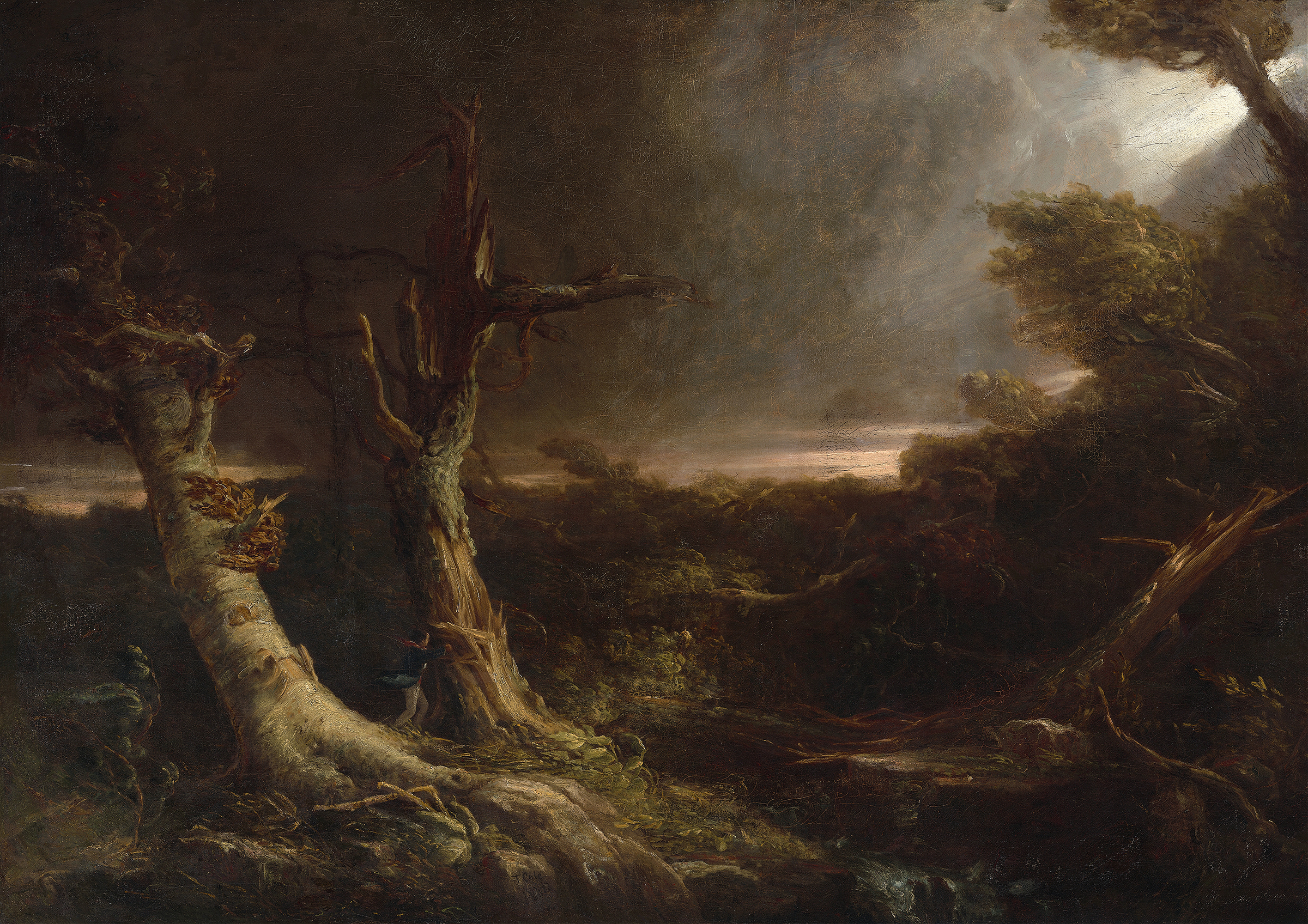
Landscape with Figures; A Scene from ‘The Last of the Mohicans’ — History & Analysis
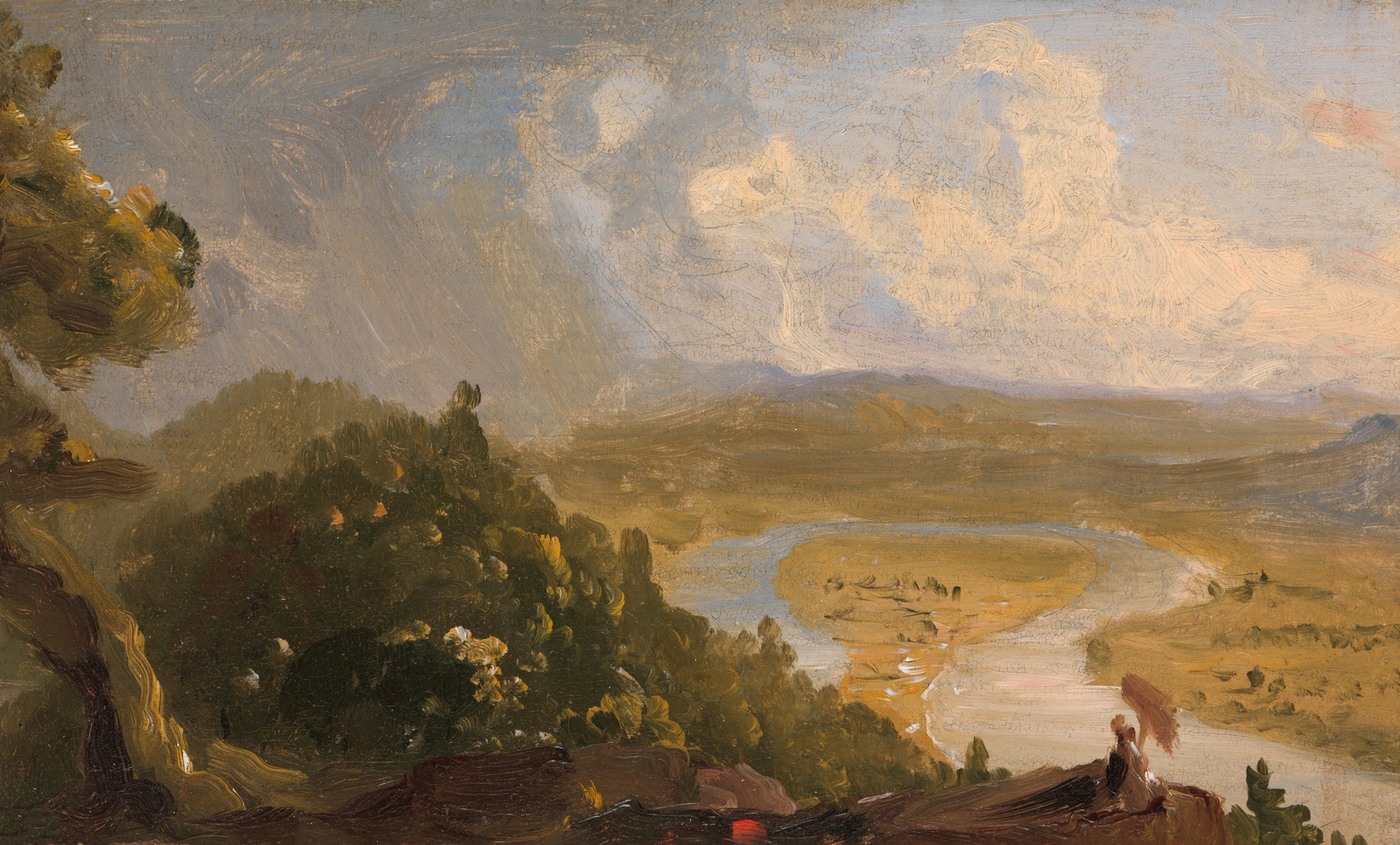
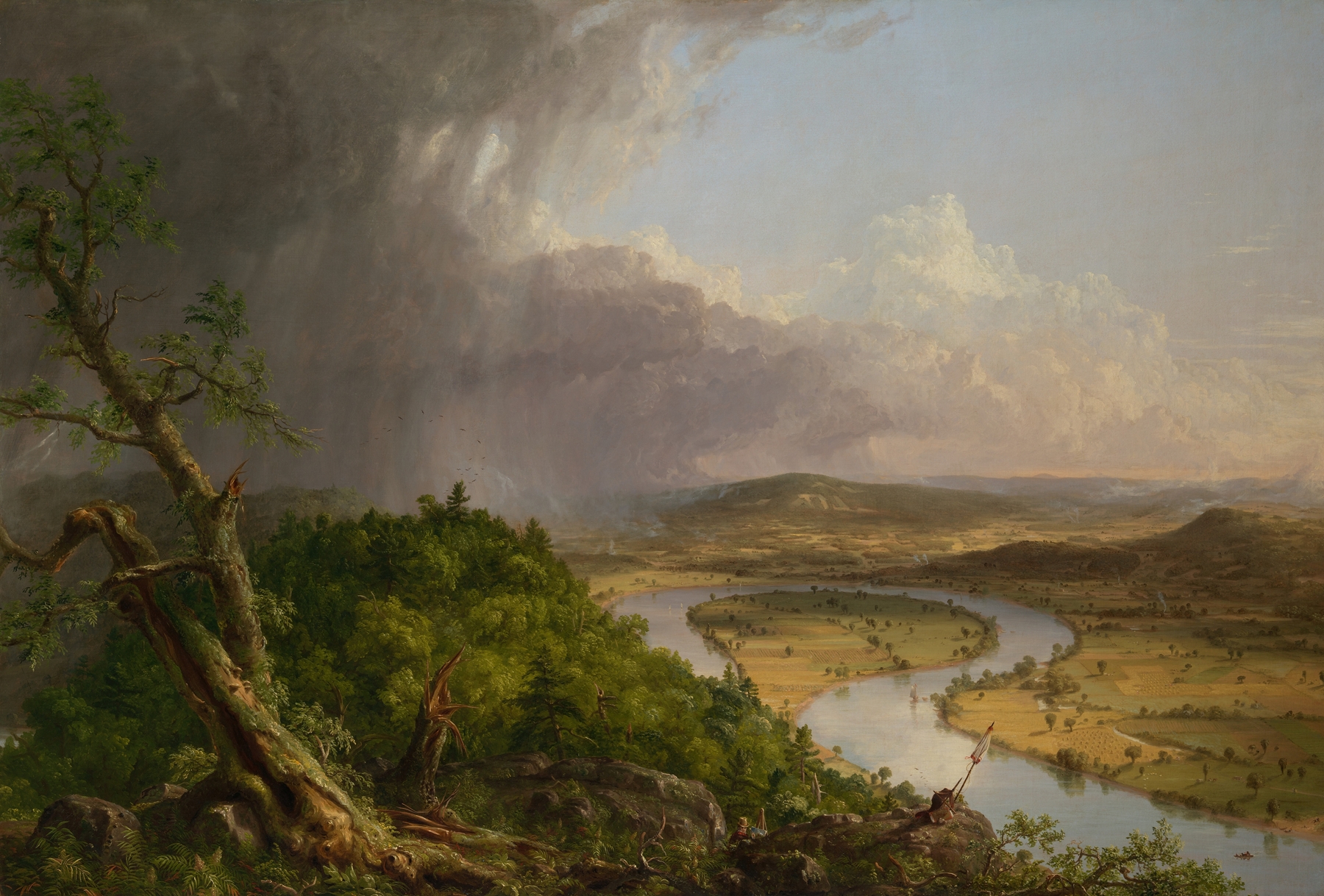
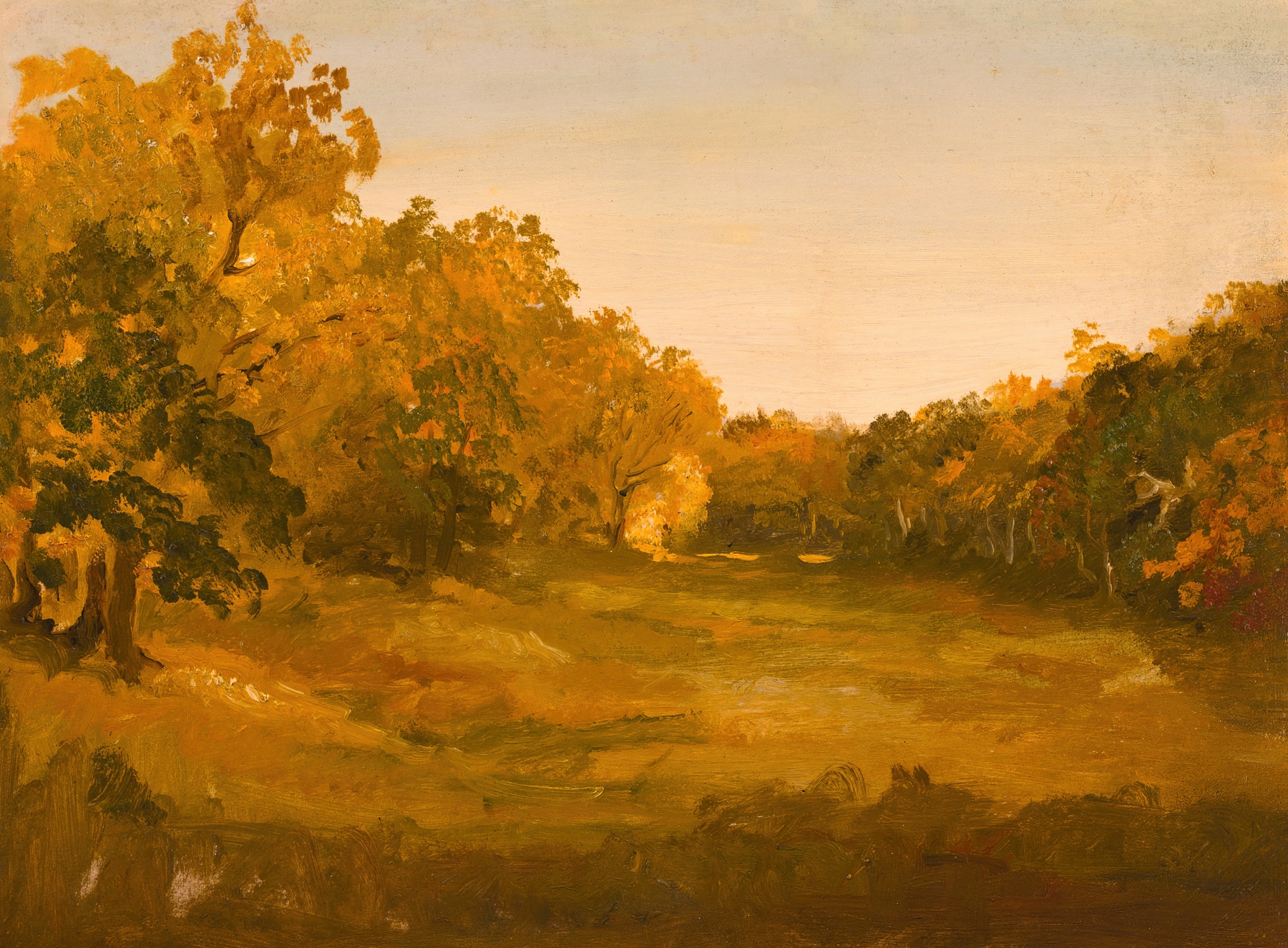
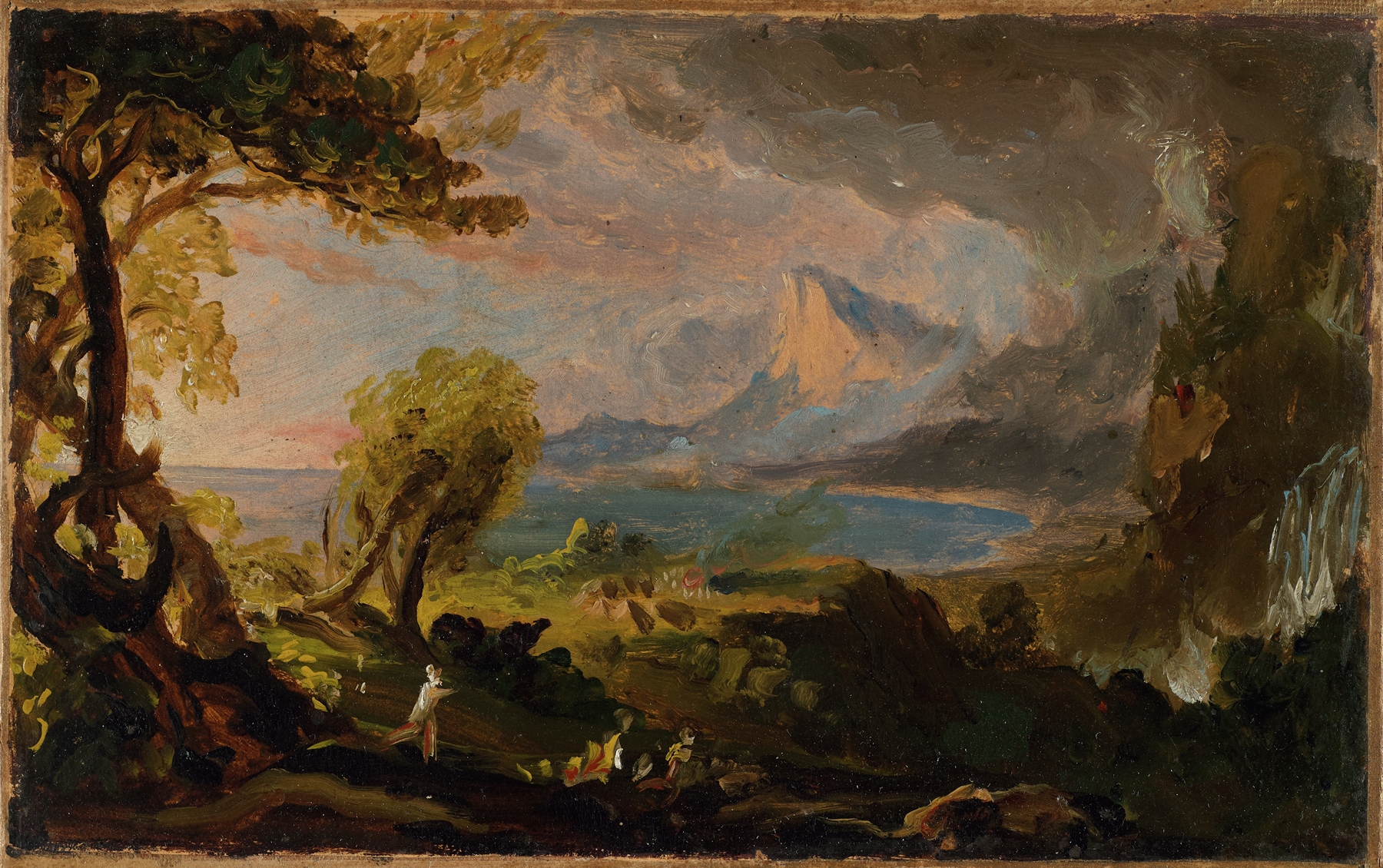
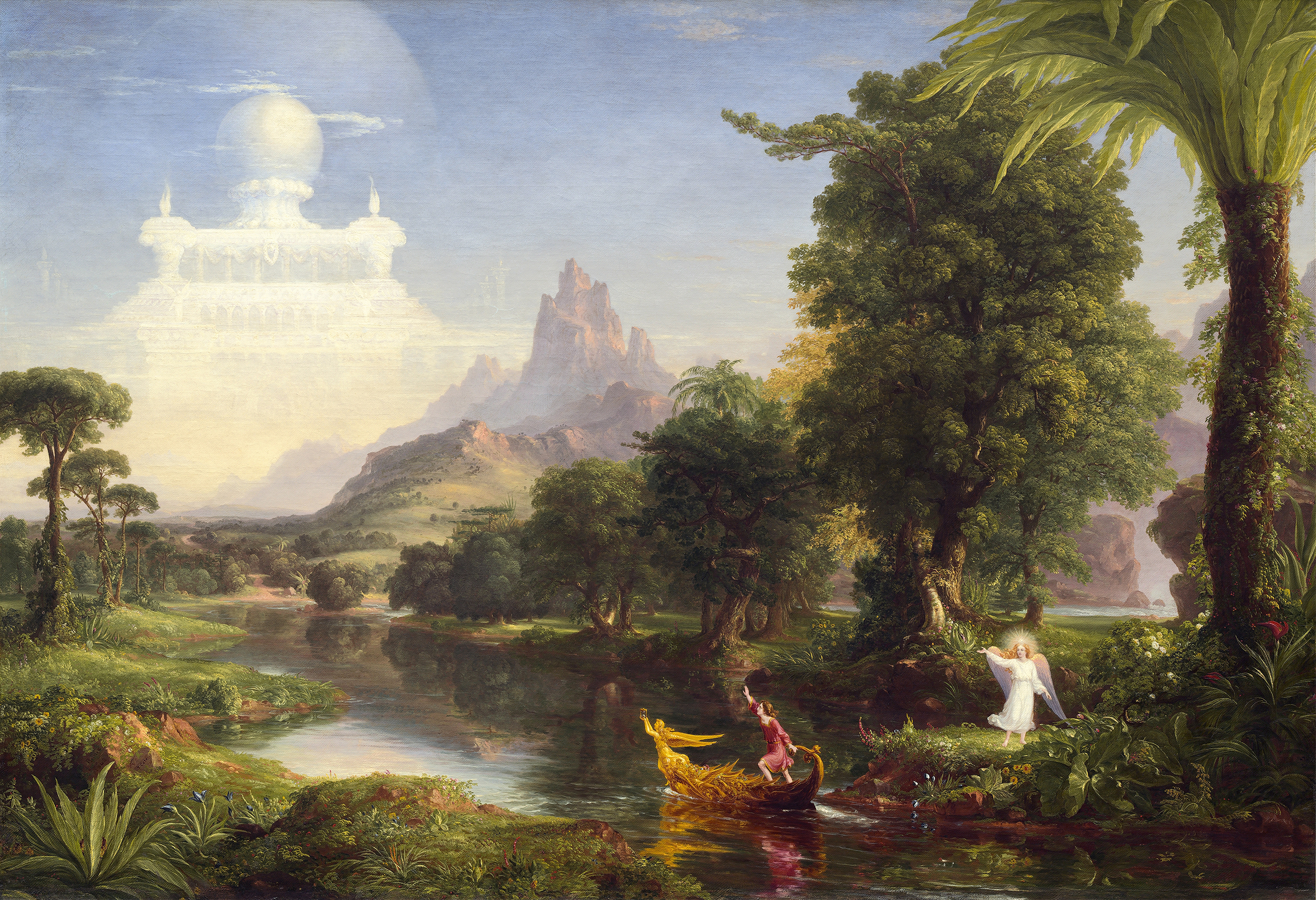
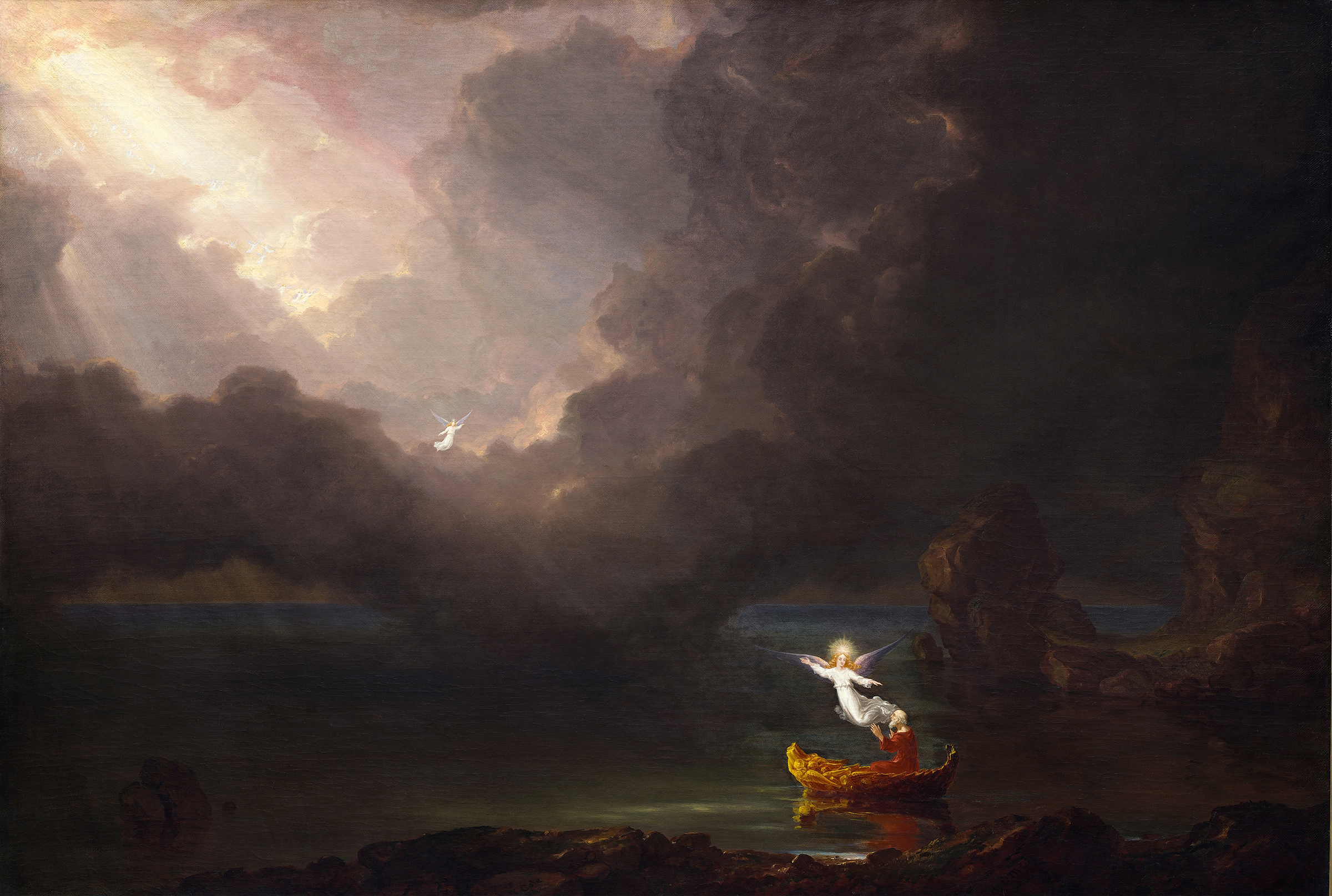
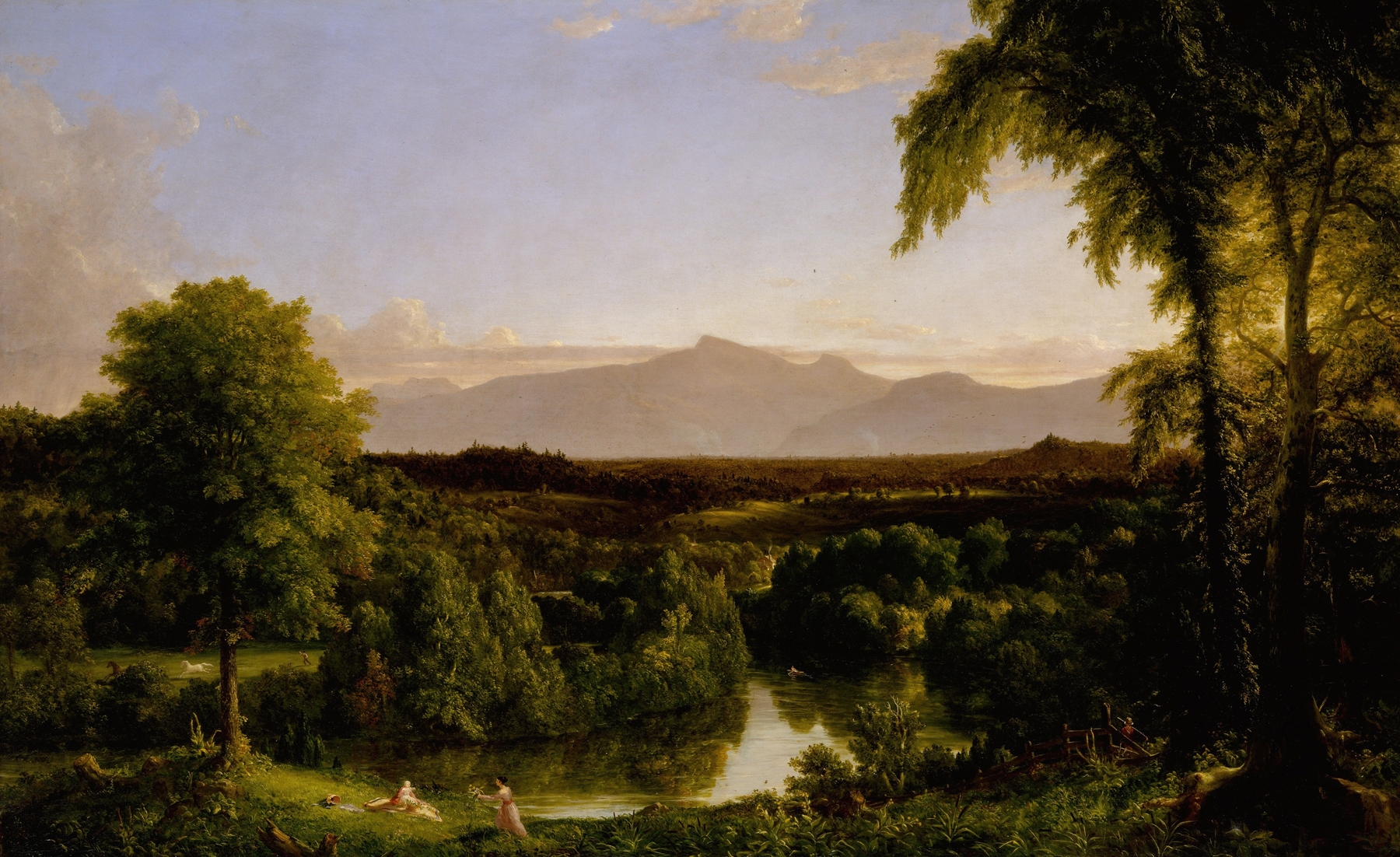
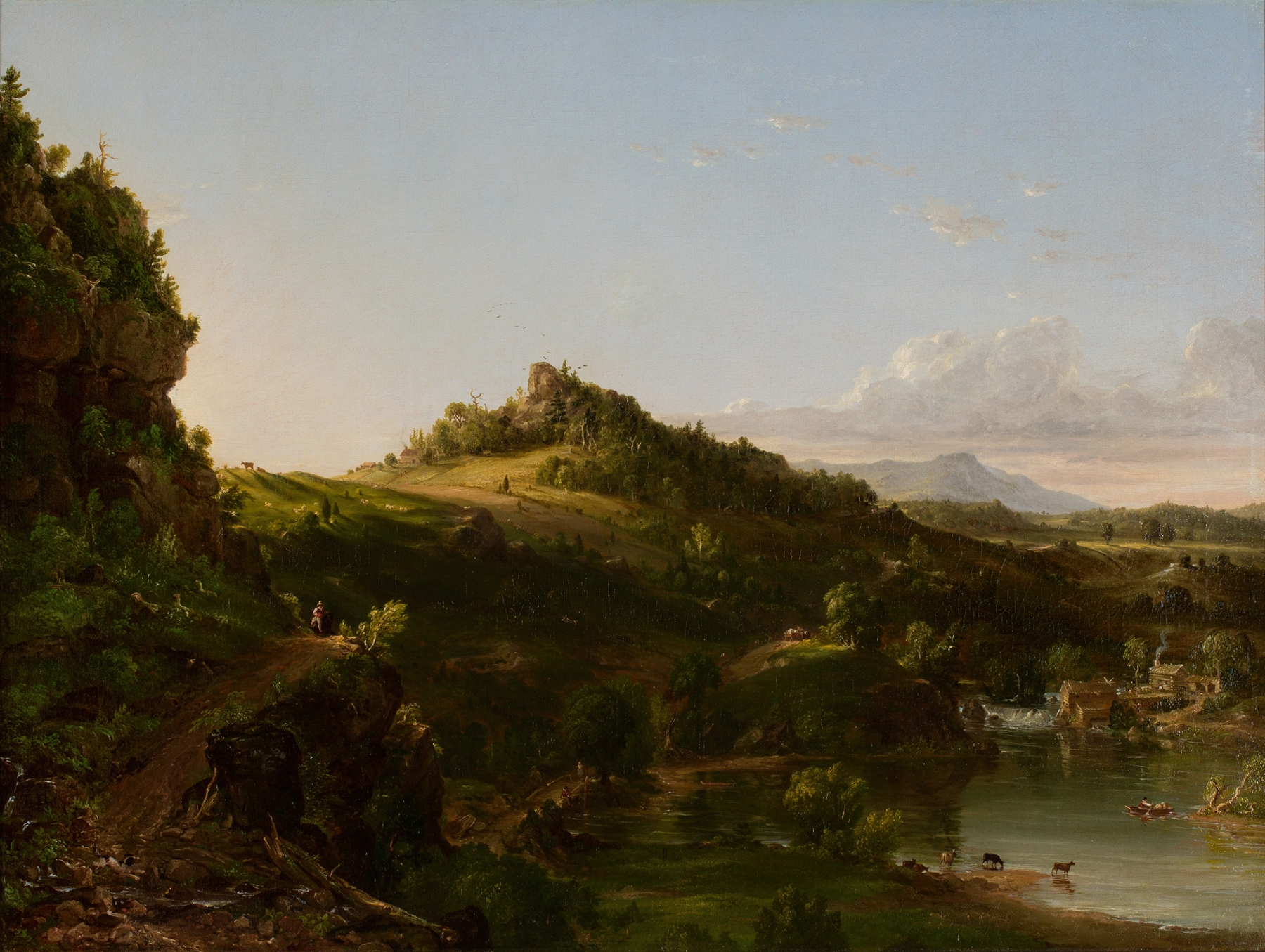
Did the painter know this moment would outlive them? Thomas Cole’s portrayal captures not just a landscape, but a profound faith in nature and human resilience amidst turmoil. Look to the foreground where the figures of Native Americans and European settlers share the frame, their unity stark against the majestic wilderness. The soft greens and browns of the trees envelop them, drawing the eye towards the harmonious contrast between civilization and the untamed world.
Notice how the sunlight filters through the leaves, creating dappled patterns that breathe life into the scene, reflecting both hope and fleeting time. As you explore the background, the looming mountains serve as both a protective embrace and a daunting barrier, symbolizing the struggle for identity and belonging. The serenity of the river echoes the internal conflict faced by the figures, their stillness suggesting a moment of contemplation amidst the chaos of their era. This tension between the human experience and the vast natural landscape speaks to a deeper narrative of coexistence and the complexities of faith in a changing world.
In 1826, while residing in New York’s Catskill Mountains, Cole painted this work during a time of burgeoning nationalism and romanticism in America. The nation was grappling with its identity, and the art world was shifting towards themes that celebrated the beauty of the American landscape. This piece not only reflects Cole’s personal journey but also represents a pivotal moment in American art, where nature was revered as a source of inspiration and spiritual connection.