Landscape with the Flight into Egypt — History & Analysis
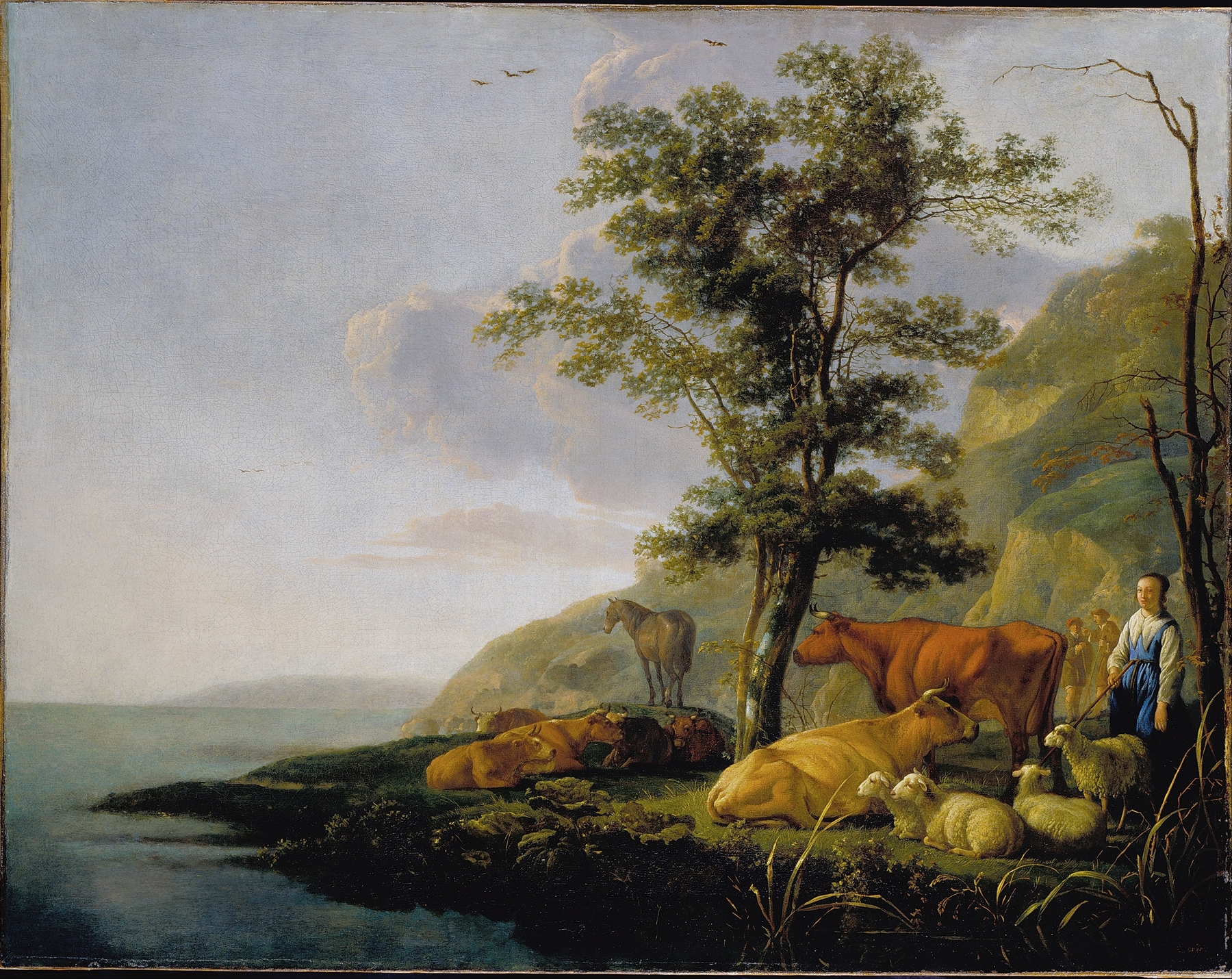
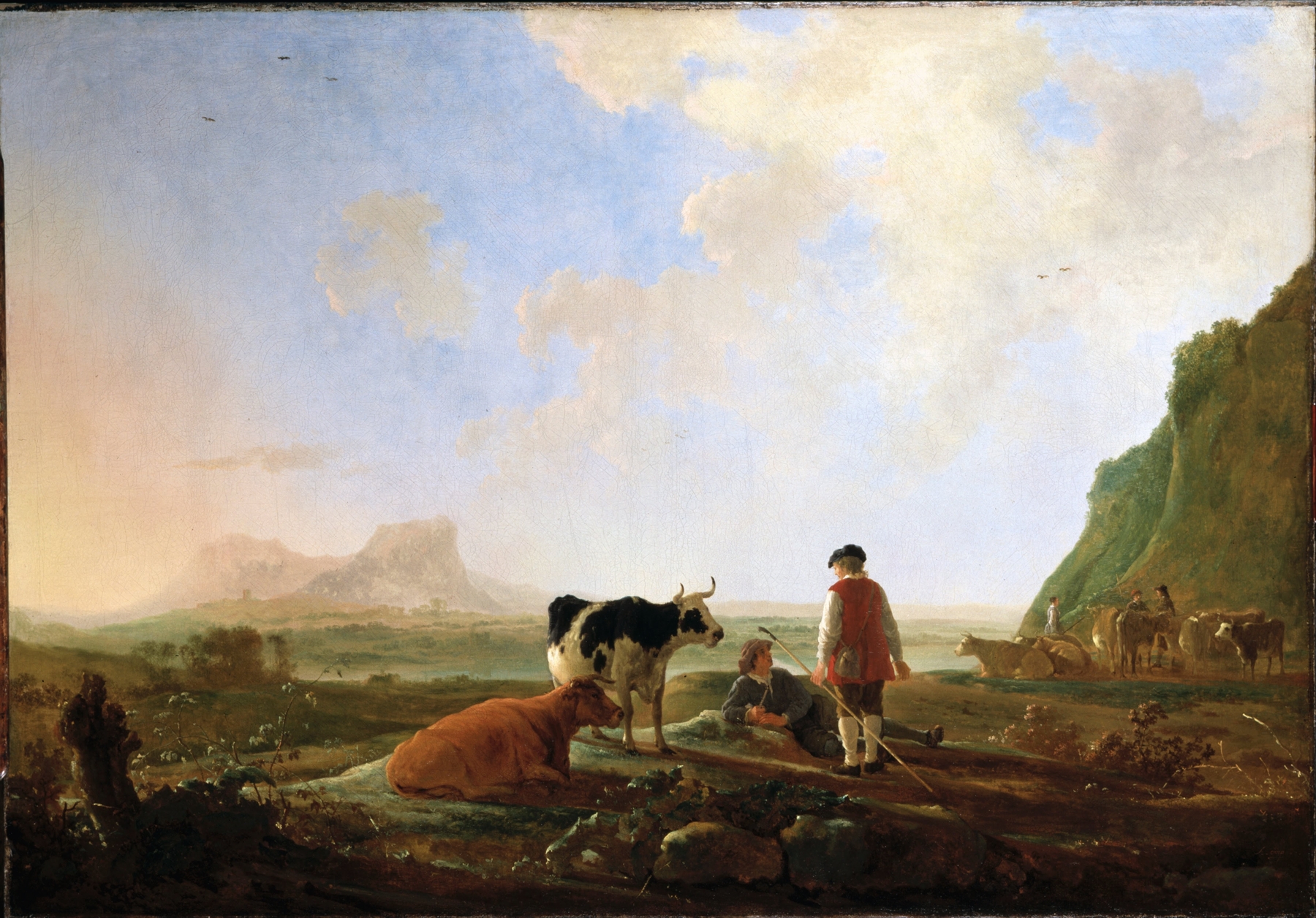
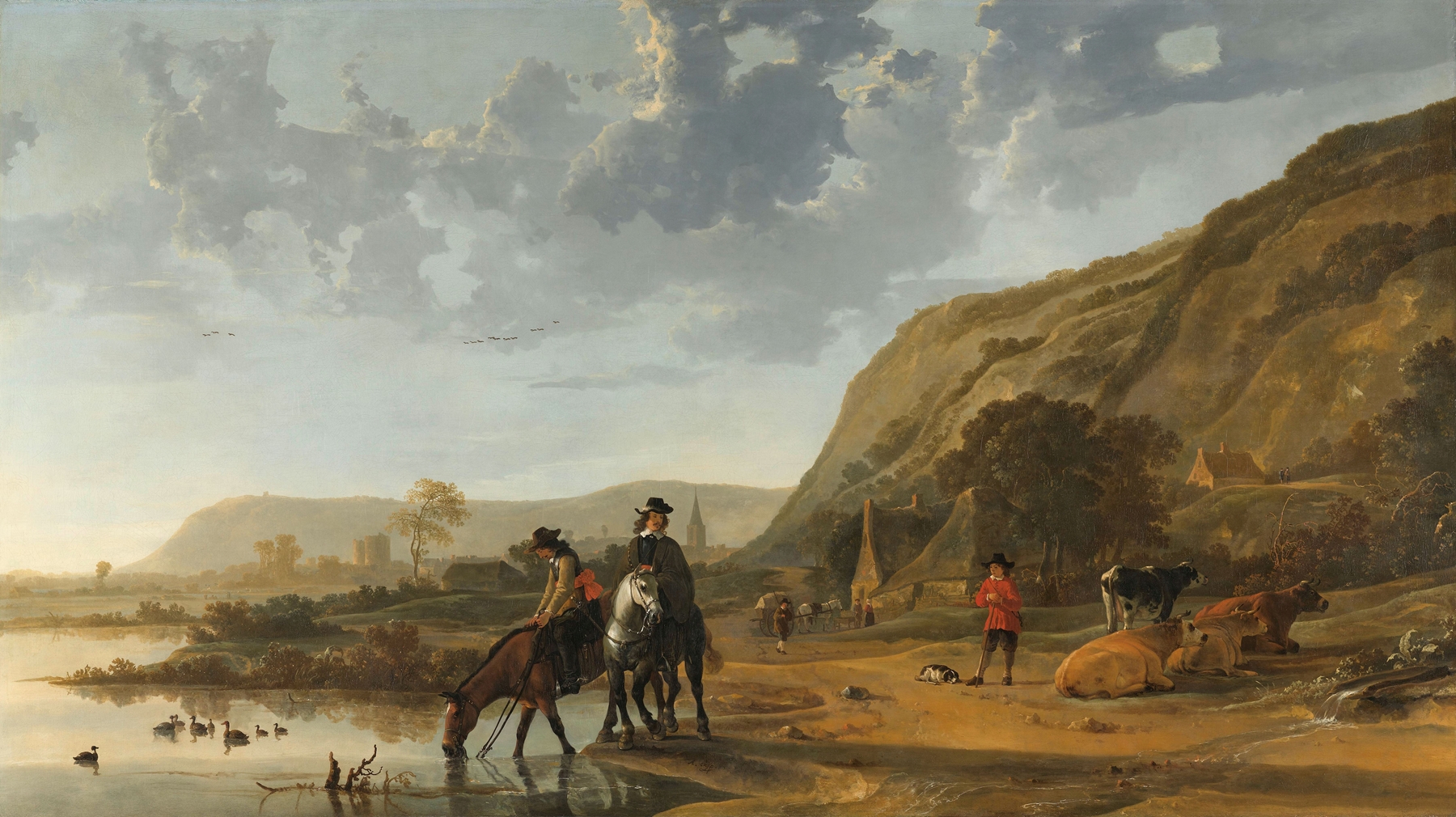
Could a single brushstroke hold eternity? In Landscape with the Flight into Egypt, Aelbert Cuyp invites us to contemplate the profound passage of time captured within the gentle hues of twilight. Look to the left at the soft, fading light that bathes the landscape in a golden glow, illuminating the figures of the Holy Family amidst the vastness of nature. The rhythmic undulation of the hills leads your gaze across the canvas, while the delicate trees stand sentinel, framing a serene yet transient moment.
The rich greens and warm ambers blend seamlessly, revealing Cuyp’s mastery of color and his ability to evoke both warmth and softness, creating a dreamlike atmosphere that transcends the ordinary. Beneath this tranquil surface lies a rich tapestry of meanings. The flight into Egypt symbolizes refuge and divine protection; yet, the expansive landscape hints at the trials of the journey, a reminder of the juxtaposition of safety and uncertainty. The palette, with its warm earth tones, speaks to humanity's connection with the divine, while the shadows cast by the trees evoke a sense of longing and the passage of time, suggesting that every journey is both an escape and an inevitable return.
Cuyp painted this work in the mid-17th century, during a time when the Dutch Golden Age was flourishing, marked by advancements in art and trade. Living in Dordrecht, he drew inspiration from the pastoral beauty of his surroundings, blending traditional religious themes with natural landscapes. This period of his life was characterized by a deepening interest in capturing the interplay of light and color, which is beautifully manifested in this piece.