Landschap in Devonshire — History & Analysis
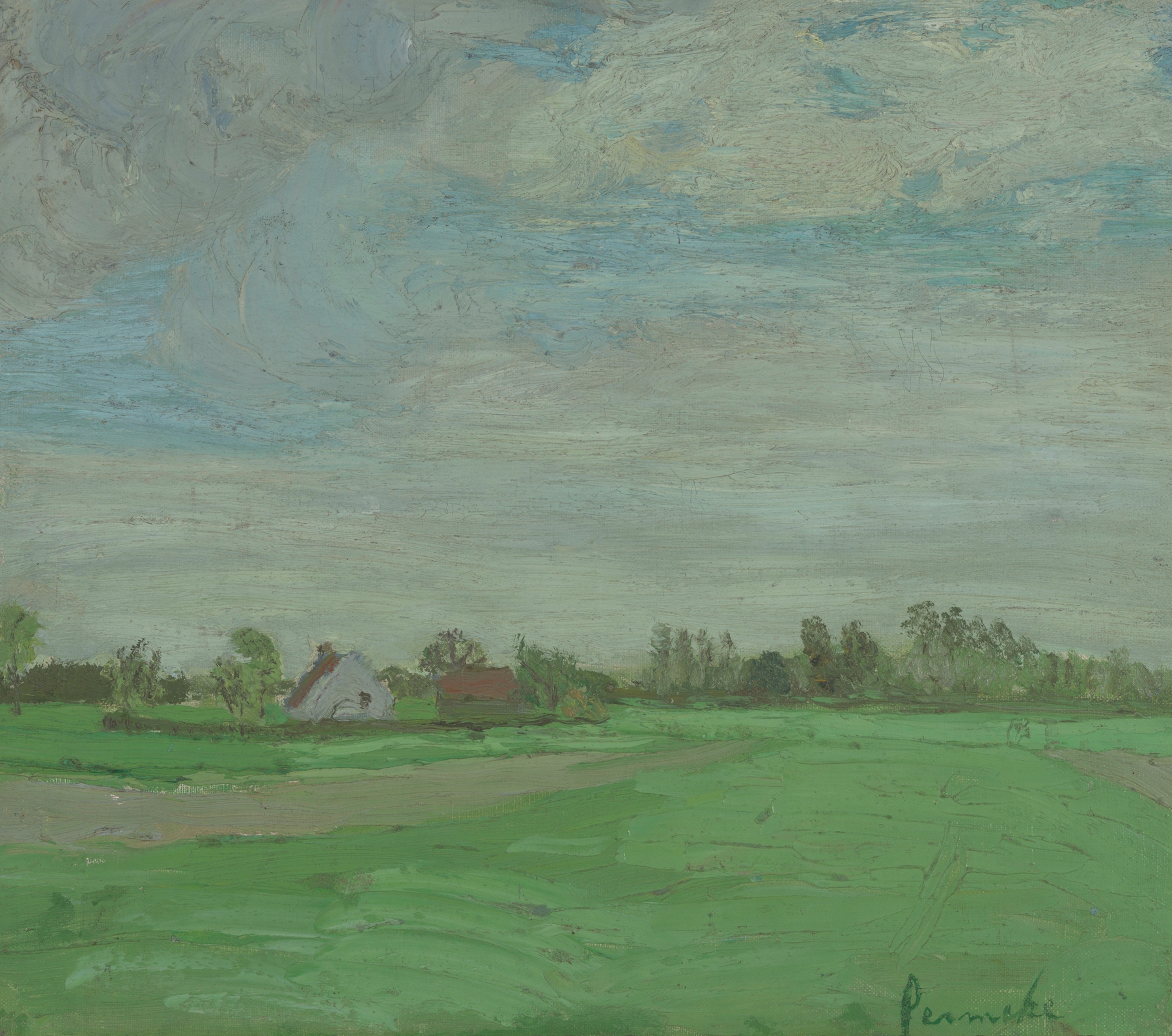
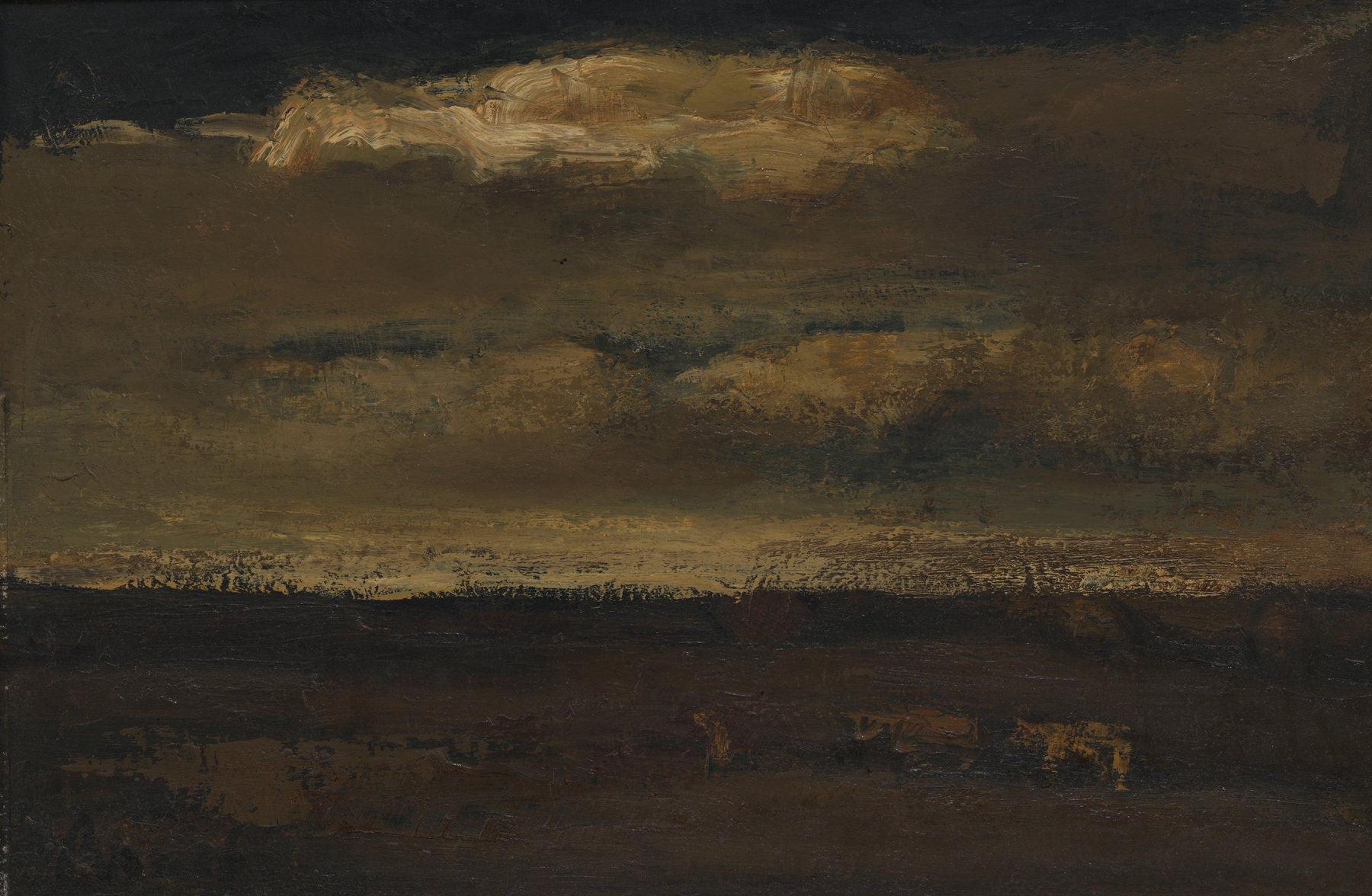
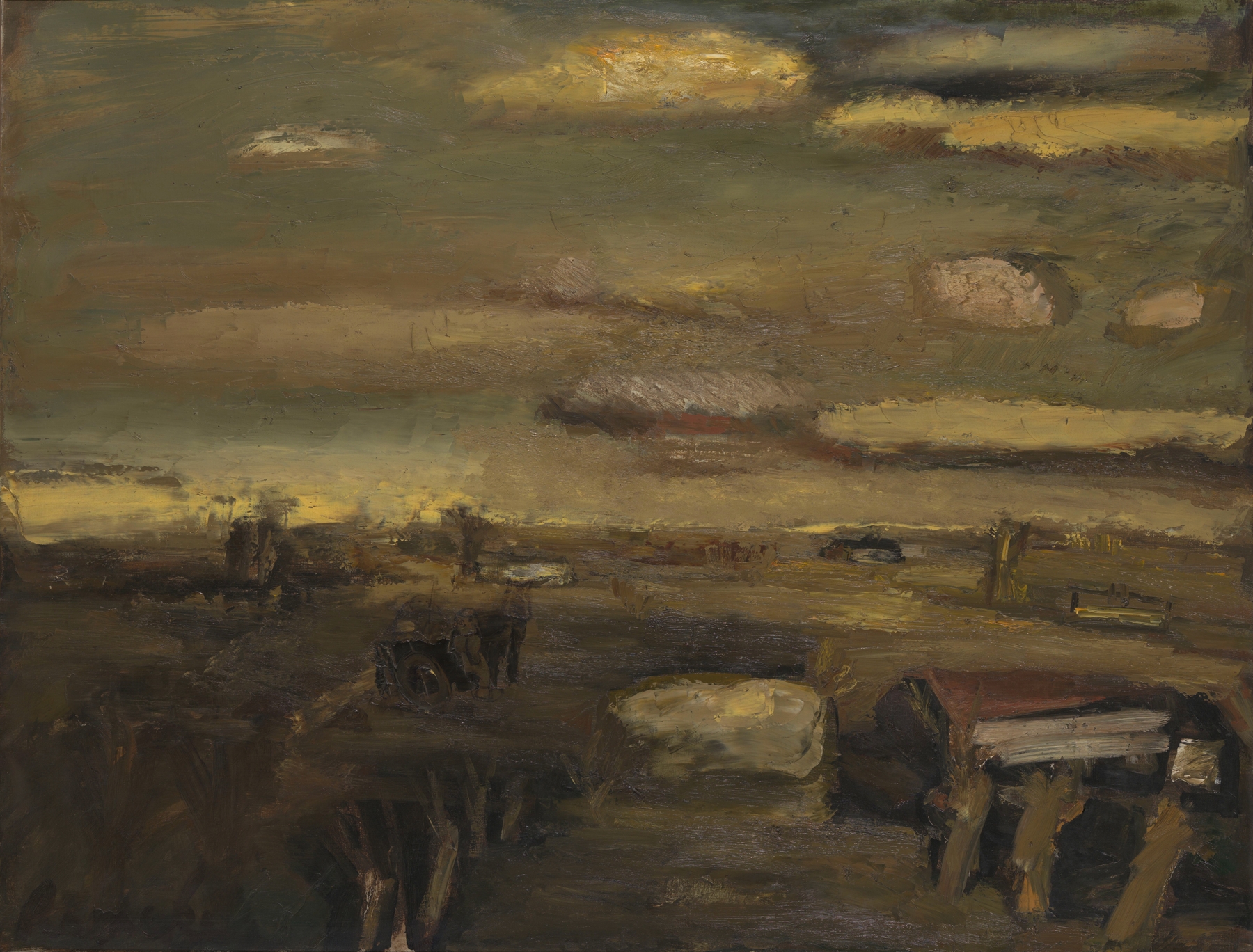
“Under the brush, chaos becomes grace.” In Landschap in Devonshire, Constant Permeke captures the essence of longing, transforming the tumult of nature into a harmonious landscape that speaks to the heart. Look to the center of the canvas, where rugged hills rise majestically against a backdrop of swirling clouds. The earthy tones of ochre and deep green dominate, weaving through strokes that seem almost alive. Notice how the light dances across the contours, casting shadows that deepen the sense of volume while inviting the viewer into the undulating topography.
The artist’s bold, expressive brushwork creates a sense of movement, suggesting a land full of stories and whispers of longing. At the edges of this pastoral scene, an emotional tension unfolds. The vibrant colors juxtapose the muted, nostalgic tones of the sky, reflecting a yearning for connection with nature’s enduring beauty. The abstract forms of trees and hills evoke a sense of solitude, while the chaotic brushstrokes suggest the restless spirit of an artist wrestling with his inner world.
This contrast captures both the strength and fragility found in the landscape and within ourselves. In 1917, Permeke was immersed in the intense experiences of World War I, grappling with the dislocation it caused within both his life and the art community. Living in Belgium, he sought solace in nature, using his palette to explore the emotional depths of his surroundings. This period marked a pivotal moment in his career, where his expressionist style would forge a powerful connection between the external world and the inner emotional landscape.