Late Autumn — History & Analysis
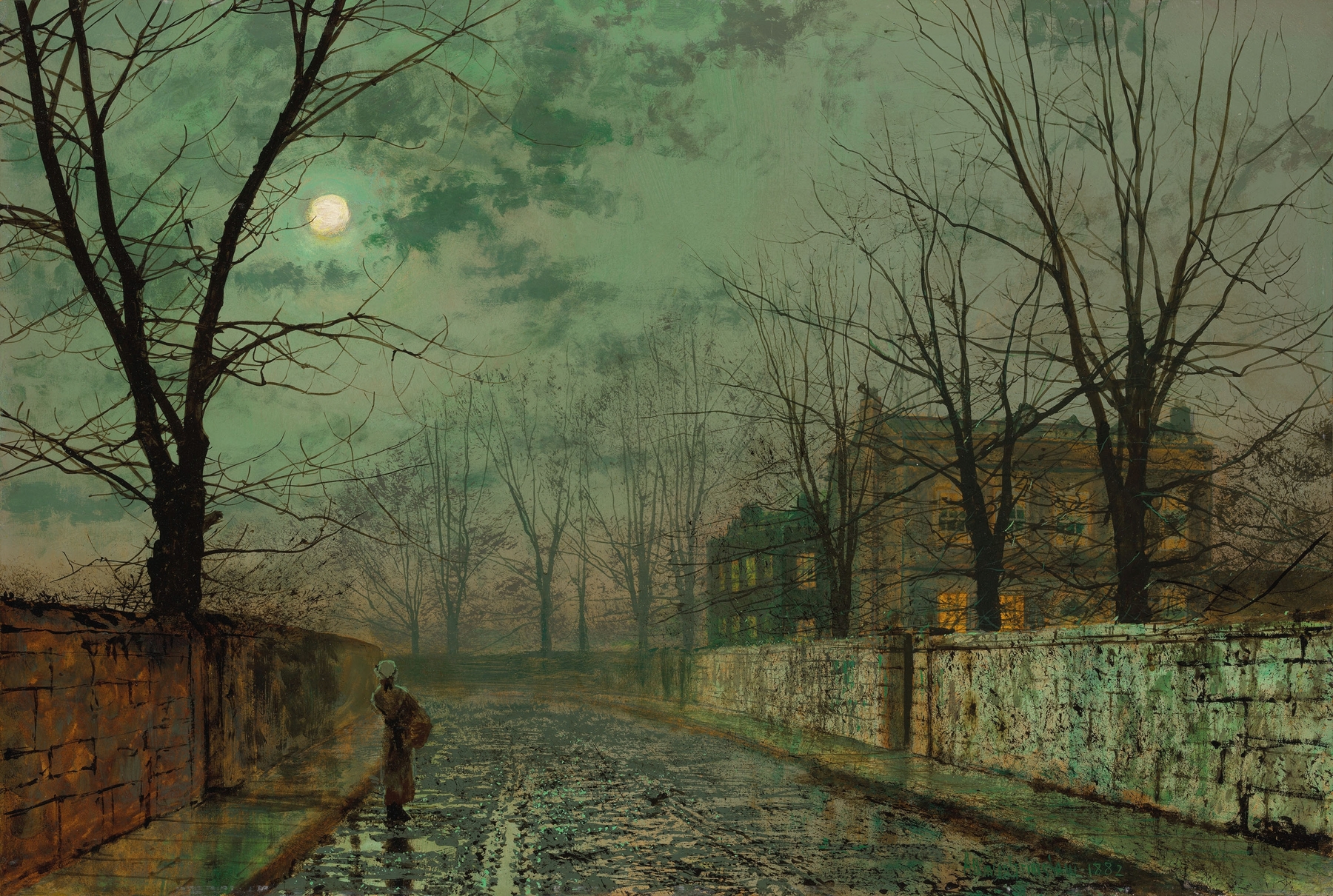
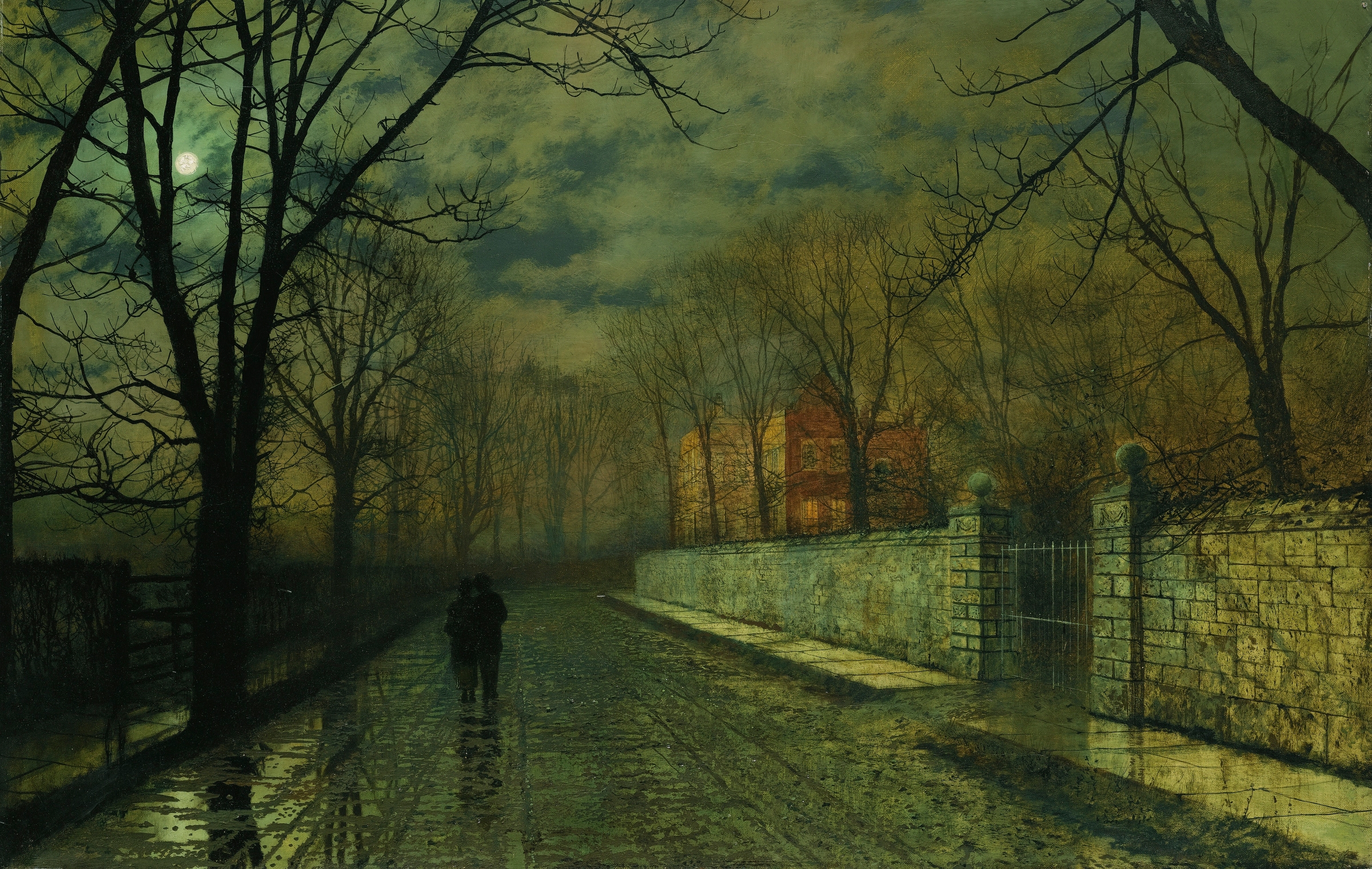
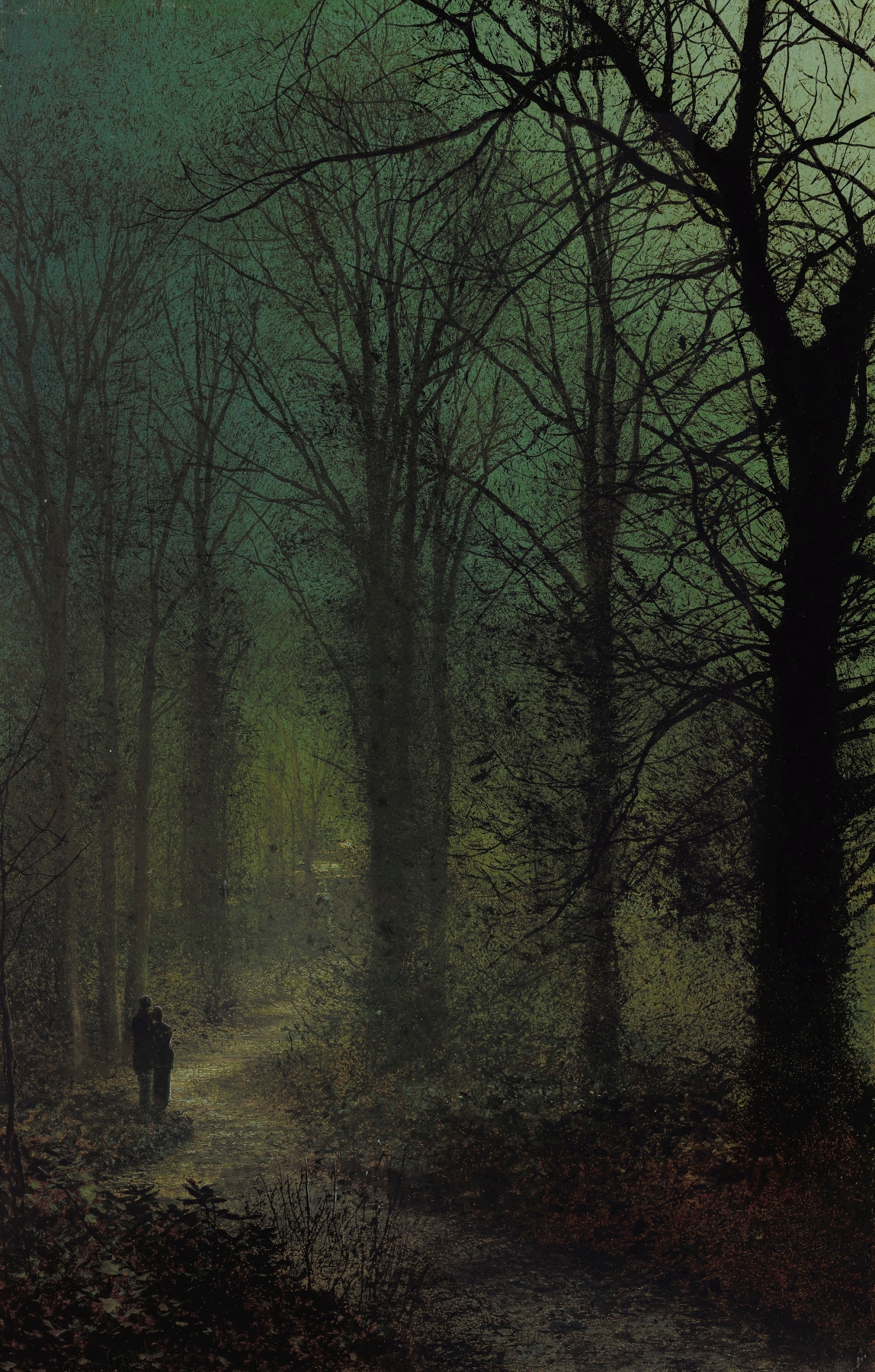
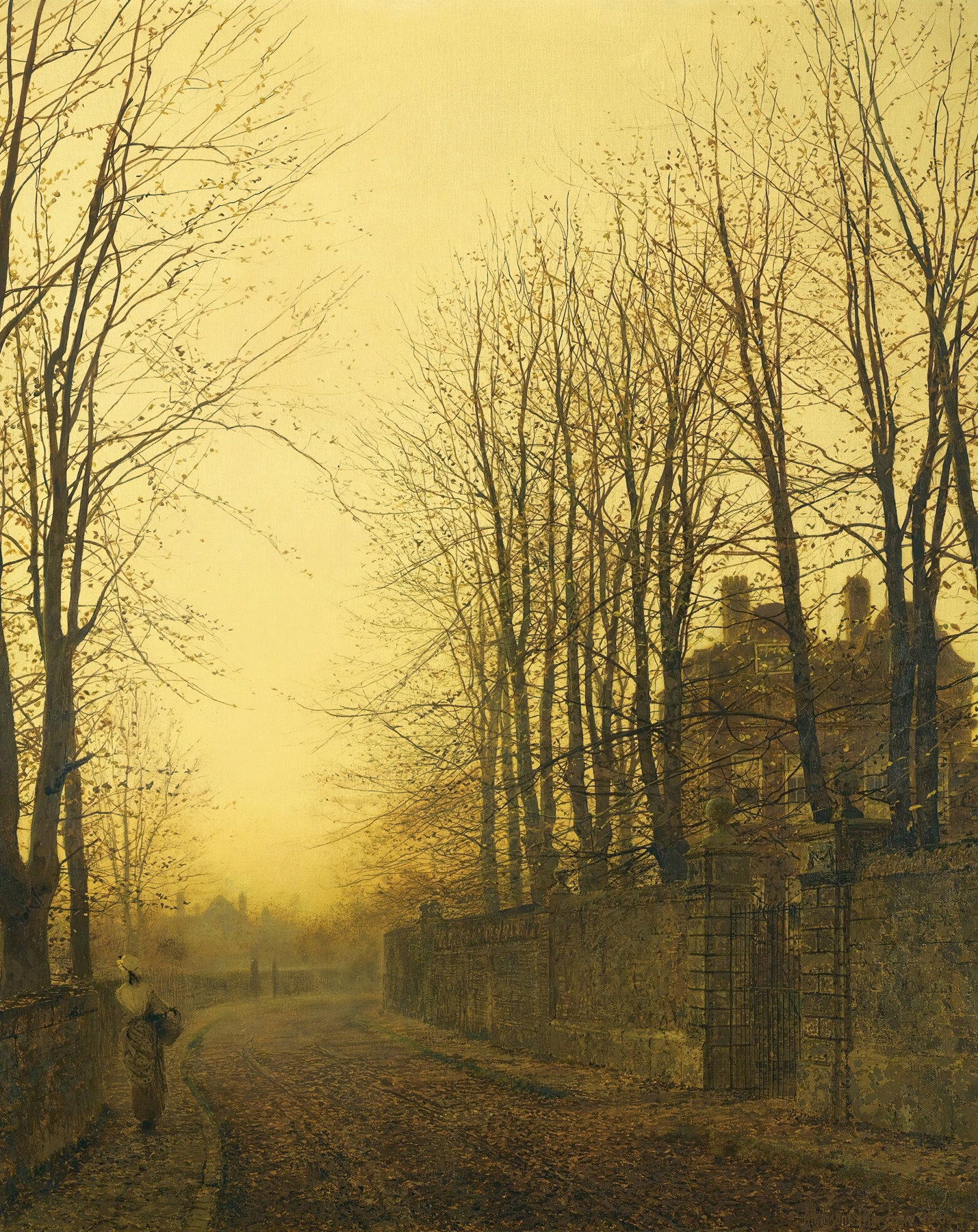
Can beauty exist without sorrow? In Late Autumn, the haunting allure of a fading season captures the bittersweet transition between life and decay, woven together with threads of innocence and melancholy. Look to the left, where a solitary figure clad in muted autumn hues strides along a leaf-strewn path. The delicate interplay of twilight casts elongated shadows, intertwining with the soft, golden light filtering through bare branches.
Notice how Grimshaw's meticulous brushwork lends texture to each leaf and twig, creating an almost tactile landscape that invites the viewer to step into this ephemeral moment. Beneath the tranquility lies a tension between the vibrancy of life and the inevitability of change. The lone figure, whose face remains shrouded in contemplation, embodies a poignant isolation juxtaposed against the backdrop of nature's slow surrender. This resonates deeply with the viewer, prompting reflections on the passage of time and the innocence of fleeting moments.
Each element in the painting, from the subtle gradient of the sky to the fallen leaves underfoot, echoes the delicate balance between beauty and sorrow, evoking an emotional response that lingers long after viewing. In 1886, Grimshaw painted this piece in his studio in Leeds, England. At the time, he was renowned for his atmospheric landscapes and depictions of urban life, finding inspiration in the interplay of light and shadow. The late Victorian era was marked by rapid industrialization and changing social landscapes, and his work often reflected a yearning for simplicity and connection with nature, making Late Autumn a poignant testament to his artistic vision.