L’entrée du jardin — History & Analysis
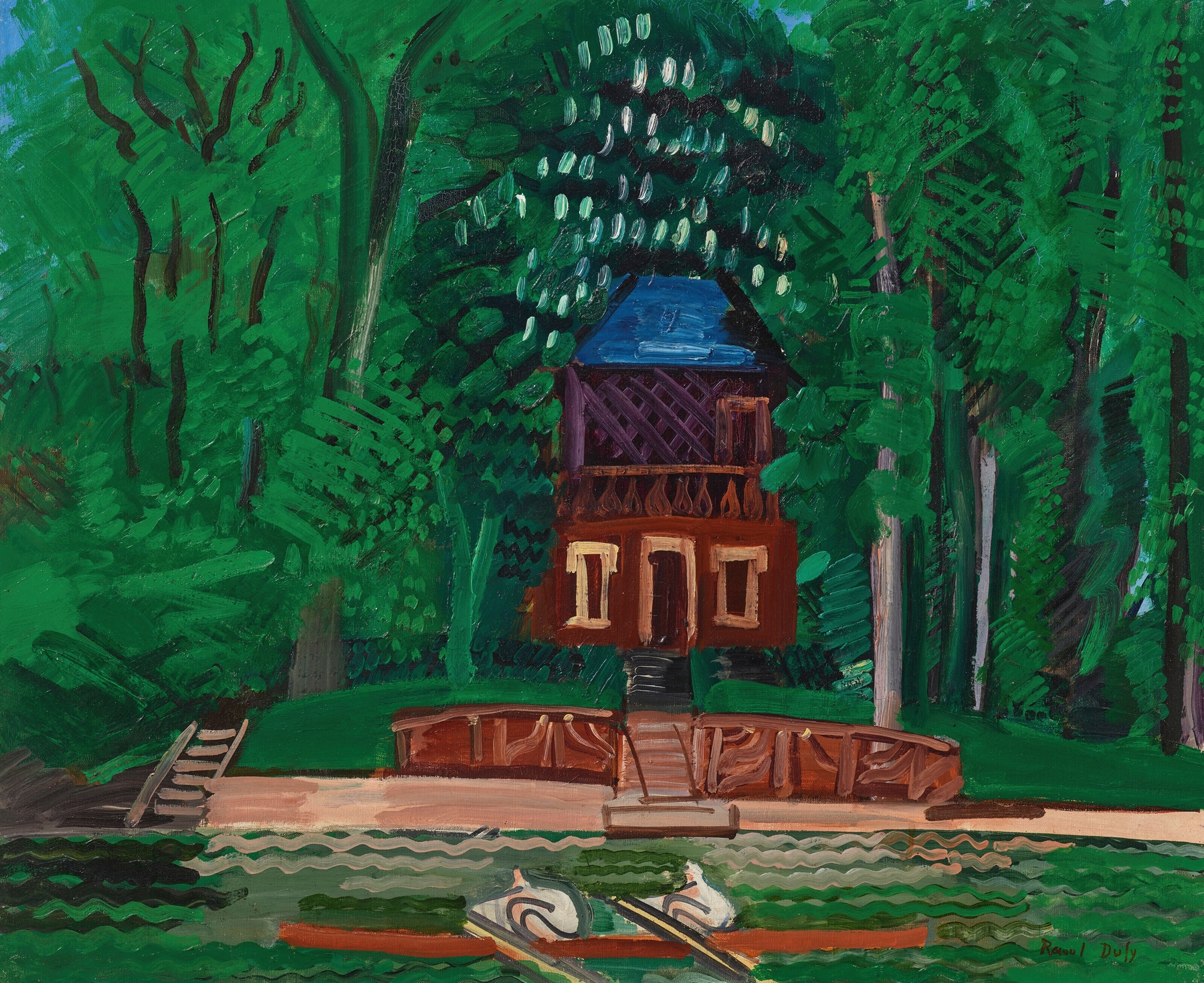
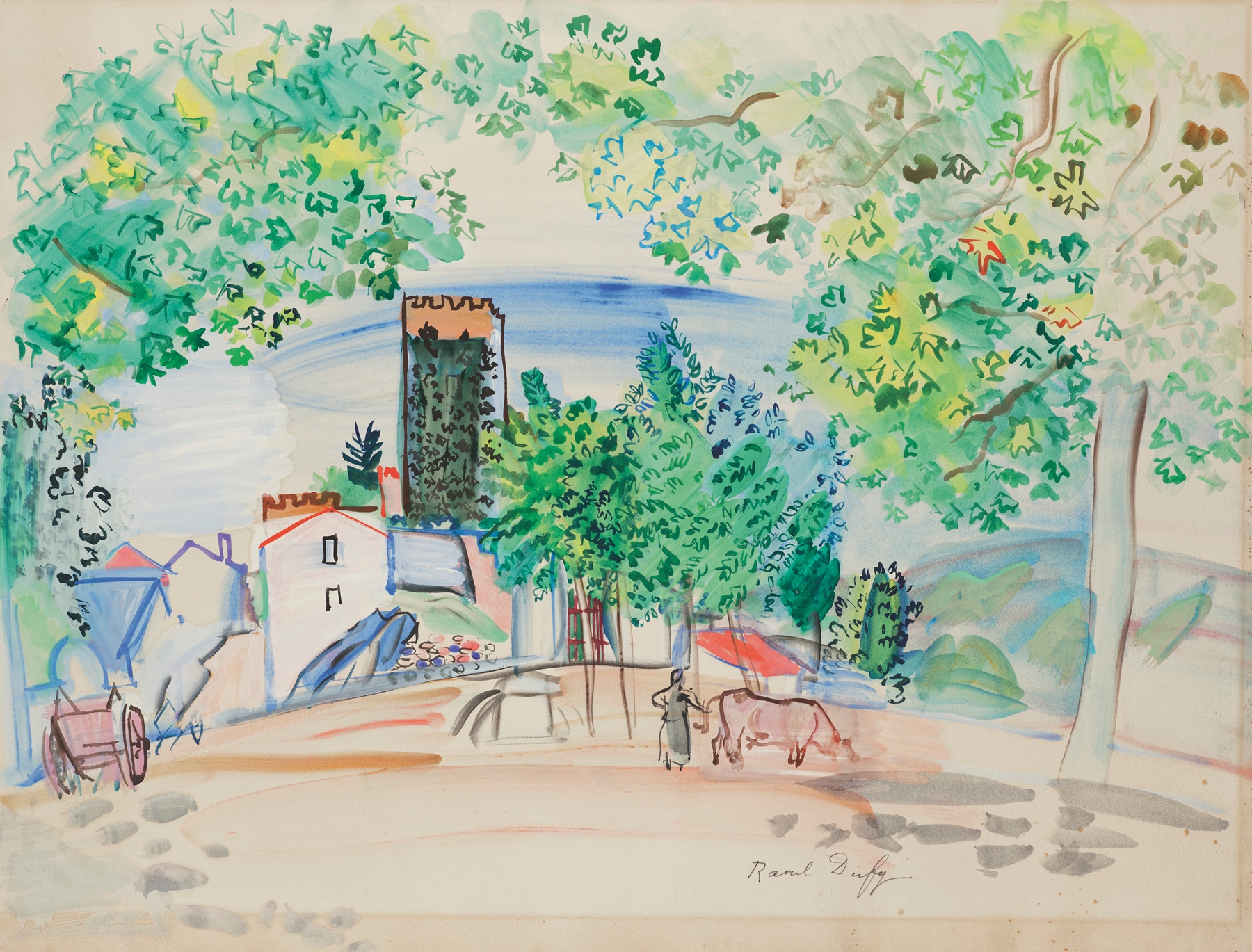
Can beauty exist without sorrow? In L’entrée du jardin, vibrant blossoms invite us in, yet their vivid colors might whisper secrets of betrayal hidden beneath the surface. Look to the left at the delicate archway, its inviting curves encircled by an exuberance of flora. Dufy’s bold strokes create a symphony of greens and reds, while dappled sunlight dances through the leaves, casting playful shadows on the path.
The composition feels both alive and structured, guiding the viewer’s gaze toward the heart of the garden where the interplay of light and color sparks an emotional resonance. Beneath the surface charm lies a tension between the idyllic scene and the notion of hidden truths. The lushness of the garden may symbolize a façade of happiness, masking underlying themes of betrayal and despair.
The contrast between vibrant blooms and the shadows they cast alludes to the duality of beauty and its potential to conceal pain, inviting introspection about the nature of appearances. In 1923, amidst the post-war avant-garde movement in France, Raoul Dufy created this piece during a time when artists sought new expressions of joy and vitality in response to the previous turmoil. Living in Paris, he was influenced by the Fauvist movement, characterized by bold colors and emotional depth, which allowed him to explore the fragile balance between beauty and disillusionment in his work.