Lunch at the Restaurant Fournaise (The Rowers' Lunch) — History & Analysis
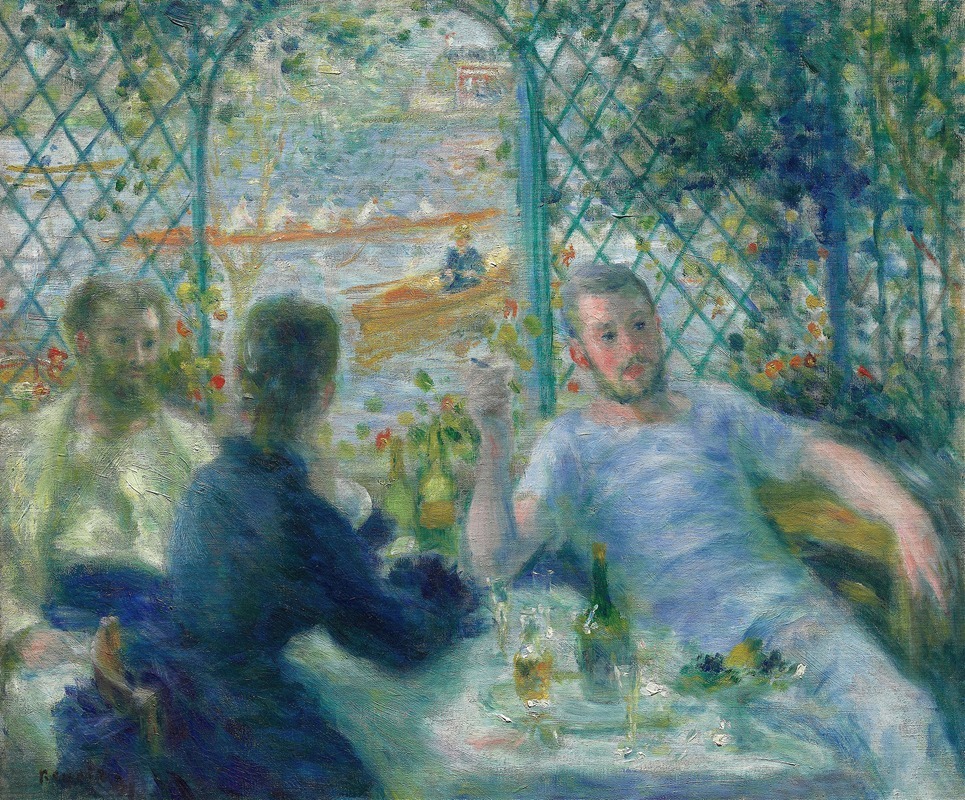
Where does light end, and longing begin? In the warm embrace of Lunch at the Restaurant Fournaise, the boundaries blur, revealing a world rich in desire and connection. Focus on the central figures seated at a sun-drenched table, their laughter almost audible amidst the vibrant colors. Notice how the light filters through the trees, casting dappled shadows that dance across their faces and the table’s surface. The gentle brushstrokes create a texture that feels alive, wrapping the viewer in the scene's intimate atmosphere.
Renoir's masterful use of soft, luminous hues invites you to fully absorb the joy emanating from this outdoor gathering, where the pleasures of food and camaraderie seem to merge seamlessly. Beneath the surface of this idyllic moment lies an exploration of class and connection. The jovial expressions and animated gestures of the diners speak to a fleeting joy, contrasting with the labor of the rowers visible in the background. Their shared space hints at a transient harmony, suggesting both the joy of leisure and the hard work that sustains it.
The juxtaposition of these two worlds reflects the artist's own life, a dance between the everyday struggles and the pursuit of beauty and happiness. Created in 1875 along the Seine in France, this piece emerged during a transformative period for Renoir. The artist was at the forefront of the Impressionist movement, seeking to capture the essence of life through light and color. Amidst the artistic camaraderie of fellow Impressionists, Renoir painted scenes that celebrated both the vibrancy of leisure and the social fabric of his time, forever encapsulating the essence of joy and longing.