Two Sisters (On the Terrace) — History & Analysis
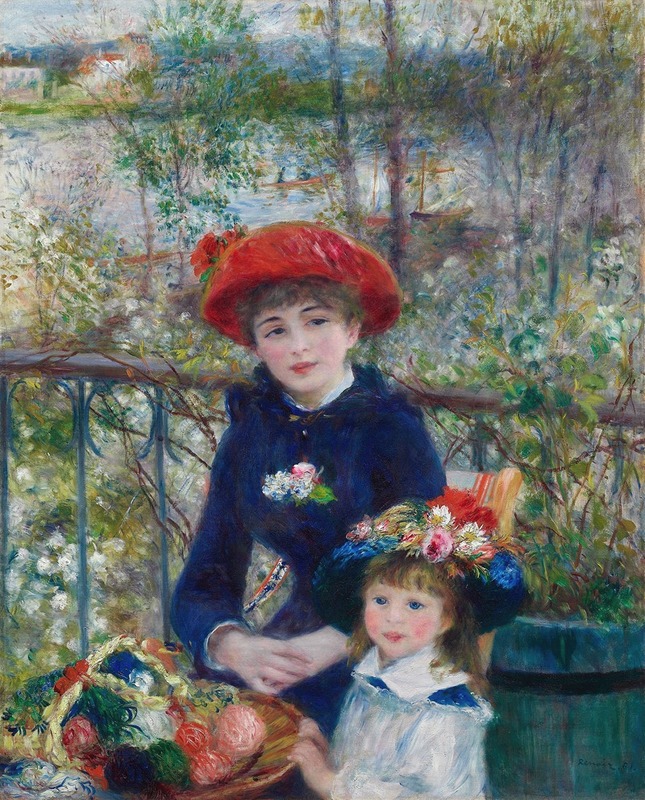
Can beauty exist without sorrow? Two Sisters (On the Terrace) invites us to explore this profound question, revealing layers of emotion hidden beneath its vibrant surface. Look to the left at the figure of the elder sister, her gaze directed outward, lost in thought. A delicate play of light dances across her pale dress, illuminating her figure against the soft greens and blues of the terrace.
Notice the younger sister, a joyful burst of color in her bright attire, her laughter almost palpable. The contrasting expressions between the two siblings suggest an underlying tension, as if the idyllic scene is merely a facade masking deeper, unspoken narratives. The juxtaposition of light and shadow in the composition underscores this complexity. The light enveloping the younger sister may symbolize innocence and joy, while the elder sister’s shaded visage hints at a more profound introspection or unresolved pain.
The juxtaposition of their positions—one grounded in the brightness, the other in contemplation—propels us to consider the balance of joy and sorrow, a duality inherent in life’s fleeting moments. In 1881, Renoir created this work during a period of personal and artistic transition in his career. As he settled into his role as a leading figure of Impressionism, he faced the challenge of reconciling the demands of commercial success with his desire for artistic integrity. The painting captivates in its exploration of familial bonds and the often unseen emotional struggles that accompany beauty, offering a glimpse into both the artist’s evolving style and the complex human experience.