Maisons au pied d’une falaise — History & Analysis
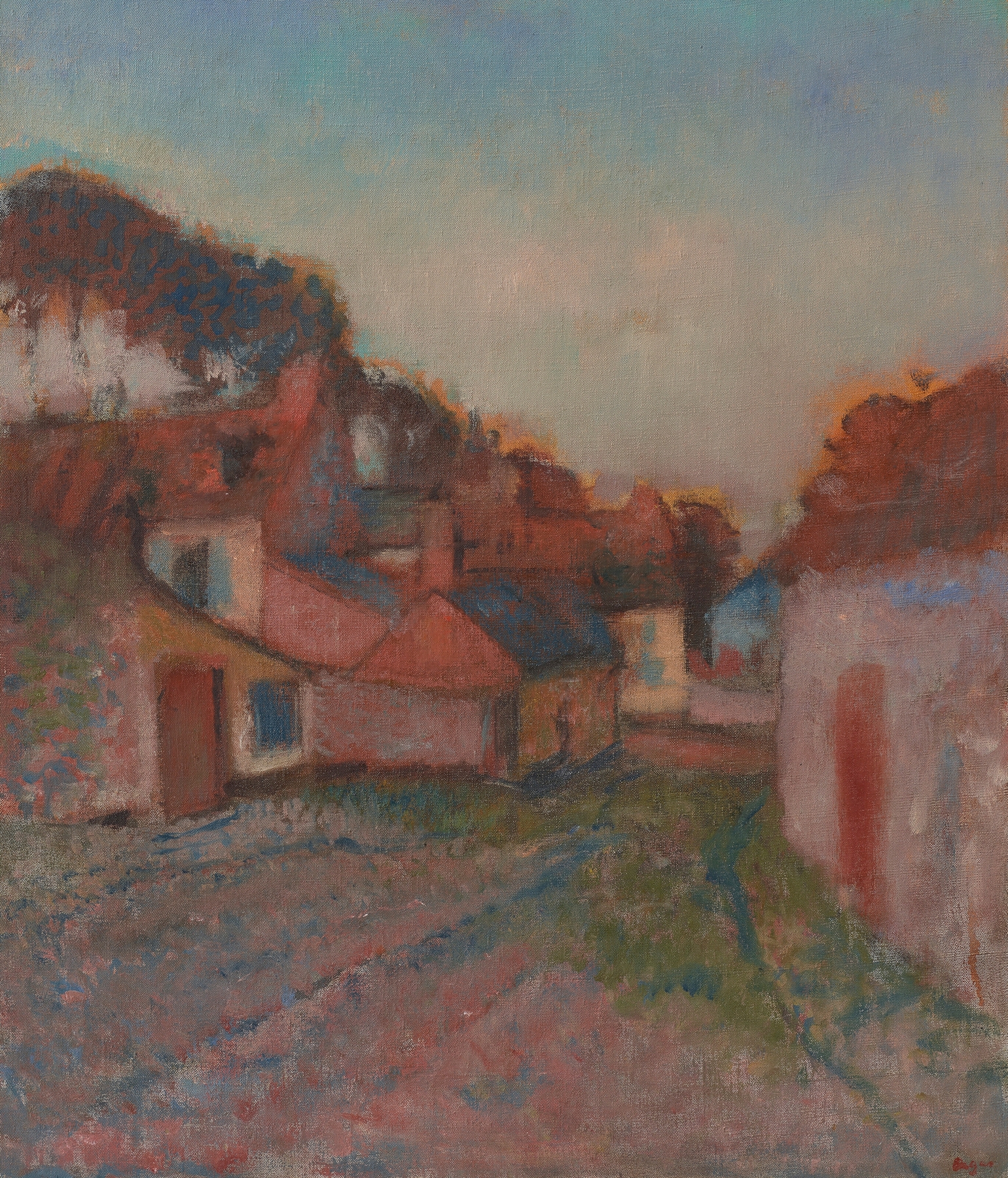
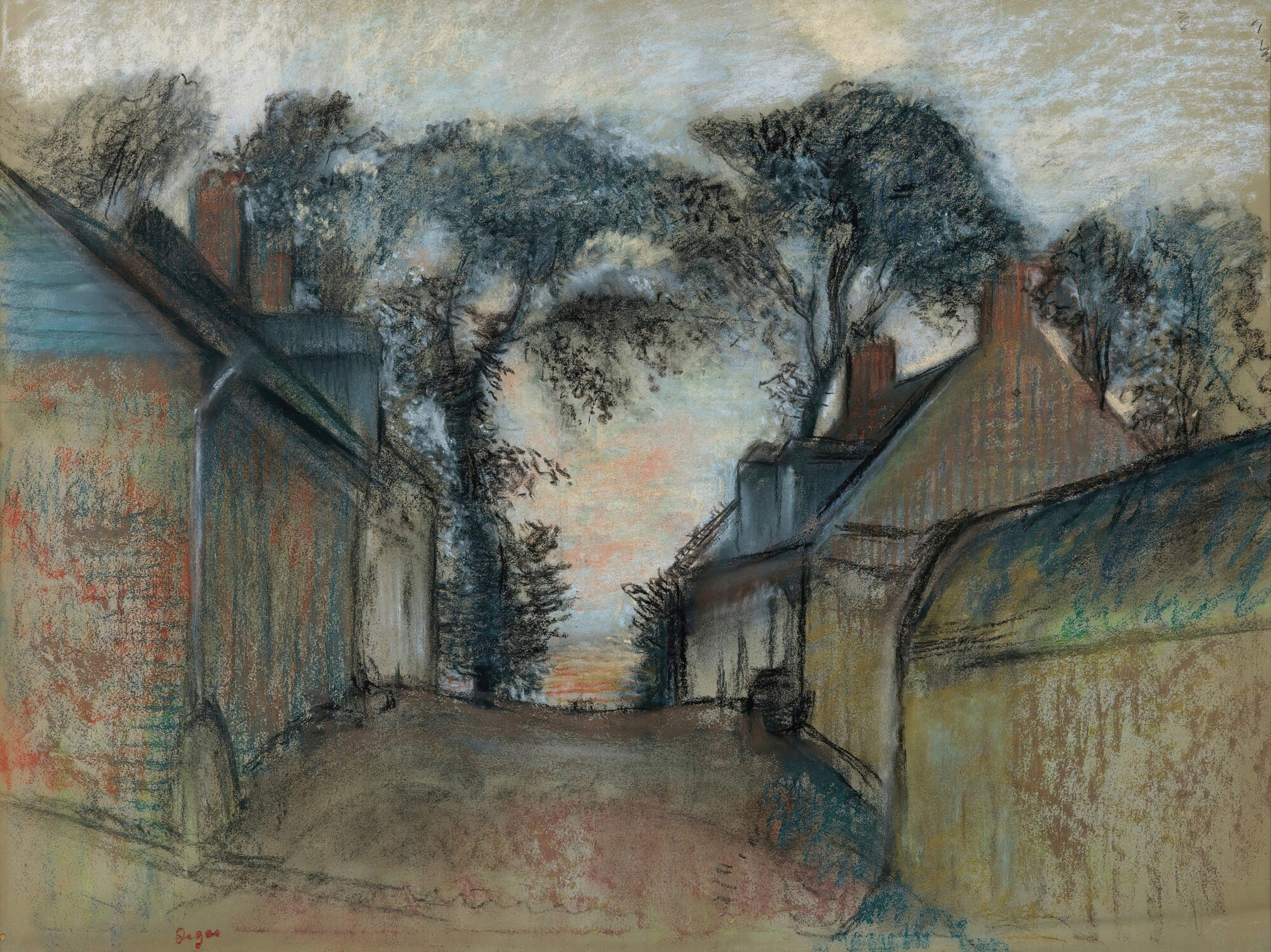
What secret hides in the quiet of the canvas? In Maisons au pied d’une falaise, shadows weave an intricate narrative, hinting at stories untold and lives lived beneath the towering cliffs. Look to the left at the cliff face, where light dances softly across its rugged texture, casting deep shadows that cradle the quaint houses nestled at its base. Notice how the muted palette of greens and browns envelops the scene, creating a sense of harmony between nature and the structure of human life.
The houses, painted with delicate strokes, seem to breathe within the embrace of the landscape, while the gentle contours of the cliff anchor the composition, leading the viewer's gaze towards the horizon. In the shadows, one might perceive a contrast between the tranquility of the scene and the potential tumult of life hidden within the homes. Each darkened crevice hints at solitude, solitude that can be both comforting and isolating. The interplay of light and shadow not only defines the physical landscape but also resonates with the emotional weight carried by those who dwell there, inviting contemplation of their stories and histories.
Degas painted this work in 1869 during a period when he was experimenting with new techniques and engaging with the Impressionist movement. Living in Paris, he was witnessing a shift in artistic expression, where capturing ephemeral moments and the subtleties of light became paramount. While he is often celebrated for his ballet paintings, this piece reveals his fascination with everyday life and the quiet beauty of the world around him.