Meeresbucht — History & Analysis
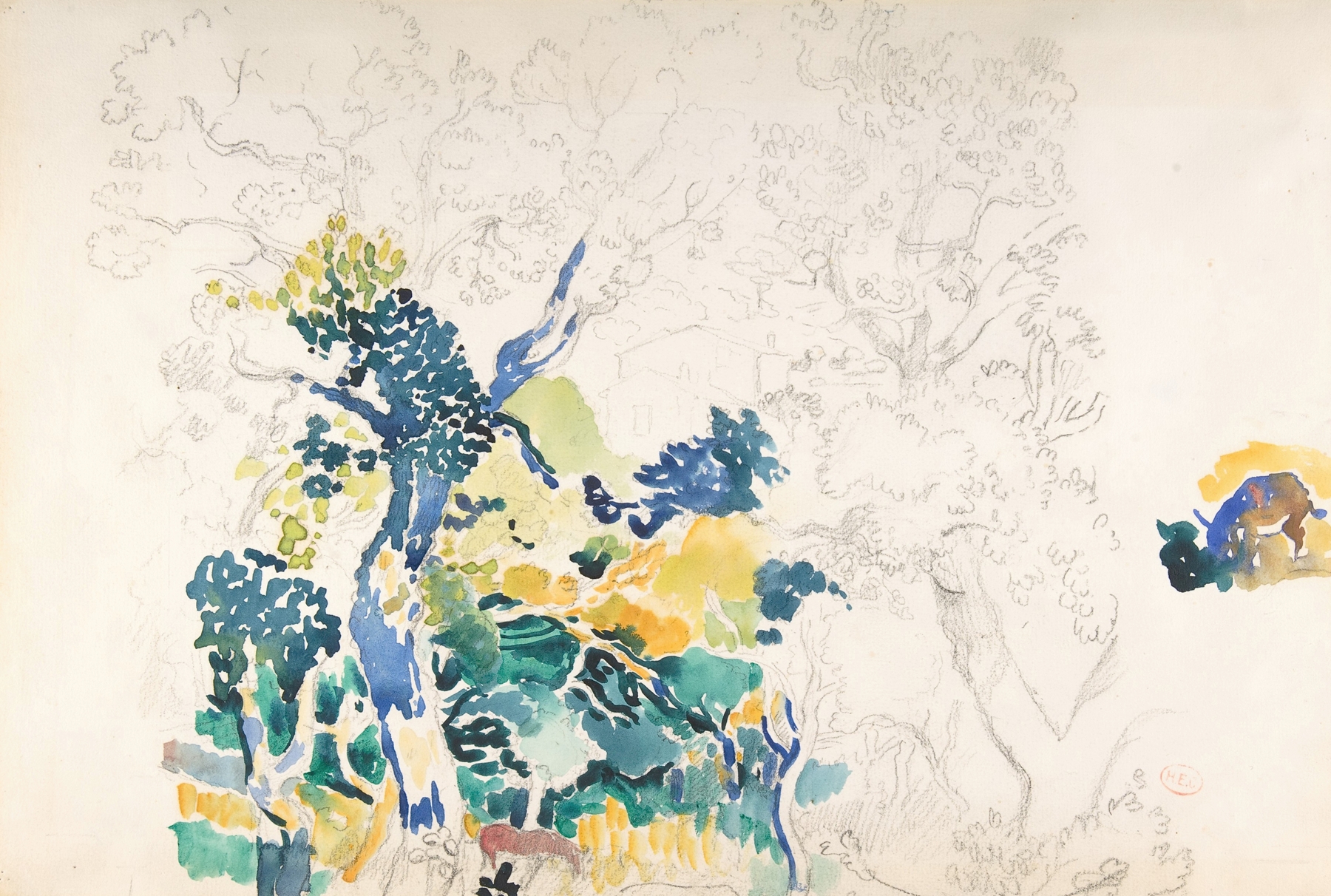
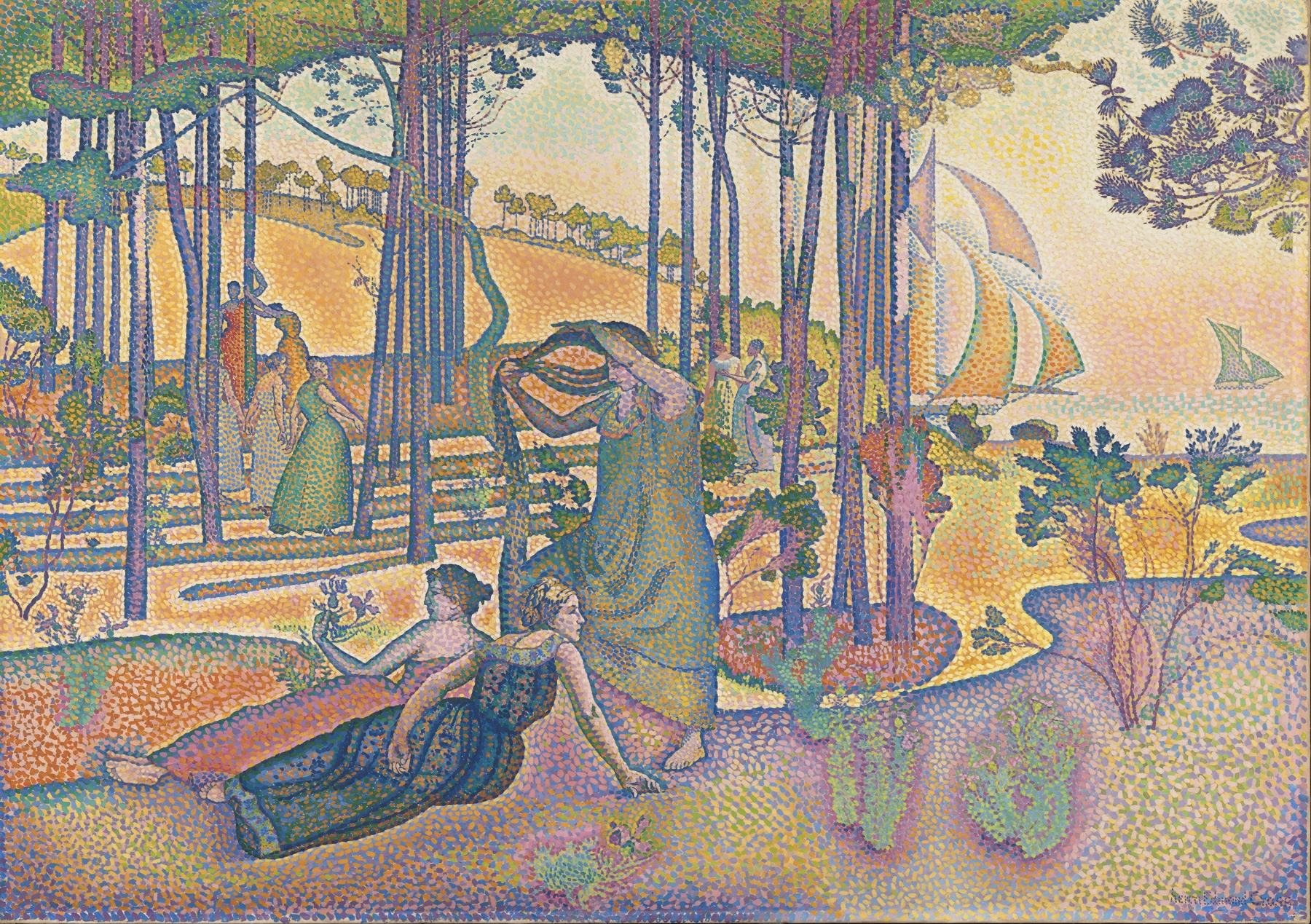
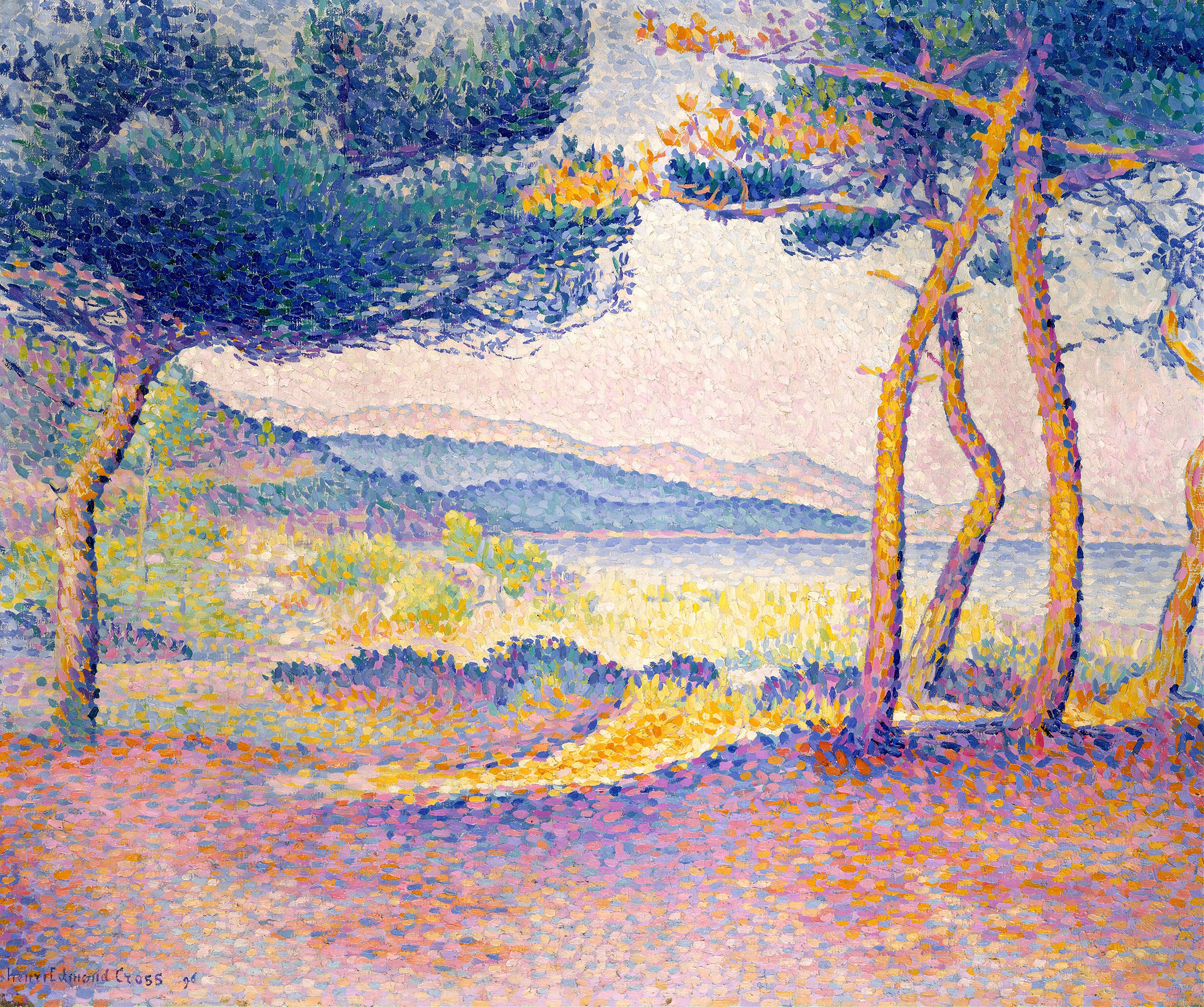
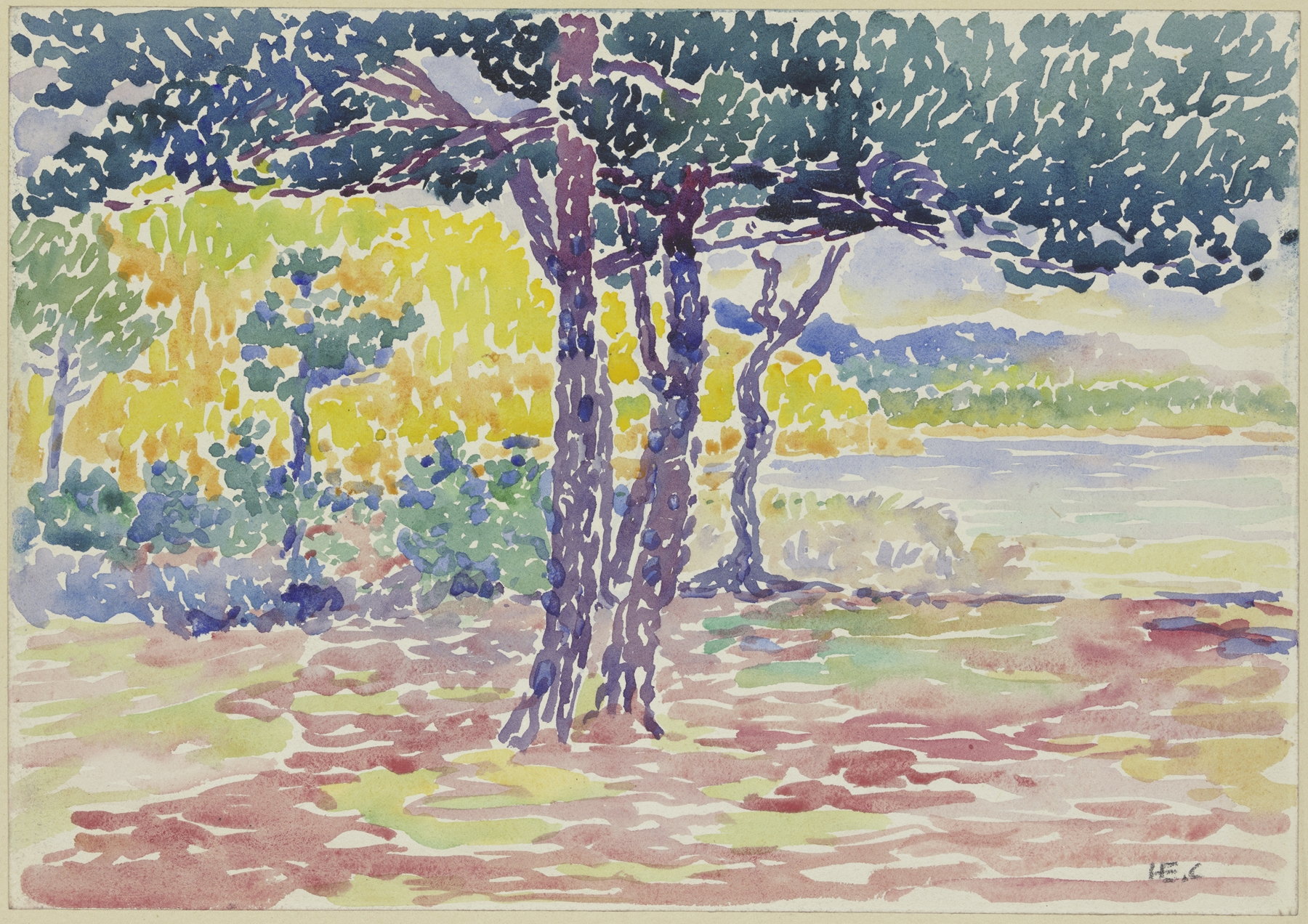
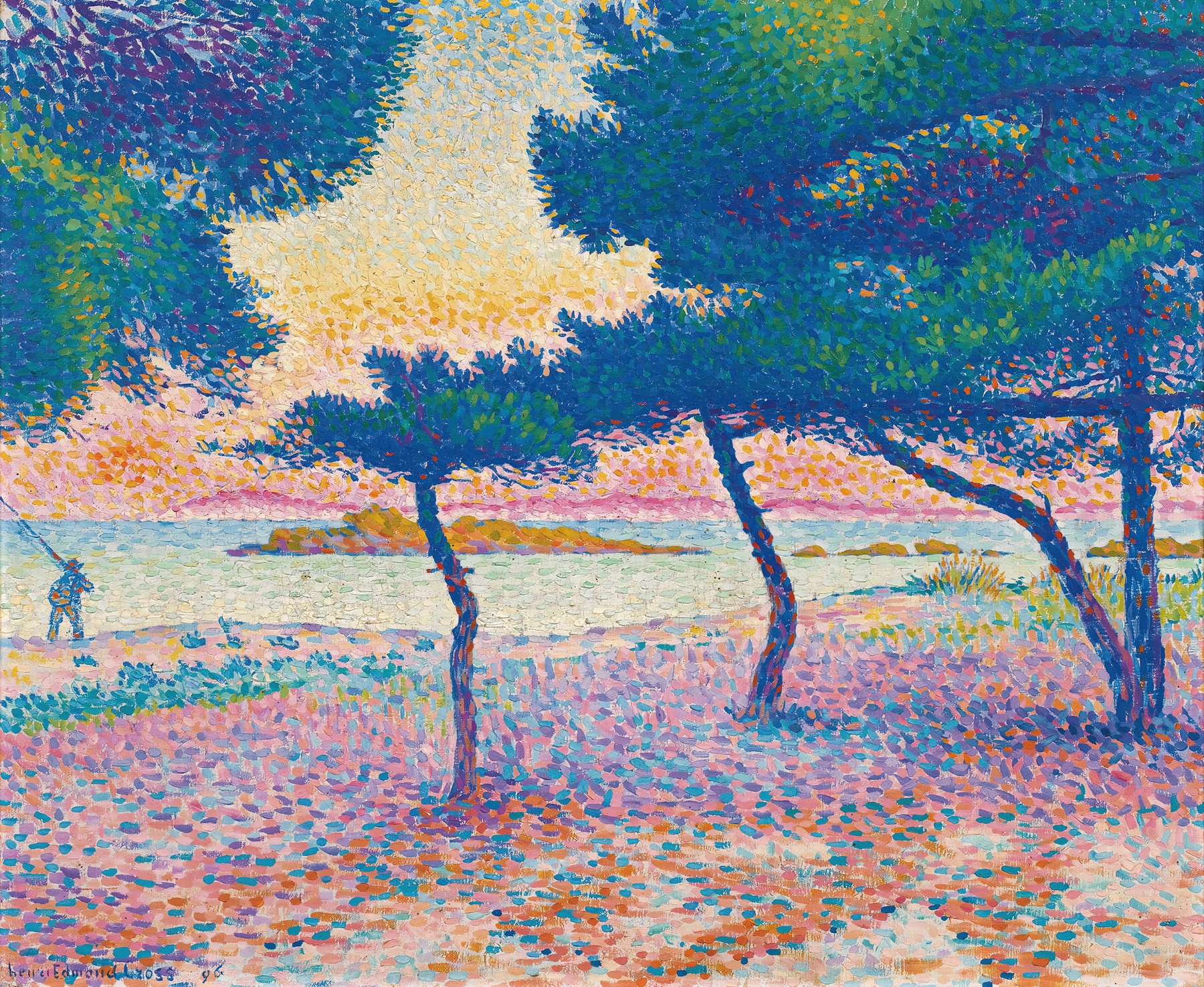
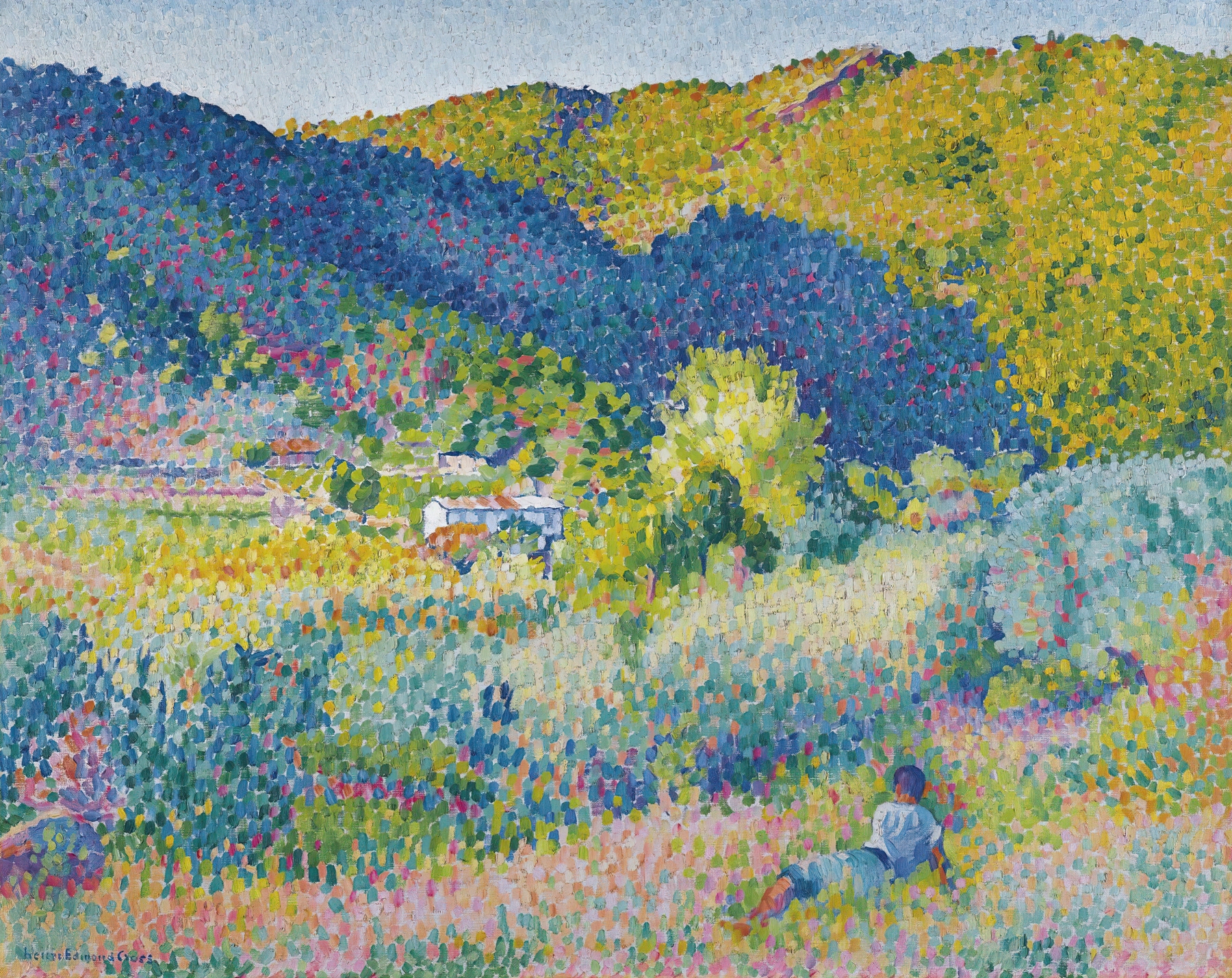
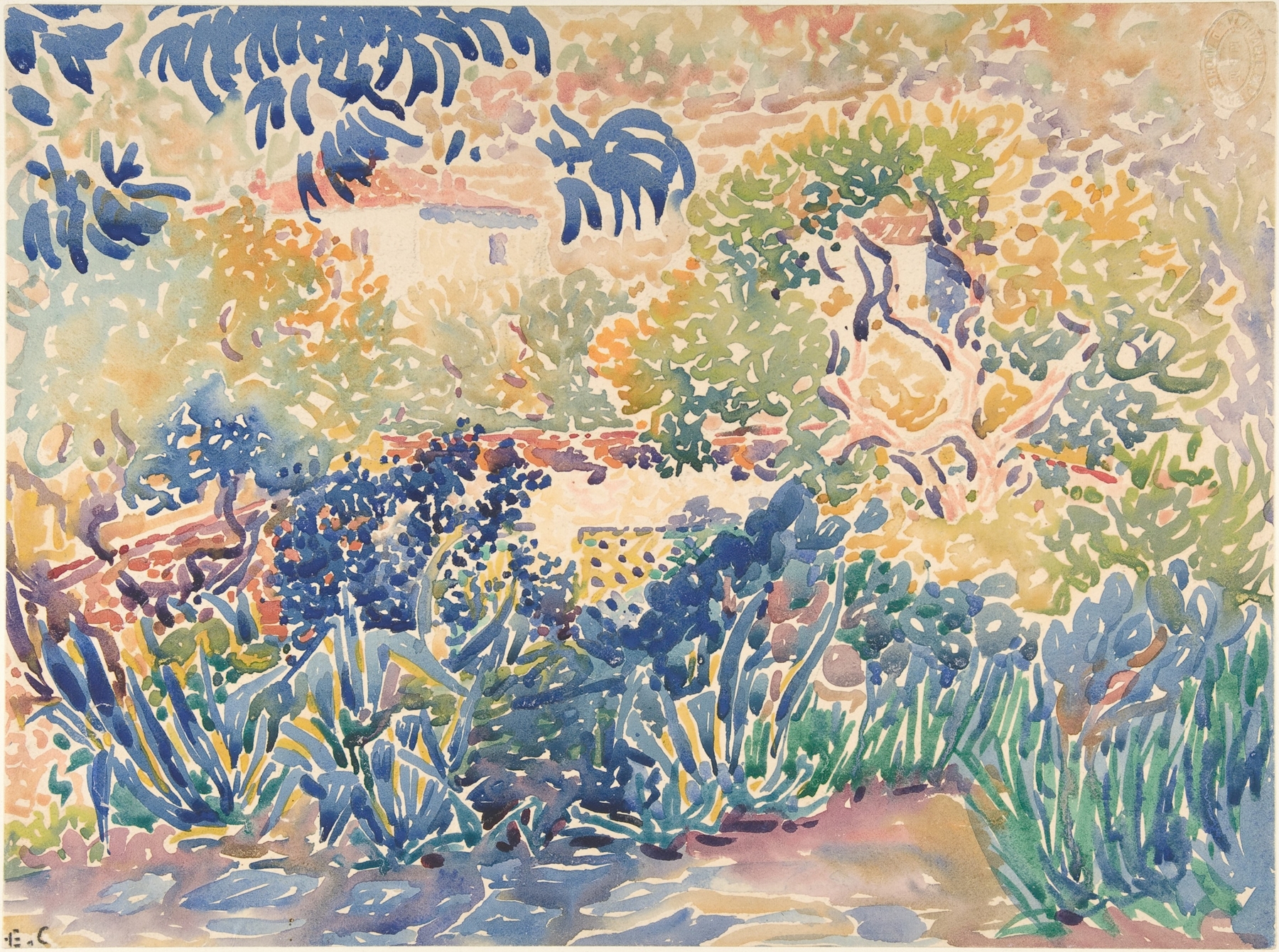
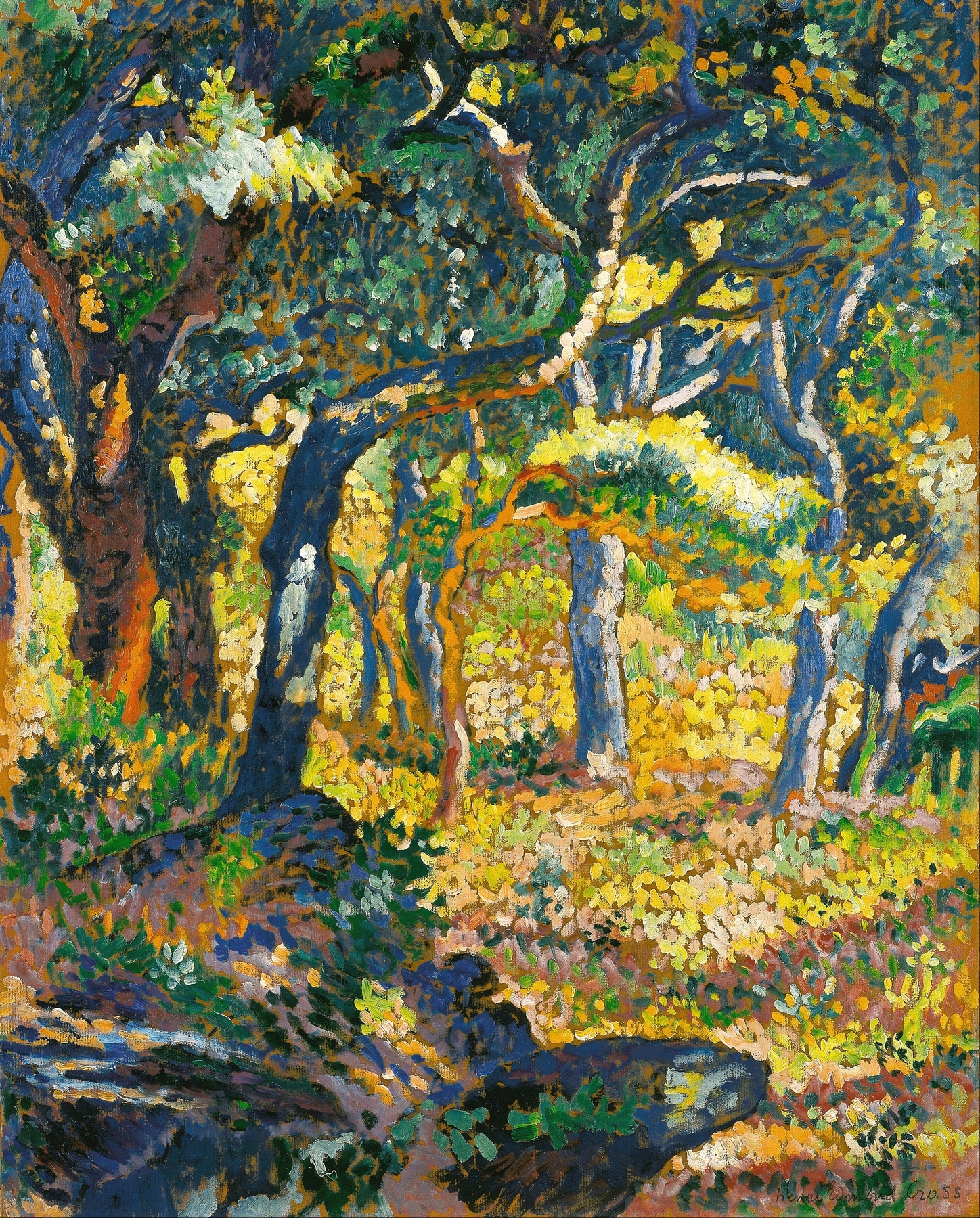
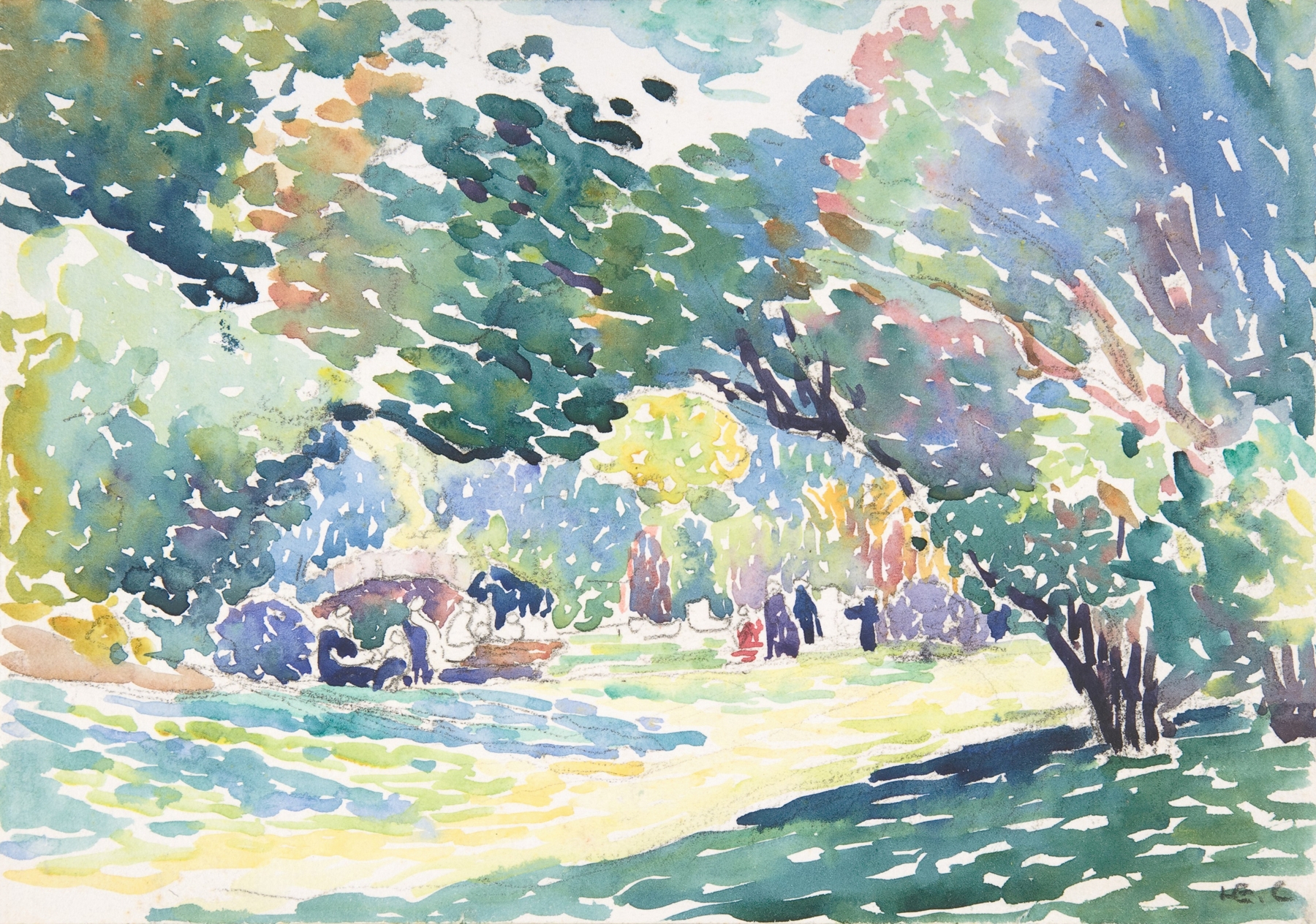
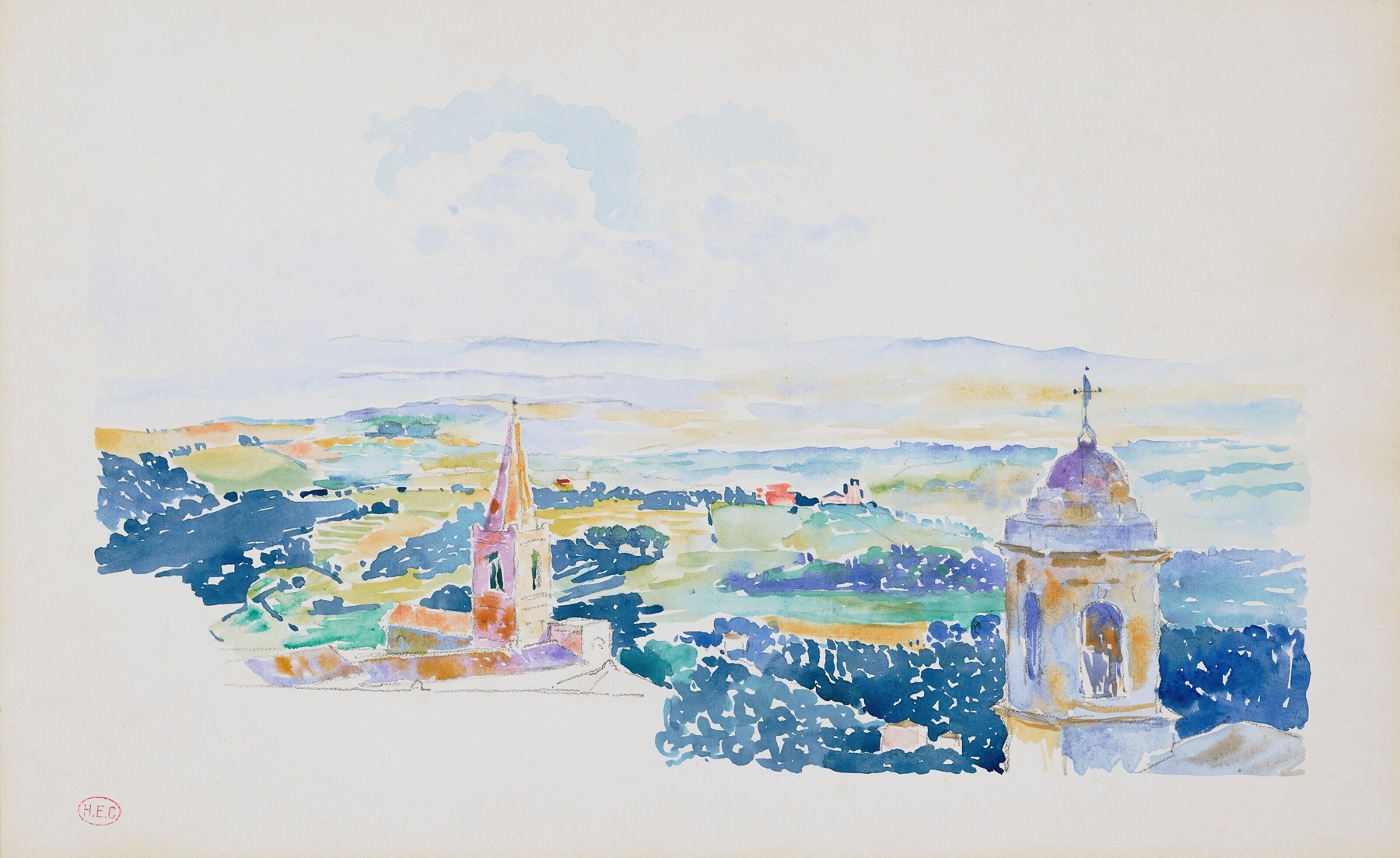
What secret hides in the quiet of the canvas? In Henri-Edmond Cross's Meeresbucht, the tranquil bay whispers truths of light, color, and solitude, inviting us to explore the depths beyond its surface. Look to the right at the gentle curve of the shoreline, where soft greens and blues merge seamlessly with the horizon. The interplay of light dances upon the water, creating a shimmering pathway that draws your gaze toward the horizon. Notice how the dappled sunlight filters through the trees, casting delicate shadows that envelop the scene in a serene embrace.
The brushstrokes, fluid yet purposeful, evoke a sense of movement, linking the viewer intimately to the landscape. Beneath this serene facade lies a tension between nature's beauty and the solitude it can inspire. The solitary sailboat on the calm waters suggests a journey, perhaps representing a quest for truth or self-discovery. The contrast between the vibrant colors of the foliage and the muted tones of the water hints at the complexity of emotions—between joy and melancholy, presence and absence.
Each detail resonates with a deeper meaning, urging the viewer to contemplate the nuances of their own experiences within such landscapes. Cross created Meeresbucht in the early 20th century while residing in southern France, a period marked by his exploration of neo-impressionism. This was a time when he sought to convey the harmony of light and color, stepping away from traditional forms to embrace a more expressive palette. The work reflects both his personal evolution as an artist and the broader shifts occurring in the art world, where color became a primary vehicle for emotional expression.