Monnik en de Dood — History & Analysis
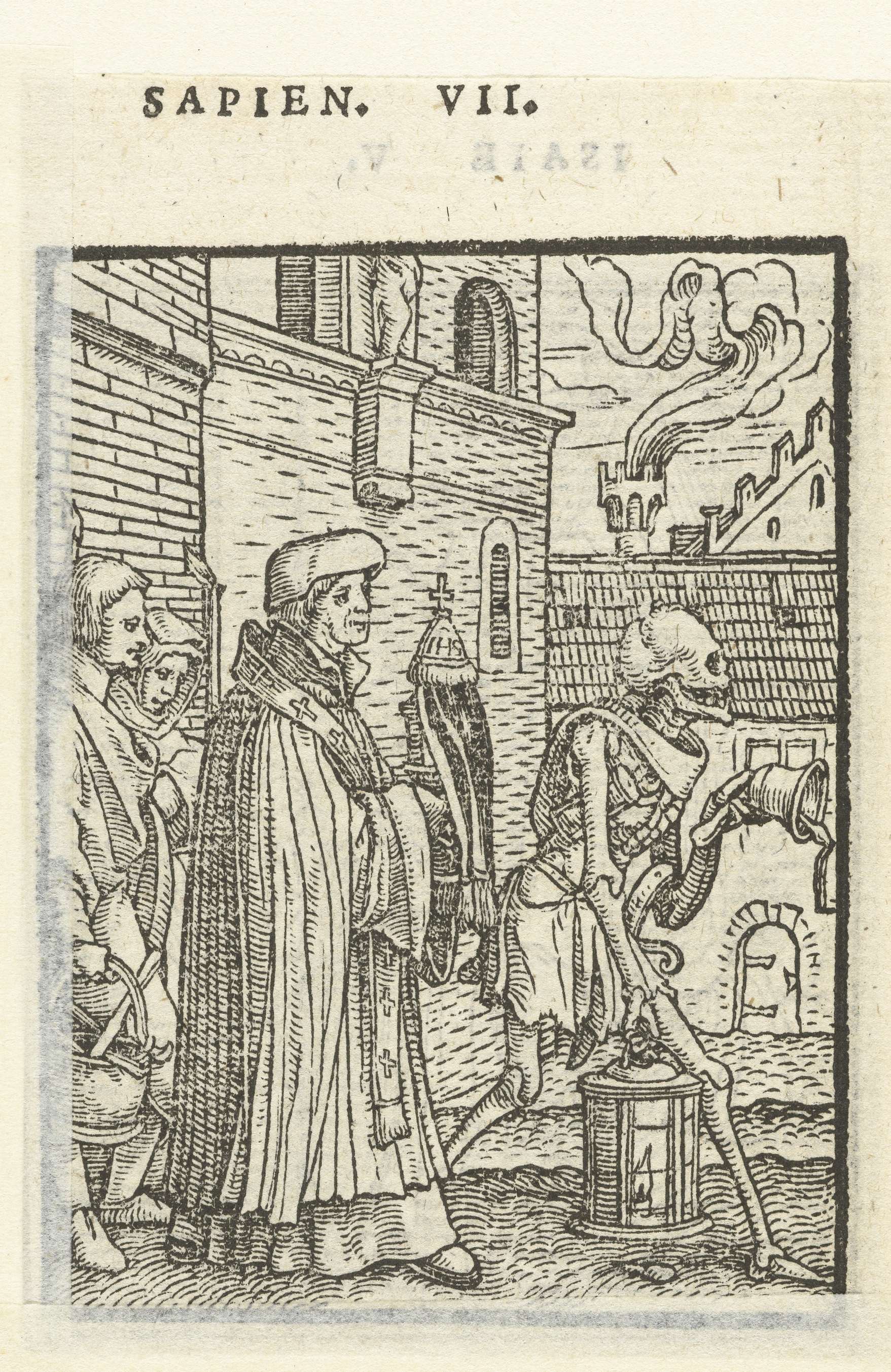
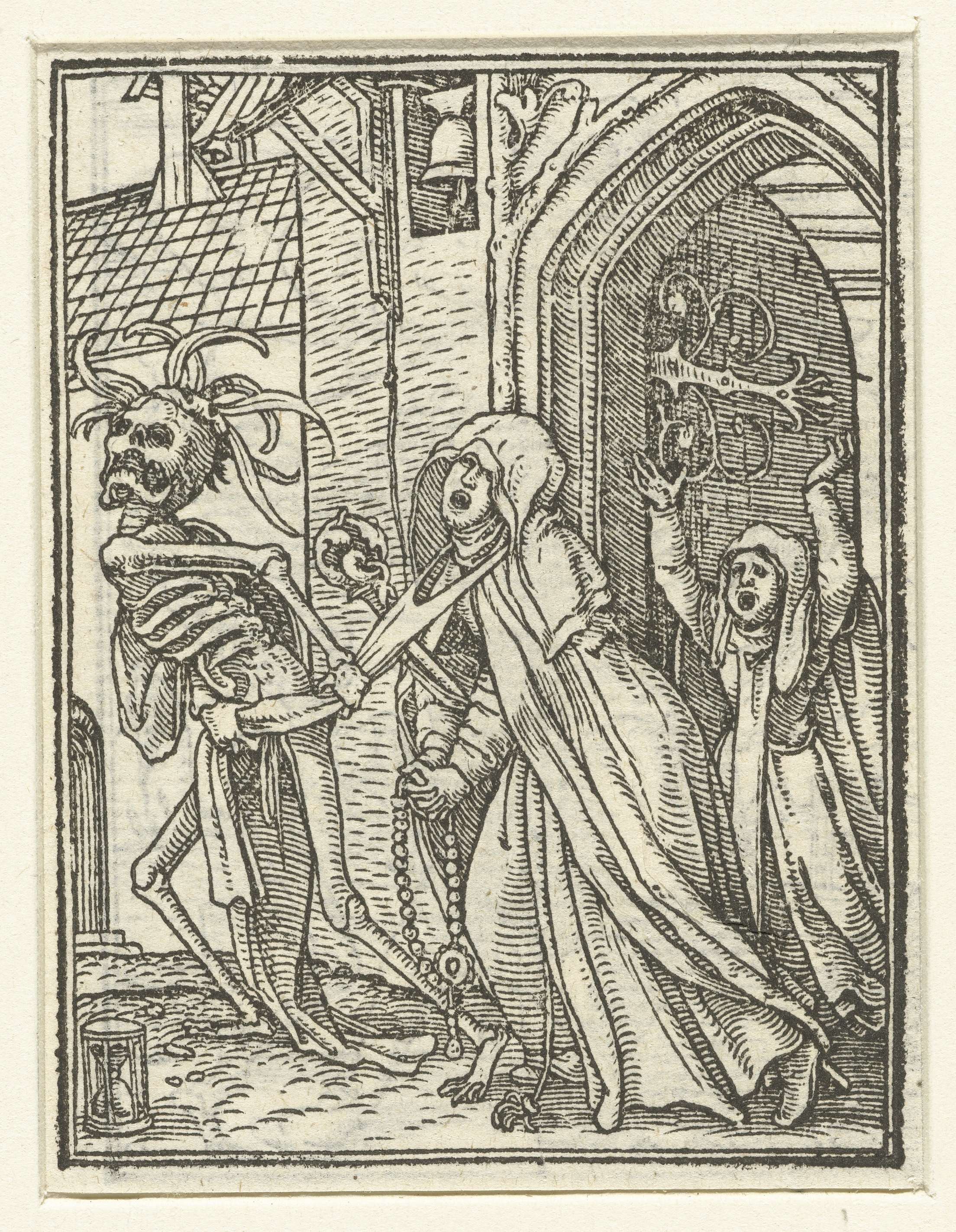
“Art reveals the soul when the world turns away.” In the silence of mortality, we encounter the raw weight of grief, a theme that transcends time and resonates deeply within the human experience. Look closely at the central figure, the monk, whose face is a canvas of contemplation and fear. Notice how the folds of his robe, rendered in somber, muted tones, seem to envelop him like a shroud, while the darkened background amplifies his isolation. The stark contrast between the monk's pale skin and the depths of shadow around him draws the eye, creating an immediate sense of tension.
Just beyond him, the looming figure of Death hovers, rendered in skeletal detail, a spectral presence that cannot be overlooked. This work is imbued with rich symbolism—the hourglass at the monk's side symbolizes the fleeting nature of time, while the fading light subtly suggests the inevitability of his fate. Holbein masterfully contrasts the monk's earthly concerns with the grim reality represented by Death, evoking a profound sense of existential dread. The juxtaposition of life and mortality echoes a universal truth, revealing not only the monk's inner turmoil but also reflecting our own encounters with loss and reflection.
Hans Holbein the Younger created Monnik en de Dood in 1538, during a period marked by religious upheaval and the spread of humanist thought. Living in Basel at the time, he found himself at the intersection of art and philosophy, engaging with themes of mortality amid shifting societal structures. His work sought to confront viewers with their own mortality, making this painting both a personal meditation and a broader commentary on human existence.