Mountainous Landscape with the Ruins of a Castle — History & Analysis
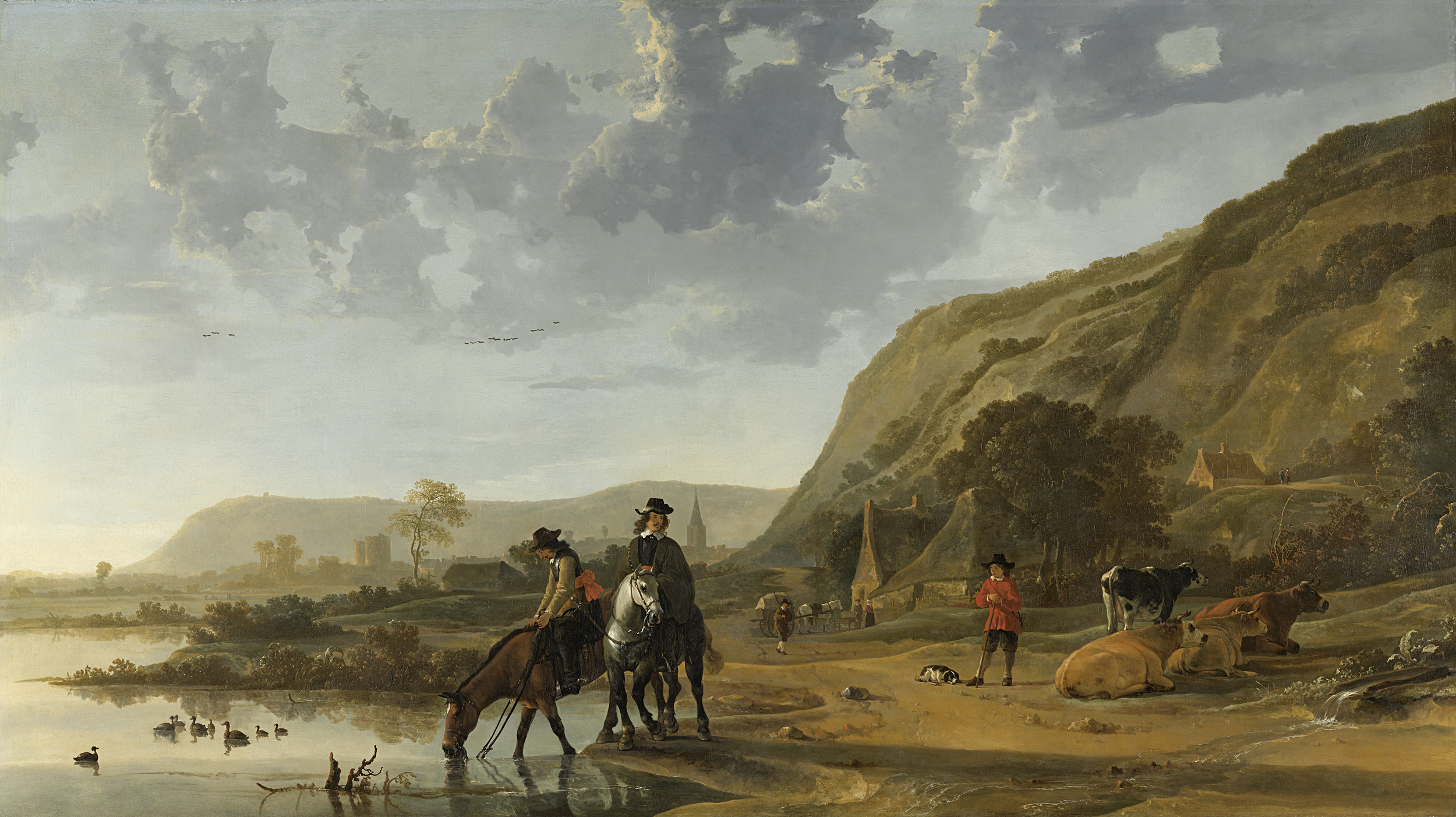
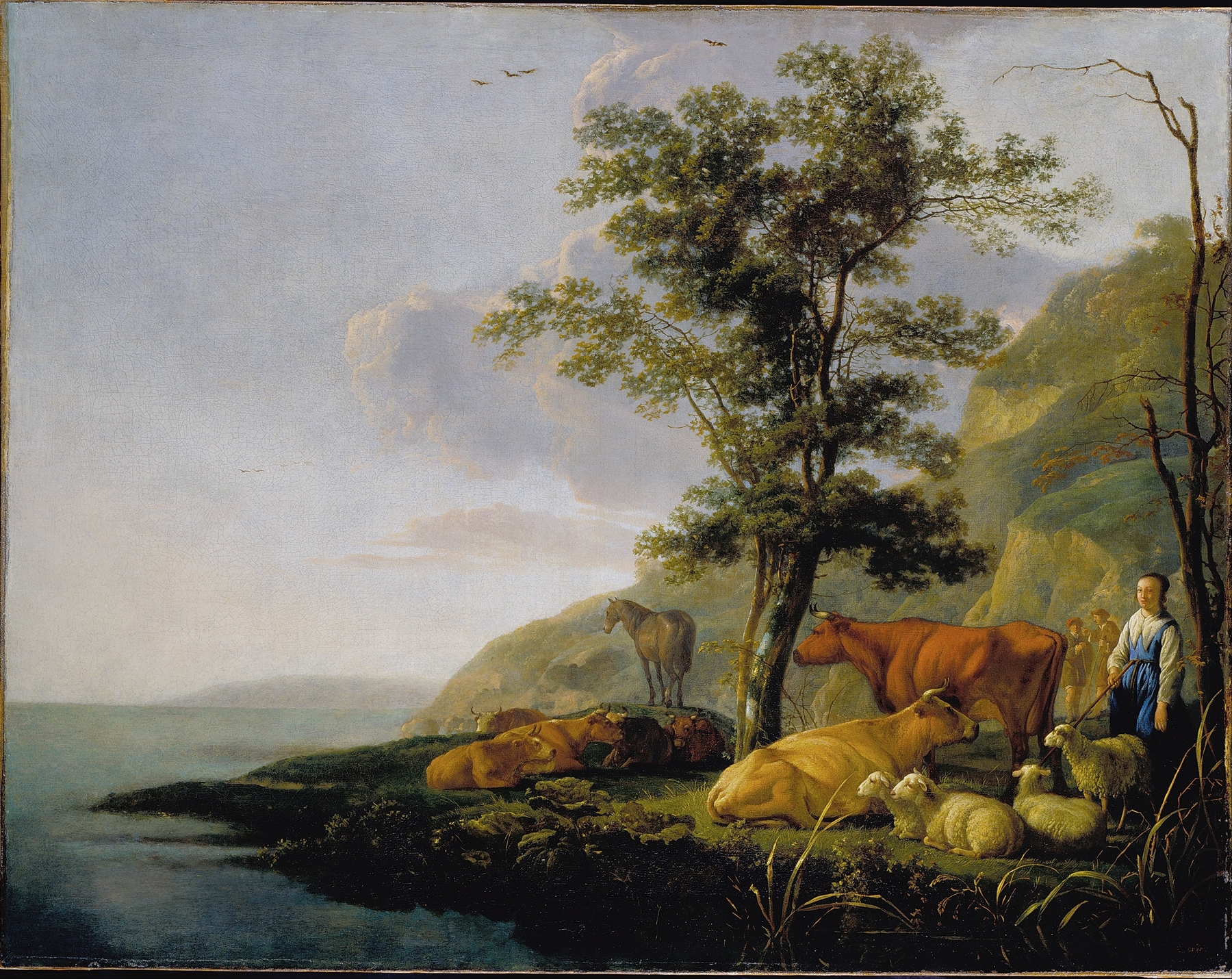
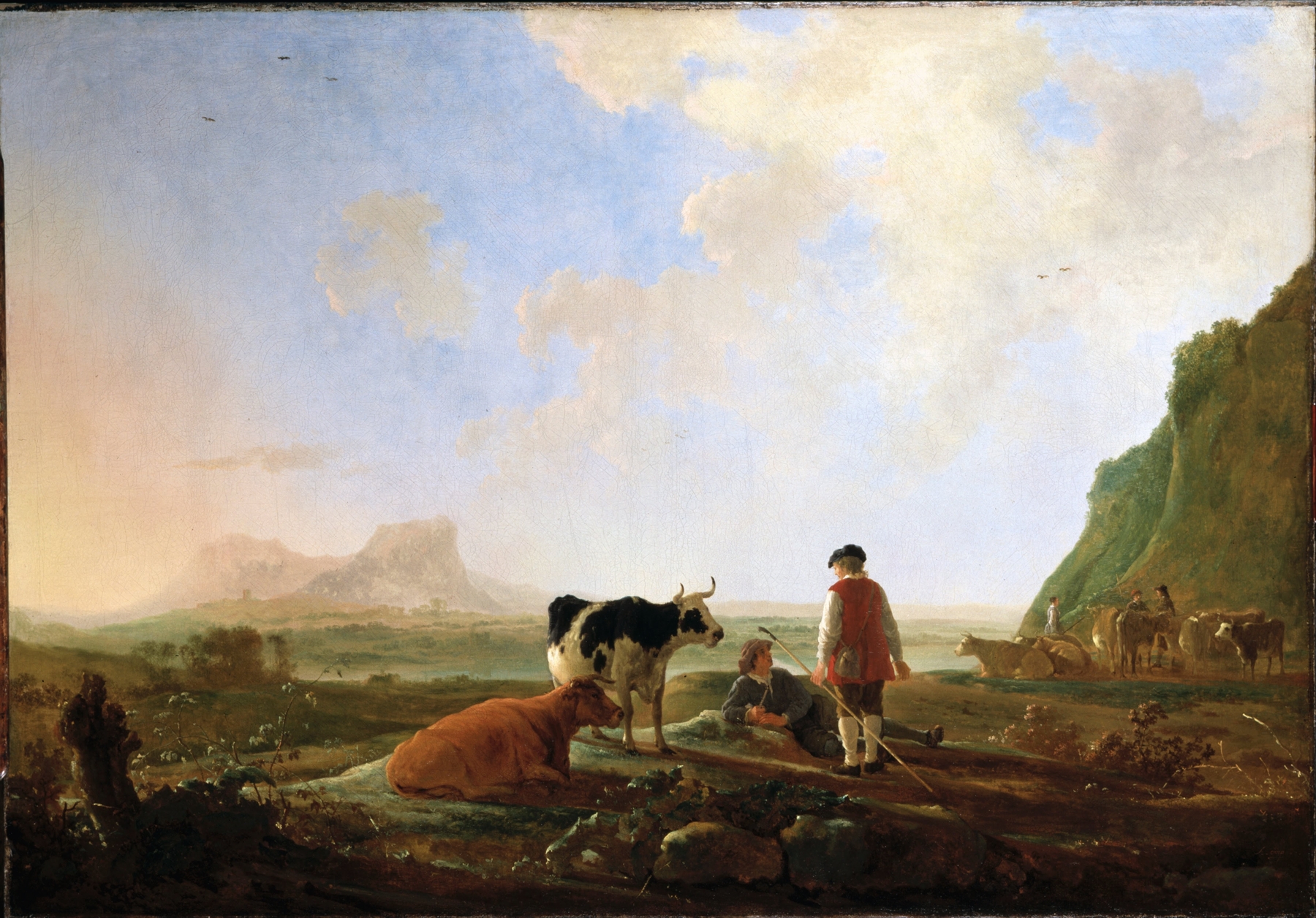
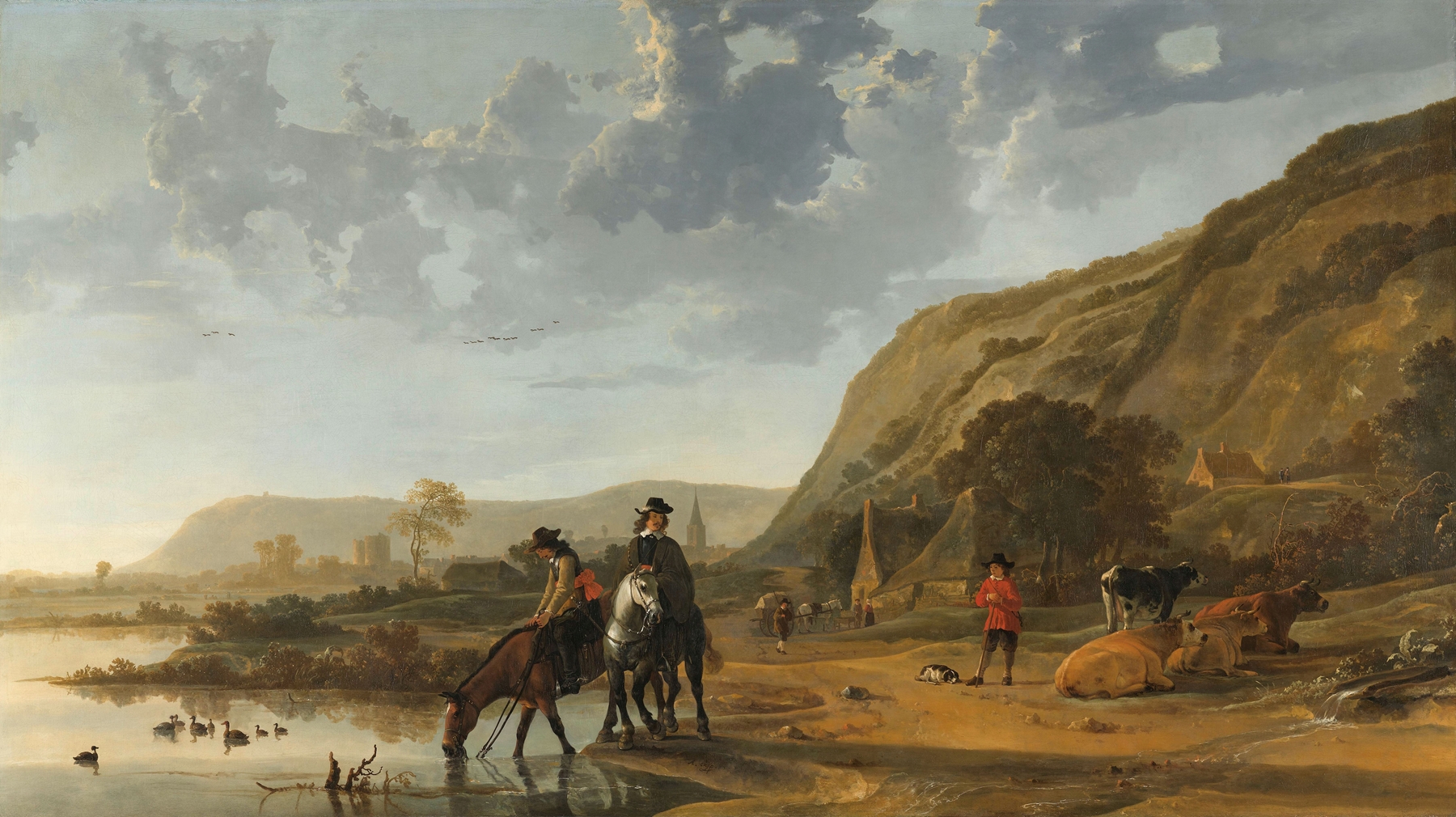
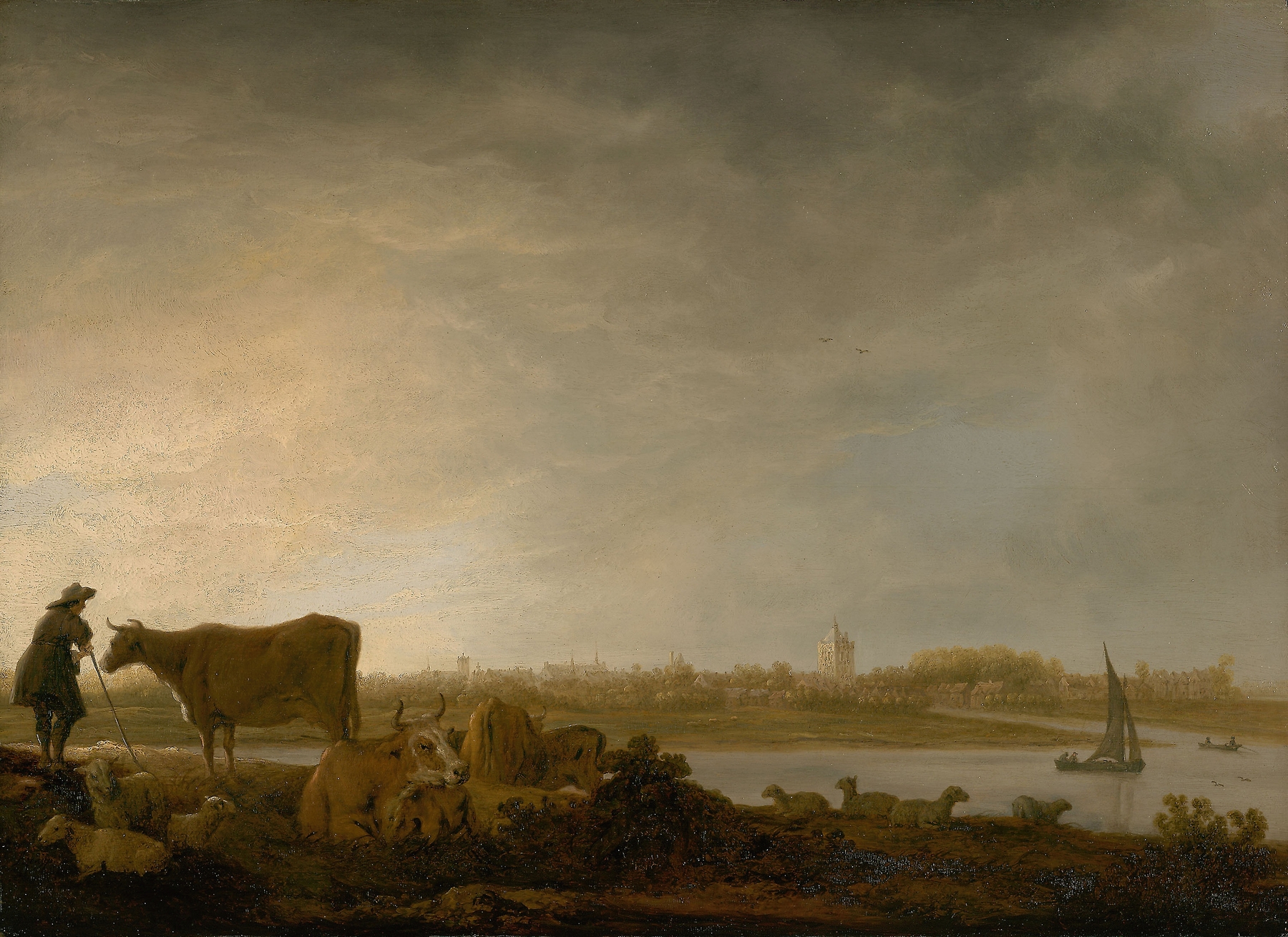
What secret hides in the quiet of the canvas? Aelbert Cuyp's Mountainous Landscape with the Ruins of a Castle invites the viewer to explore the delicate interplay between stillness and movement in a world where nature and humanity intertwine seamlessly. Look to the left at the majestic mountains, their peaks cloaked in soft clouds, towering over the serene landscape below. The ruins of the castle stand resolute against the sweeping backdrop, their crumbling walls echoing a history that whispers in the wind.
Notice how the warm, golden light bathes the scene, illuminating the verdant fields and casting gentle shadows that dance across the ground, inviting the imagination to wander through the past. The composition balances the grandeur of nature with the relic of human endeavor, creating a harmonious dialogue between earth and sky. There is tension in the juxtaposition of the castle's decay against the vibrancy of the surrounding landscape, hinting at the passage of time and the impermanence of human ambition. The movement in the clouds suggests a fleeting moment, as if the scene is alive and in constant transformation, shifting with the rhythm of nature.
Cuyp’s use of color—earthy greens contrasting with the soft blues and warm yellows—evokes a sense of nostalgia, while the quiet presence of animals in the foreground adds a gentle pulse to the otherwise tranquil vista. During the years 1640 to 1650, the artist worked in his native Dordrecht, a time marked by a burgeoning interest in landscape painting across Europe. Cuyp, influenced by the natural beauty of his surroundings, sought to capture the essence of light and atmosphere through his brushwork. This period saw a shift towards a more emotional and expressive representation of landscapes, reflecting both personal sentiment and societal change, and Mountainous Landscape with the Ruins of a Castle stands as a testament to this artistic evolution.