Märkischer See — History & Analysis
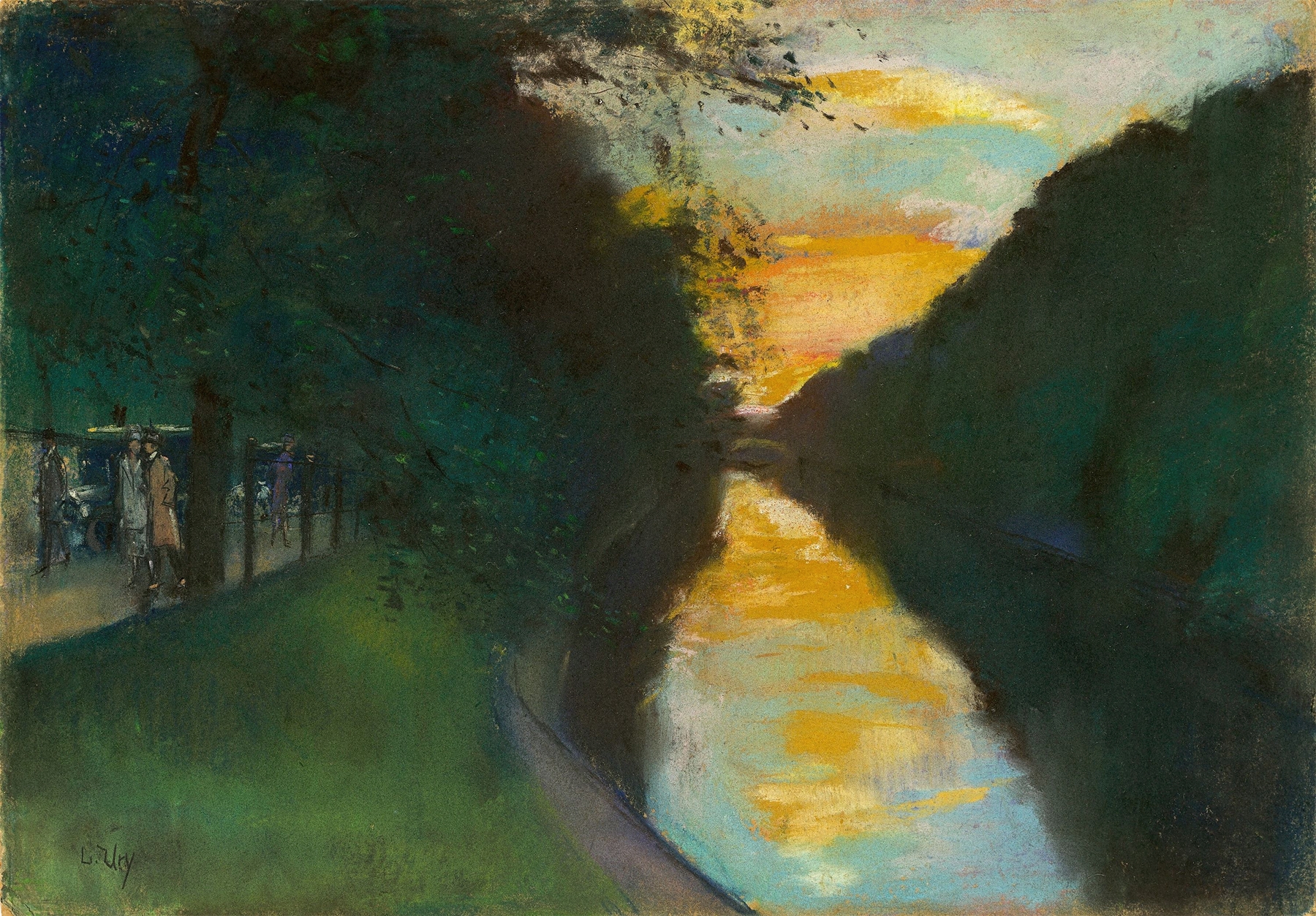
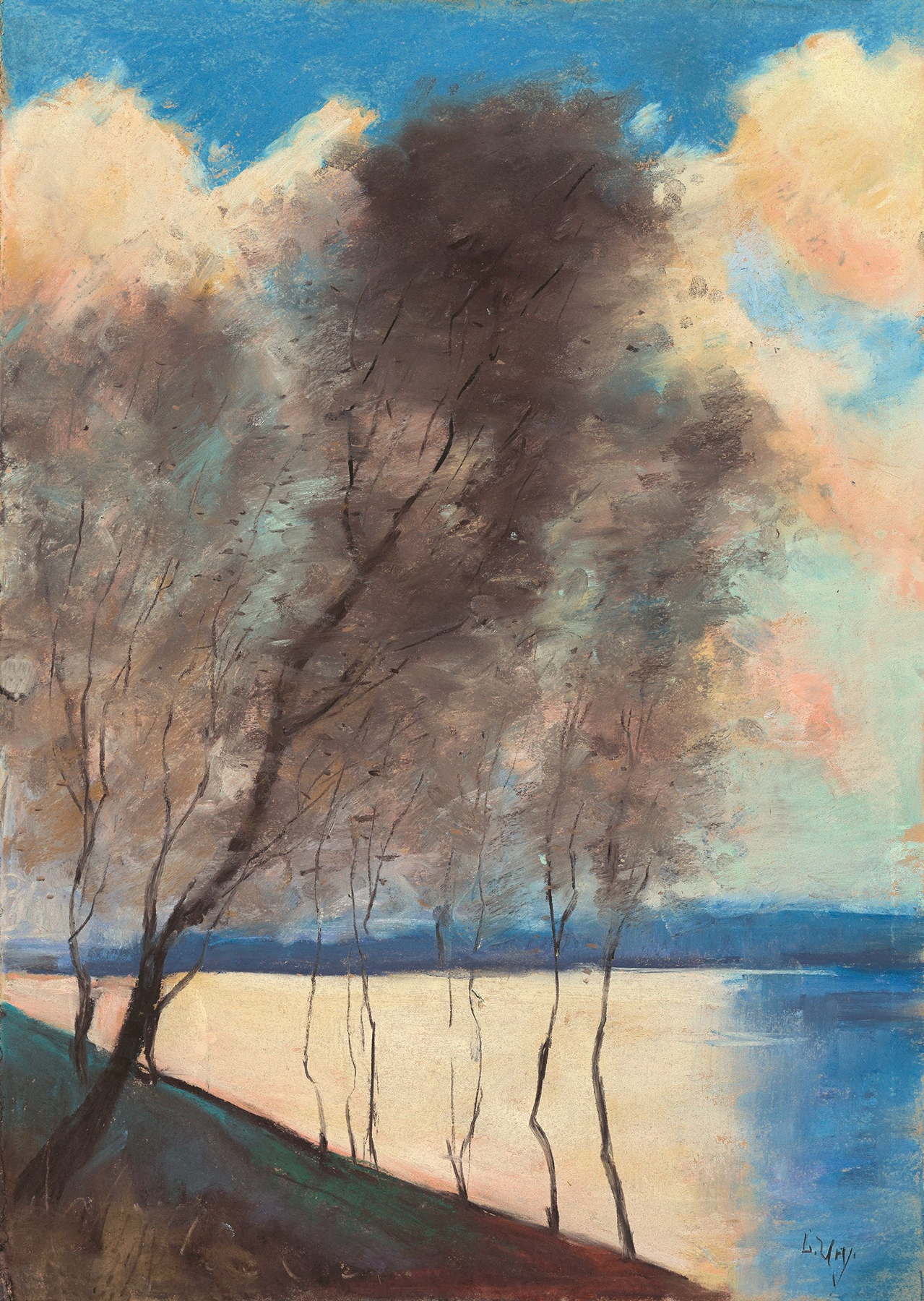
Can paint confess what words never could? In Märkischer See, a silent tension permeates the canvas, evoking an unspoken fear that lurks beneath the serenity of the surface. Look to the left, where a cluster of trees sways gently, their dark, tangled branches reaching out like anxious fingers. Focus on the still water reflecting the muted hues of twilight, a delicate blend of blues and grays that create a haunting atmosphere. The subtle brushstrokes convey movement, yet the scene remains eerily calm, capturing a moment suspended between tranquility and apprehension.
This juxtaposition is reinforced by the artist’s choice of a narrow, elongated format, drawing the viewer's gaze along the horizon, suggesting both isolation and introspection. The emotional weight in this piece lies in its contrasts. The serene landscape seems a facade, hiding the underlying dread of encroaching darkness. The fading light evokes a sense of fleeting time, prompting contemplation of what lies beyond the visible. One may sense an impending change, as if the natural world holds its breath, echoing an existential fear that resonates through the quiet ambiance.
The viewer feels drawn in, experiencing a silent conversation with their own anxieties. Lesser Ury painted Märkischer See between 1905 and 1910, a period marked by his exploration of expressive landscapes in Berlin. This era was pivotal for Ury, as he sought to convey deeper emotions through the interplay of light and color, moving away from mere representation. The looming shadows of impending world events infused his work with an awareness of fragility, reflecting the broader anxieties of a society on the brink of change.