Munich – English Garden — History & Analysis
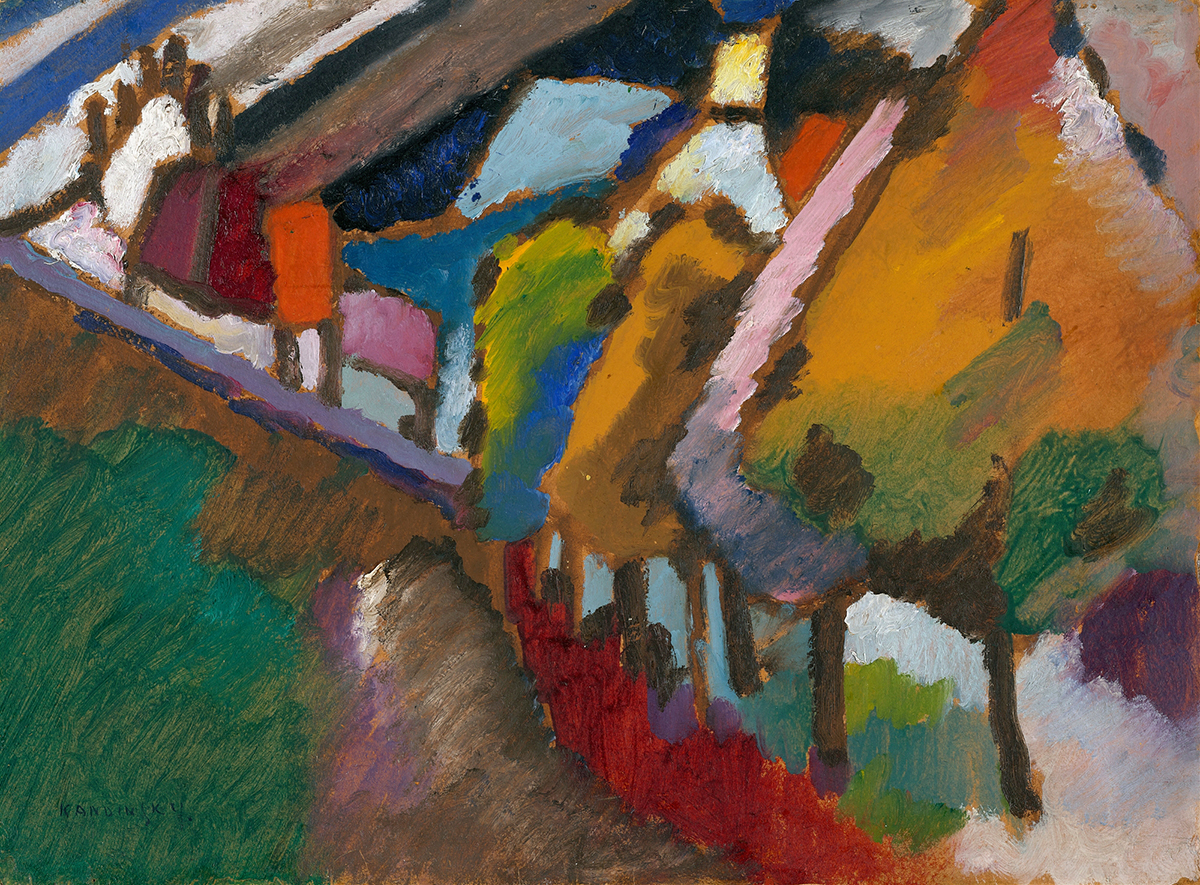
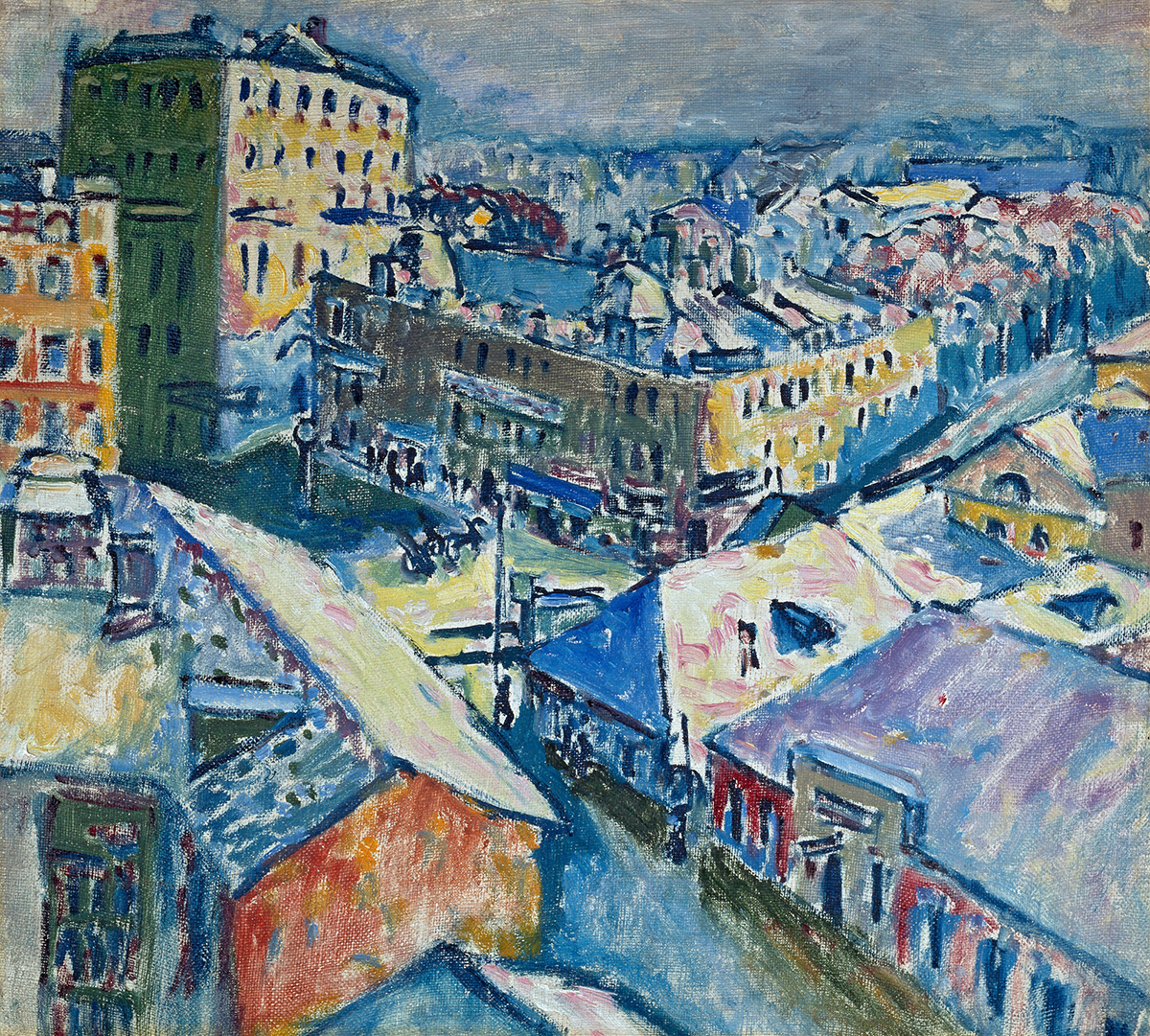
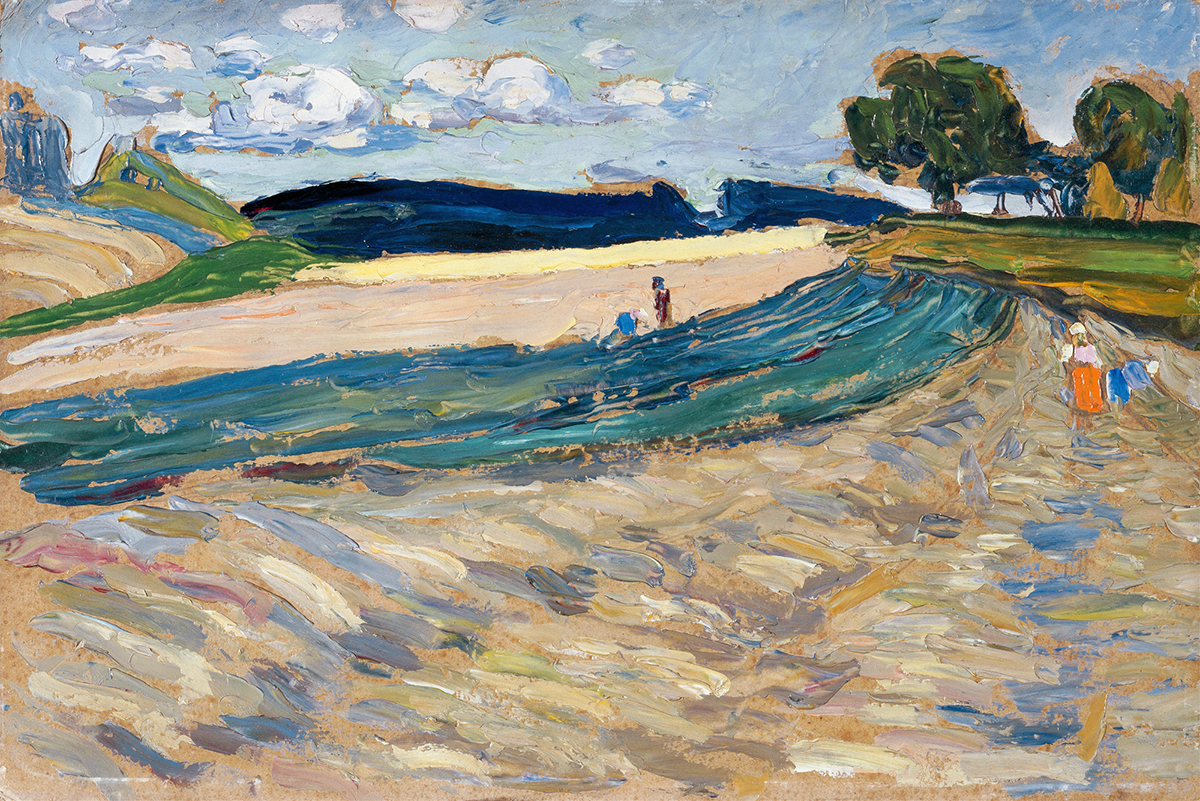
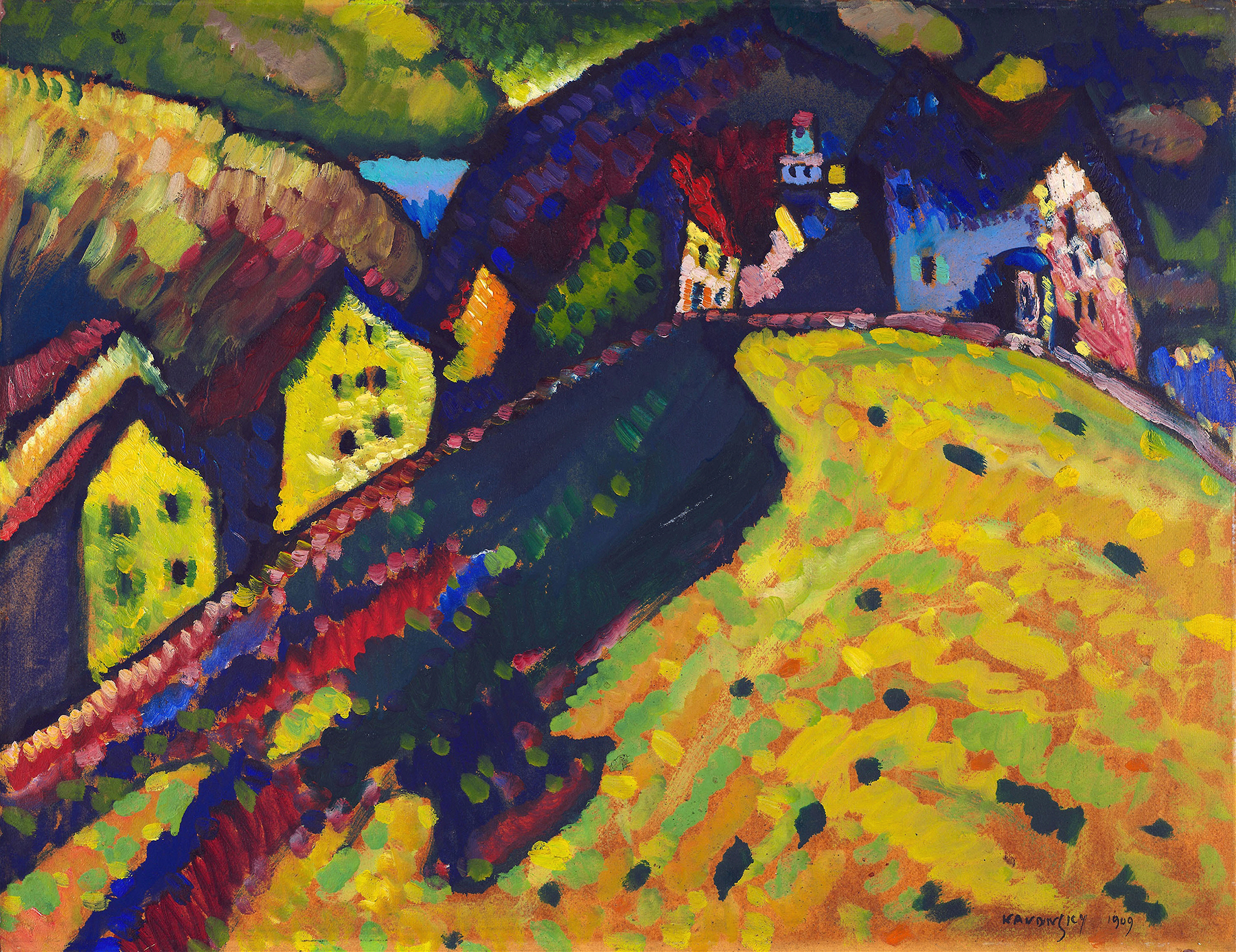
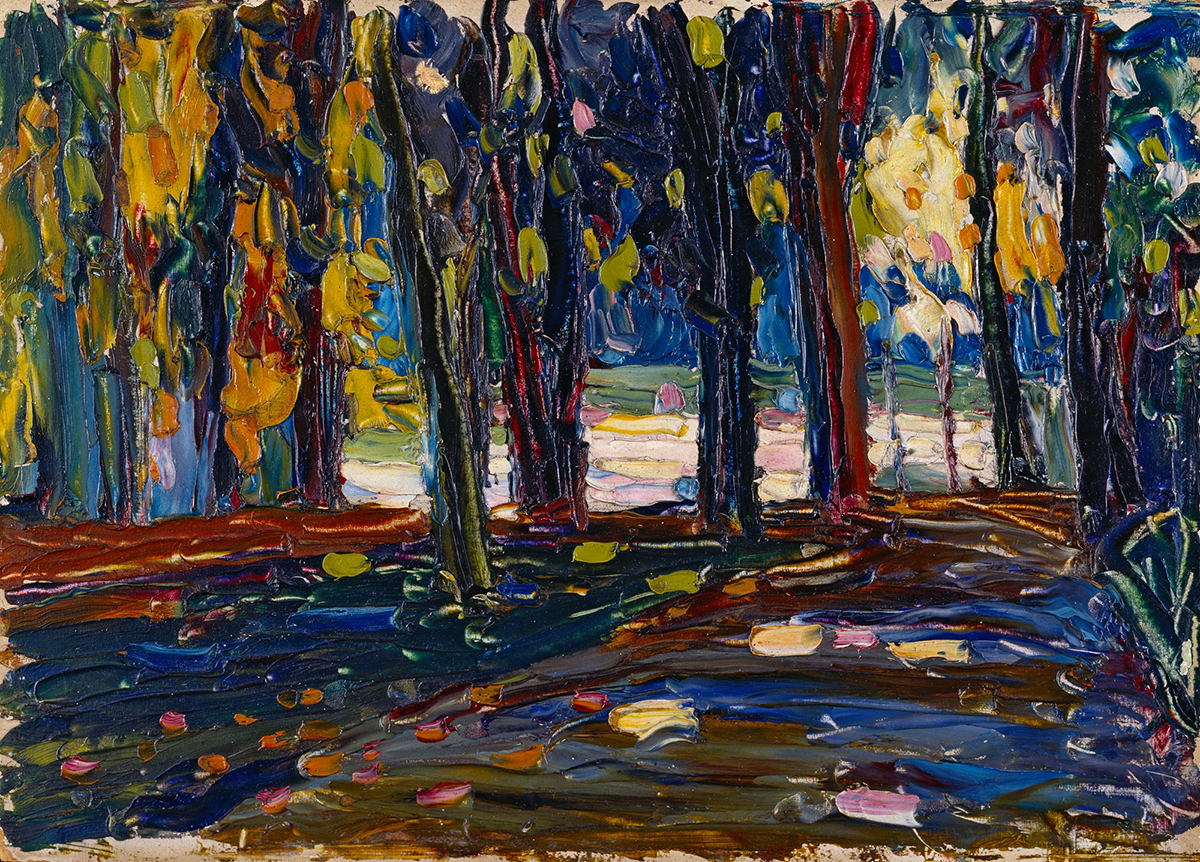
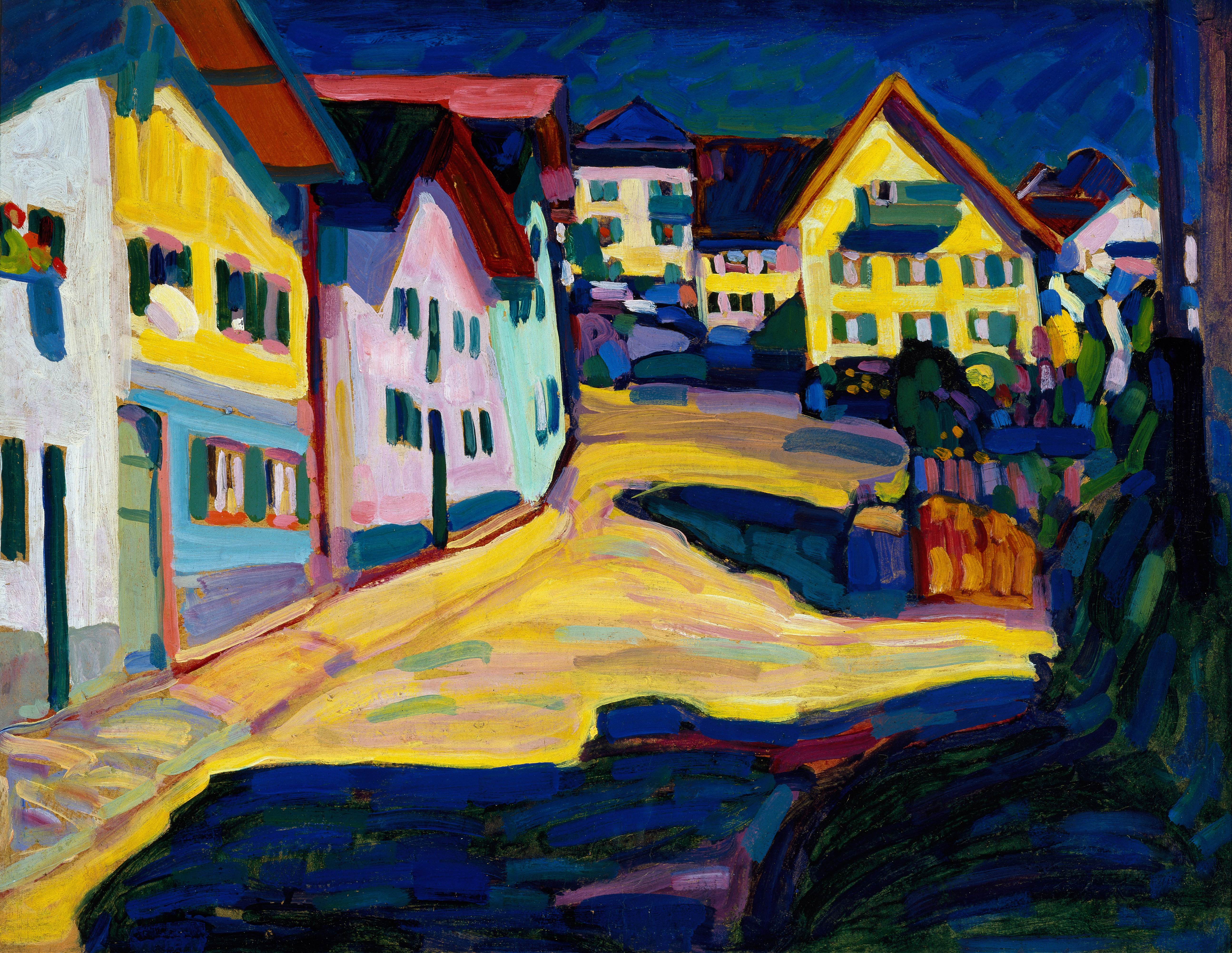
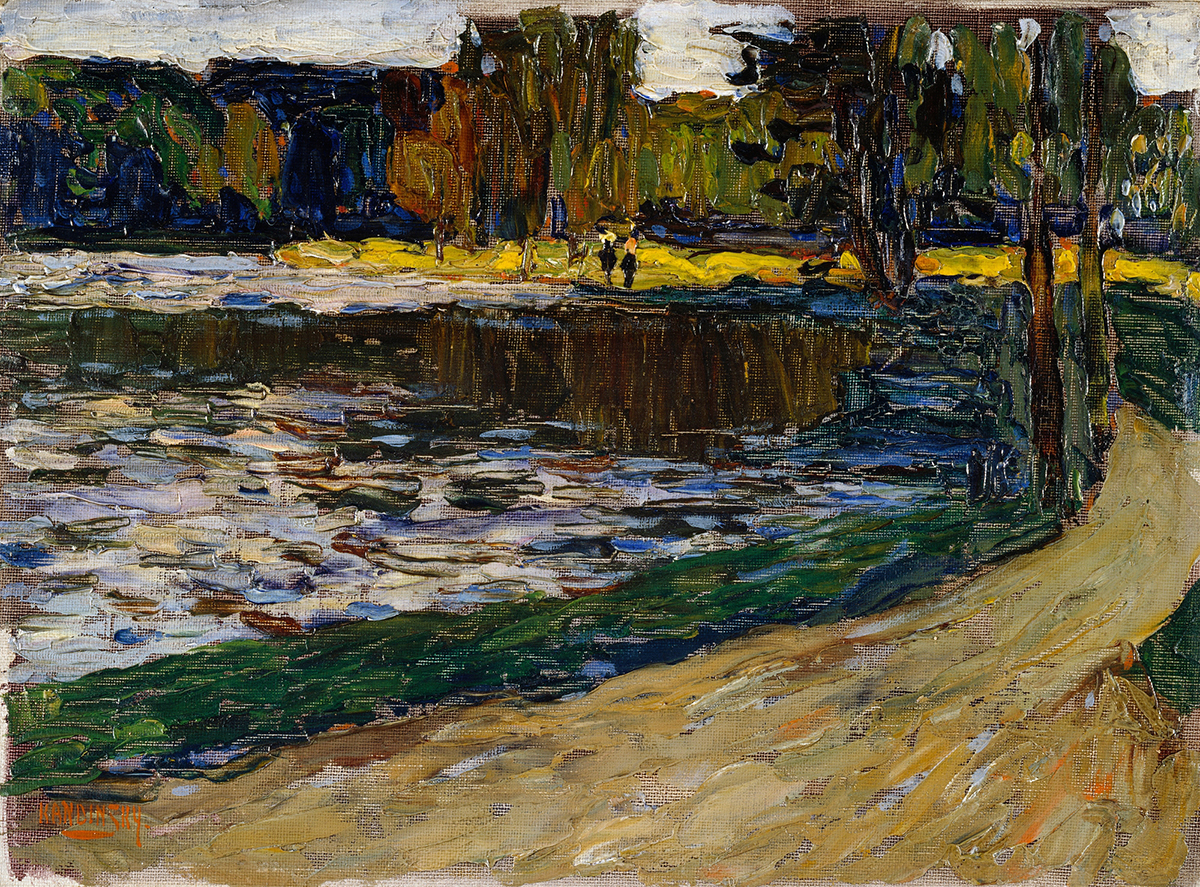
In the heart of a sun-drenched park, a cacophony of color swirls around picnickers and children playing, their laughter ringing beneath the canopy of vivid greens. A couple strolls leisurely, their hands brushing against one another, as vibrant brushstrokes echo the vitality of life and nature all around. Yet, beneath this vivacious façade, there lurks an unsettling tension—a stirring beneath the beauty that hints at an underlying violence, perhaps a reflection of the turmoil in the world beyond the garden's boundaries. Look to the right at the luminous greens and blues that envelop the figures, blending seamlessly with the sky above. Notice how Kandinsky's bold strokes create a dynamic rhythm that pulls the viewer's eye through the scene, guiding us from the jubilant couple to the distant trees that seem to sway uneasily.
The colors pulsate in a almost frenetic energy, creating a stark contrast between the idyllic setting and the hidden chaos within. The composition invites contemplation—what lies beneath this apparent harmony? Upon closer inspection, one can discern the undercurrents of unrest woven into the tapestry of the painting. There’s a disquieting juxtaposition between the joyful scenes of leisure and the tumultuous backdrop of the world outside—a reflection of the artist’s own emotional landscape.
The swirling forms might suggest the tension of human experience, with beauty often coexisting with the specter of violence, hinting at the fragility of peace in a rapidly changing society. In 1901, while living in Munich—an epicenter of artistic thought—Kandinsky was on the cusp of embracing abstraction. The turn of the century was fraught with social and political upheaval, as traditional structures seemed to be breaking down under the weight of modernity. This was a pivotal moment, not only in his own artistic journey but also in the landscape of art, as movements began to shift towards expressions that transcended mere representation, setting the stage for a revolution in visual language.