Oostzijdse Mill along the River Gein by Moonlight — History & Analysis
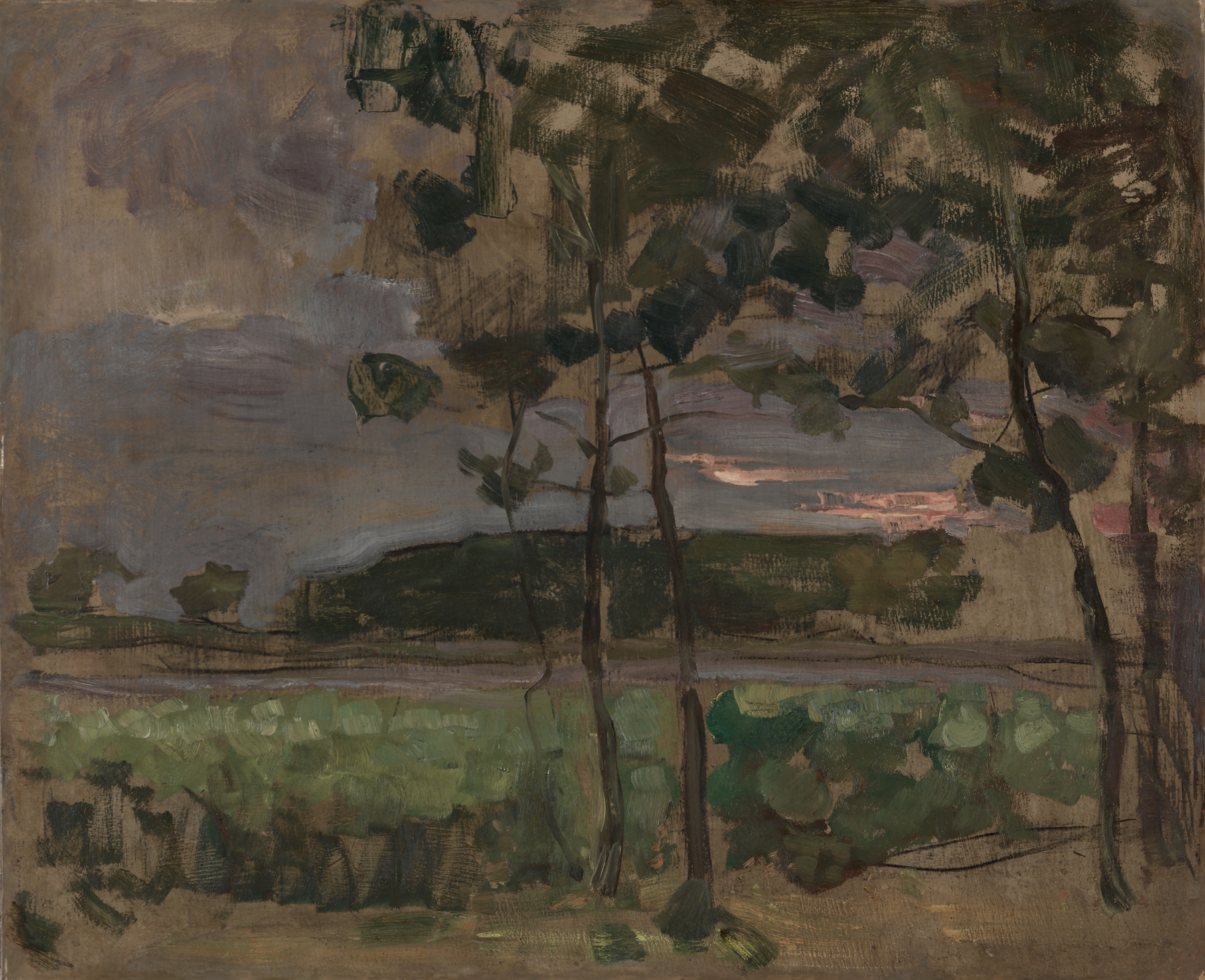
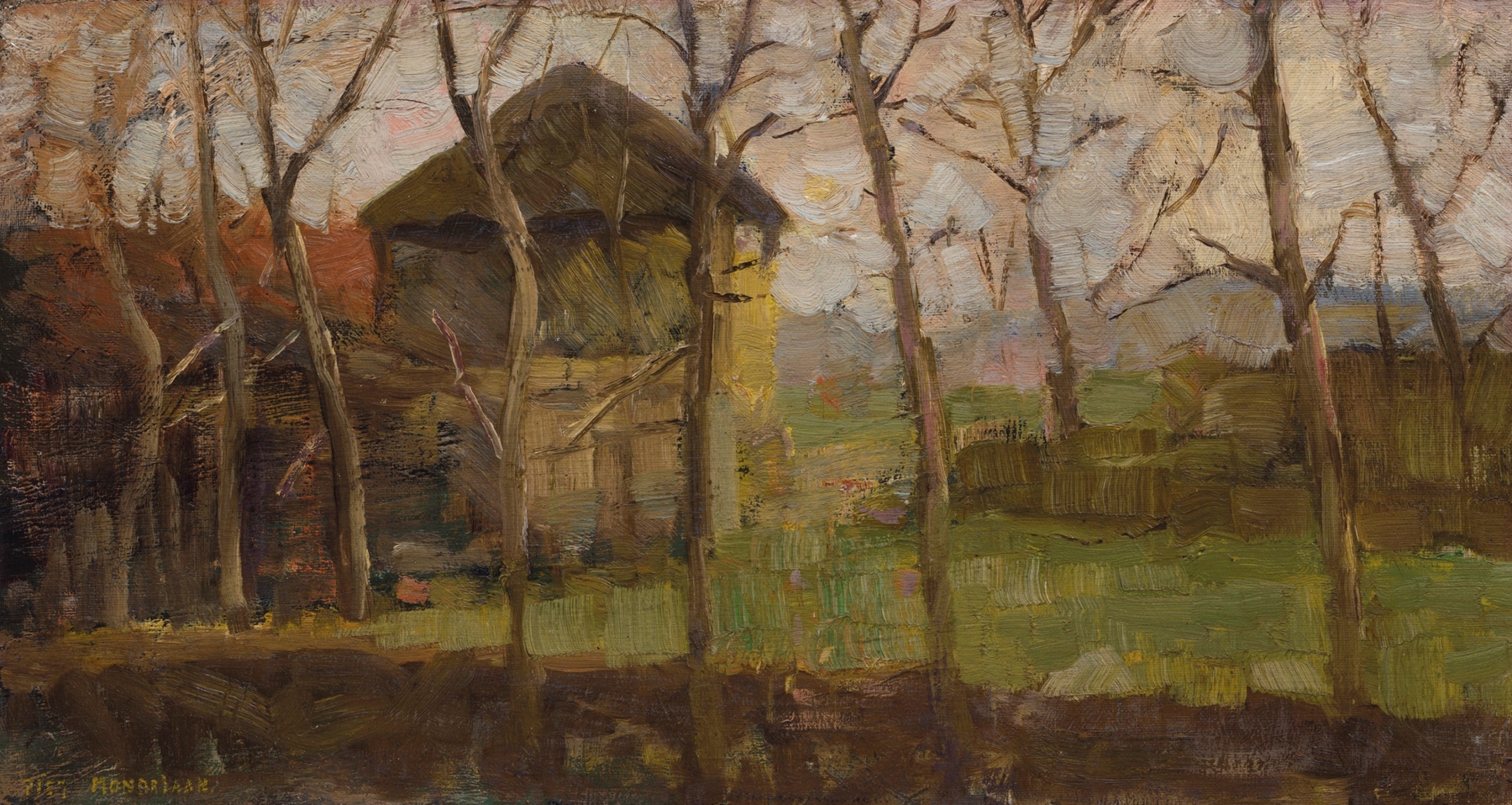
“Art reveals the soul when the world turns away.” In a realm where silence cloaks the night, the beauty of grief emerges; a fleeting moment captured in the stillness of time. Focus on the gently rippling water, where moonlight dances like whispers upon its surface. The mill, standing resolute at the edge, is painted with soft strokes that meld into the darkened sky, while the silhouettes of trees frame the scene. Notice how the luminous orb above casts an ethereal glow, illuminating the contours of the landscape, yet leaving the darkest corners untouched, evoking a sense of longing. Mondrian’s use of muted colors—a symphony of deep blues and subtle grays—creates an atmosphere suspended between calmness and melancholy.
Within this serene tableau lies a profound tension between tranquility and sorrow. The water reflects not just the moon, but the weight of unspoken emotions, hinting at loss. The mill represents stability amidst uncertainty, yet its solitary stance may suggest isolation. Each brushstroke tells a story, revealing layers of vulnerability woven into the fabric of the scene.
The interplay of light and shadow invites contemplation of what lies beneath the surface, much like grief itself—a multifaceted experience often hidden from view. Piet Mondrian painted this poignant piece around 1903 while living in the Netherlands, a time when he was still deeply rooted in naturalism. In a world poised on the brink of modern abstraction, he was exploring the interplay of light and color, seeking to express inner emotions through the external world. This work reflects his early journey, capturing not just a moment in time, but a glimpse into the soul’s quiet struggle with sorrow.