Passage du nil — History & Analysis
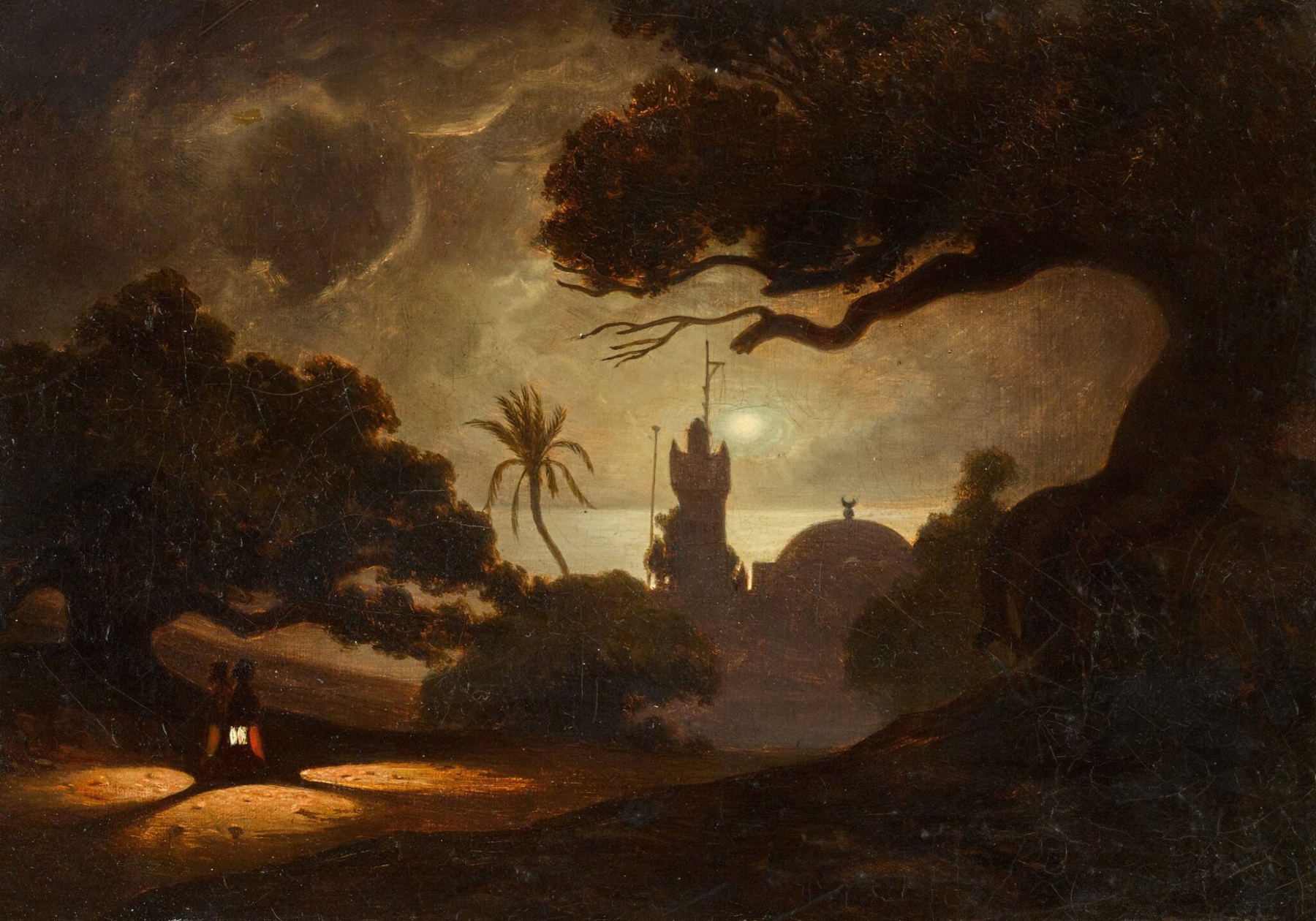
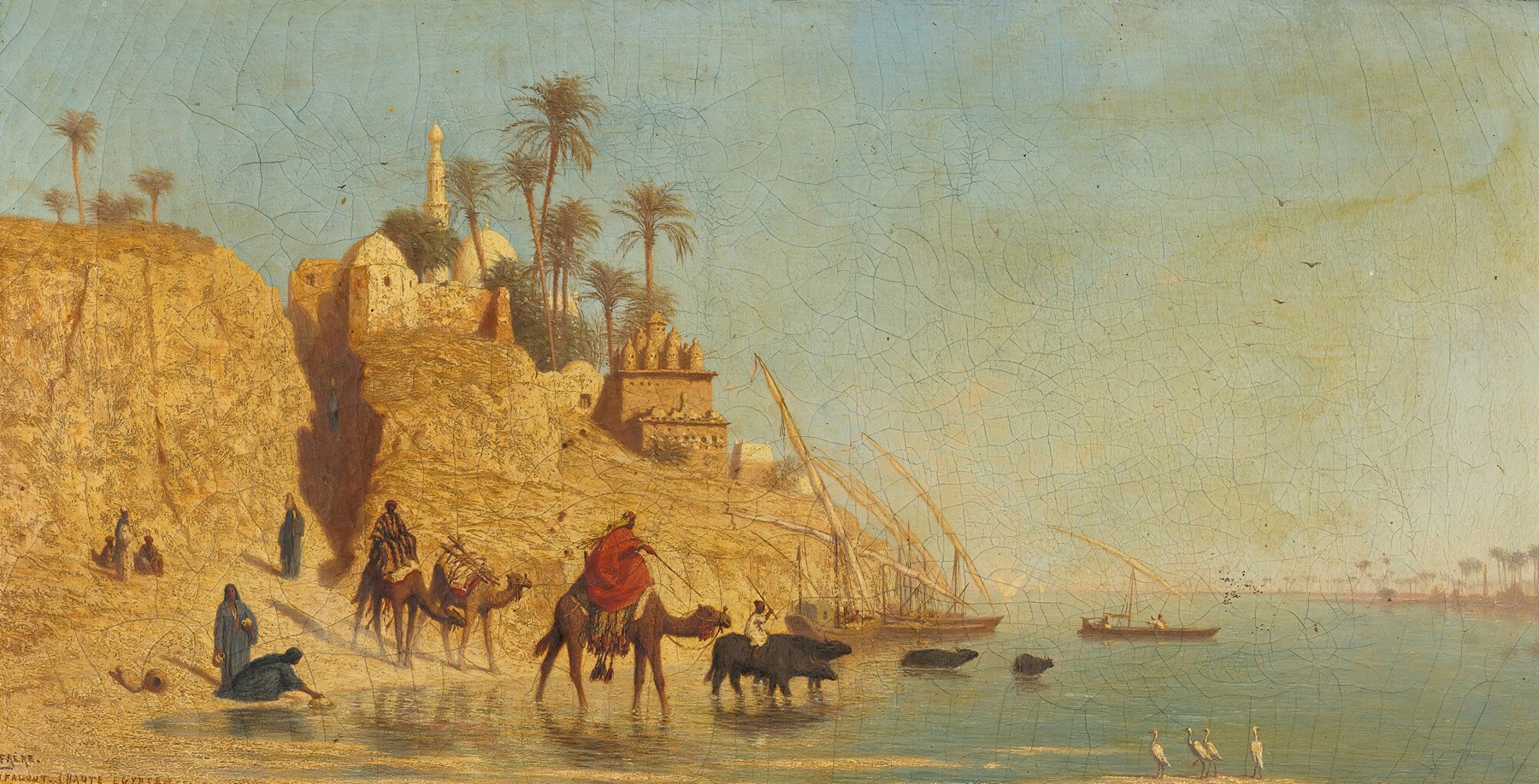
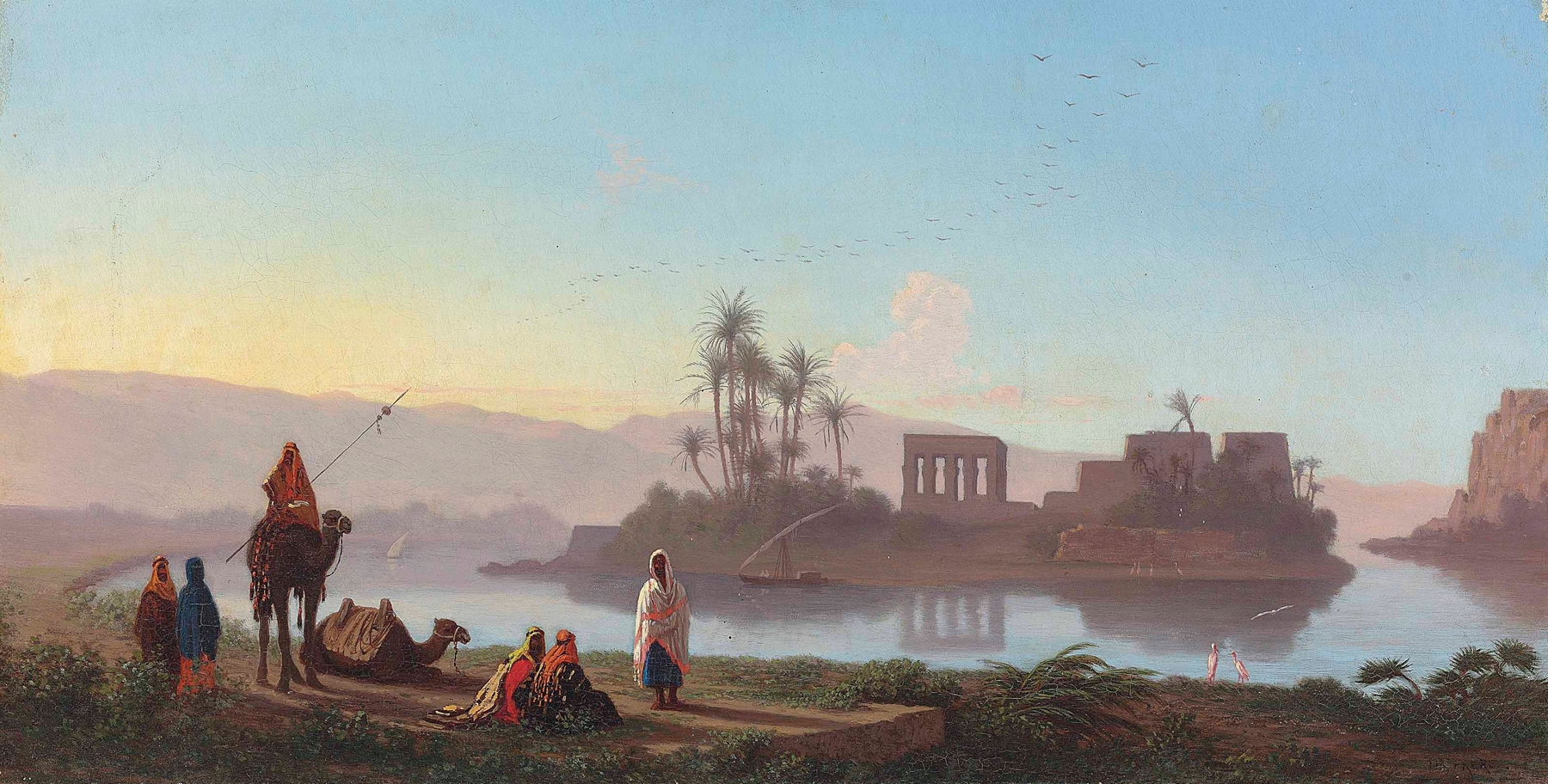
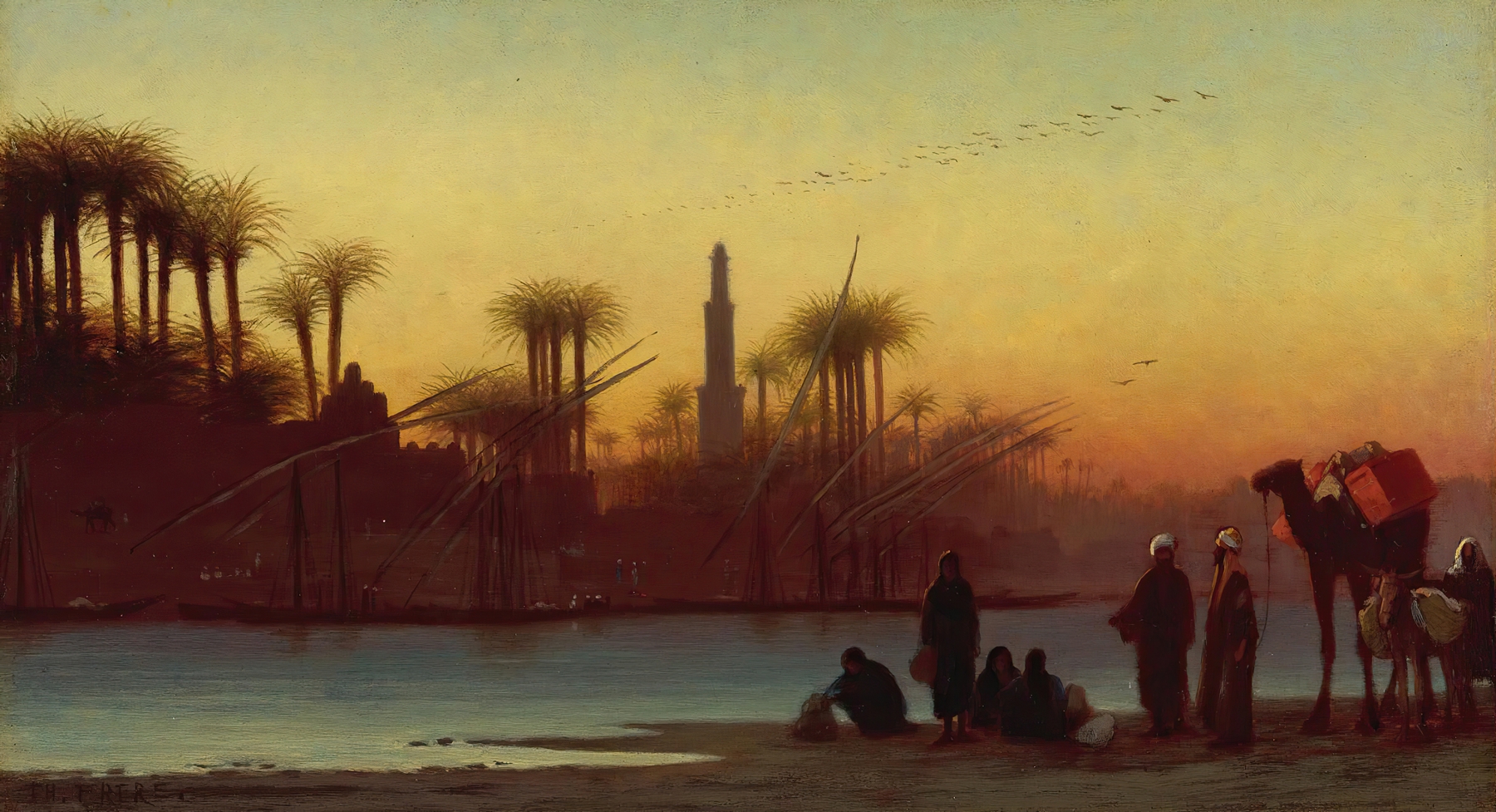
“Art reveals the soul when the world turns away.” In the stillness of a moment, we find an echo of the passage of time, a reminder of what endures even as everything else fades. Focus on the soft, muted hues that wash over the canvas, creating a sense of tranquility as you explore the serene river scene. Notice how the delicate play of light reflects off the water, casting a gentle shimmer that draws your gaze to the distant horizon. To the left, the ethereal silhouettes of palm trees frame the composition, their feathery fronds swaying lightly in an imagined breeze.
The careful brushwork and the harmony of color choices lend a meditative quality to this landscape, inviting a deeper contemplation of its layers. The painting captures an inherent contrast: the fluidity of the water against the steadfastness of the boats that float upon it. Each vessel, anchored yet drifting, symbolizes the tension between movement and stillness, a metaphor for the passage of time itself. Shadows linger along the riverbank, hinting at memories and stories that might have unfolded there.
This interplay of light and dark creates a profound sense of nostalgia, urging viewers to reflect on their journeys and the moments that shape their lives. Charles Théodore Frère painted this work during the mid-19th century, a period when artists were increasingly drawn to capturing the effects of light and atmosphere in their landscapes. Although the exact date is uncertain, Frère was active in Paris, where the art world was buzzing with new ideas about realism and impressionism. This context influenced his approach, as he sought to evoke emotional responses through his depictions of tranquil scenes, revealing a deep connection to both nature and the passage of time.