Paysage de Cagnes — History & Analysis
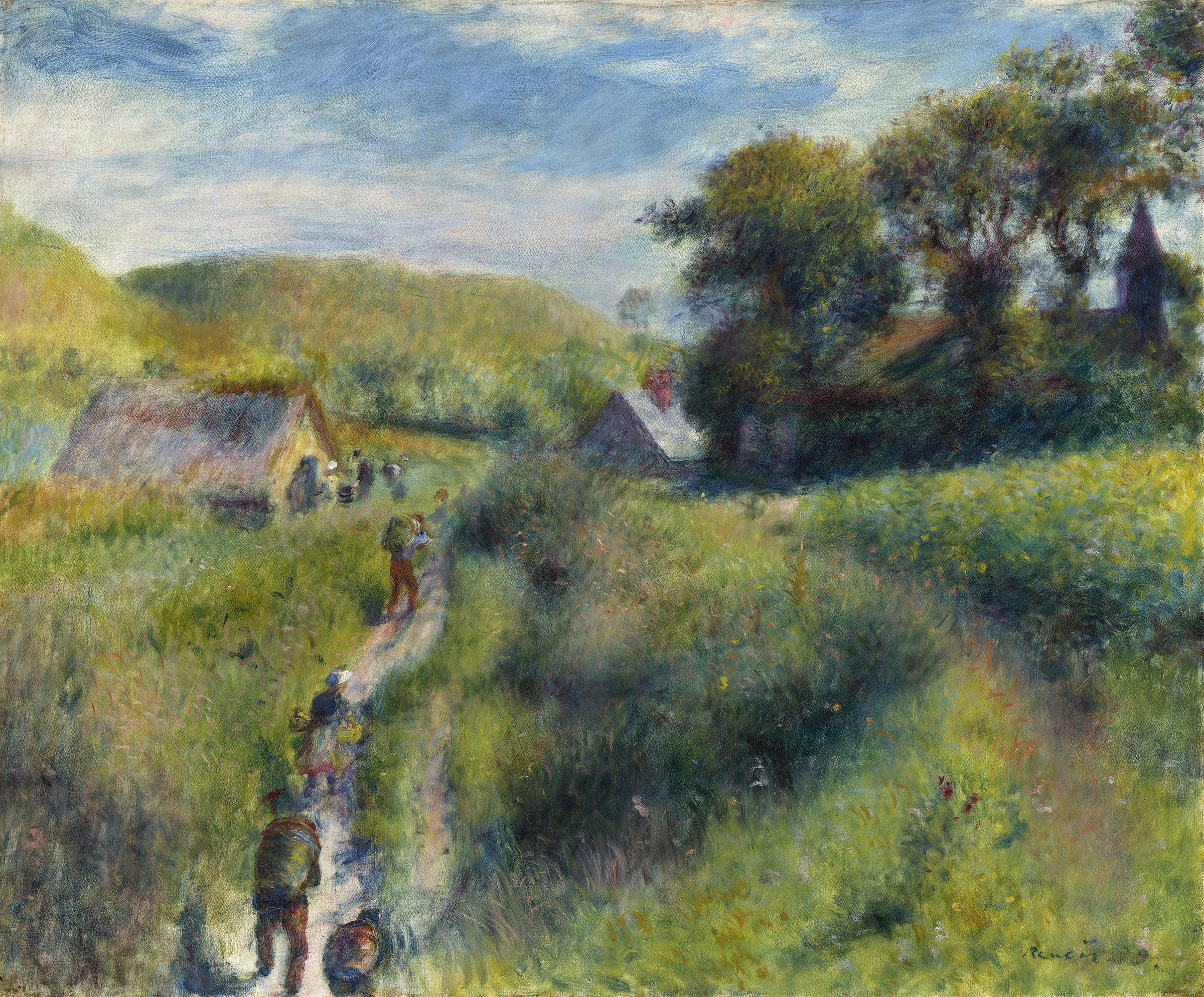
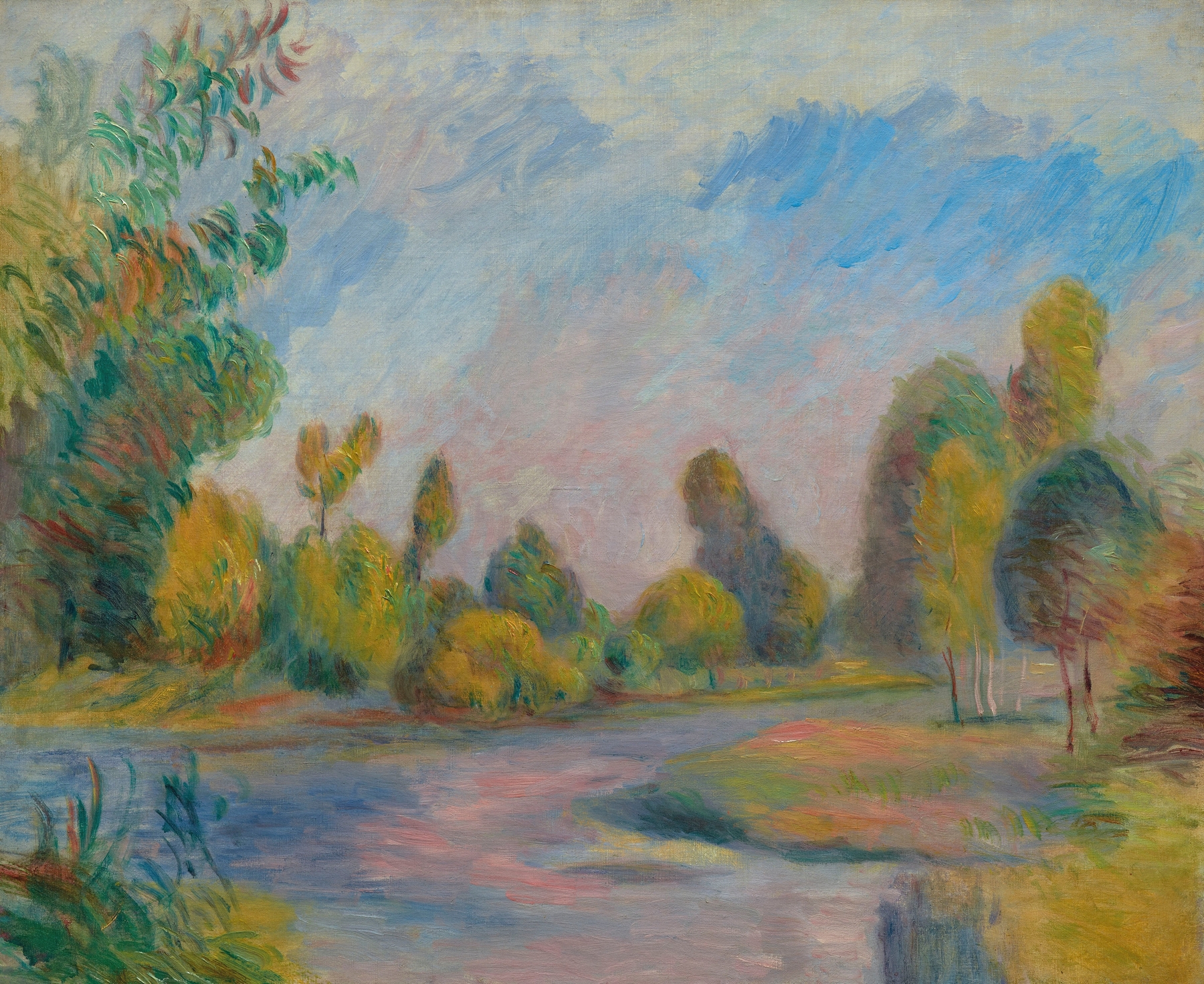
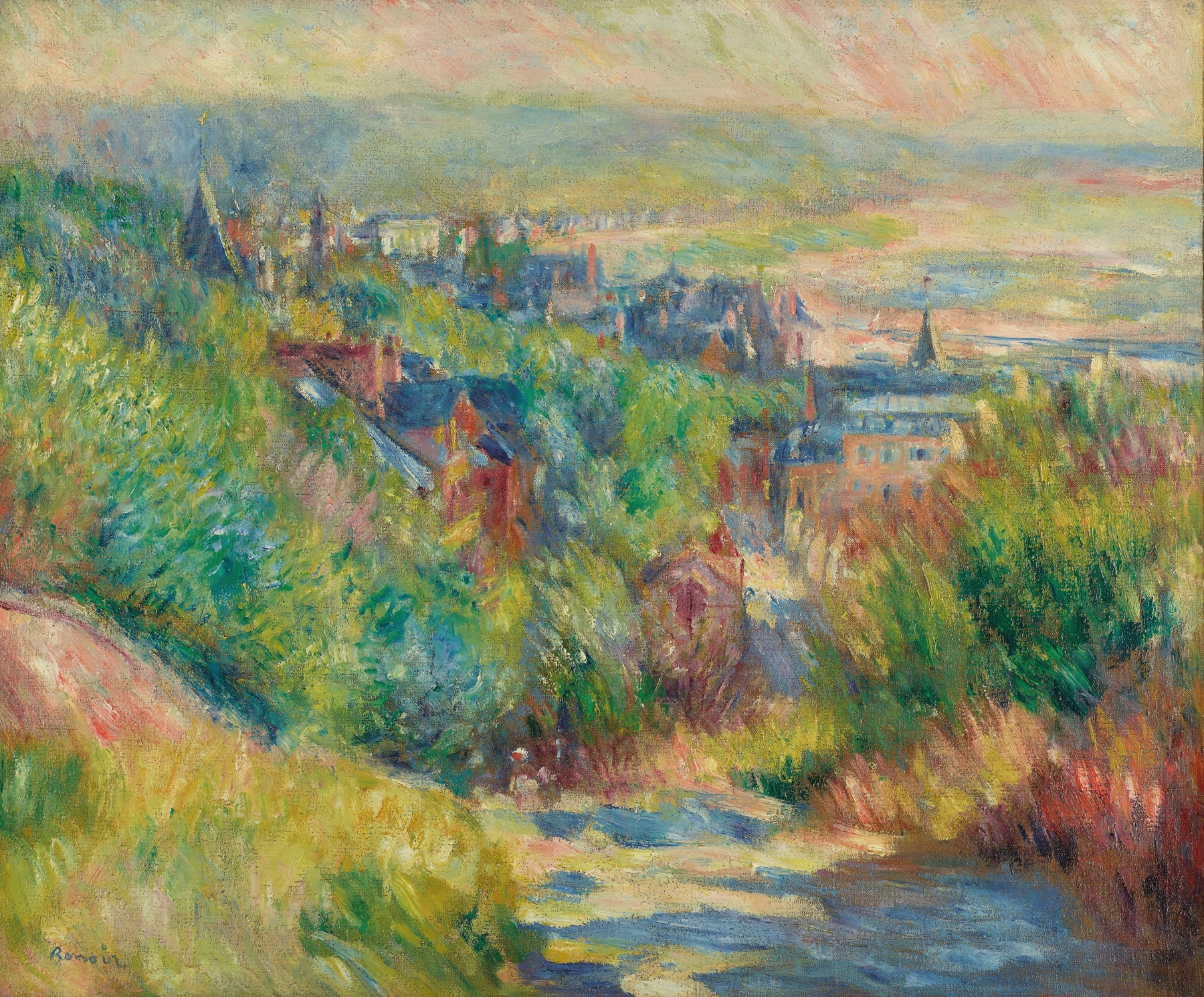
Could a single brushstroke hold eternity? In Paysage de Cagnes, the fleeting interplay of light and shadow invites us to reflect on the nature of memory itself, capturing a moment suspended in time. Look to the foreground where the lush greenery bursts forth in vibrant greens and earthy browns, each stroke brimming with life. The trees arch elegantly, their leaves shimmering under the warm embrace of the sun.
Focus on the gentle curves of the landscape that draw your eye toward the horizon, where soft blues and pastel hues blend seamlessly, creating an ethereal quality that balances realism and impressionism. The brushwork, fluid yet deliberate, evokes the tactile sensation of the scene, inviting viewers to almost feel the warm breeze and the caress of nature surrounding them. The contrast between the vivid colors of the foreground and the muted tones of the distant hills conveys both vitality and nostalgia, suggesting a longing for simpler times. Subtle interplay between light and shadow reveals hidden depths, as if the landscape itself holds memories long forgotten.
Each stroke captures the essence of a moment that, while transient, is imbued with emotional resonance, inviting viewers to lose themselves in their own recollections. Renoir painted Paysage de Cagnes in 1910 while residing in the south of France, a period marked by his shift towards a more subdued palette. This era followed his successful exhibitions and recognition as a master of Impressionism, reflecting both the tranquility of his surroundings and his evolving artistic vision, deeply rooted in the beauty of everyday life.