Paysage du midi — History & Analysis
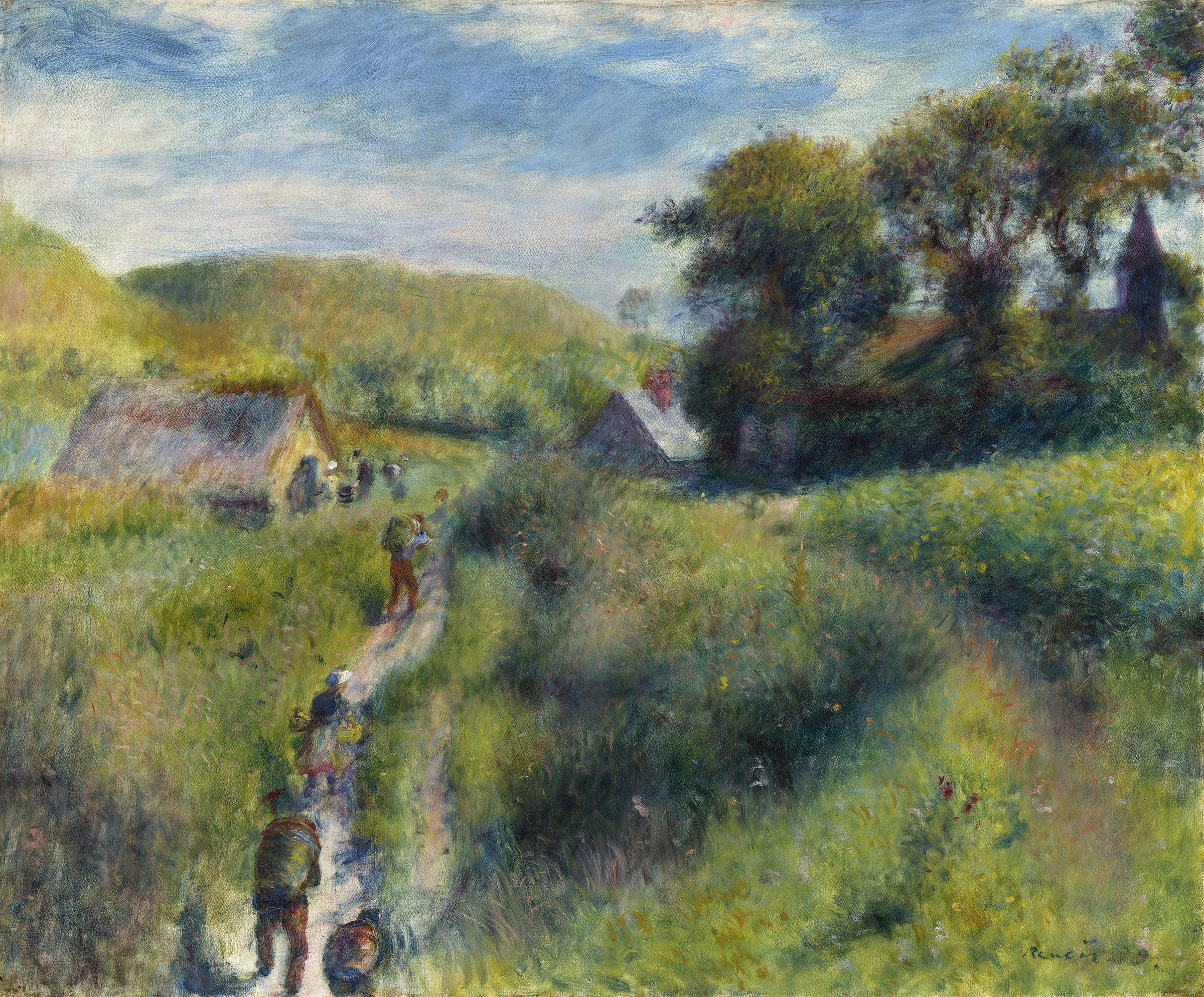
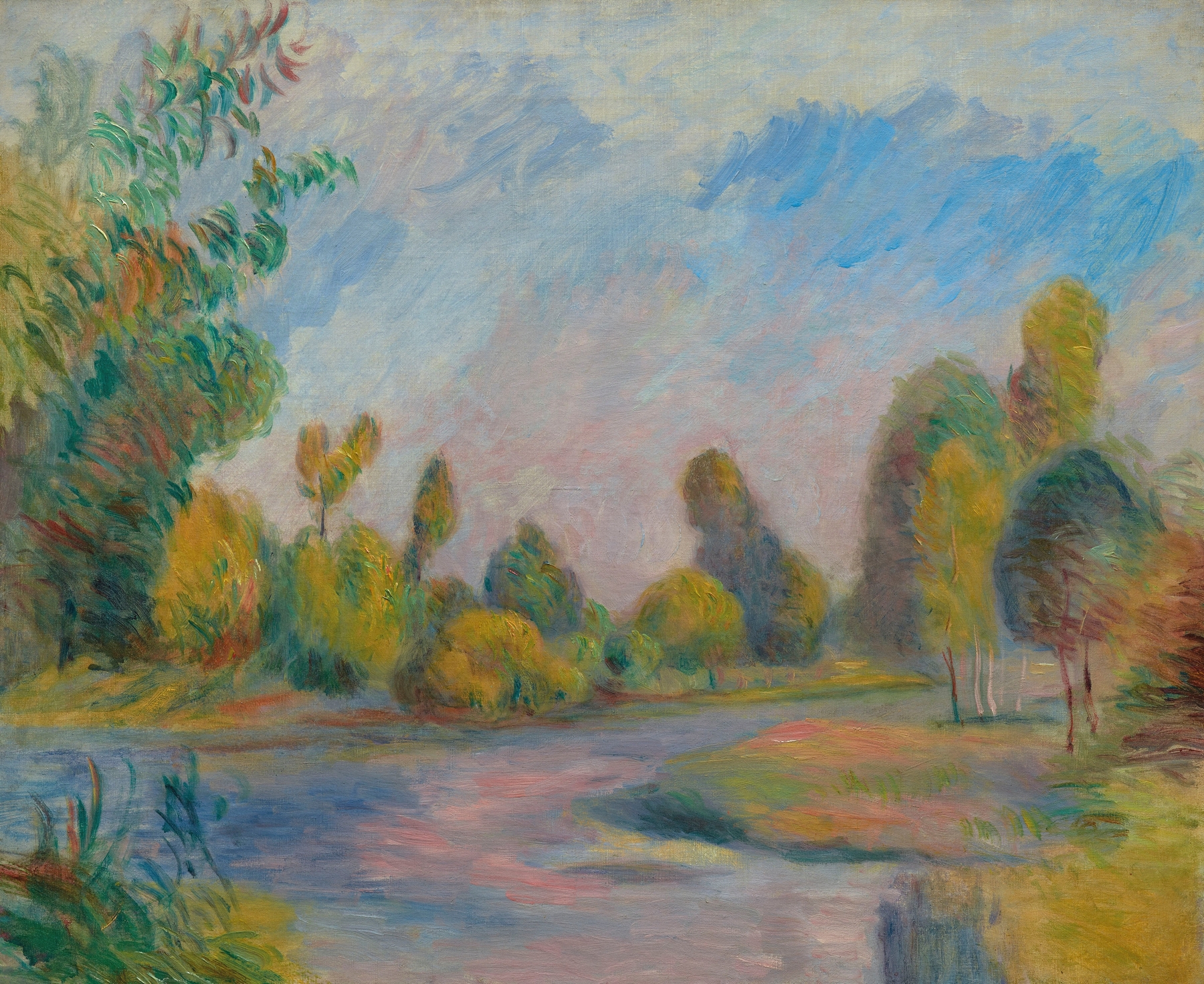
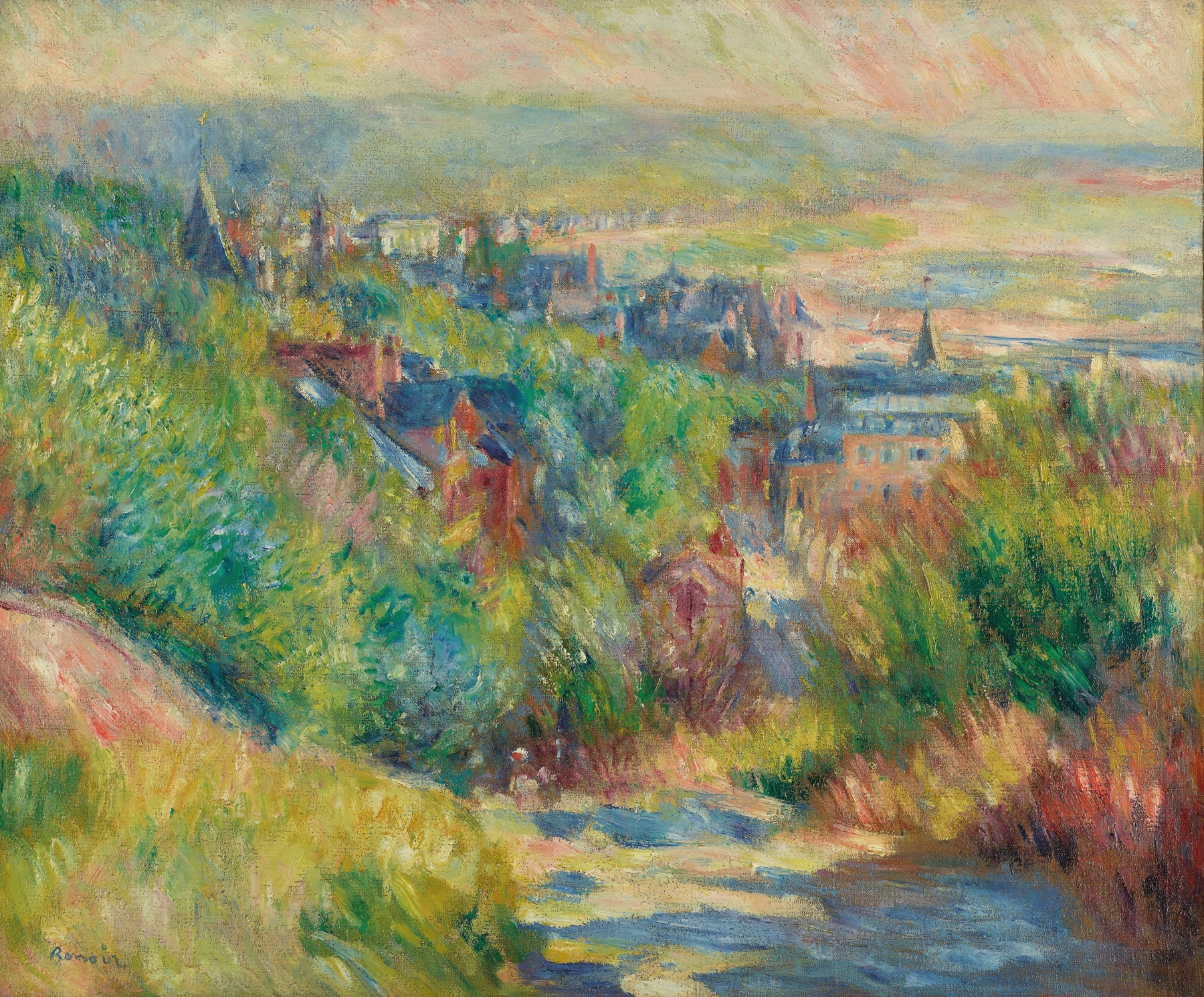
Where does light end, and longing begin? In the quiet embrace of Paysage du midi, the sun-drenched landscape invites contemplation, a canvas that blurs the line between reality and desire, crafting a space where truth resides in the interplay of color and light. Look to the left at the vibrant greens of the trees, their leaves a fusion of emerald and lime, shimmering in the gentle caress of sunlight. Shift your gaze to the horizon, where soft blues meld into warm yellows, capturing the essence of a Mediterranean afternoon.
Renoir's brush strokes are fluid and loose, inviting the viewer to feel the warmth of the scenery, while the composition draws your eye toward the distant hills, as if beckoning you into the depths of this idyllic retreat. The emotional tension in this work lies in its serene simplicity, juxtaposed with the depth of longing it evokes. Each brushstroke reflects a moment of tranquility, yet there is an undercurrent of yearning for something just beyond reach, perhaps a fleeting memory or an idyllic escape. Subtle details, like the wisps of clouds dancing in the sky, hint at the ephemeral nature of life and beauty, creating a dialogue between the viewer's inner world and the external landscape.
Renoir painted Paysage du midi between 1895 and 1900, during a period marked by his exploration of light and color in Impressionism. Living in France, he was experiencing both personal growth and artistic evolution, striving to capture the essence of happiness and beauty in everyday moments. This painting reflects his dedication to portraying life’s fleeting joys, rooted in the vibrant atmosphere of southern France, where he found solace and inspiration.