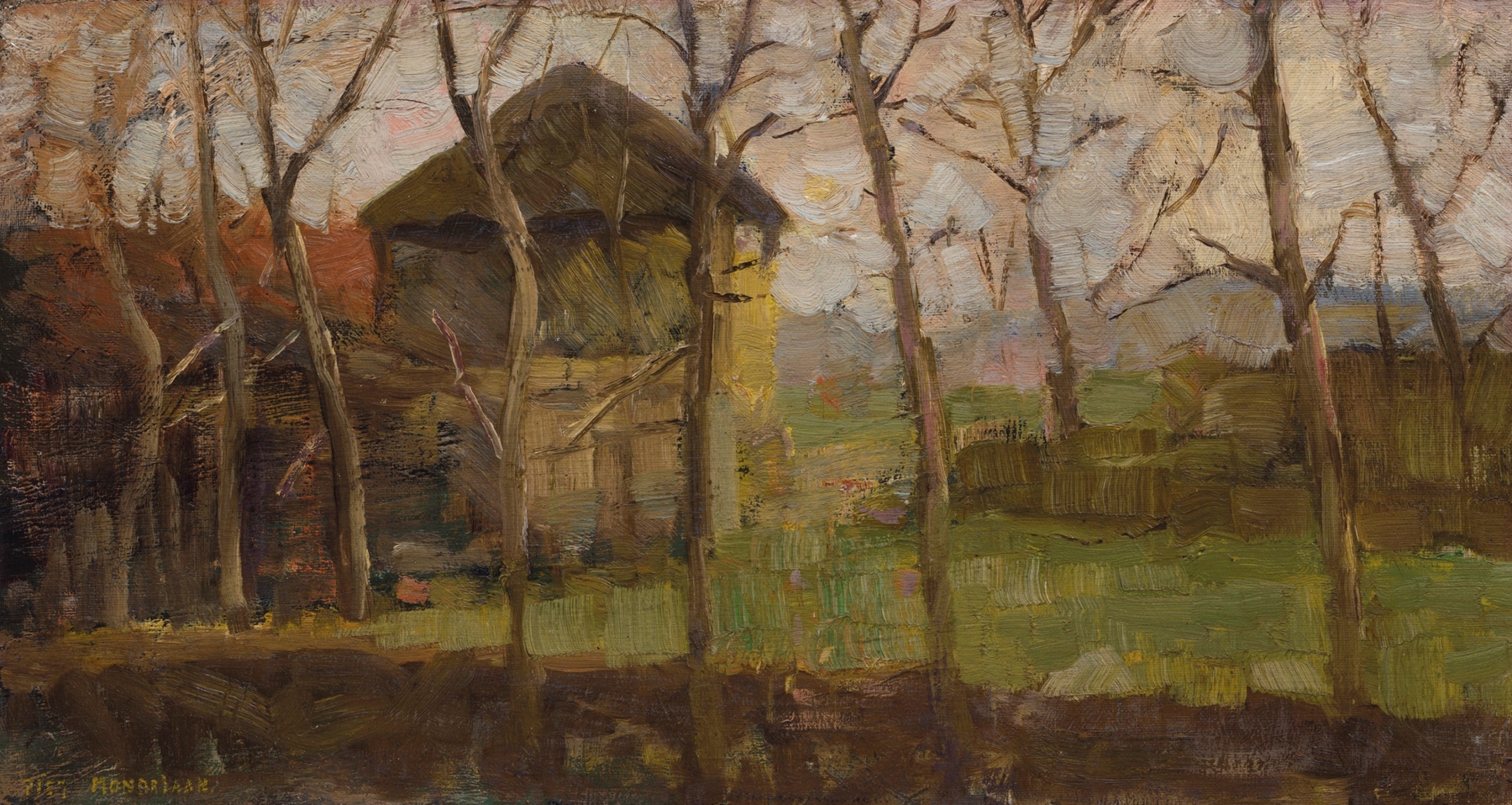
Polder met gemeerde vrachtschuit buiten Amsterdam II — History & Analysis
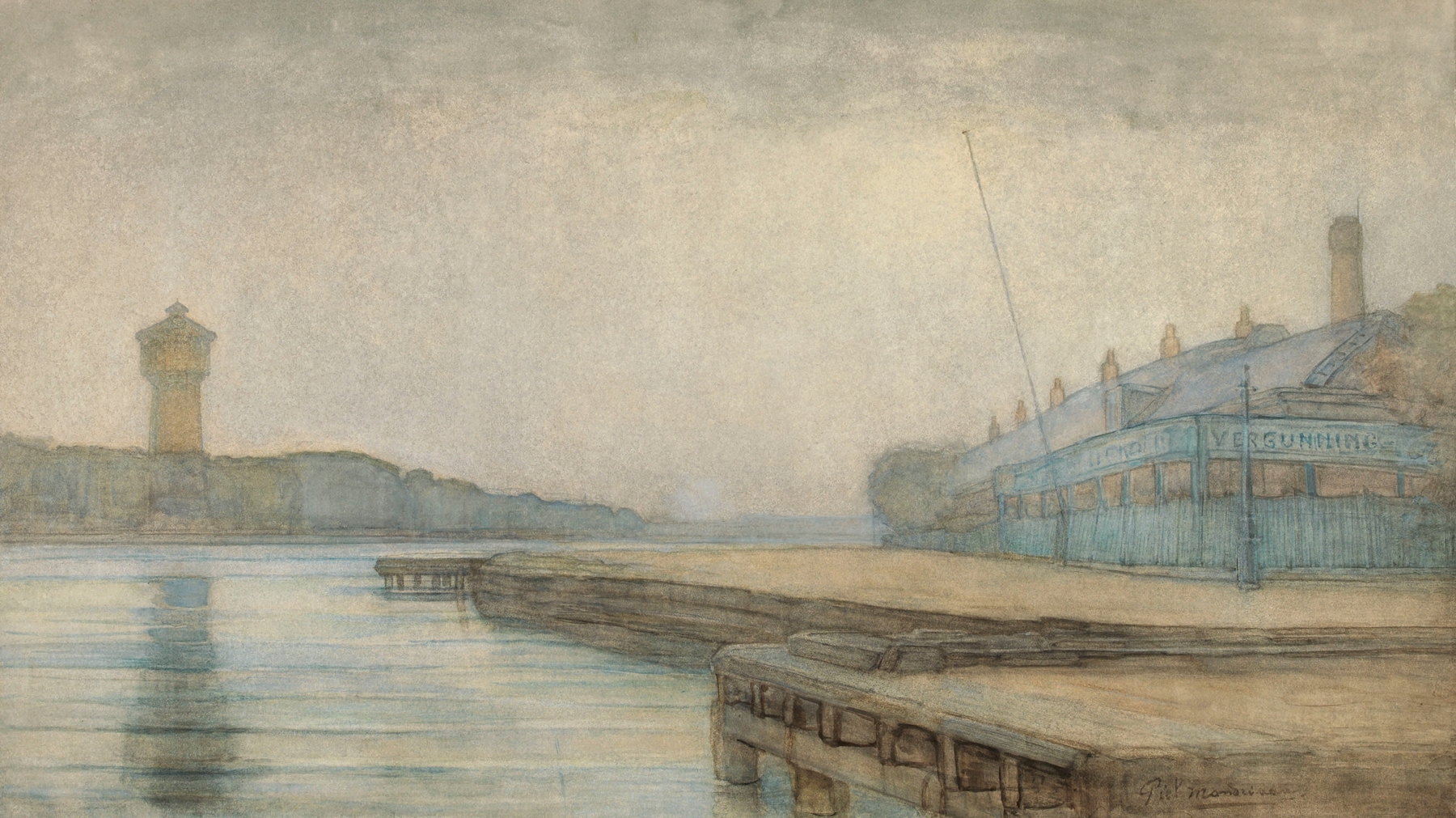
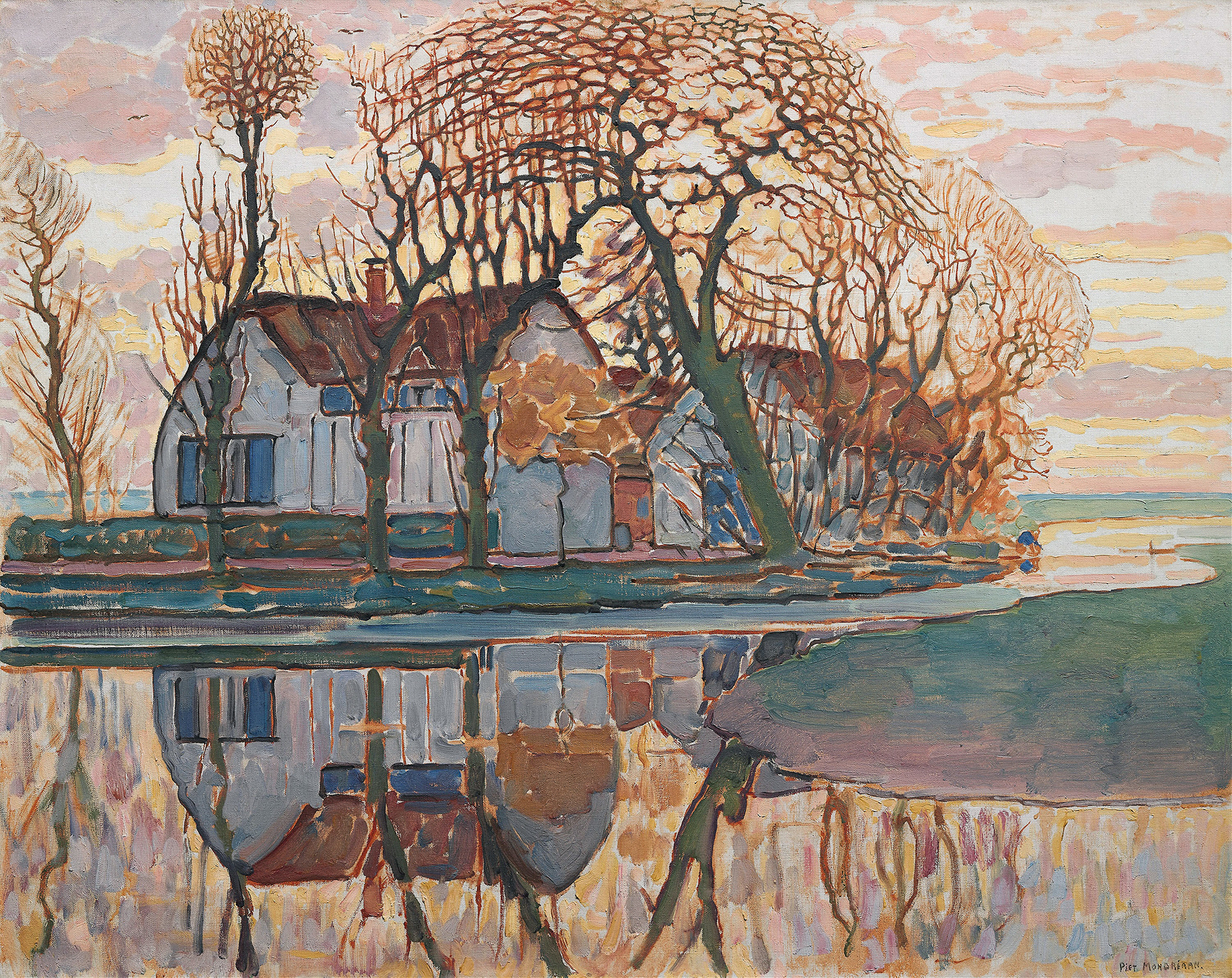
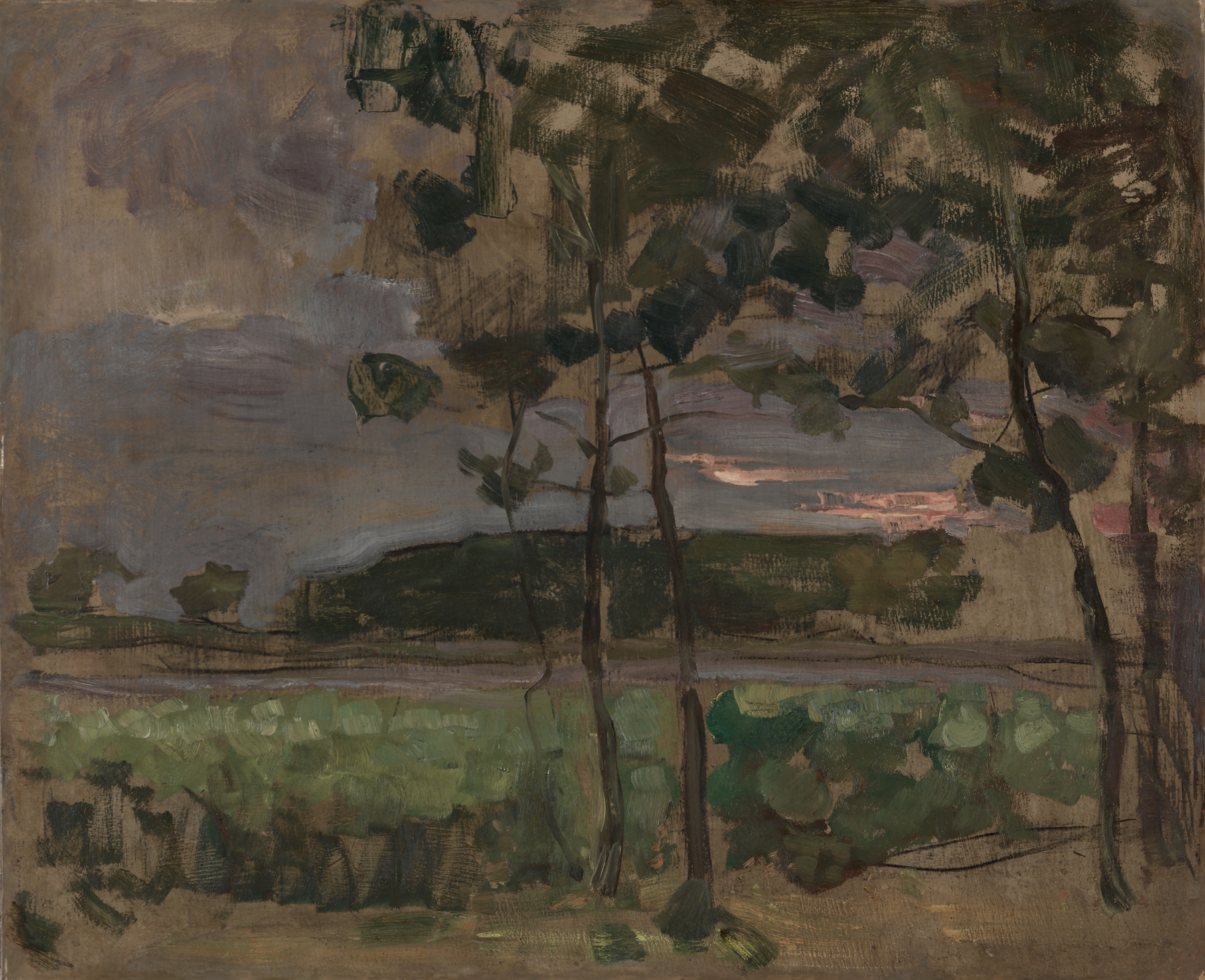
“Between color and silence, truth hides.” Fear lingers in the delicate interplay of hues and forms, whispering the unspoken tensions of the human experience. Focus on the tranquil waterway that bisects the canvas, guiding your gaze toward the muted blues and greens that blend seamlessly with the sky above. Notice how Mondrian’s brushstrokes, though restrained, pulse with an underlying energy, creating a rhythmic harmony that is, at once, soothing and unsettling.
The boats, rendered with precise lines, appear almost like sentinels on the water, their stillness beckoning contemplation. As you explore the scene further, the contrasting calm of nature juxtaposed with the engineered boats reveals a silent struggle—an echo of mankind's fear of isolation amid the vastness of the landscape. The serene horizon offers an illusion of freedom, while the tightly controlled composition suggests an underlying constraint, a reminder that the beauty of nature is often wrapped in the complexities of human existence.
Created between 1900 and 1901, during the early stages of his career, the artist was deeply influenced by the Dutch landscape and the burgeoning modernist movement. At this time, Mondrian was experimenting with abstraction, seeking to distill the essence of his subjects into their most fundamental forms. Against a backdrop of societal change in Europe and advancements in artistic expression, his work begins to hint at the exploration of the emotional landscapes that would define his later masterpieces.