Portret van Keizer Karel V — History & Analysis
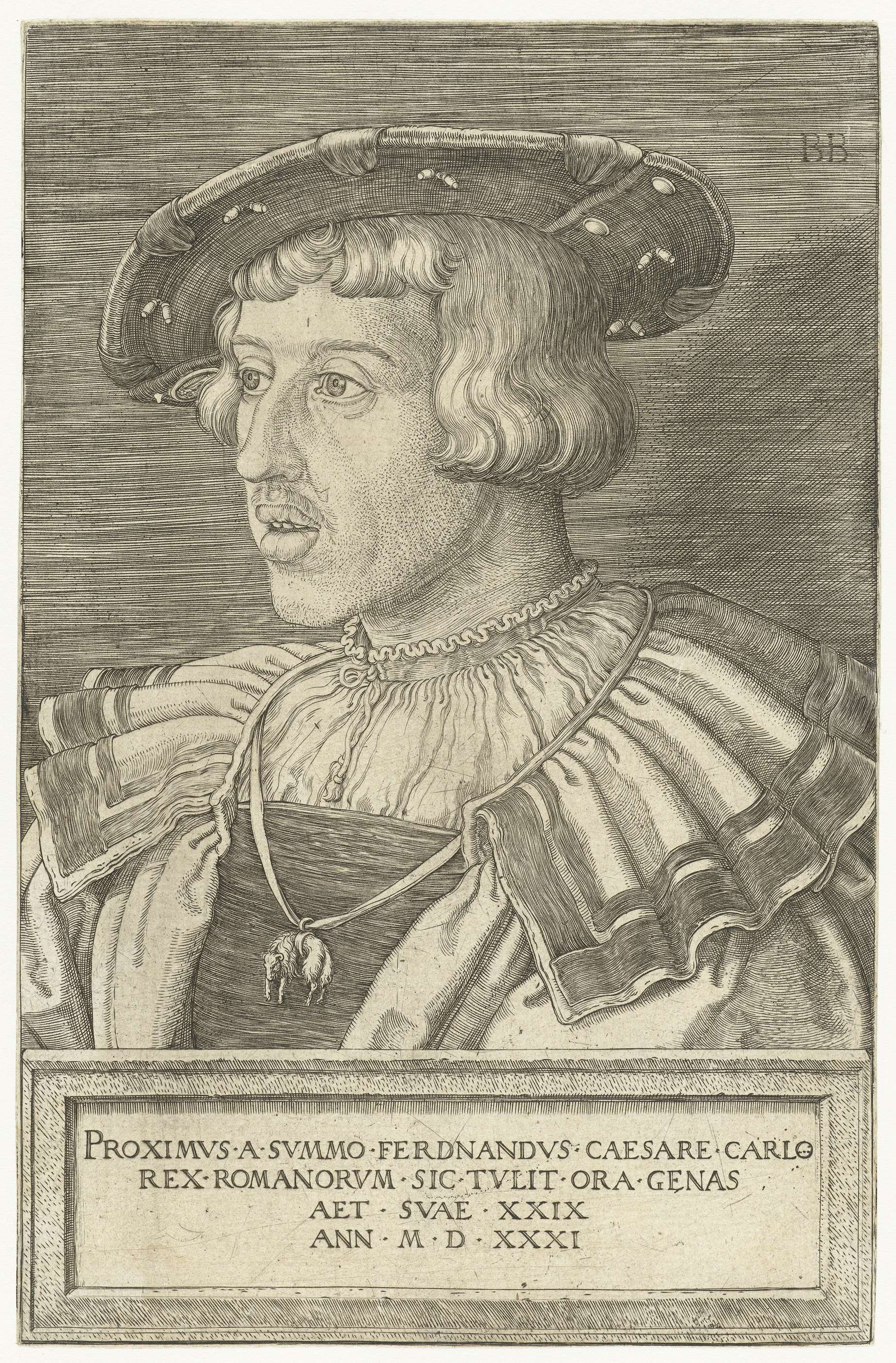
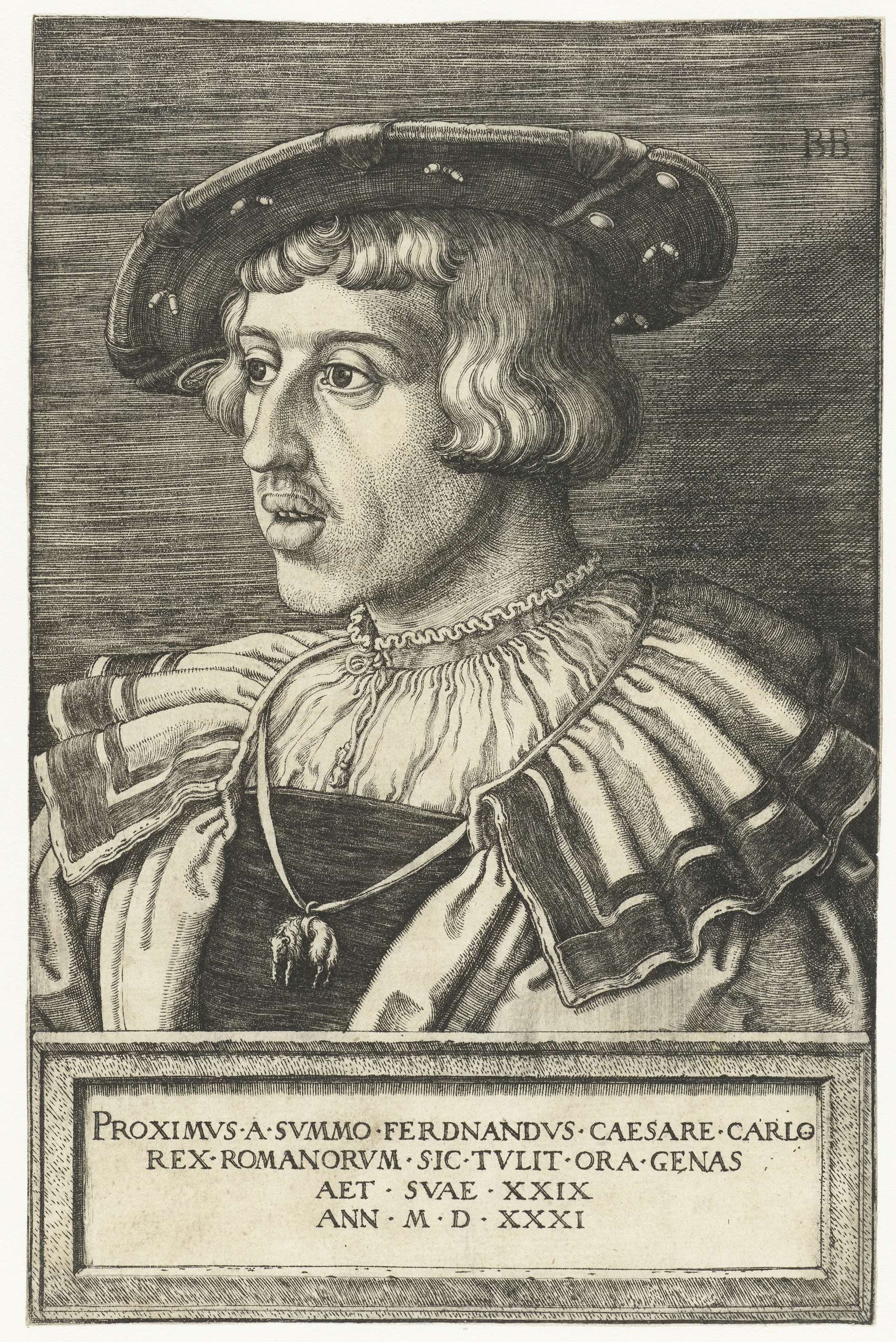
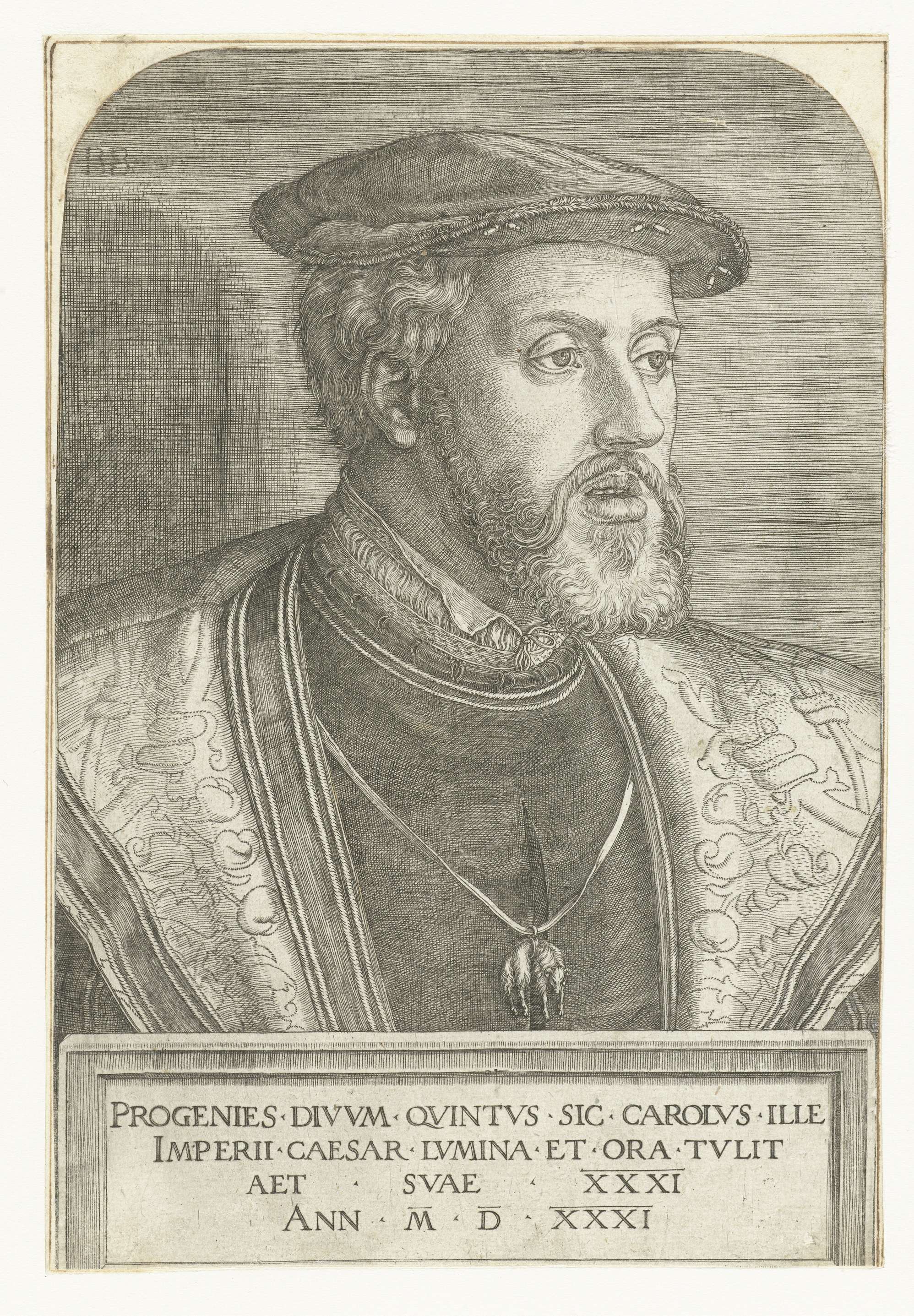
“Art reveals the soul when the world turns away.” In the quietude of introspection, a portrait emerges, capturing not just a ruler but the essence of hope in turbulent times. Look to the center of the canvas where the imposing figure of the Emperor stands, his gaze piercing yet contemplative. Notice how the rich, dark background enhances the luminous quality of his armor, glistening with intricate details that reflect both power and vulnerability. The soft play of light across his face highlights the thoughtful furrow of his brow, inviting the viewer to connect with the complexity of his reign.
Each stroke reveals Beham’s mastery of technique, as he balances the opulent colors of the garments against the simplicity of the setting. Beneath the regal exterior lies a deep emotional current, fraught with the weight of expectation and the shadows of impending conflict. The subtle tension between the Emperor's confident posture and the gravity in his expression speaks to a leader caught between ambition and the demands of his time. The delicate patterns in his attire suggest a cultural richness, echoing the hopes of an empire on the brink of transformation, while the slight turn of his head seems to suggest an awareness of the fragile nature of his power.
In 1531, Beham crafted this portrait during a period marked by both artistic innovation and political strife in Europe. Operating in Nuremberg, he was part of the burgeoning Northern Renaissance, a movement characterized by its attention to detail and realism. As the Reformation took root, artists like Beham reflected the complexities of their subjects, capturing not merely their likenesses, but the tumult of their times.