Rialto Bridge in Venice — History & Analysis
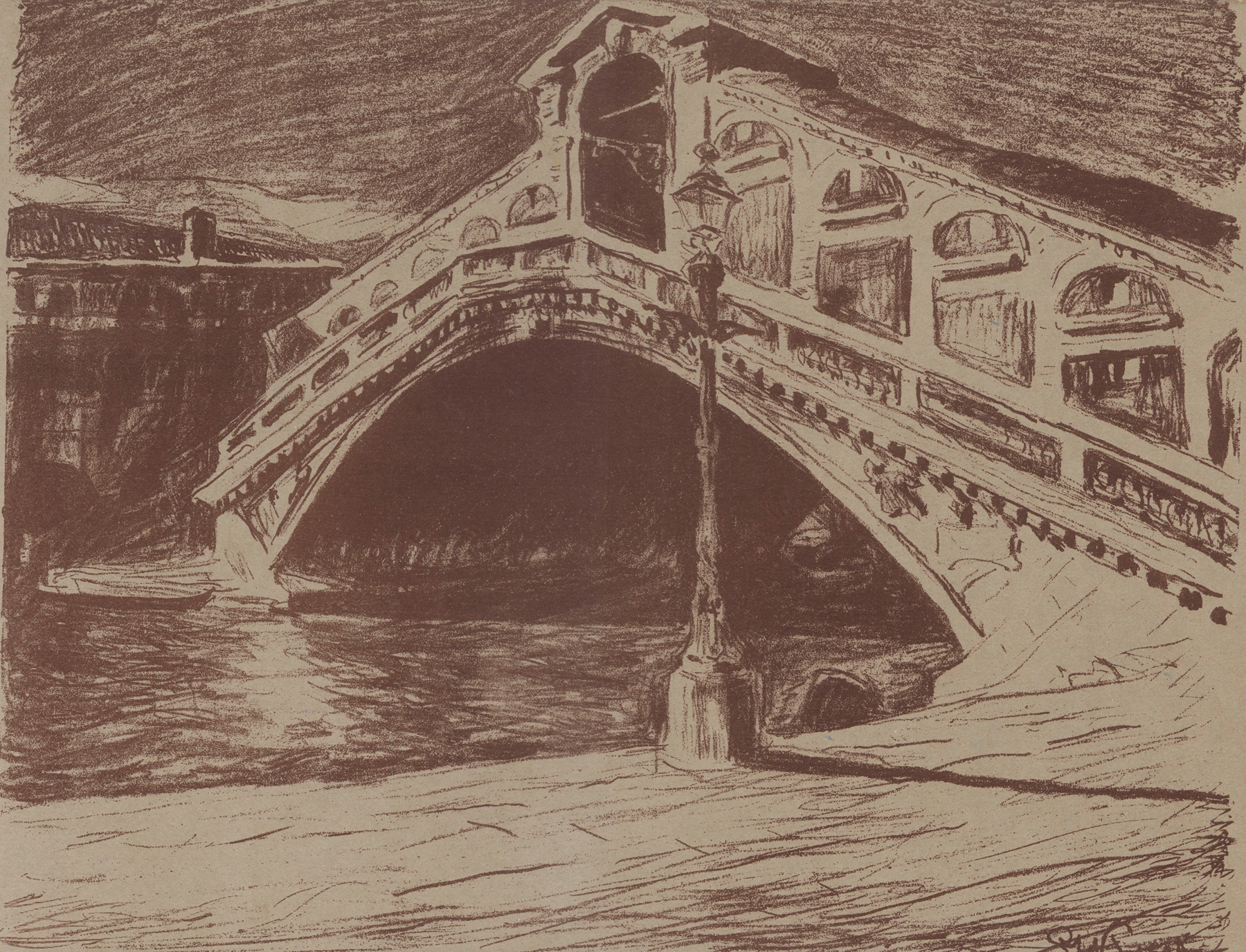
Could beauty survive in a century of chaos? In Rialto Bridge in Venice, Stanisław Kamocki encapsulates an enduring desire for connection amidst the transience of time and turmoil. Look closely at the shimmering water that reflects the architectural grandeur of the bridge, inviting your gaze to dance across the surface. Notice how the artist’s brushstrokes evoke the warmth of the Venetian sun, illuminating the buildings with a golden hue.
The soft blues and greens of the canal create a lush contrast, while the subtle details of bustling figures reveal life in motion, grounding the scene in a palpable reality. As you delve deeper, consider the juxtaposition of stillness against the dynamic crowd. The bridge stands firm, a symbol of permanence, while the figures below embody fleeting human experiences. The soft whispers of desire ripple through the air, echoing the longing for beauty and connection.
Kamocki captures the essence of Venice, a city both cherished and threatened, where every brushstroke yearns to preserve its magic in the face of inevitable change. Painted in 1907, this piece emerged during a time when Kamocki was exploring themes of nostalgia and the ephemeral nature of life. Living in Poland, he was influenced by the broader artistic movements of the early 20th century, which sought to balance realism with impressionistic elements. In a world on the brink of modern upheaval, his work serves as a poignant reminder of the beauty that persists even amidst chaos.