River Boat — History & Analysis
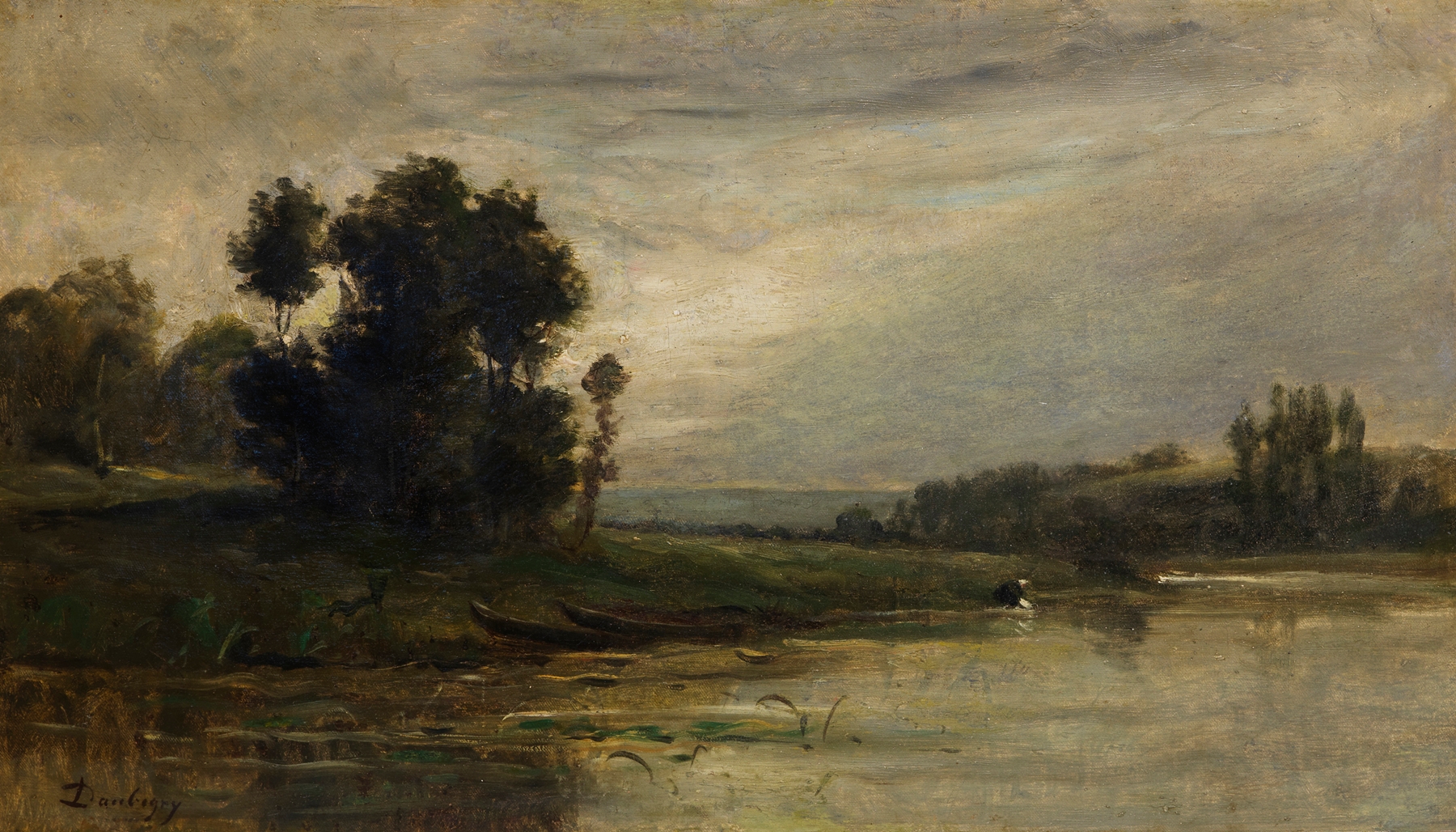
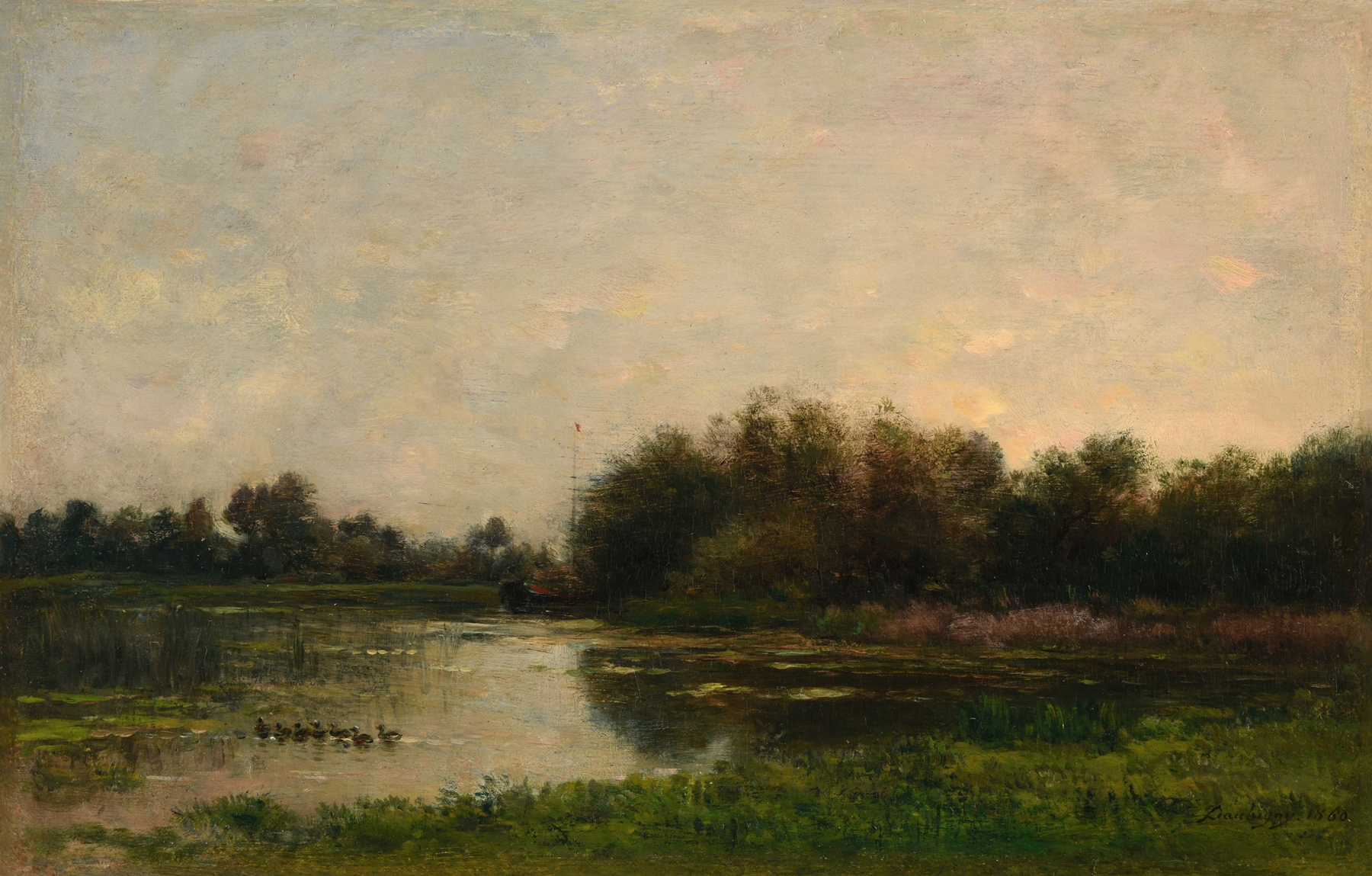
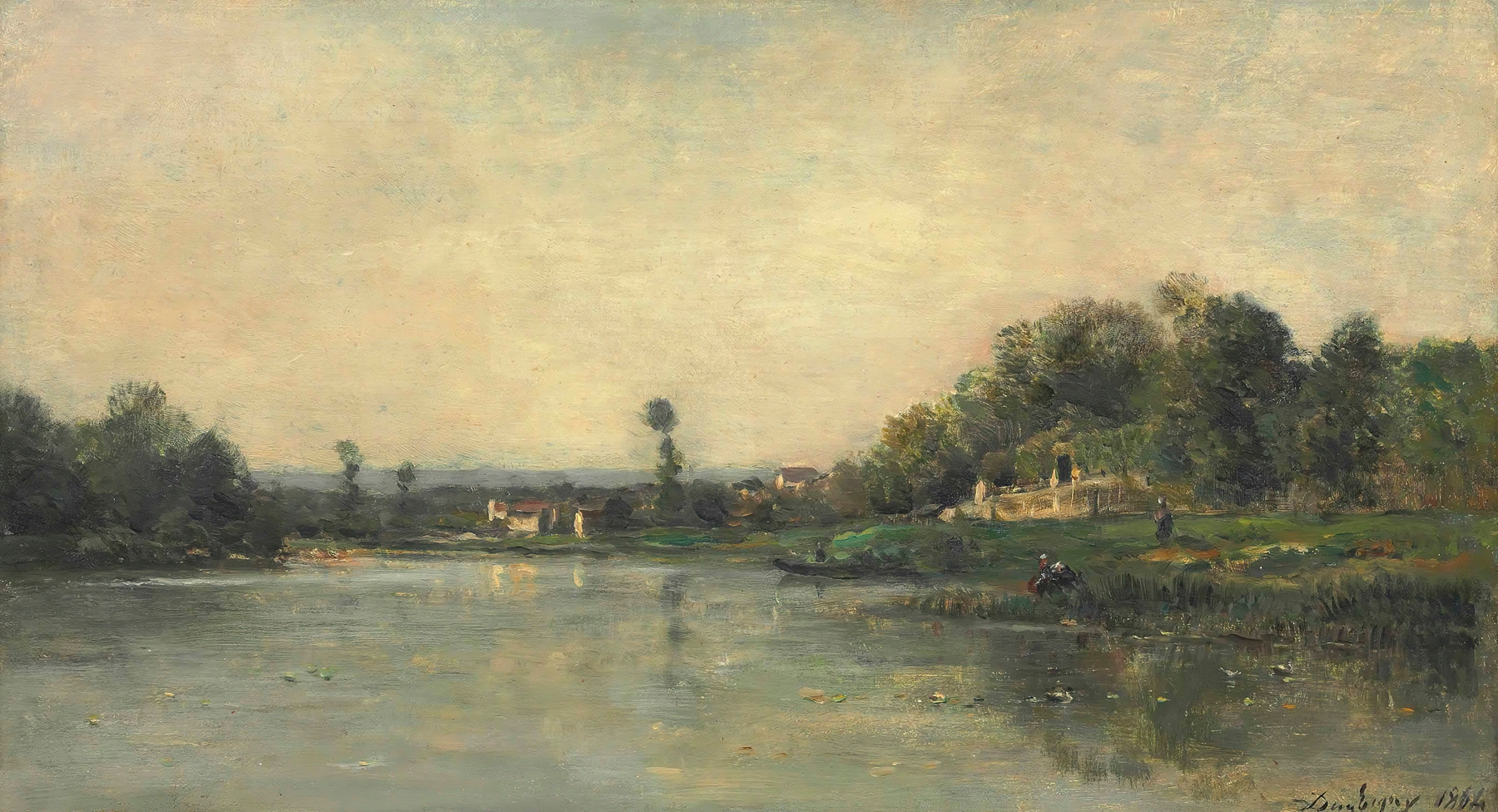
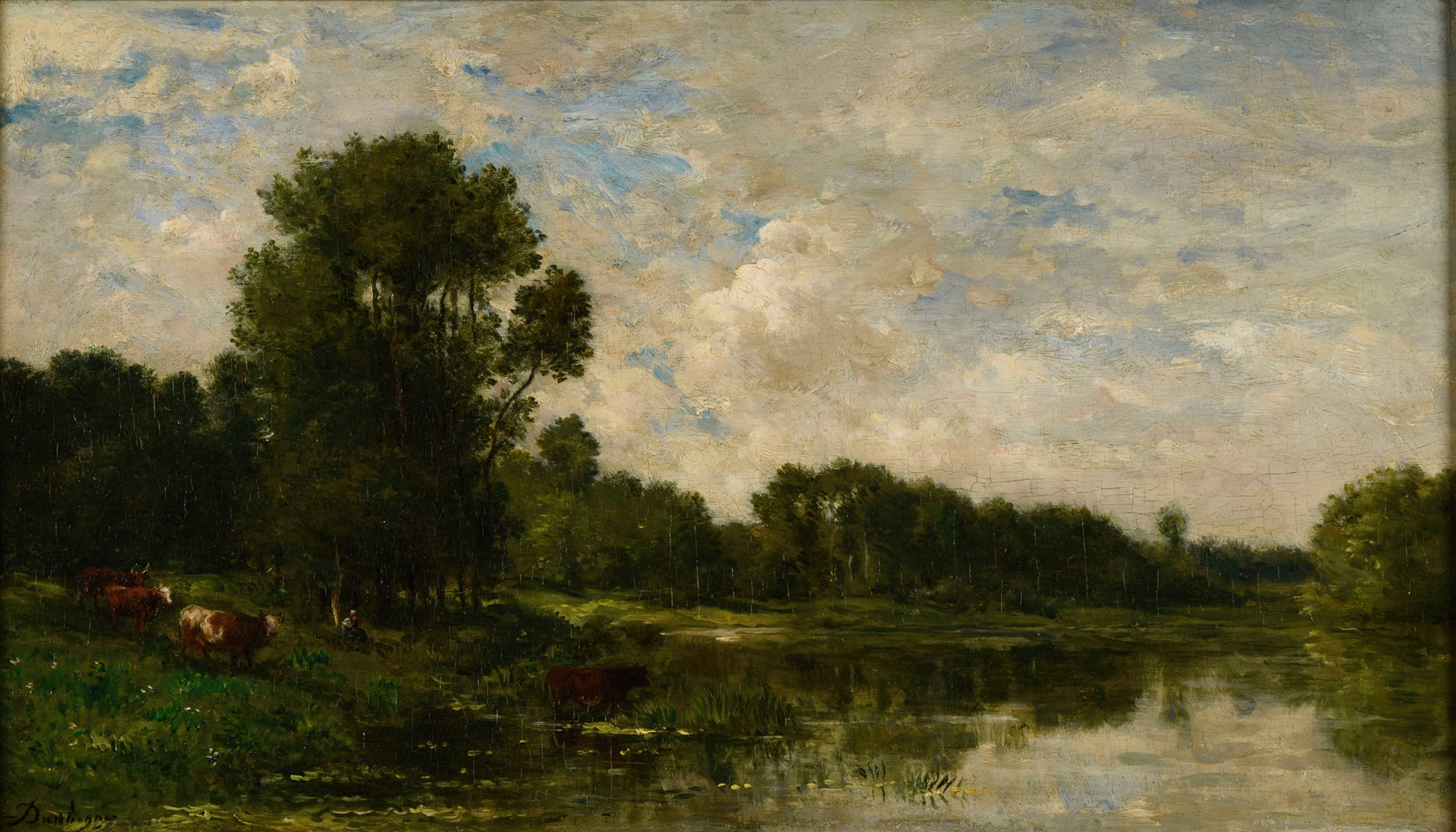
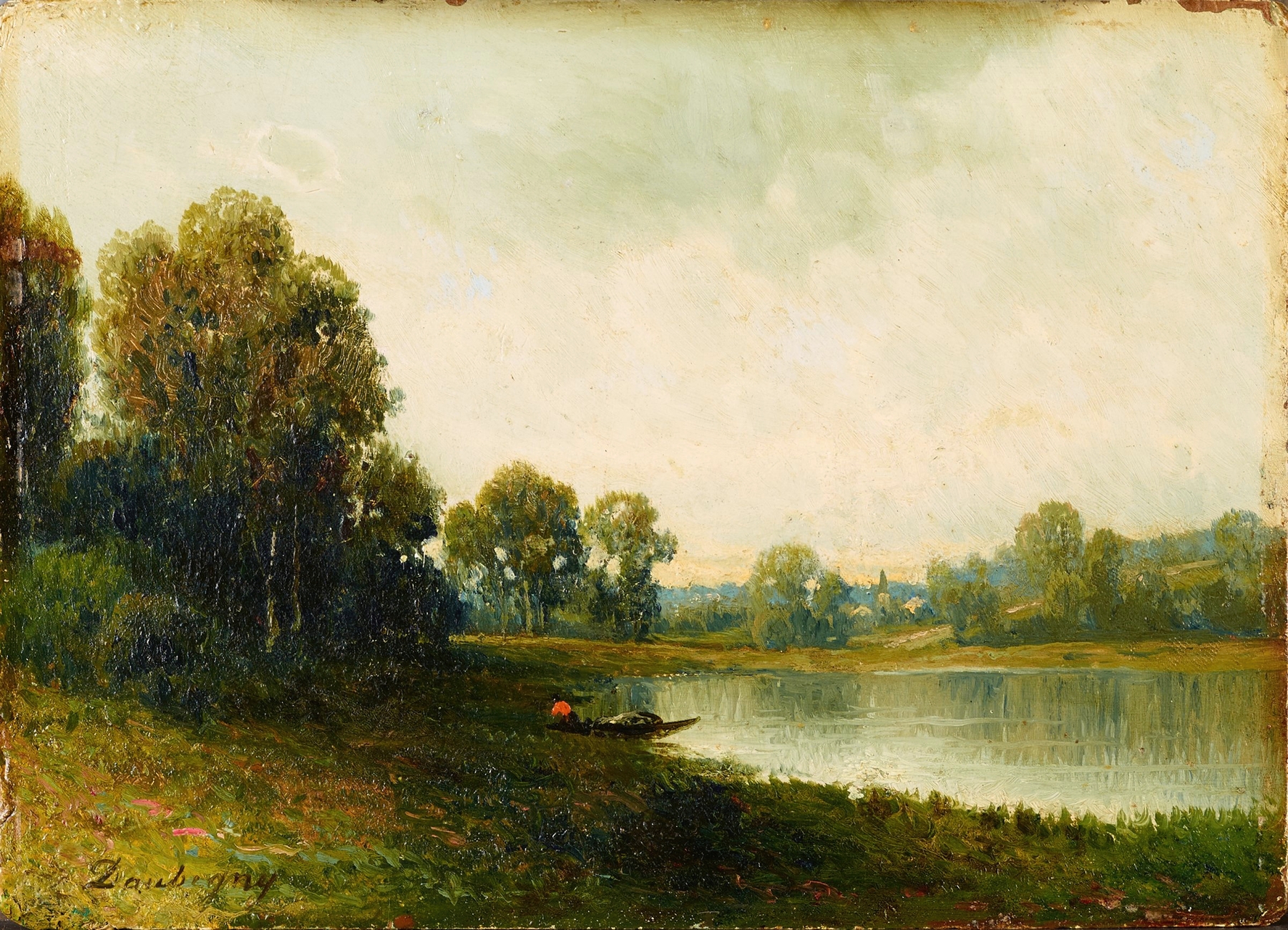
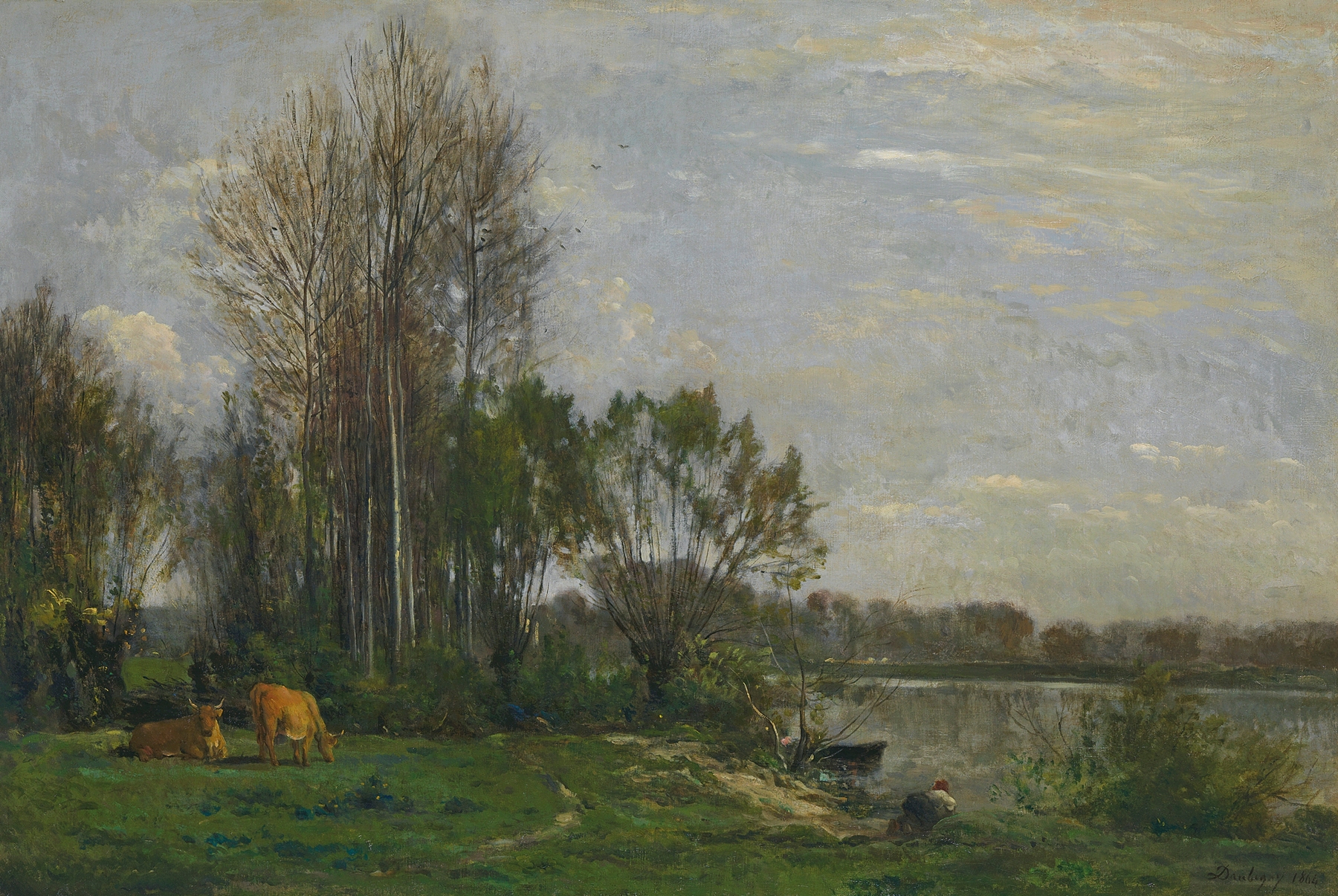
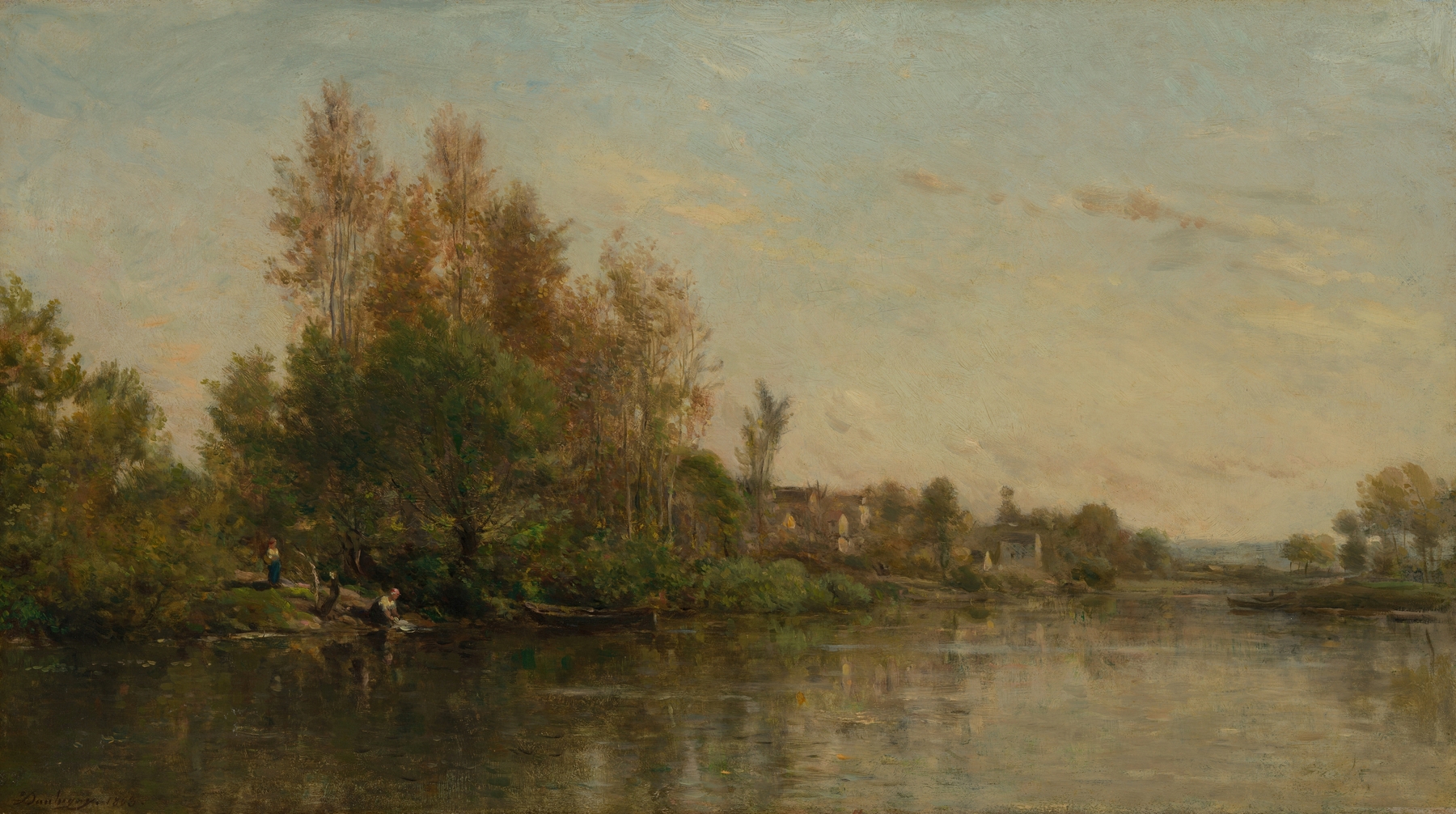
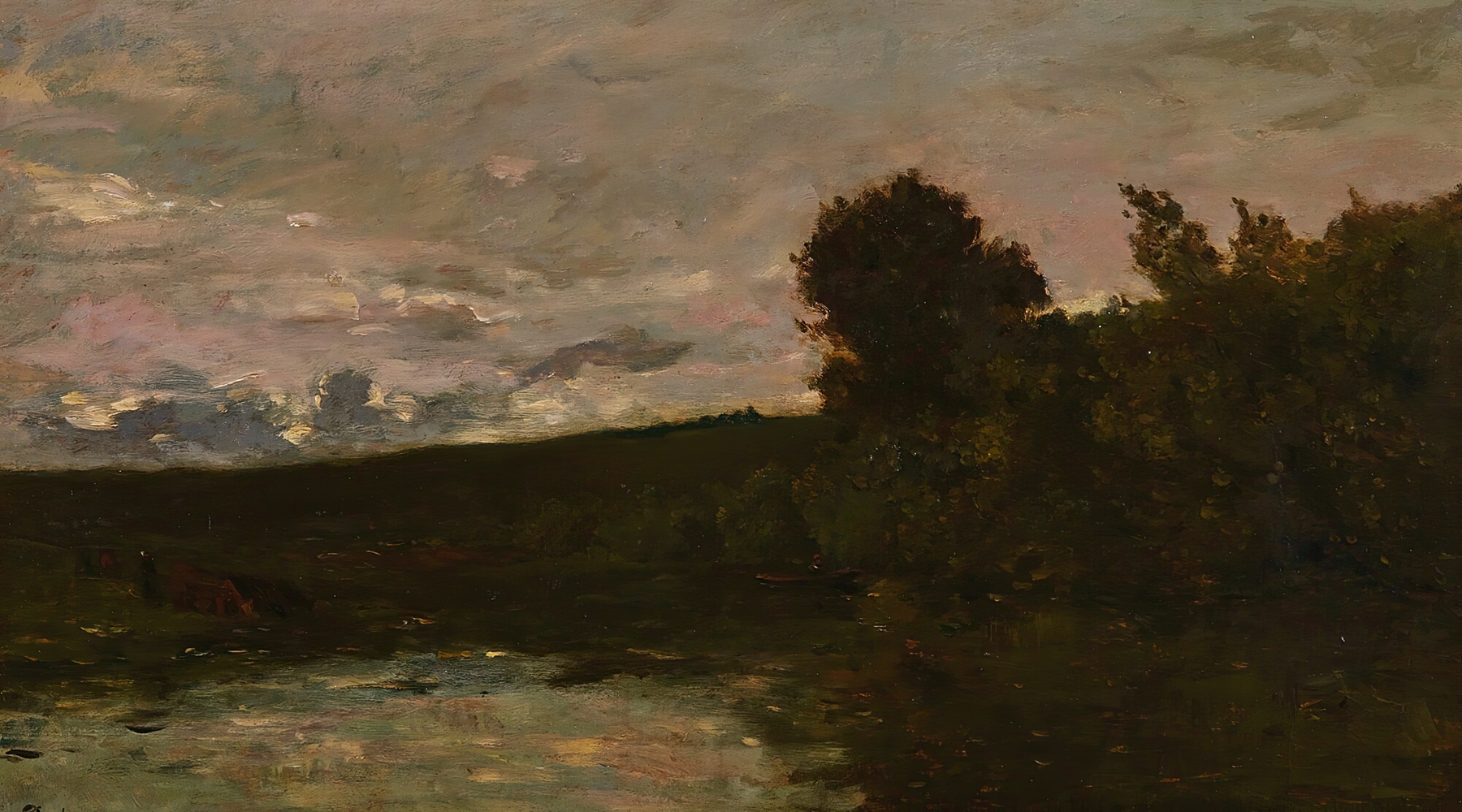
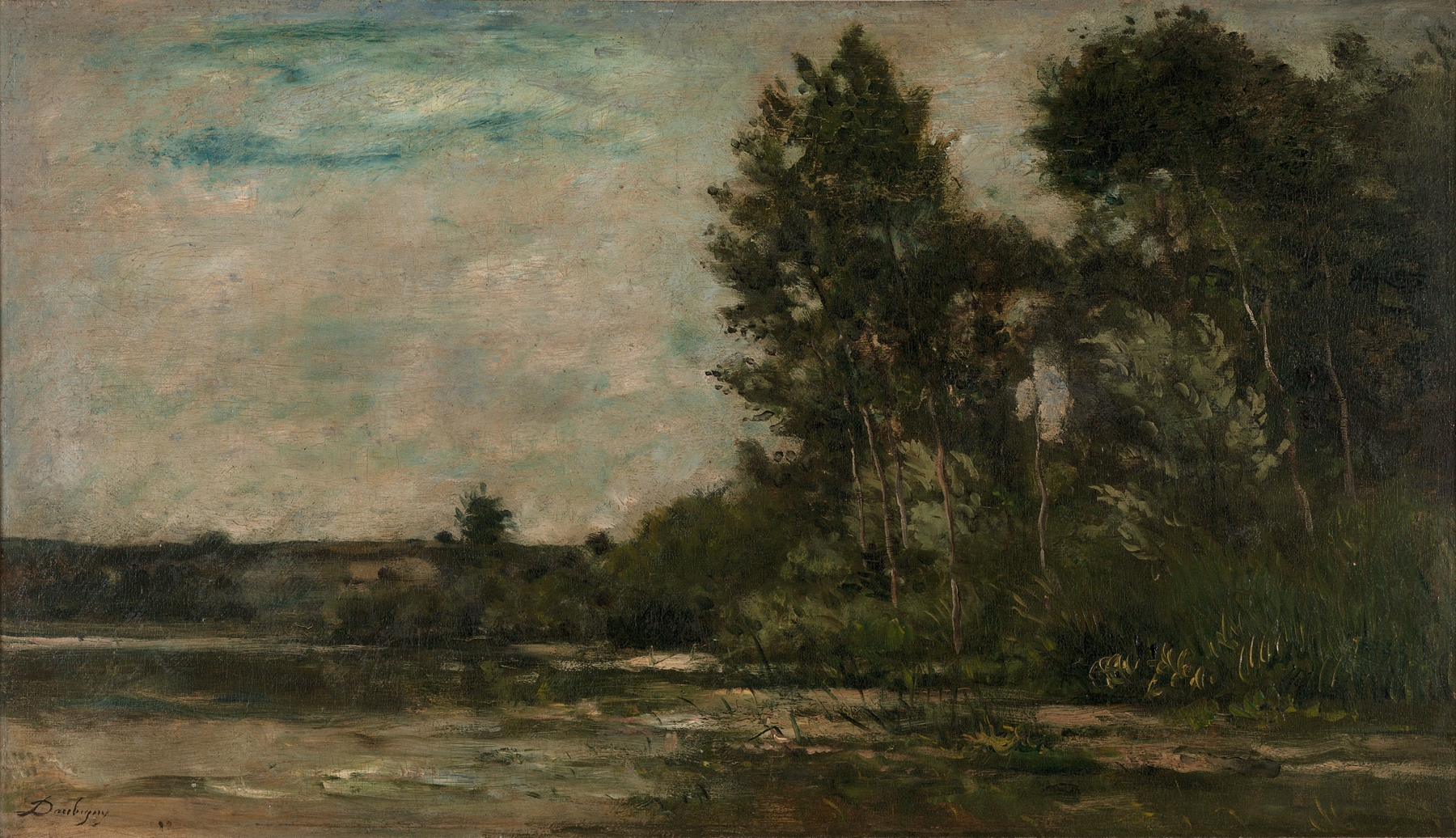
Could a single brushstroke hold eternity? In River Boat, the canvas reveals a tranquil yet turbulent interplay between nature and the human touch, echoing the violence of life upon the water’s surface. Look to the left at the riverbank, where deep greens and browns converge under the warm embrace of the sun. The boat, caught in mid-motion, glides softly along the rippling water, its gentle curves starkly contrasting against the jagged reflections of the surrounding trees. As the light plays upon the water’s surface, notice how Daubigny captures the fleeting moment through quick, deliberate strokes, suggesting both movement and the inevitability of change.
The palette is rich yet subdued, invoking a sense of peace that masks the underlying chaos of life. Yet, amid this serene scene, a deeper narrative unfolds. The boat's journey evokes the fragility of existence against the relentless flow of time, hinting at the violence of nature's unpredictability. The rough brushwork along the water’s edge speaks to the struggle between human ambition and the raw power of the environment.
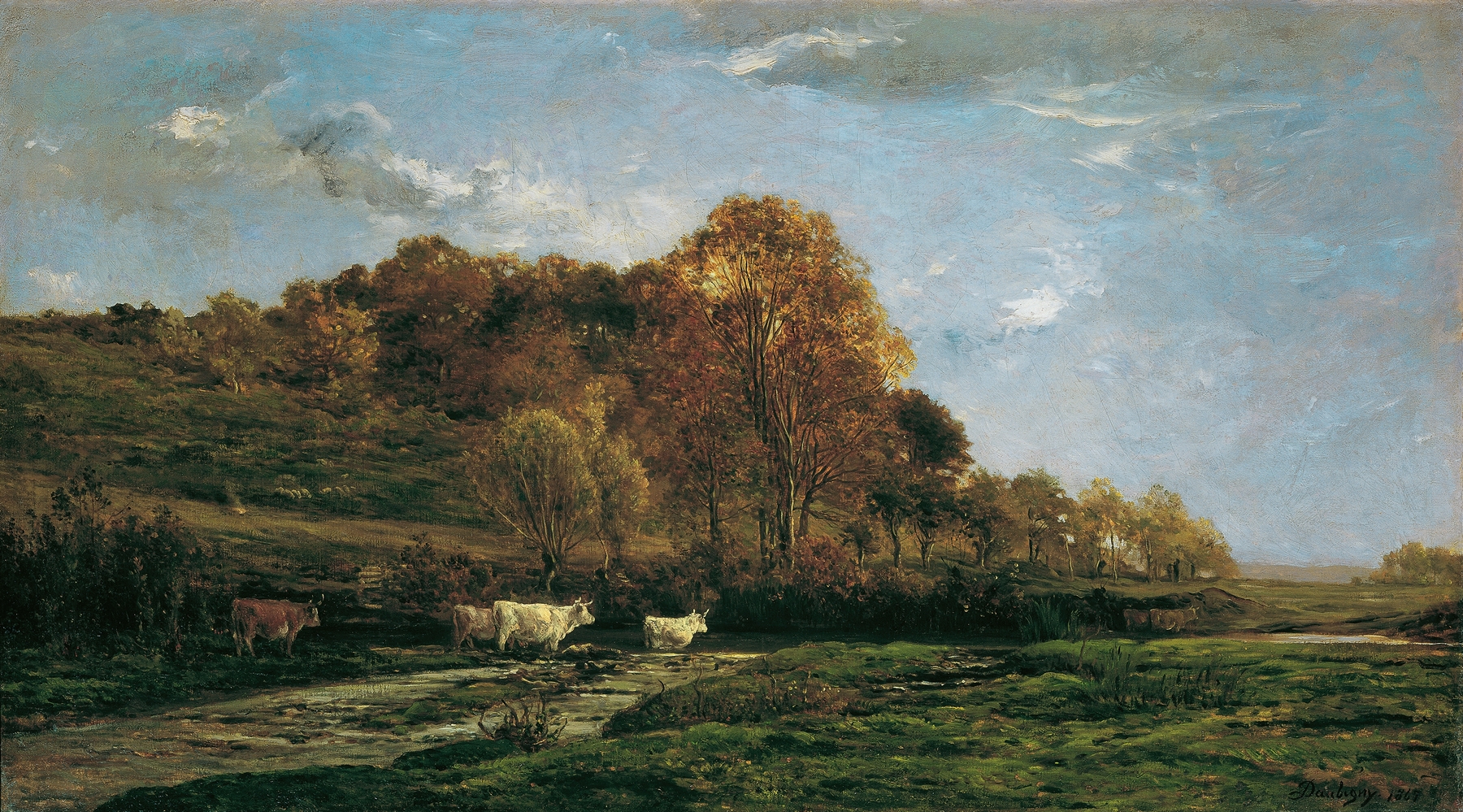
Each element of the composition embodies a duality: the stillness of the scene juxtaposed with the tumult of the currents that threaten to overwhelm. Charles François Daubigny created River Boat around 1860 while living and working in France, during a time when the art world was shifting towards Impressionism. This period saw a burgeoning interest in capturing the essence of fleeting moments, a reflection of Daubigny’s own embrace of the natural world amidst the societal changes occurring around him. His innovative approach to landscape painting placed him at the forefront of a movement that sought to express both beauty and the tumult of life.