River Landscape with Cows — History & Analysis
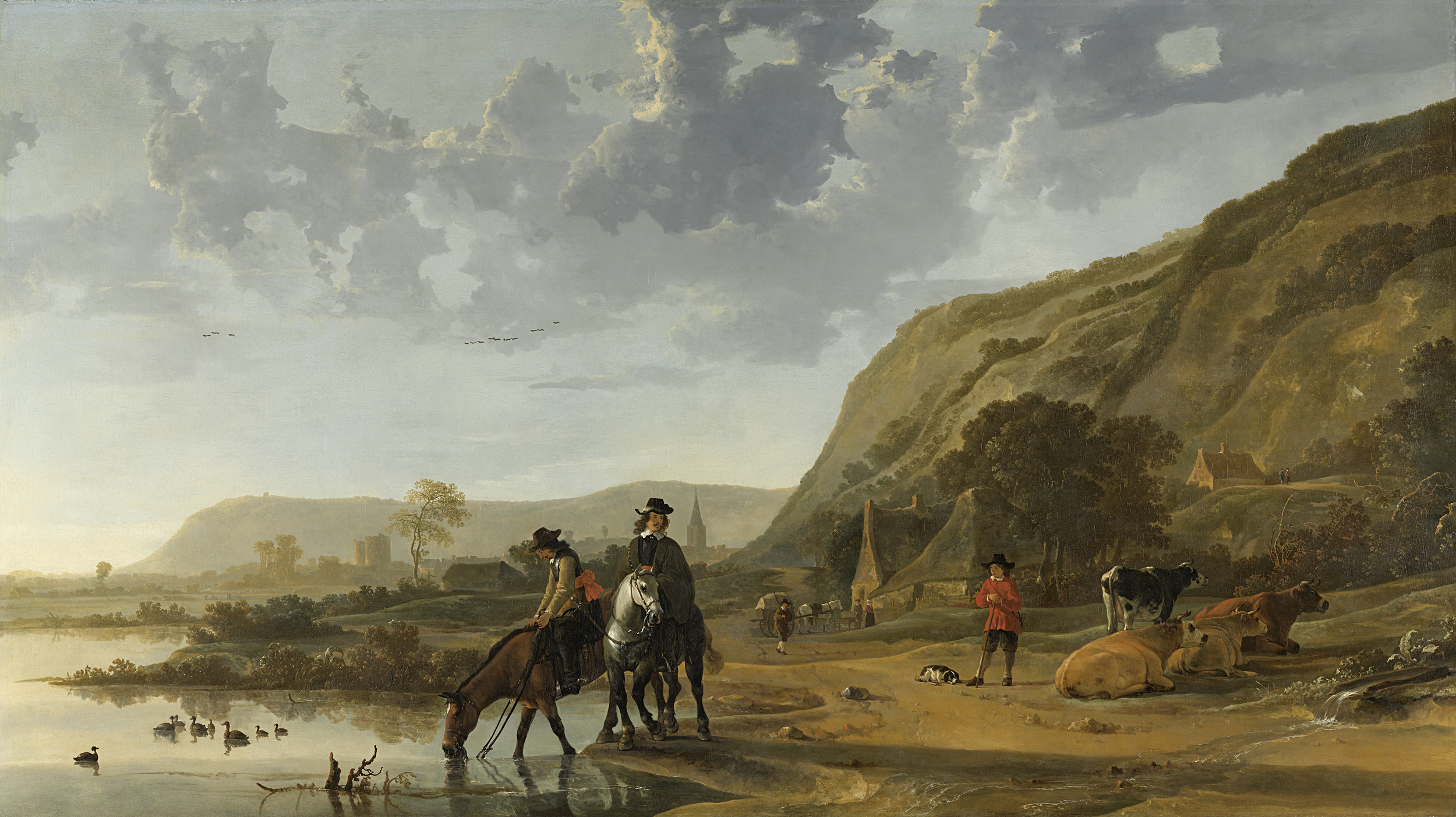
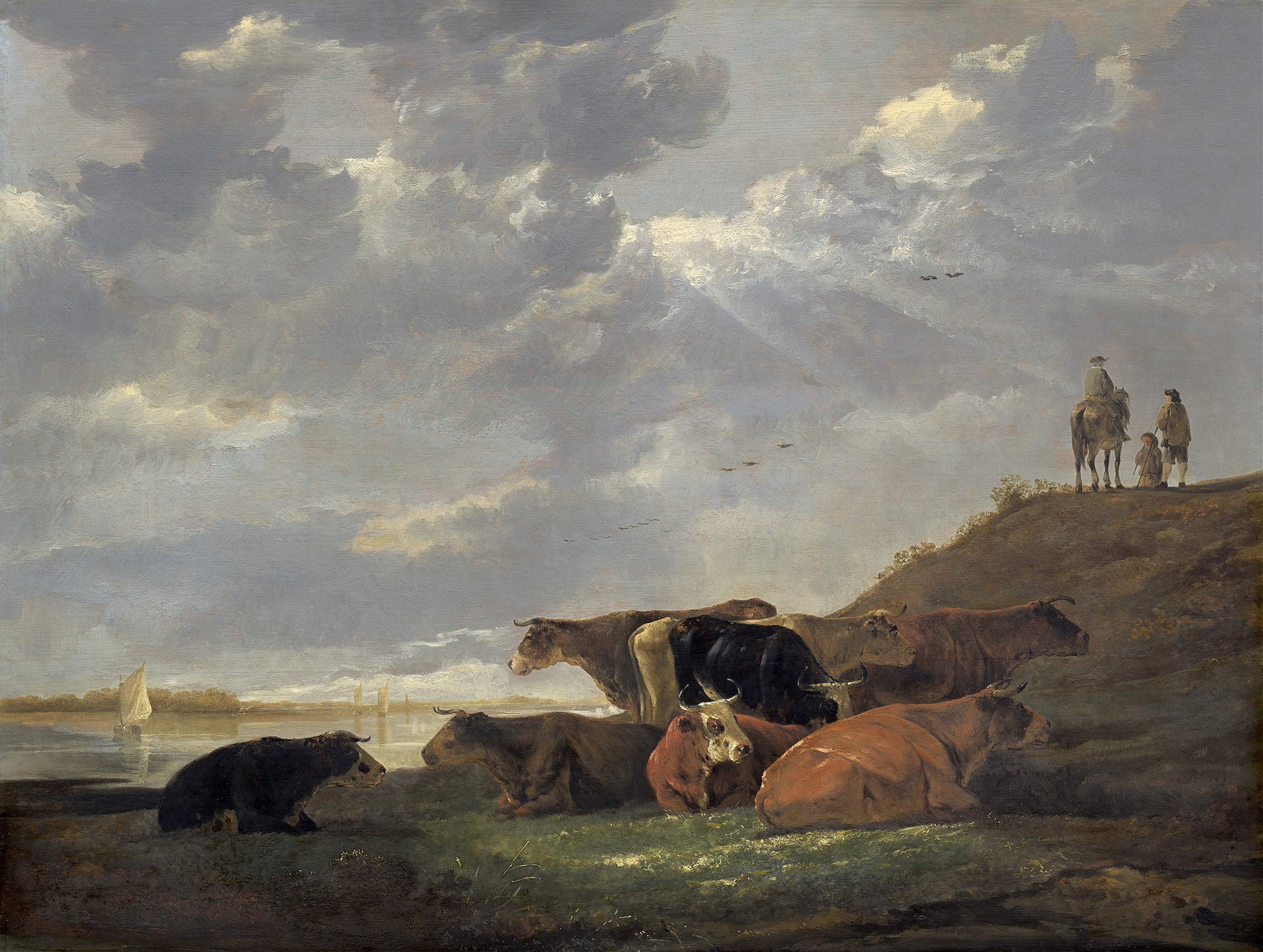
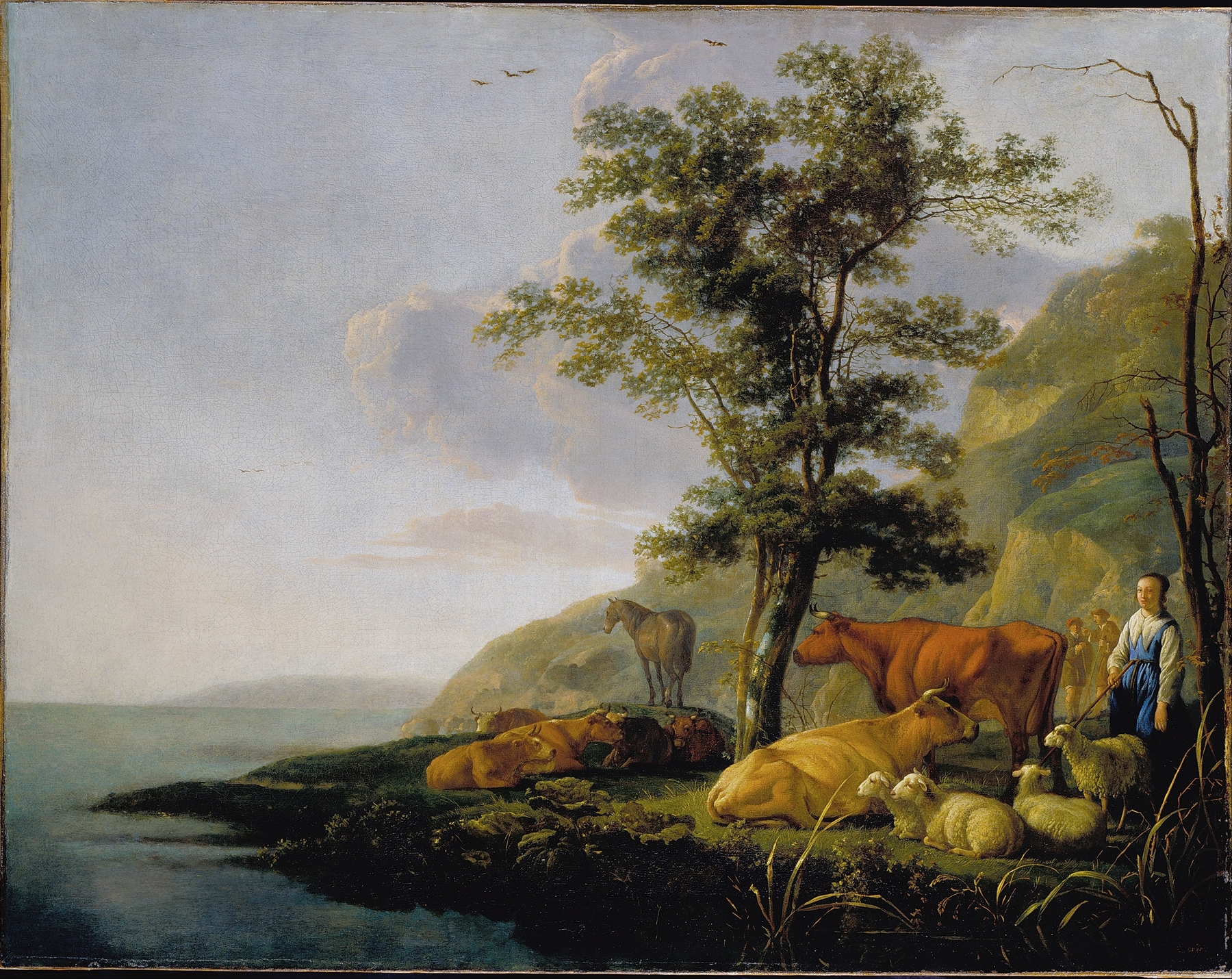
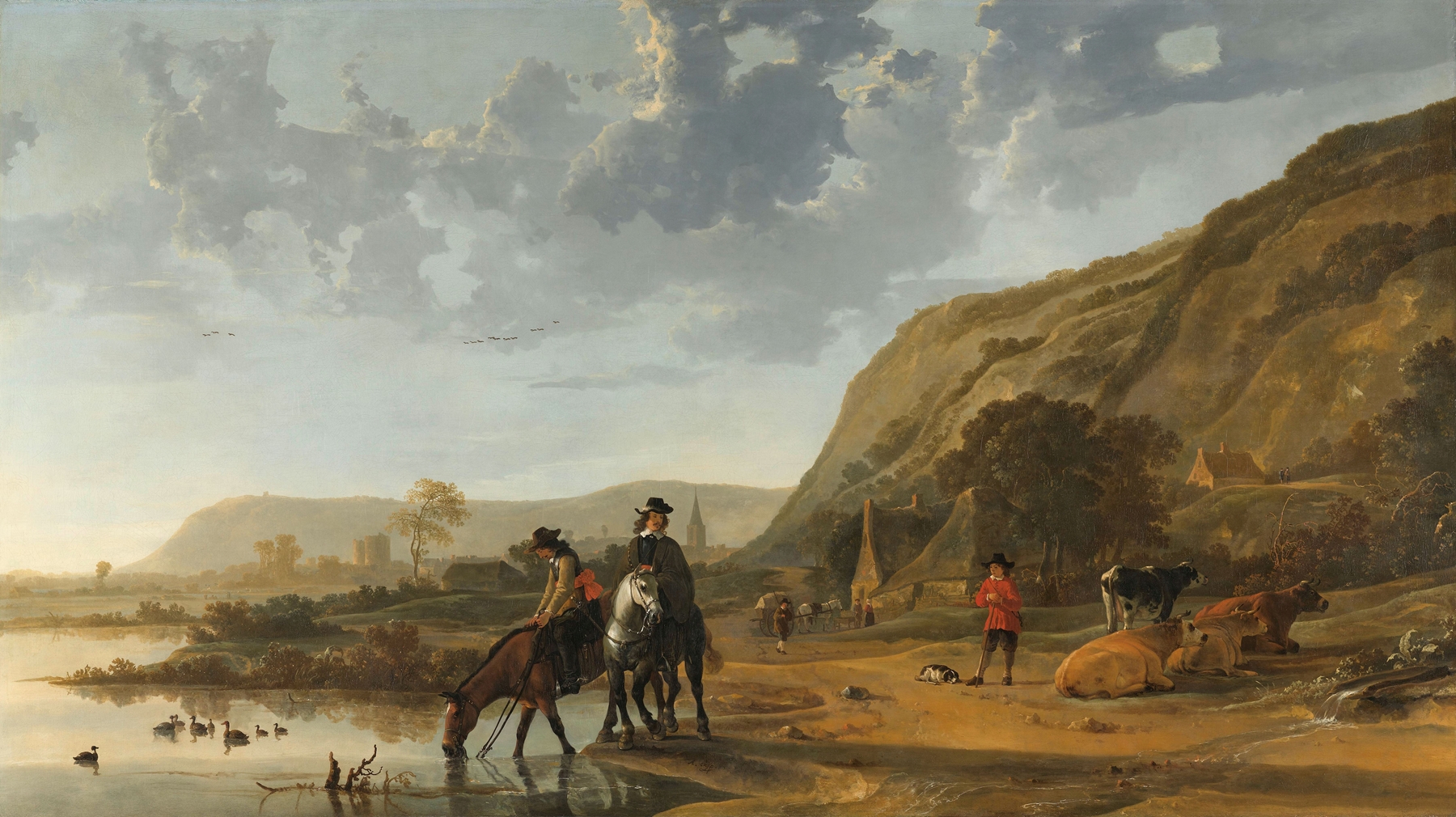
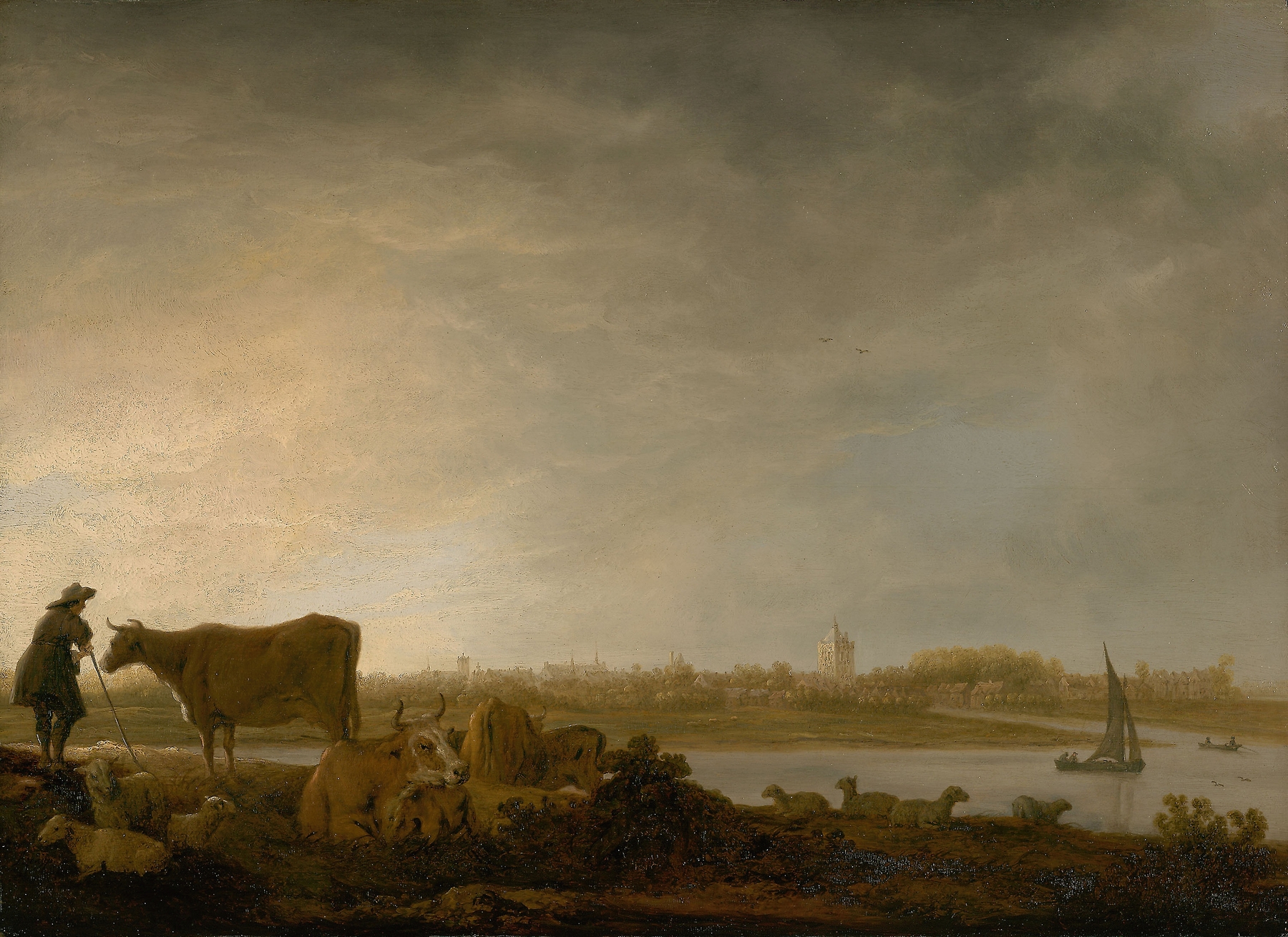
What secret hides in the quiet of the canvas? In River Landscape with Cows, the serenity of the pastoral scene invites the viewer to linger, discovering layers of ecstasy hidden beneath its tranquil surface. Look to the left at the gentle curve of the river, where the water reflects the soft hues of the sky, blending oranges and blues in a delicate dance. Notice how the sunlight bathes the cows in a warm glow, their forms soft yet vivid against the cool greens of the grass. The composition draws your gaze along the horizon, where the clouds gather like whispers, creating a sense of depth that pulls you into the landscape.
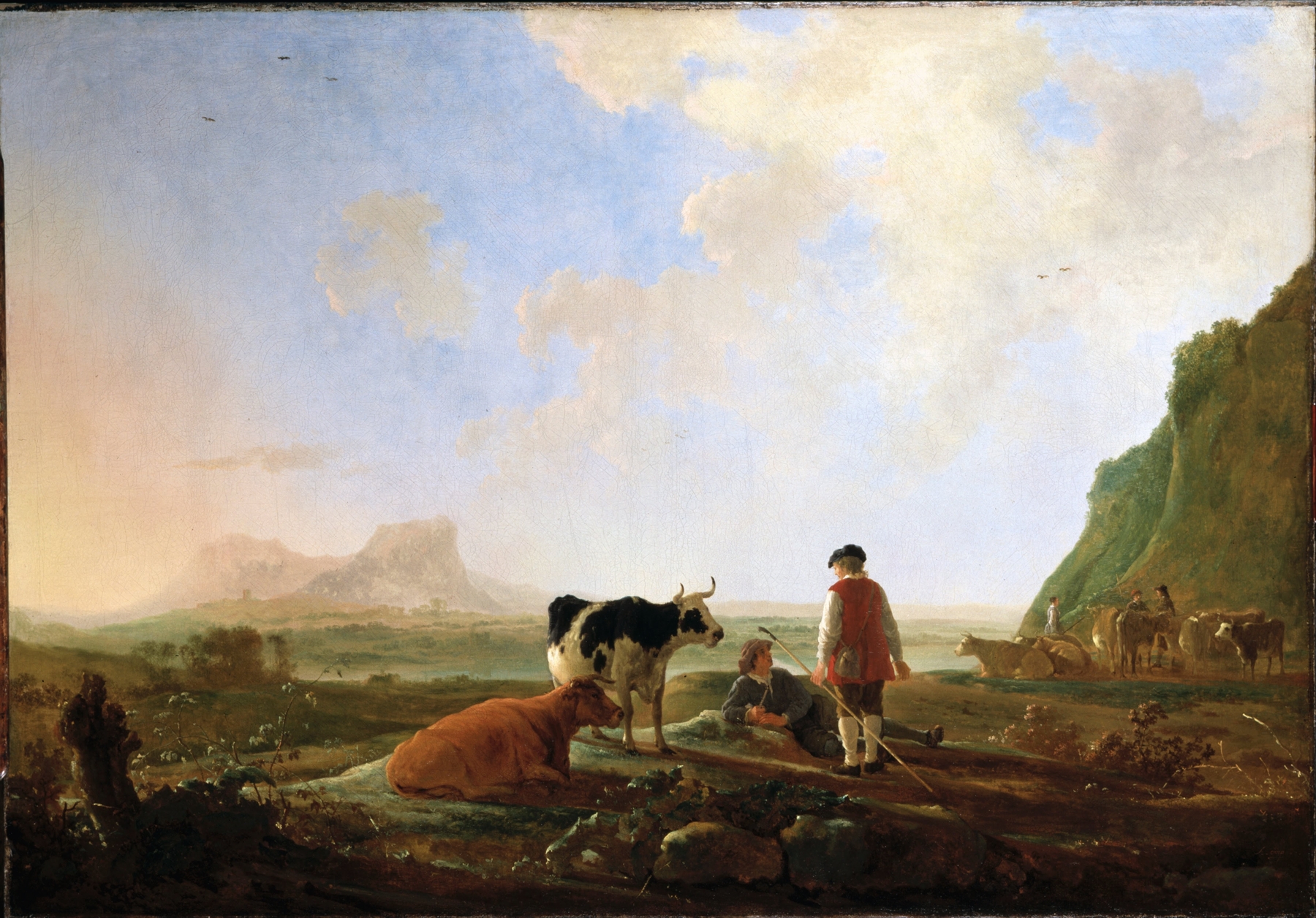
Cuyp’s masterful use of light and shadow enhances the scene’s peacefulness, evoking the ripe fullness of a summer's day. Yet, beneath this idyllic surface lies a narrative of contrasts. The sturdy cows embody a connection to the earth, grounding the viewer in the present, while the expansive sky suggests the infinite possibilities of the horizon. This juxtaposition of stability and freedom invites contemplation about the balance between nature and human existence.
Each detail, from the rippling water to the grazing animals, speaks to an underlying ecstasy—a celebration of life’s simple yet profound moments. Aelbert Cuyp painted this work between 1640 and 1650 in the Netherlands, a period marked by a flourishing of landscape art. During this time, he was establishing his reputation as a master of light and color, navigating the intersections of the Baroque style and Dutch realism. His landscapes not only reflect the beauty of the natural world but also offer a glimpse into an era that cherished the interplay between daily life and the serene countryside.