Rue de la Fontaine à Mulard — History & Analysis
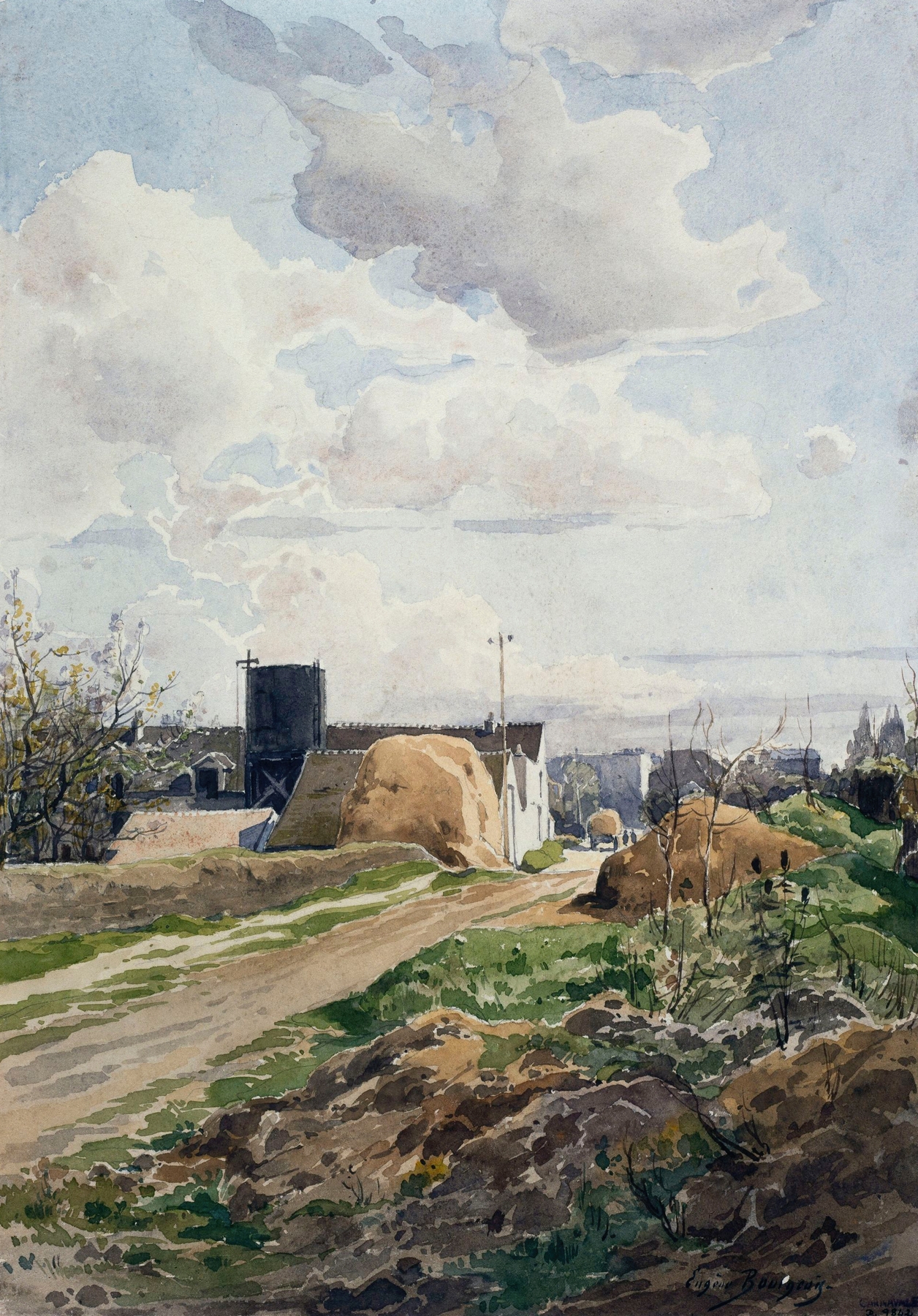
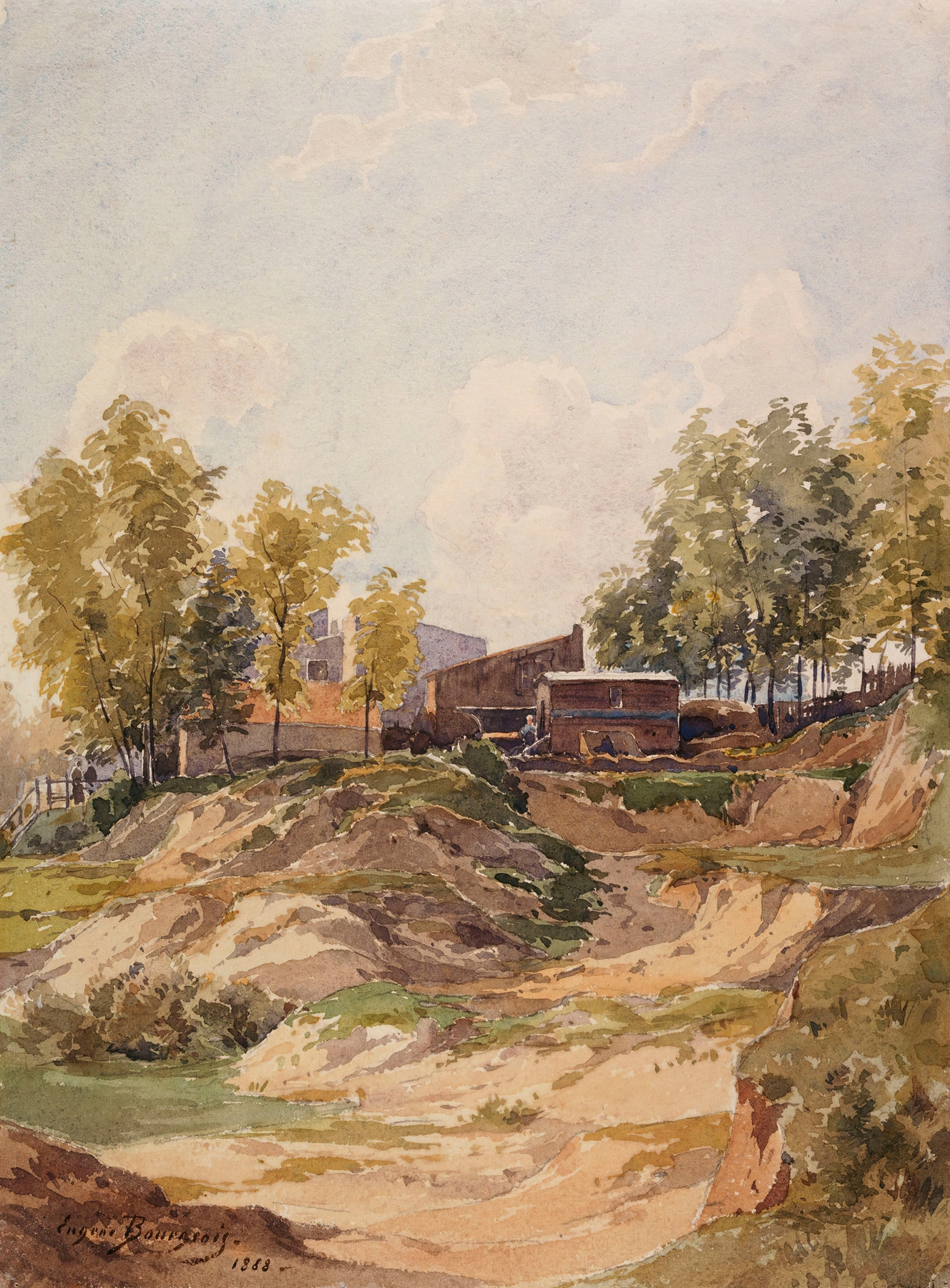
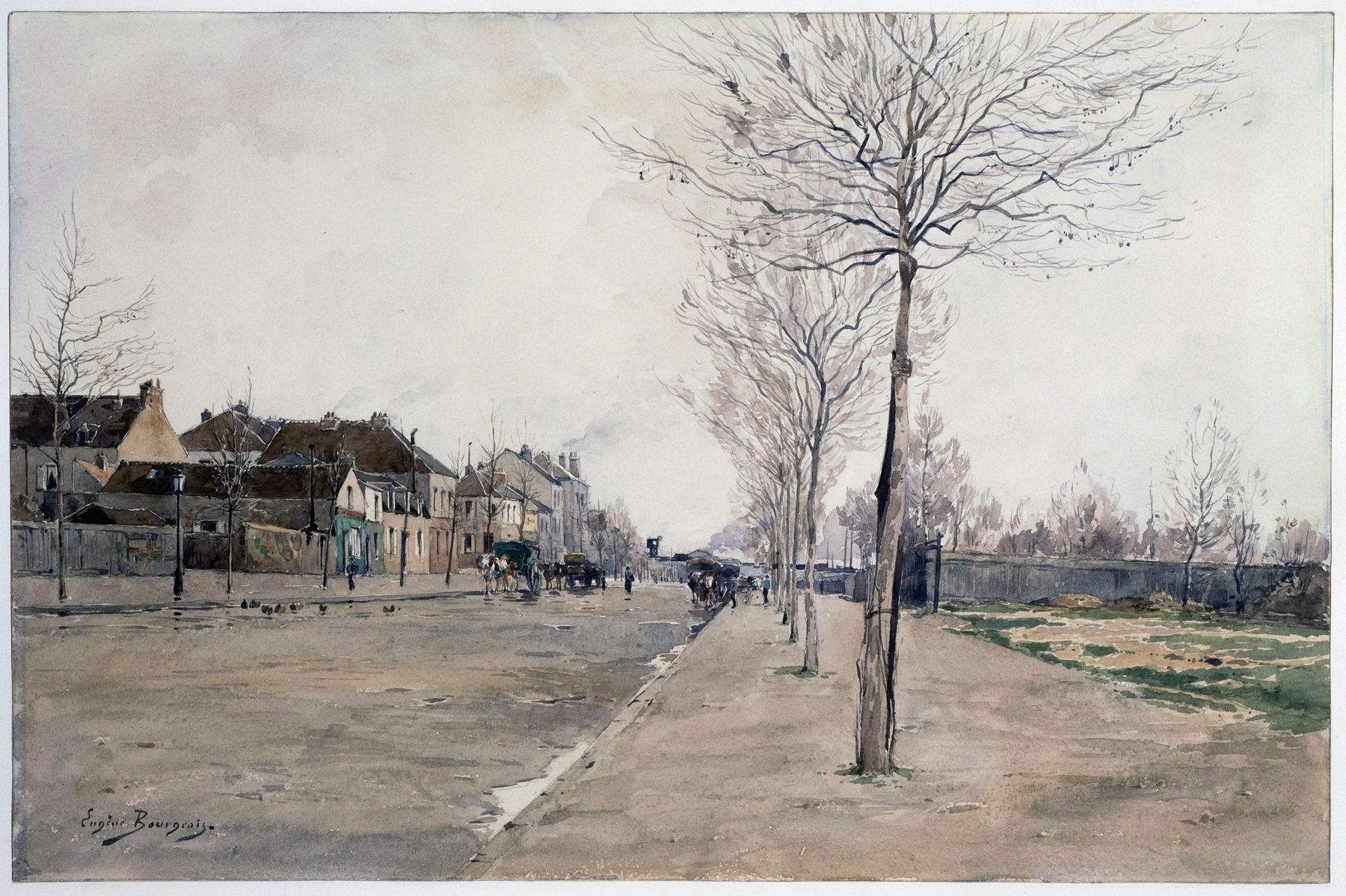
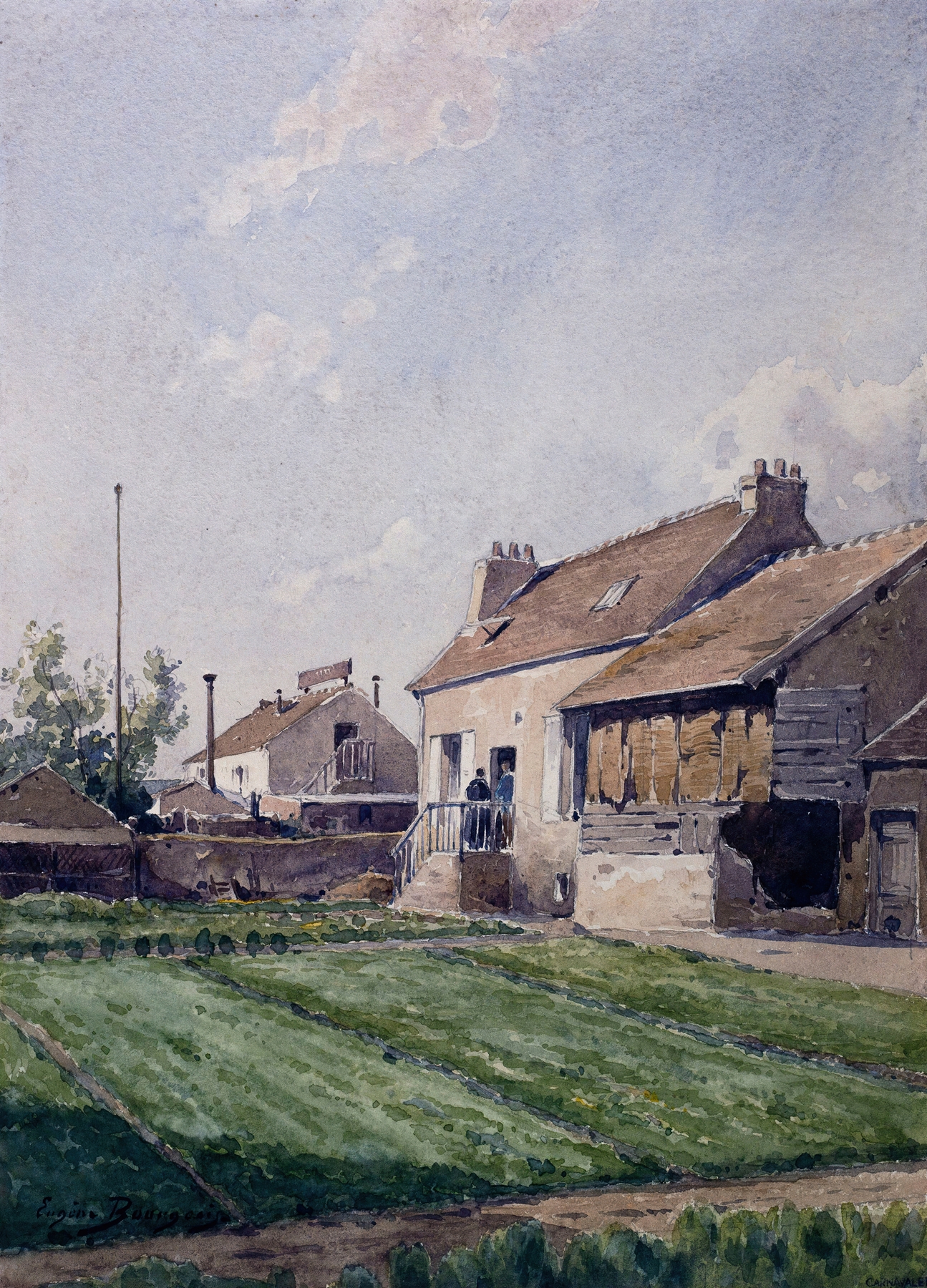
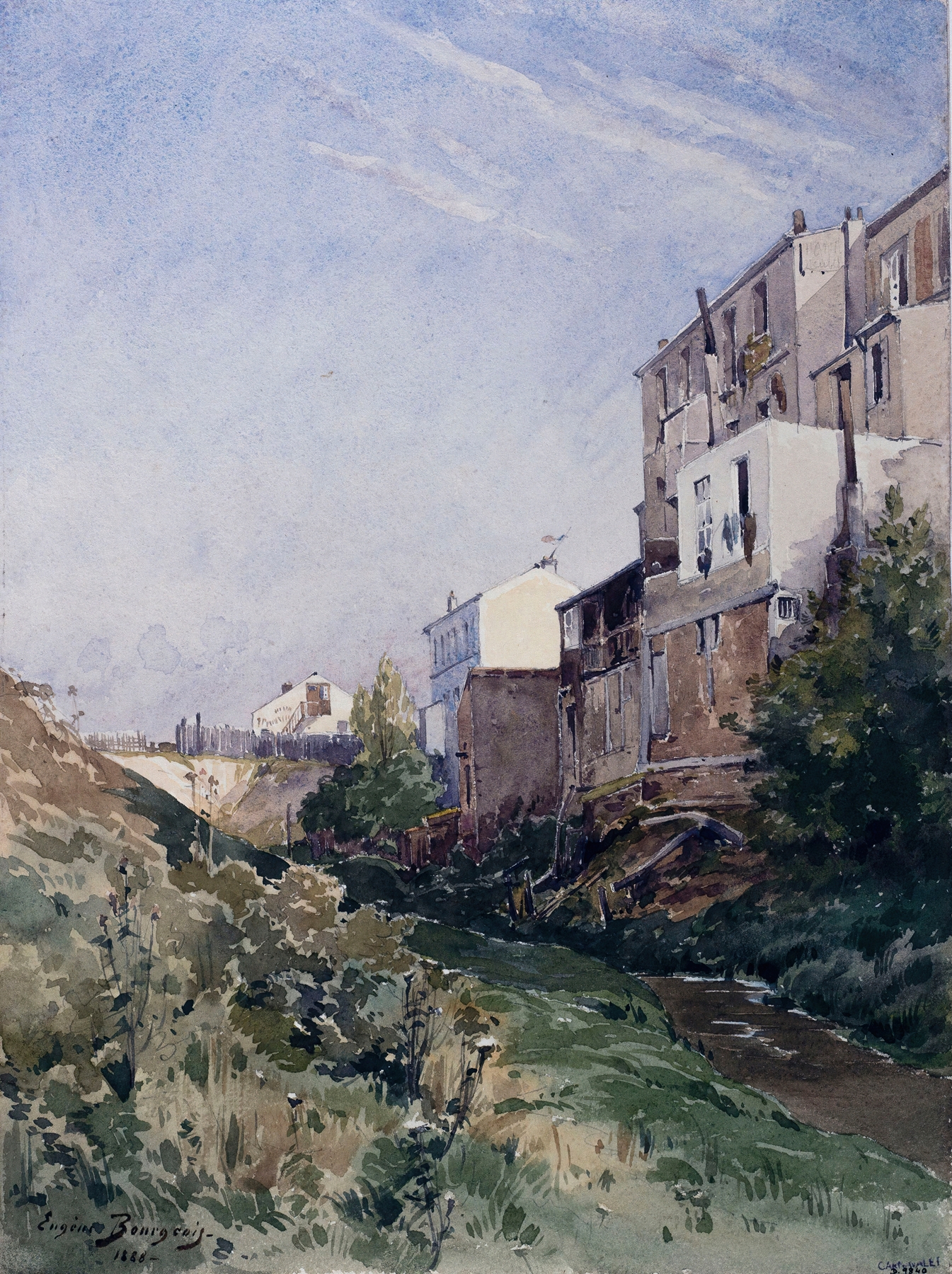
When did color learn to lie? In a world where vibrancy often masks sorrow, the palette reveals an unsettling truth, whispering tales of quiet melancholy. Look to the left at the earthy tones of the cobblestone street, where shadows deepen and merge with the ochres of the buildings. The scene unfolds against a backdrop of muted greens, punctuated by the ephemeral glow of street lamps. Each brushstroke is deliberate, capturing not just the physical space but the emotional weight that hangs in the air.
The gentle curve of the street draws the eye, inviting the viewer into the intimate embrace of this Parisian corner. As you delve deeper, notice the solitary figure near the fountain, seemingly lost in thought. His posture, slightly hunched, suggests a moment of introspection amidst the bustling city. The contrast between the stillness of the figure and the life that surrounds him evokes a poignant isolation.
The light and shadow interplay enhances this feeling, revealing the tension between vibrancy and solitude, and inviting contemplation on the meaning of belonging. Eugène Bourgeois painted Rue de la Fontaine à Mulard in 1888, during a time of artistic exploration and change in France. The Impressionist movement was gaining momentum, influencing Bourgeois to capture the essence of contemporary life in a way that radiated realism yet hinted at deeper sentiments. In this period, he sought to convey the nuanced emotions embedded within everyday scenes, leading him to create works that resonated with both the outward appearances and inward struggles of his subjects.