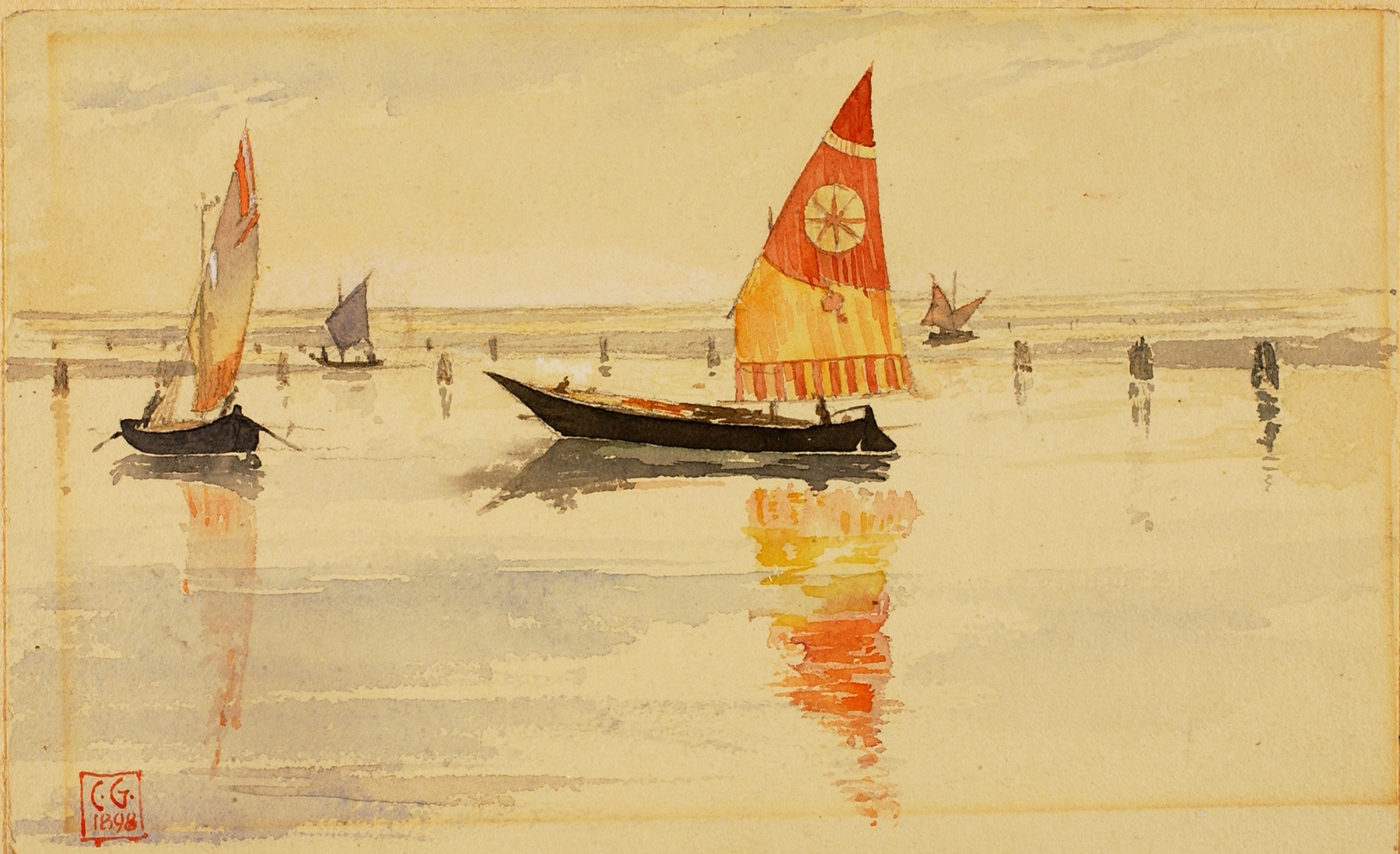
When did color learn to lie? In the shimmering reflections of the canal, Cass Gilbert encapsulates the ecstasy of a moment where reality dances with illusion, inviting us into a world drenched in hues of azure and gold. Look to the left at the bold splashes of cerulean and ochre, where the sails unfurl like wings against the backdrop of Venice’s timeless architecture. The contrast between the vibrant sails and the muted tones of the buildings creates a rhythmic harmony, drawing your eye across the canvas. Notice how the light glistens on the water's surface, creating a reflective tapestry that blurs the boundaries between the vessels and their surroundings, evoking a sense of fluidity and movement. The juxtaposition of the serene water with the vibrant sails speaks to a deeper narrative of freedom and aspiration. Each boat, with its billowing canvases, represents not just a physical journey across the lagoon but a spiritual quest for liberation amidst the constraints of the everyday. This tension between stillness and motion allows the viewer to feel the underlying pulse of life in Venice, a city caught between the ebb and flow of time and the unyielding embrace of beauty. In 1898, while residing in the United States, Cass Gilbert crafted this piece during a period when Impressionism was resonating globally, bending perceptions of light and color. Capturing this iconic scene of Venice, he was influenced by both the artistic movements of his time and his own explorations, merging a sense of realism with the vibrant energy that characterizes this coastal city.