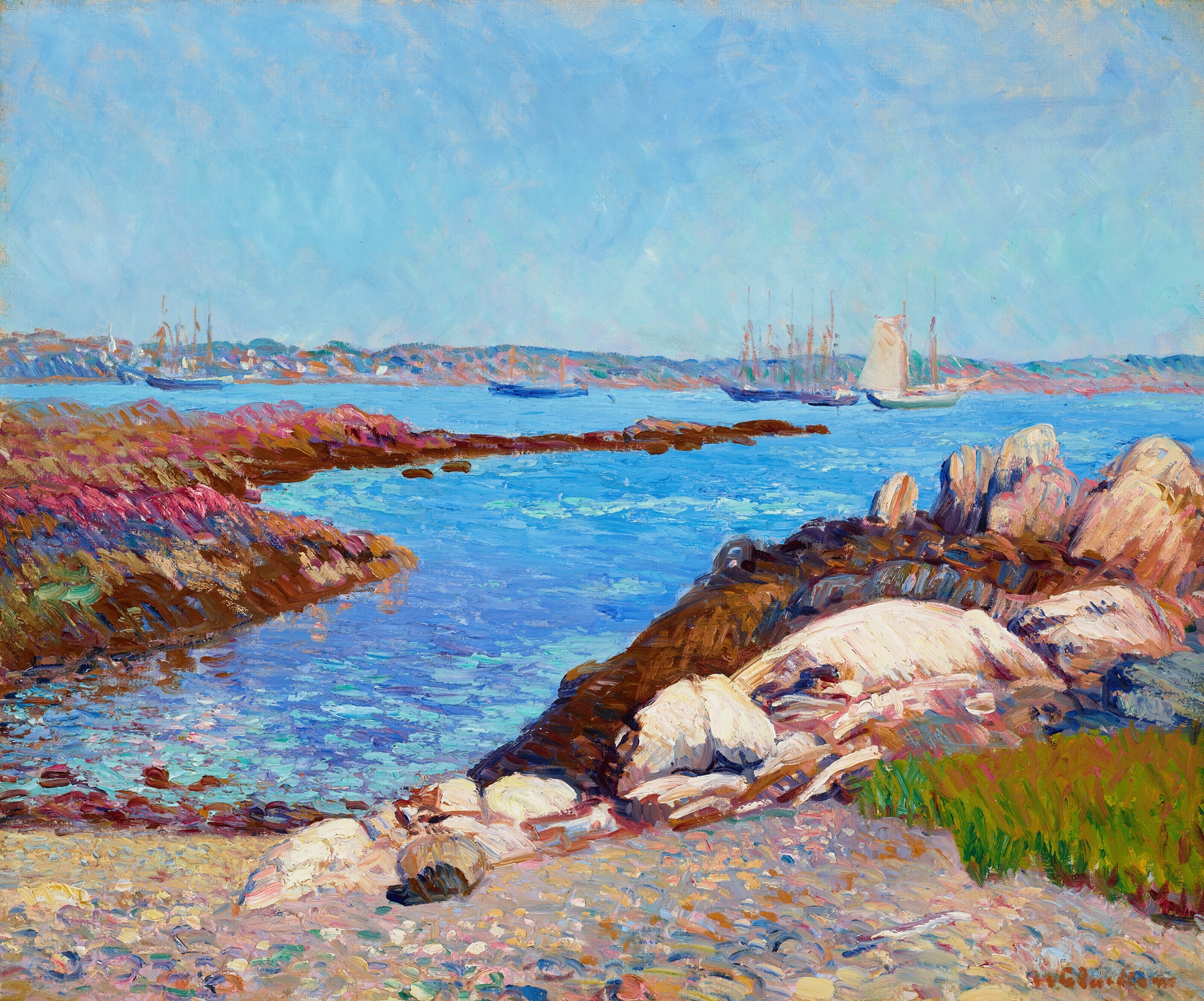
Samois-sur-Seine — History & Analysis
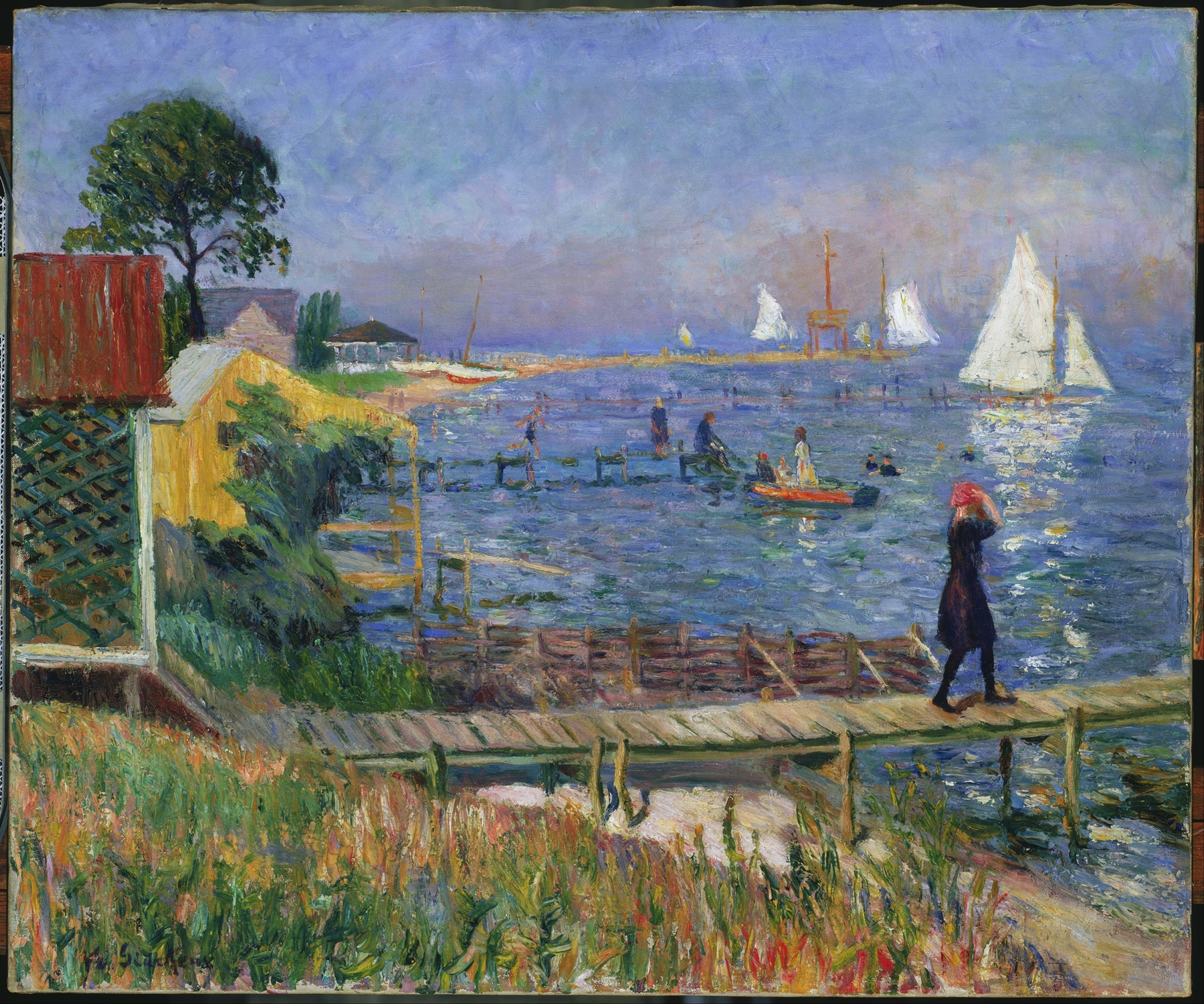
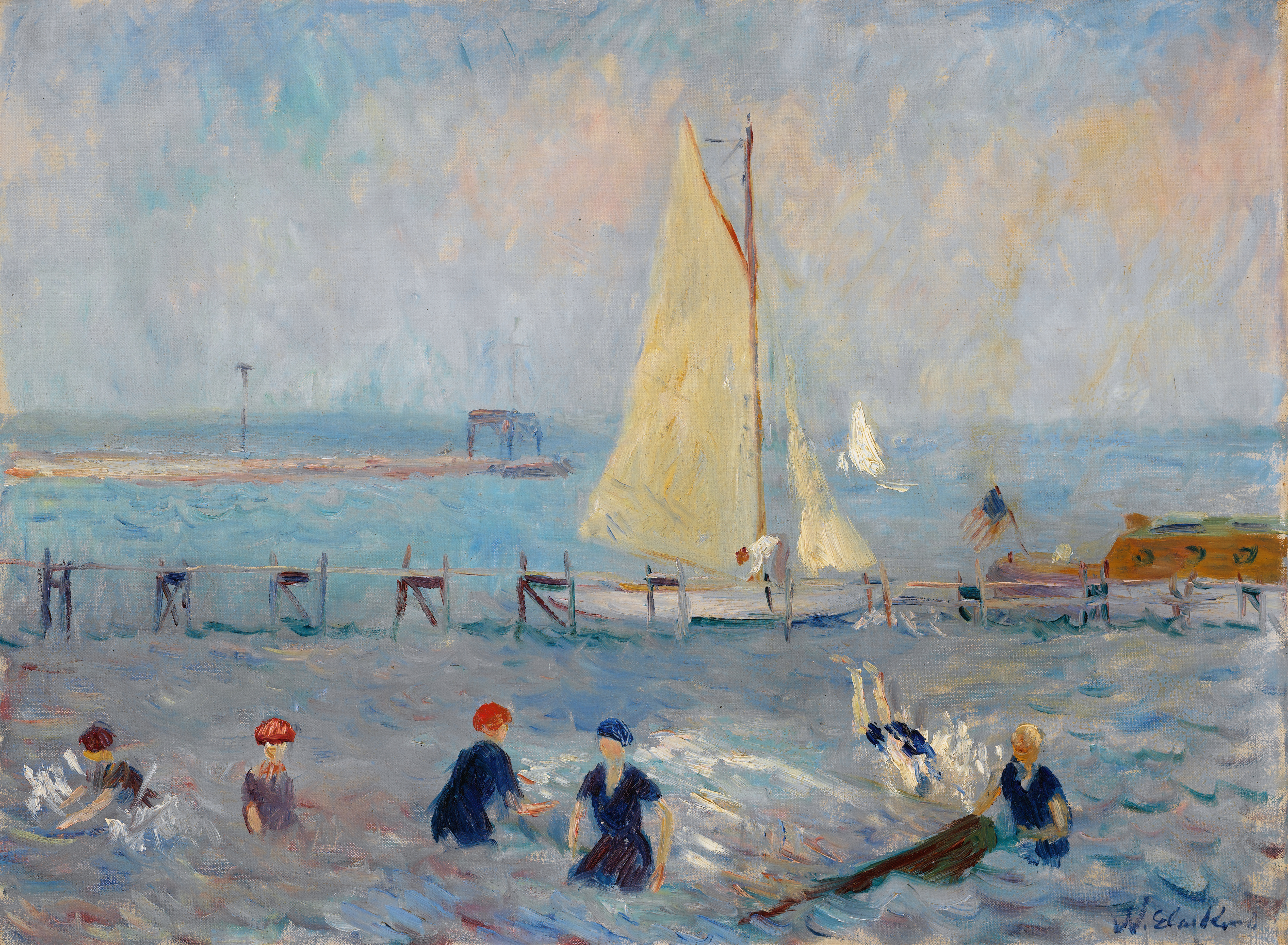
“The canvas doesn’t lie — it simply waits.” In the realm of art, balance can be both a delicate dance and a profound statement, inviting viewers to explore the space between chaos and harmony. Look to the right at the shimmering water, where reflections ripple under the soft caress of sunlight. Glackens employs a palette of serene blues and warm golden hues, creating a soothing ambiance that draws the eye.
The composition is both structured and organic, with dynamic brushstrokes depicting the foliage and the gentle flow of the river, encapsulating a moment in time that feels both fleeting and eternal. Yet, beneath this tranquil surface lies a tension between the static and the flowing, a dialogue between nature and human presence. The figures scattered across the canvas — picnicking, laughing, or simply gazing — embody a sense of leisure that contrasts the ever-moving water.
Their stillness in a world of motion prompts reflections on the essence of balance in life, between work and play, solitude and community. In 1925, while residing in New York, the artist created Samois-sur-Seine during a period of vibrant exploration in American art, influenced by European styles yet rooted in American subjects. This was a time when artists like him were beginning to embrace the Impressionist techniques that had flourished across the Atlantic, merging observations of everyday life with a newfound sense of freedom in brushwork and color.