Santa Caterina a Formiello und Porta Capuana in Neapel — History & Analysis
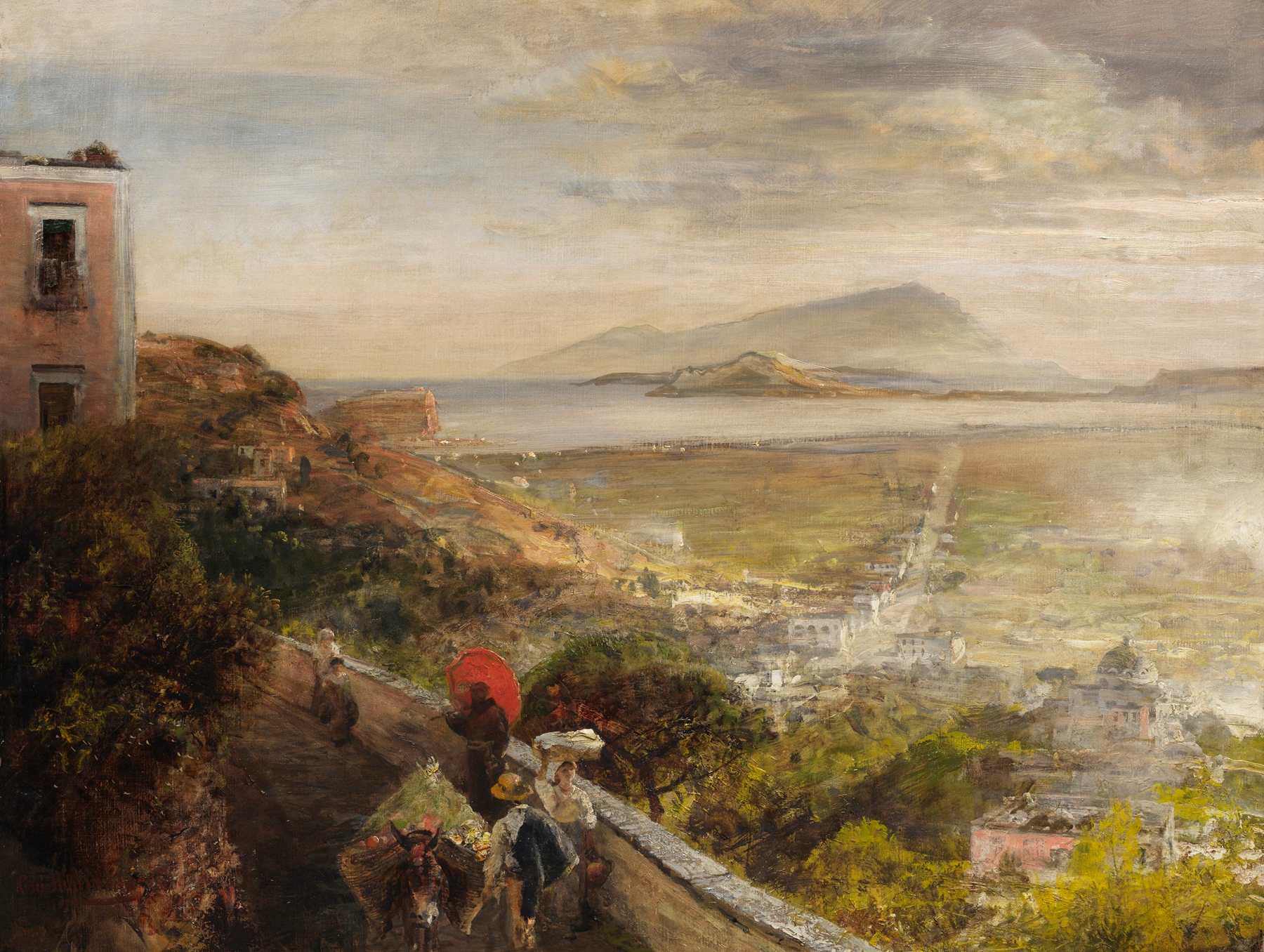
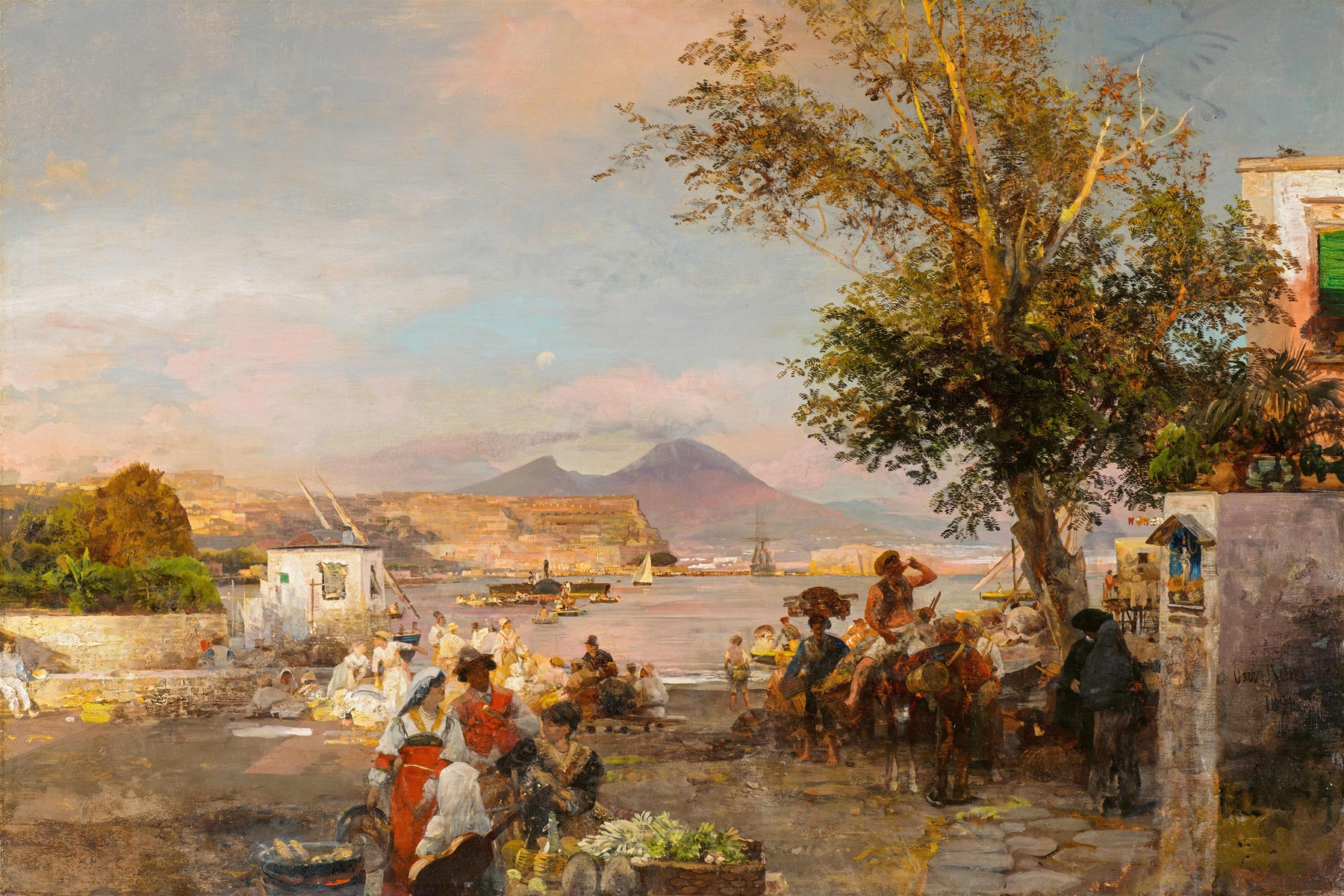
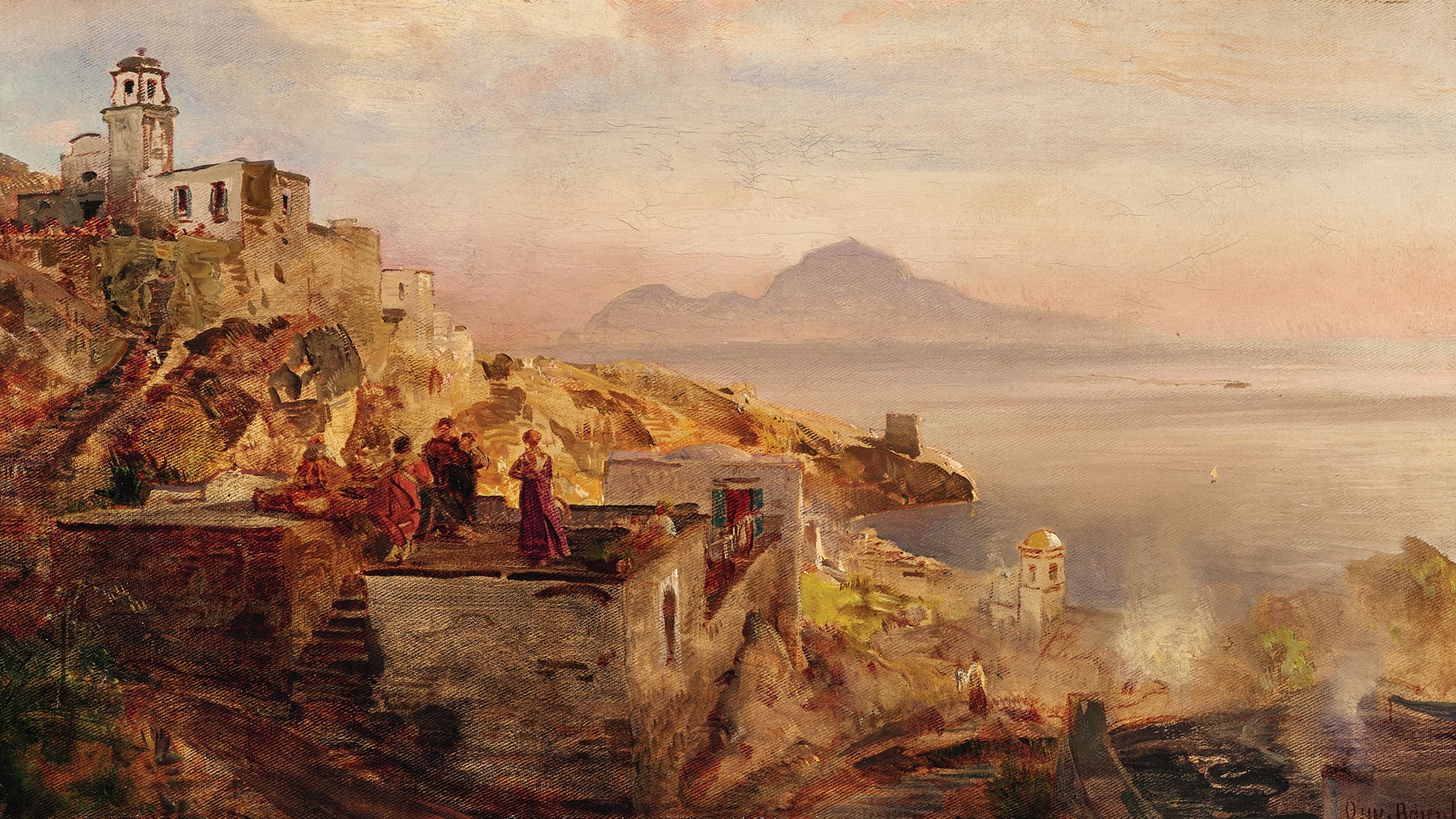
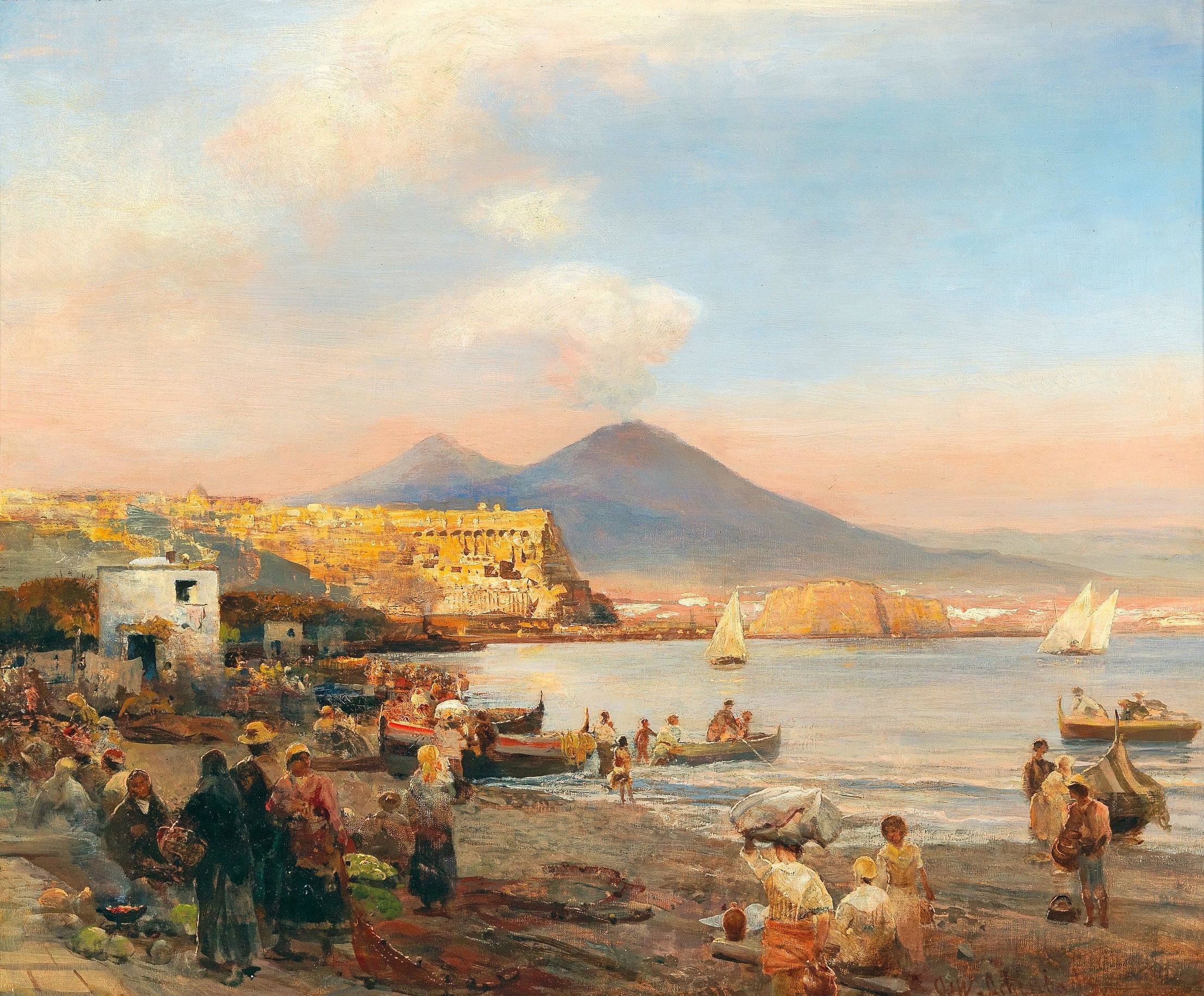
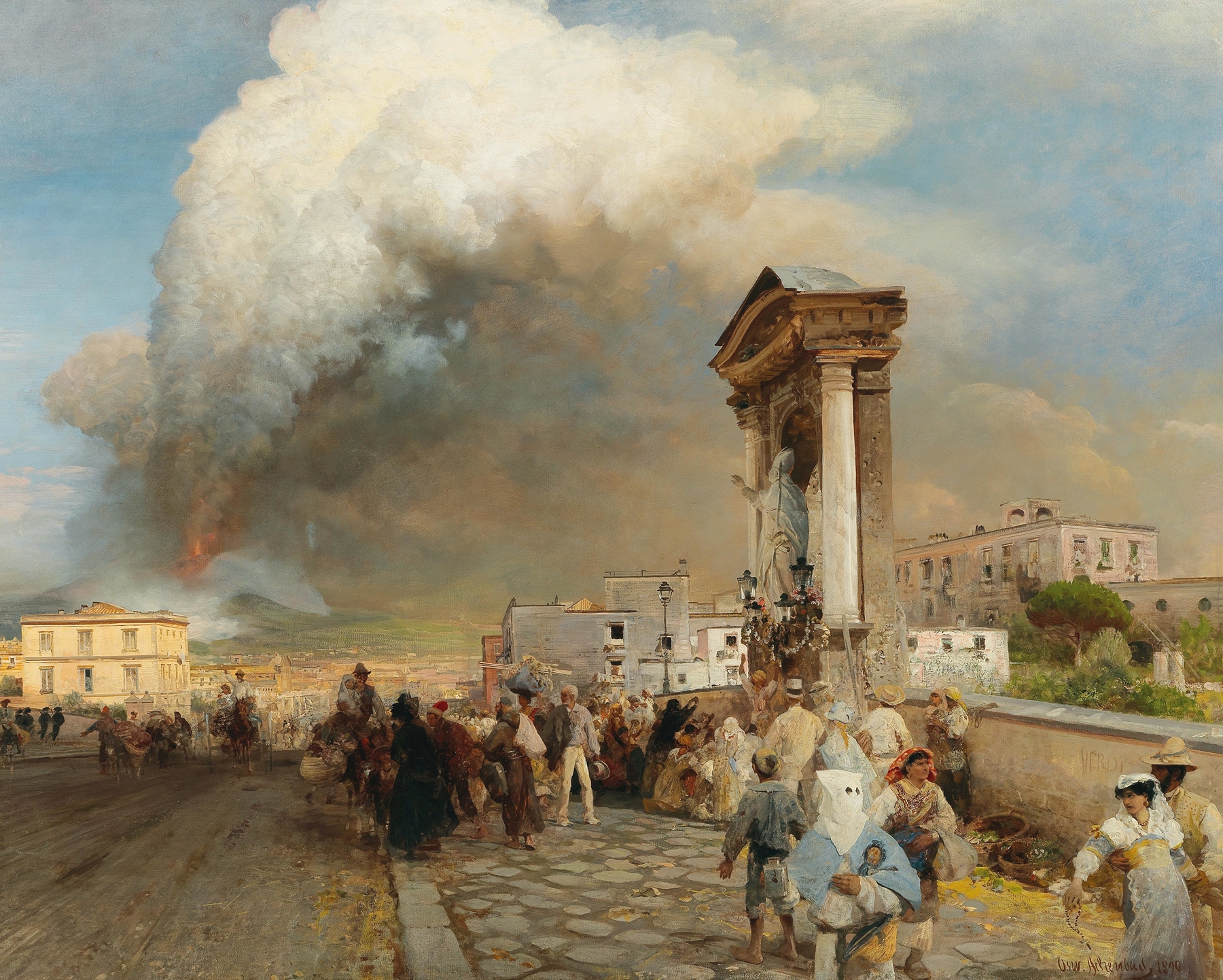
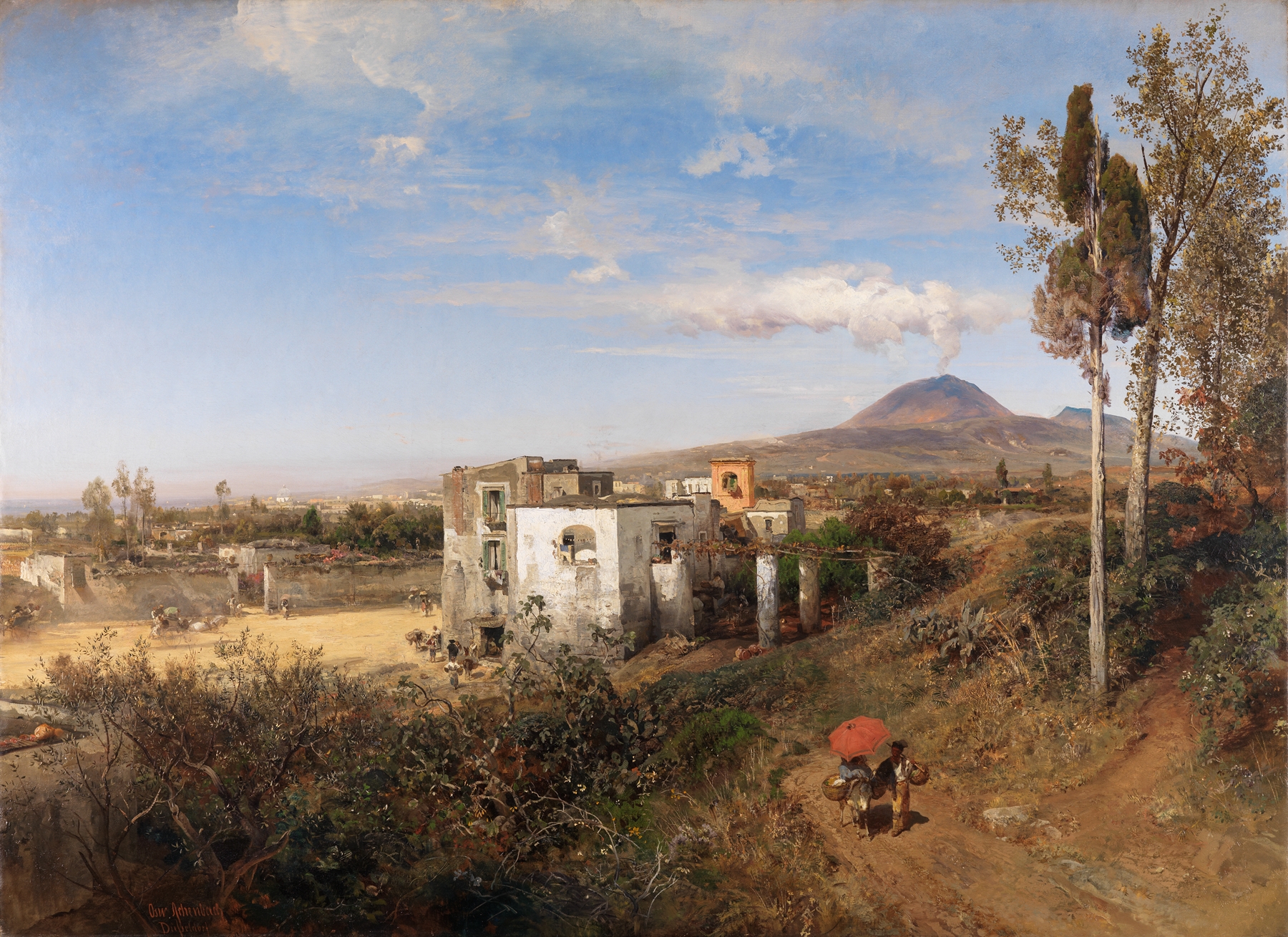
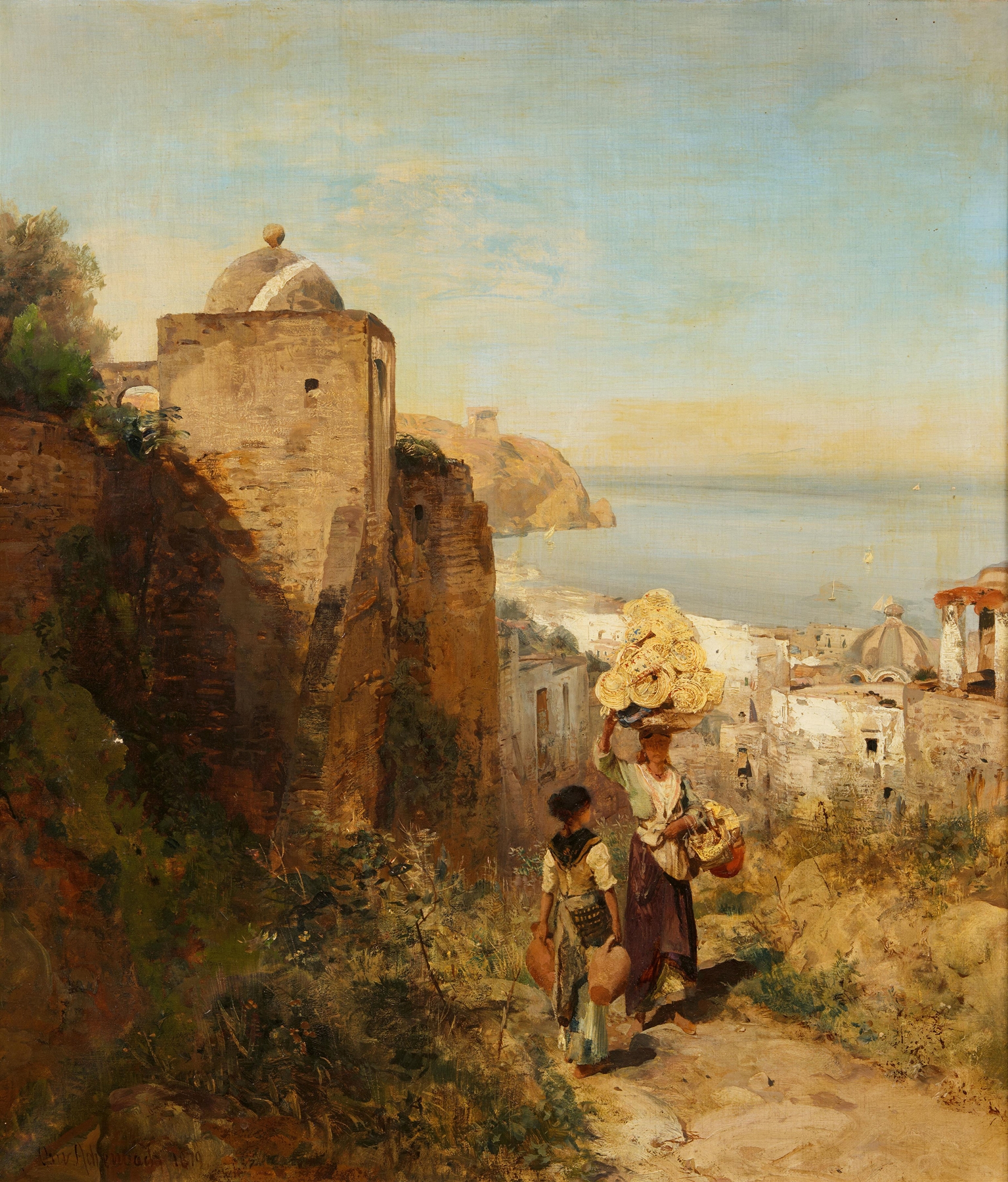
Could beauty survive in a century of chaos? In Oswald Achenbach's work, the answer lies in the delicate interplay of light and shadow that breathes life into a city on the brink of turmoil. Look to the right at the imposing structure of Porta Capuana, its ancient stones whispering tales of resilience against the backdrop of a vibrant Neapolitan scene. The artist's deft brushstrokes capture the play of sunlight glinting off the buildings, illuminating the figures moving purposefully through the archway.
Amidst a palette of warm earth tones and cool blues, each stroke reveals the careful balance between life and decay, evoking the character of a city steeped in history yet teetering on the edge of modernity. Beneath the surface, emotional tensions simmer. The bustling streets, filled with merchants and townsfolk, hint at a society thriving despite underlying fears of change. The distant mountains loom large, suggesting both stability and isolation, as if nature itself is a silent witness to the unfolding drama.
Achenbach’s juxtaposition of the architectural grandeur with the ordinary life of the people beckons viewers to ponder the resilience of beauty against the inevitable passage of time. Creating this piece in the mid-19th century, Achenbach was in Düsseldorf amidst a transformative period for art. The Romantic movement was flourishing, emphasizing emotion and the sublime in nature. This environment propelled Achenbach to explore themes of landscape and architecture, capturing the essence of places alive with history, even as Europe faced social and political upheaval.