Scene Associated with Mount Vernon — History & Analysis
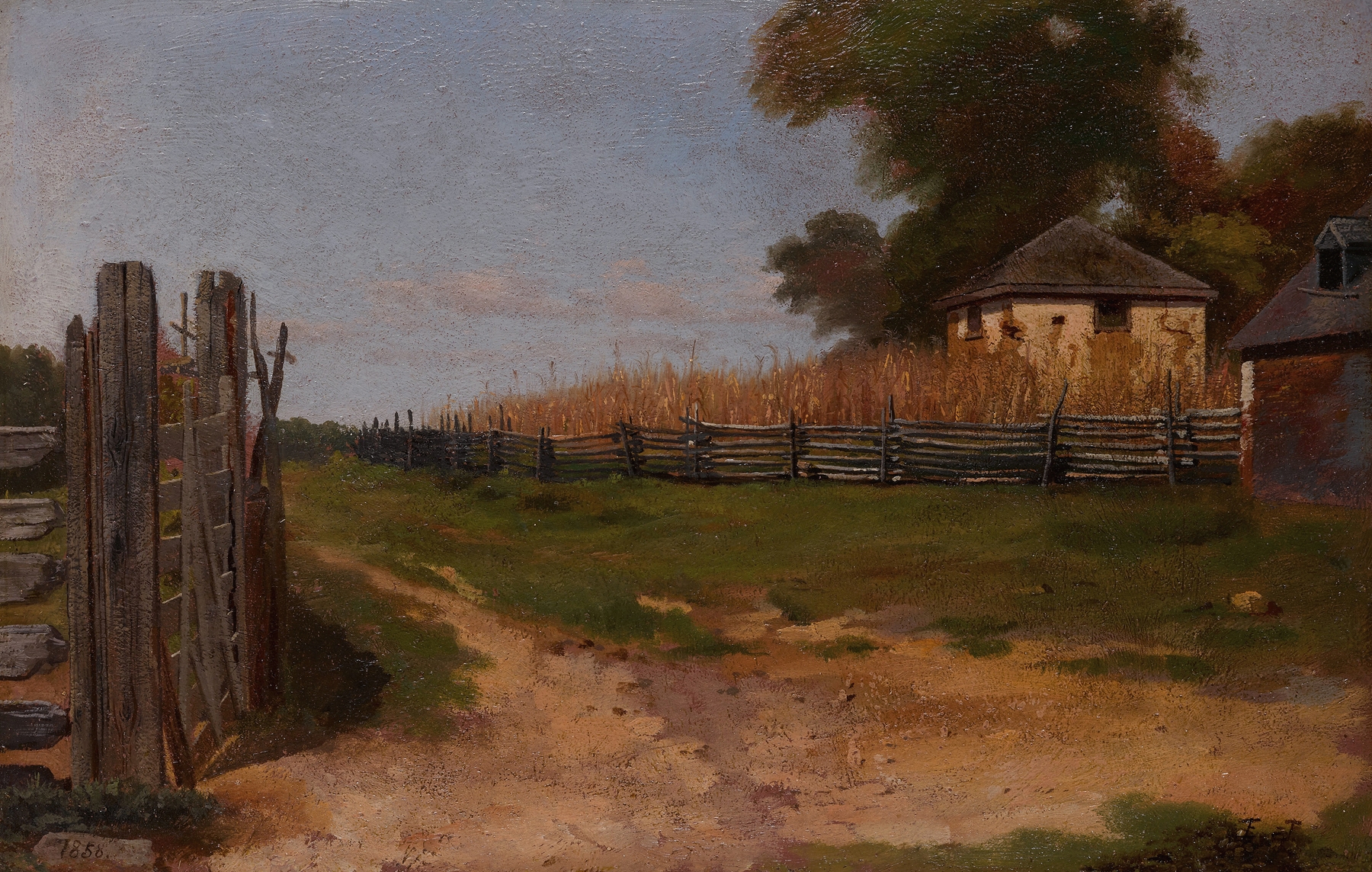
When did color learn to lie? In the stillness of a moment, serenity unfolds under the watchful gaze of a timeless landscape, where tranquility masks the tumult of human existence. Look to the center of the canvas, where soft greens and warm browns intertwine, evoking a sense of peace that envelops the viewer. The gentle strokes of Eastman Johnson’s brush create a harmonious balance between the foreground and the distant vista, drawing your eye to the graceful lines of the rising hills.
Notice how the sunlight filters through the foliage, casting dappled shadows that dance with the breeze, offering a glimpse of life’s fleeting beauty. Yet, beneath this calm facade lies a deeper tension. The delicate juxtaposition of light and shadow speaks to the complexities of human emotion — a silent yearning for connection amid the idyllic solitude. The figures, though at rest, seem almost suspended between past and future, hinting at stories untold, hopes dashed, or dreams reclaimed.
The serene color palette, while soothing, paradoxically beckons the viewer to question what is left unspoken. In 1858, Eastman Johnson crafted this piece during a time of great transition in America, where the seeds of civil strife were beginning to take root. As the nation grappled with its identity, Johnson himself was exploring the interplay of realism and emotion in his work, influenced by the evolving landscape of American art. This painting emerges from that critical juncture, capturing a moment that resonates with a timeless yearning for peace amidst change.