Schooner – Nassau — History & Analysis
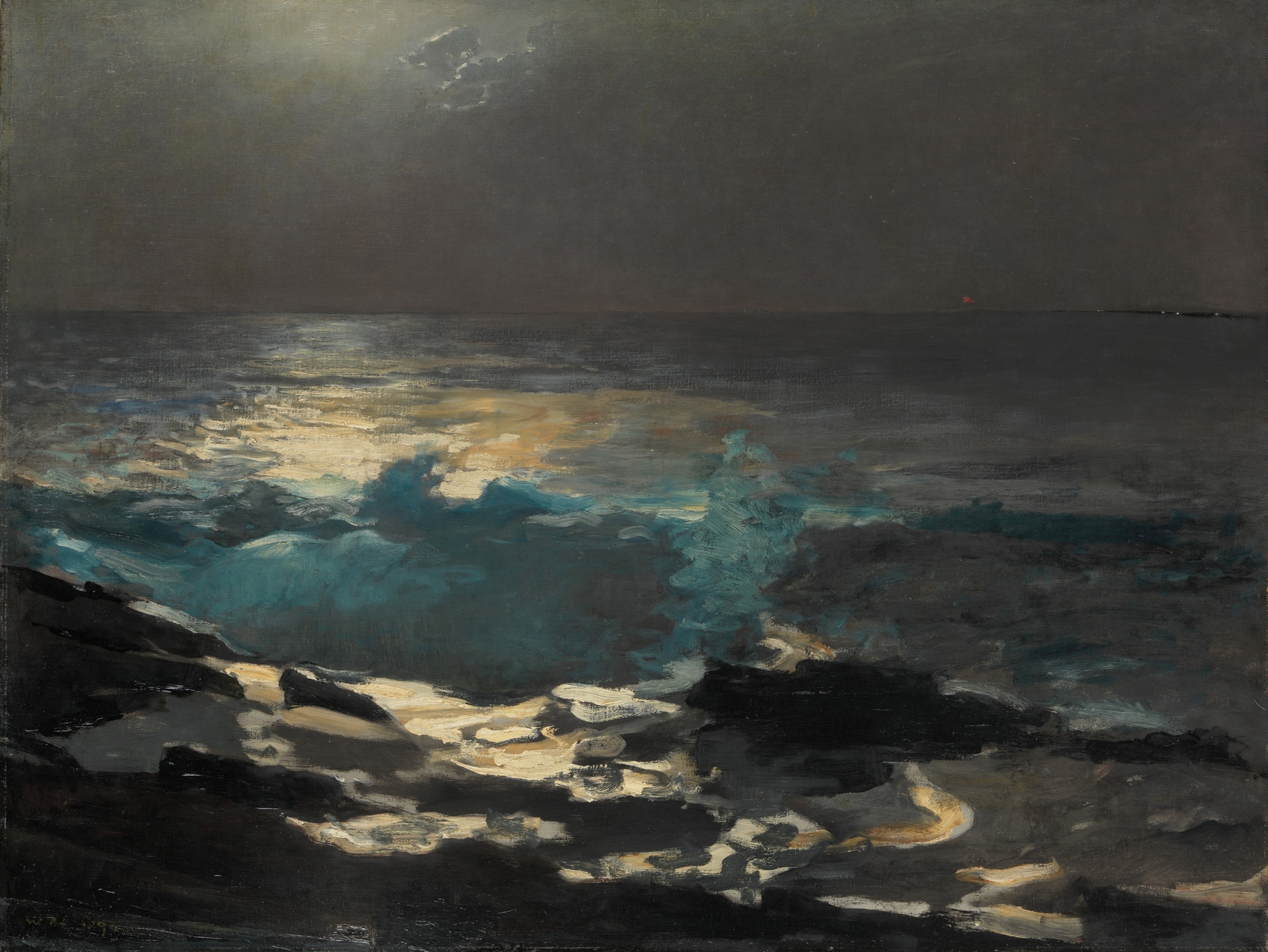
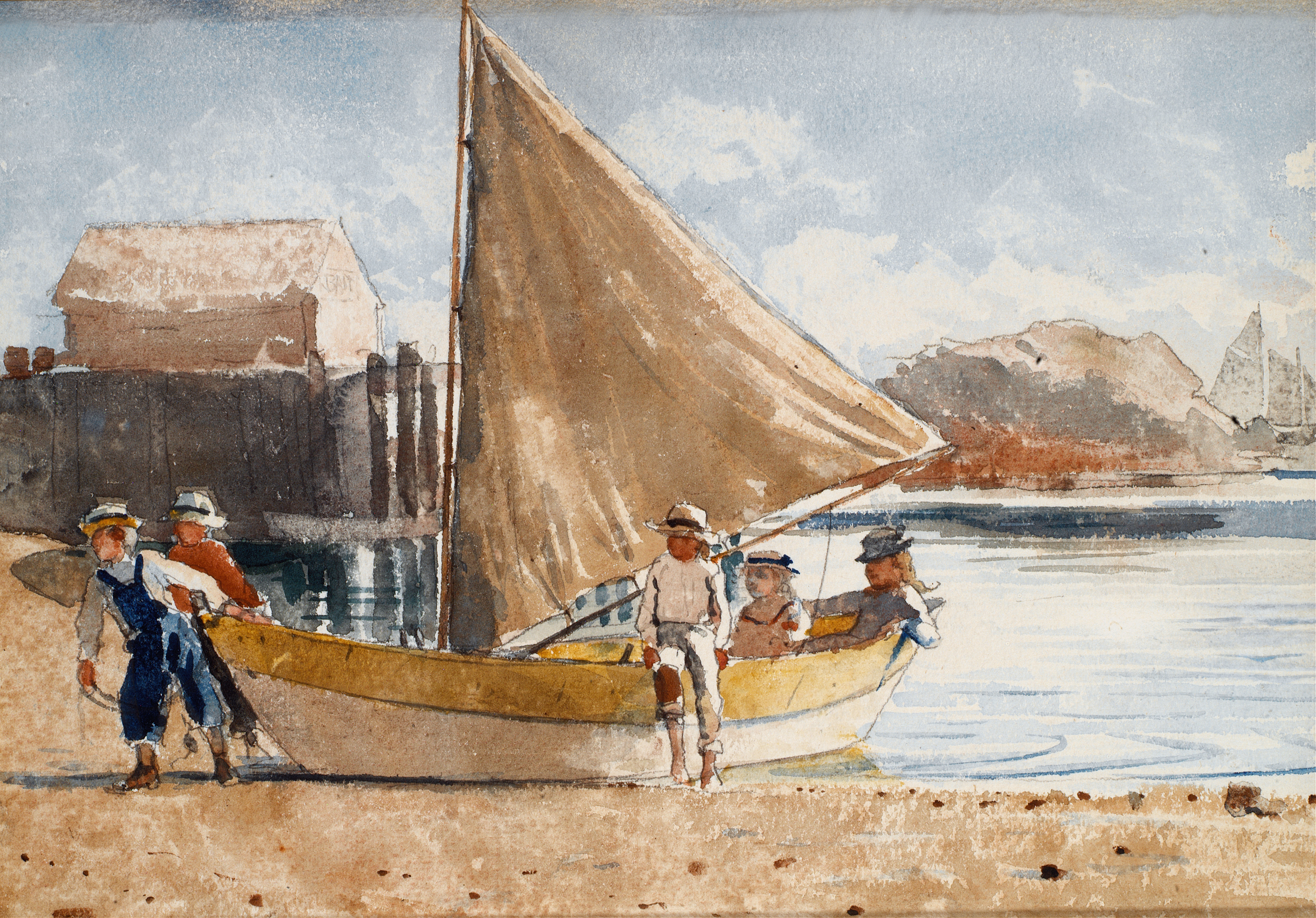
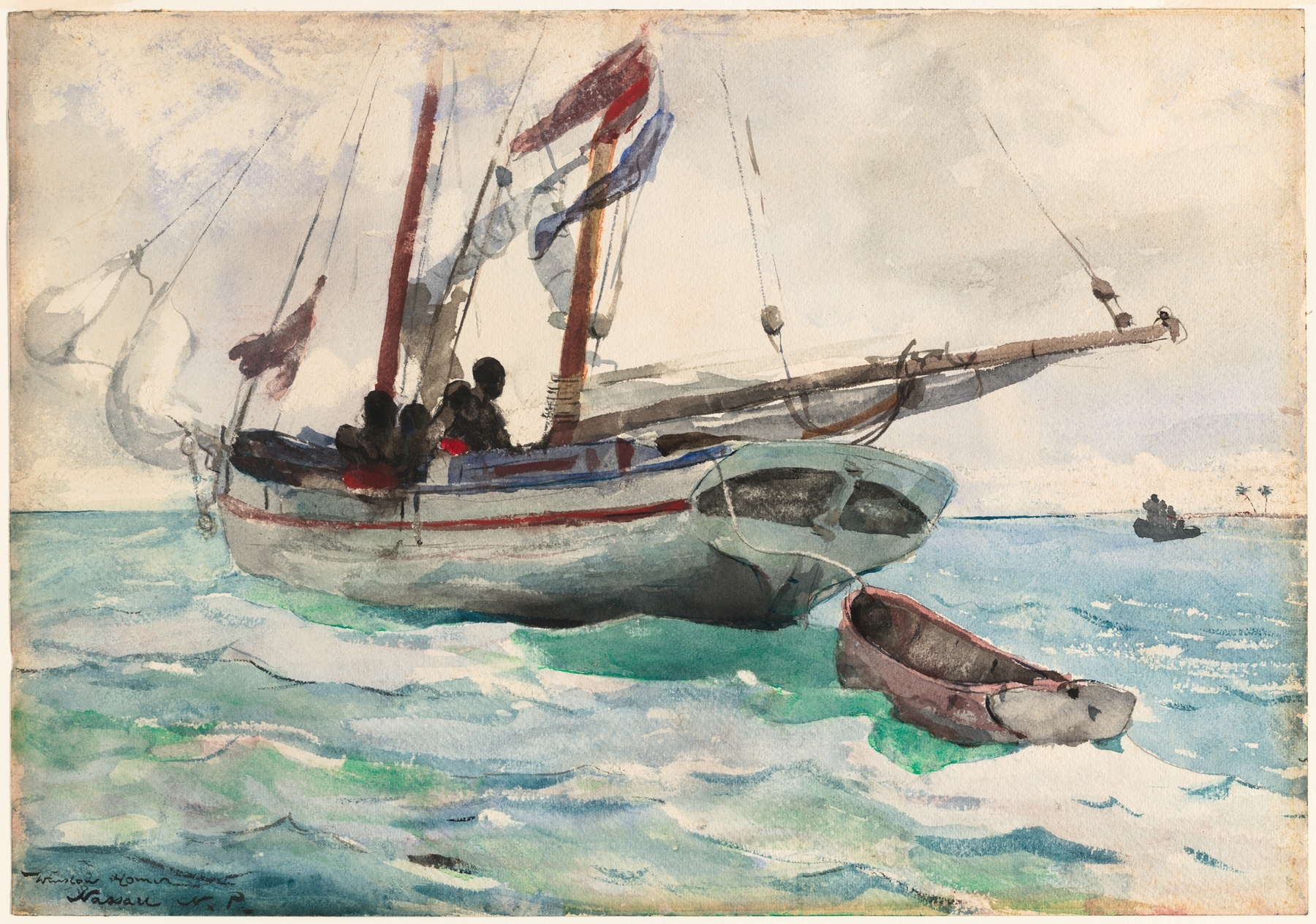
“Under the brush, chaos becomes grace.” In Schooner – Nassau, Winslow Homer captures a moment where the restless sea meets the sturdy vessel, evoking a profound sense of melancholy that resonates beyond the canvas. Look to the left of the painting, where the vibrant azure waves undulate with life, brushing against the hull of the schooner. Notice how the interplay of light and shadow dances across the water, creating a shimmering effect that invites the eye to explore further. The ship, with its stark white sails, stands in stark contrast to the deep blues and greens of the ocean, embodying both strength and vulnerability as it navigates the unpredictable waters.
Hidden within this tranquil scene lies a poignant tension. The sails, billowing with wind, suggest movement and adventure, yet the somber tone of the sky looms heavy, casting an emotional weight that hints at impending storms. The juxtaposition of the lively waves against the melancholic horizon speaks to the duality of nature; beauty intertwined with uncertainty. It's a reminder of the fragility of human endeavors against the vastness of the sea.
During 1898-99, Winslow Homer painted this piece while living in Prouts Neck, Maine, a period marked by his growing introspection and exploration of themes such as solitude and the human condition. The world was on the brink of change, and the artistic community was grappling with shifts towards modernism. In this context, Schooner – Nassau reflects both personal and universal struggles, capturing the essence of a time when artists sought to depict life’s complexities through their work.