Shipping on the Maas, Dordrecht — History & Analysis
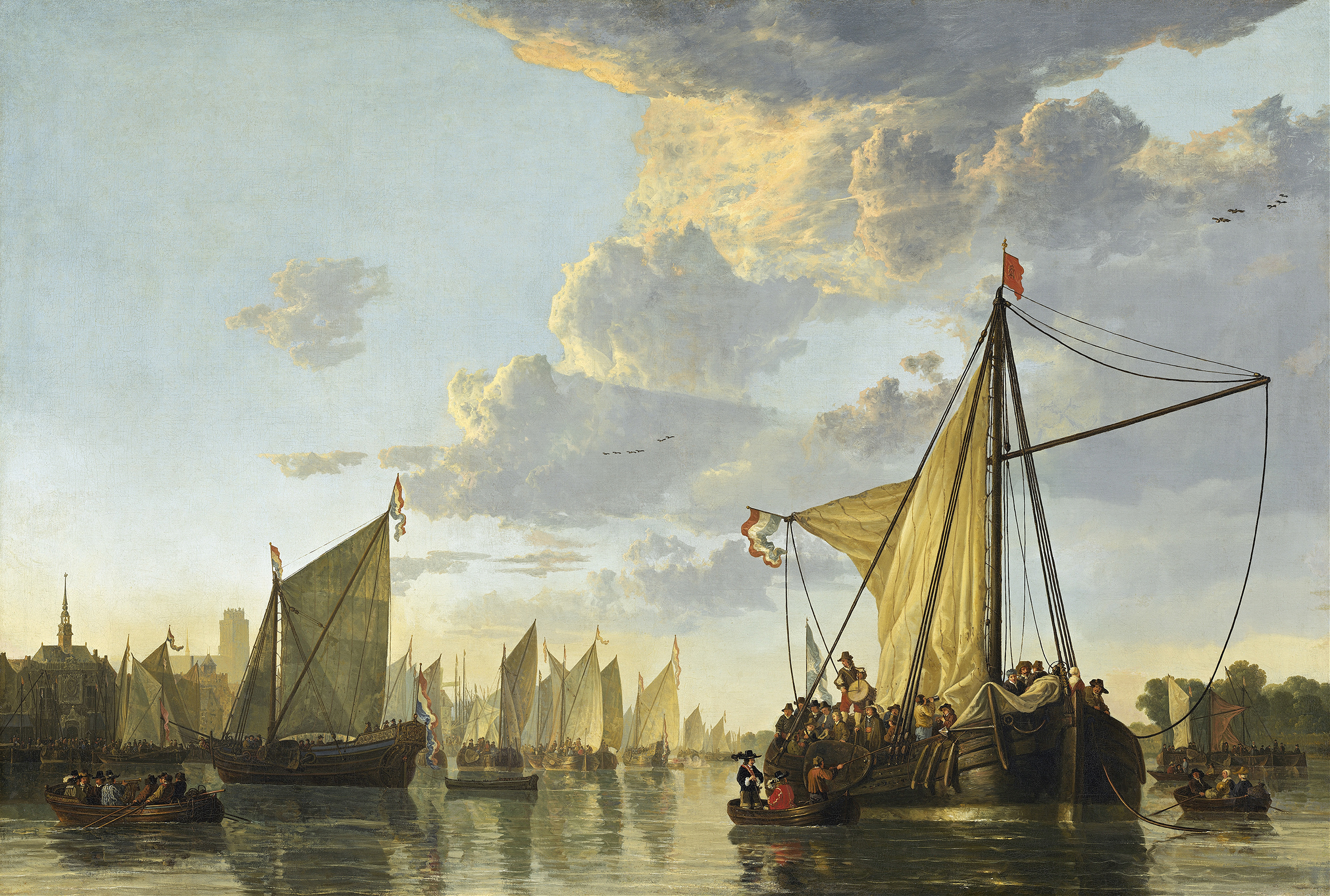
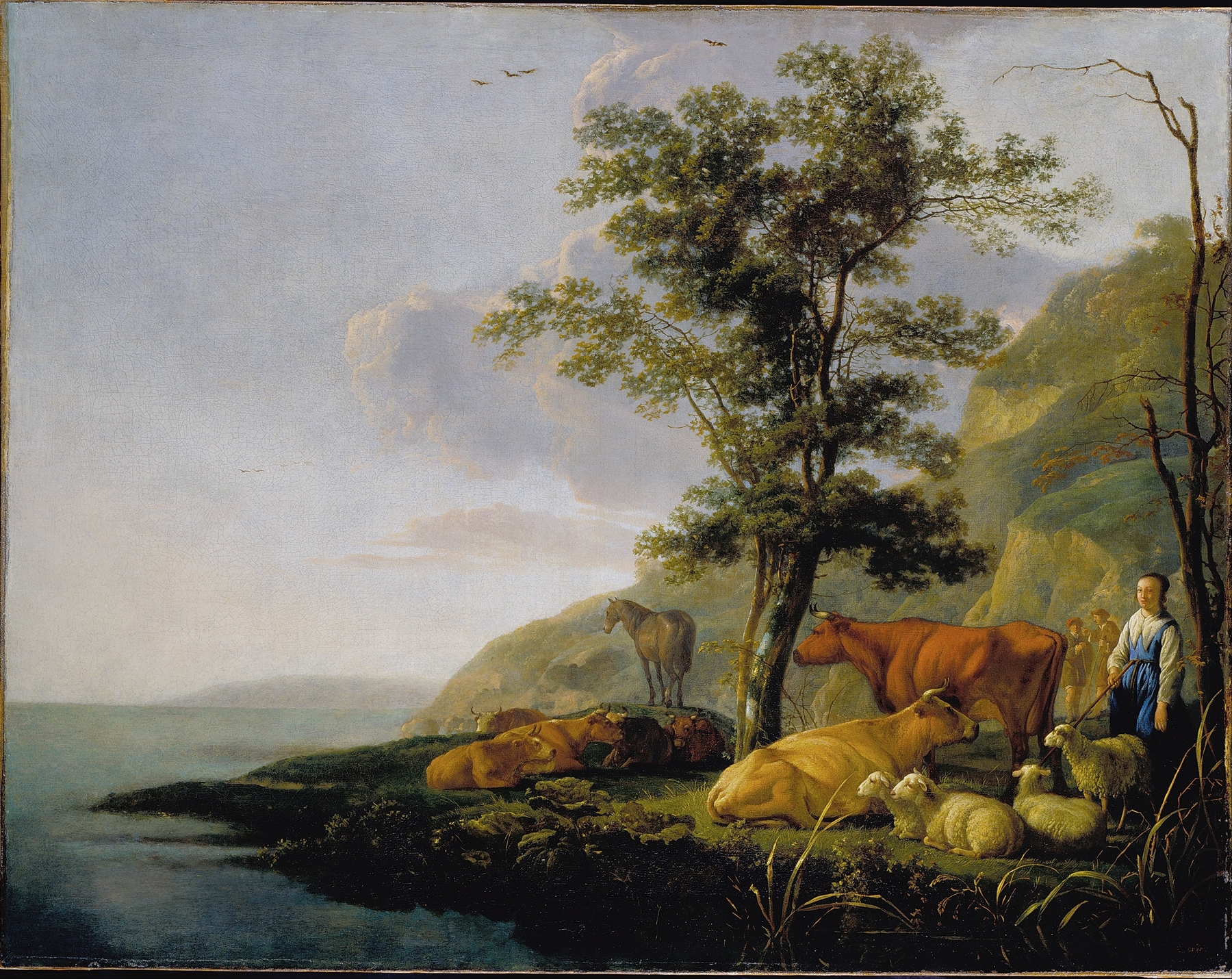
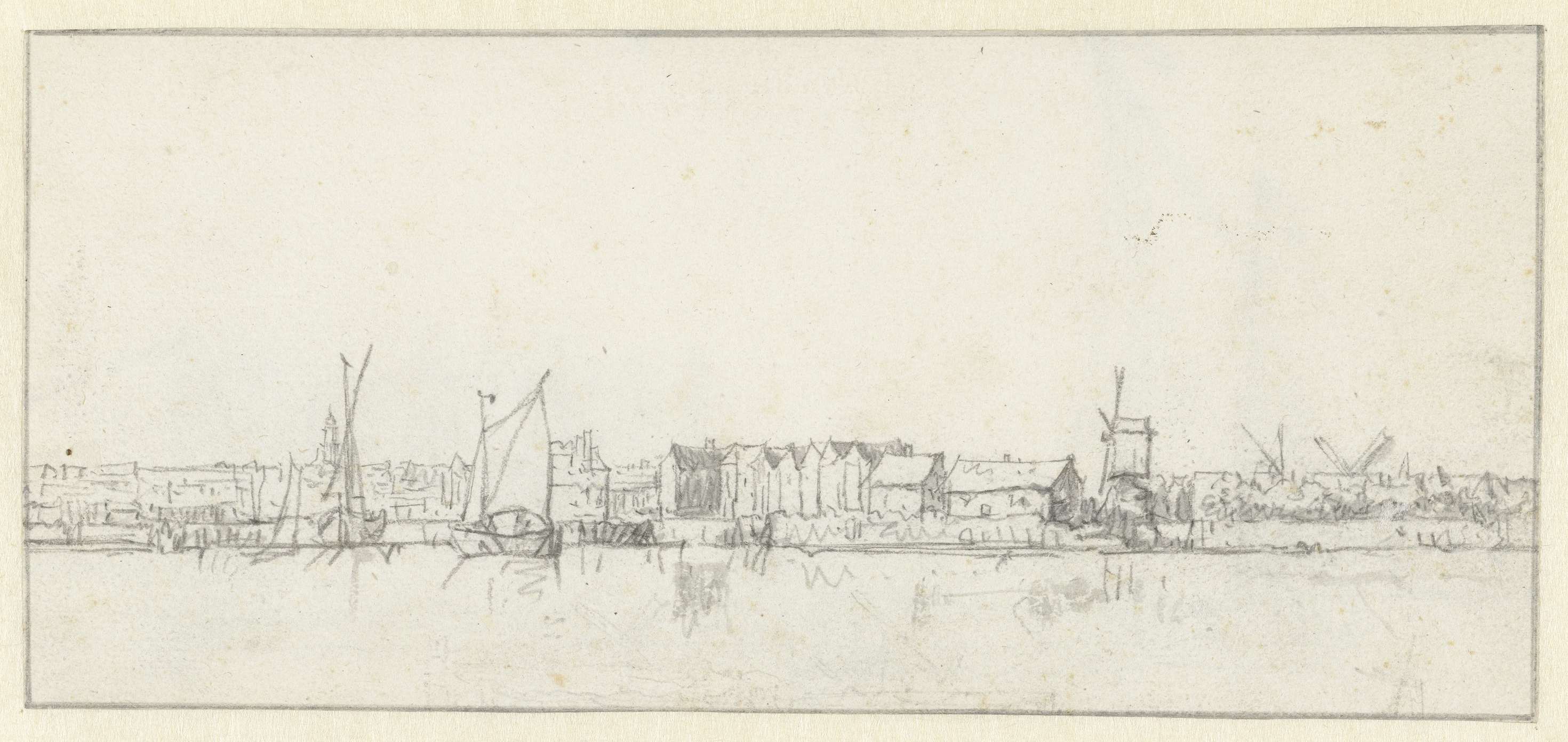
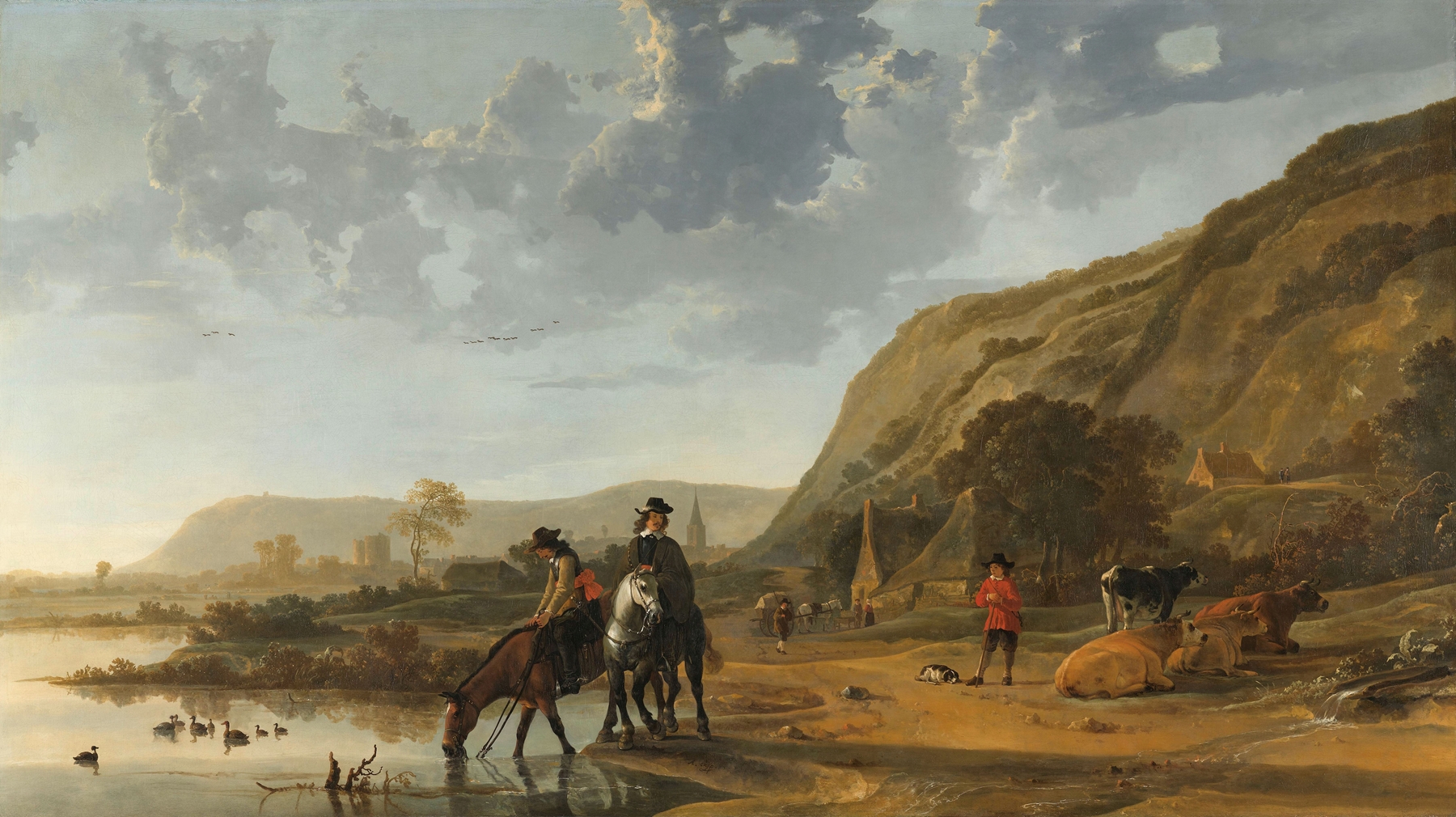
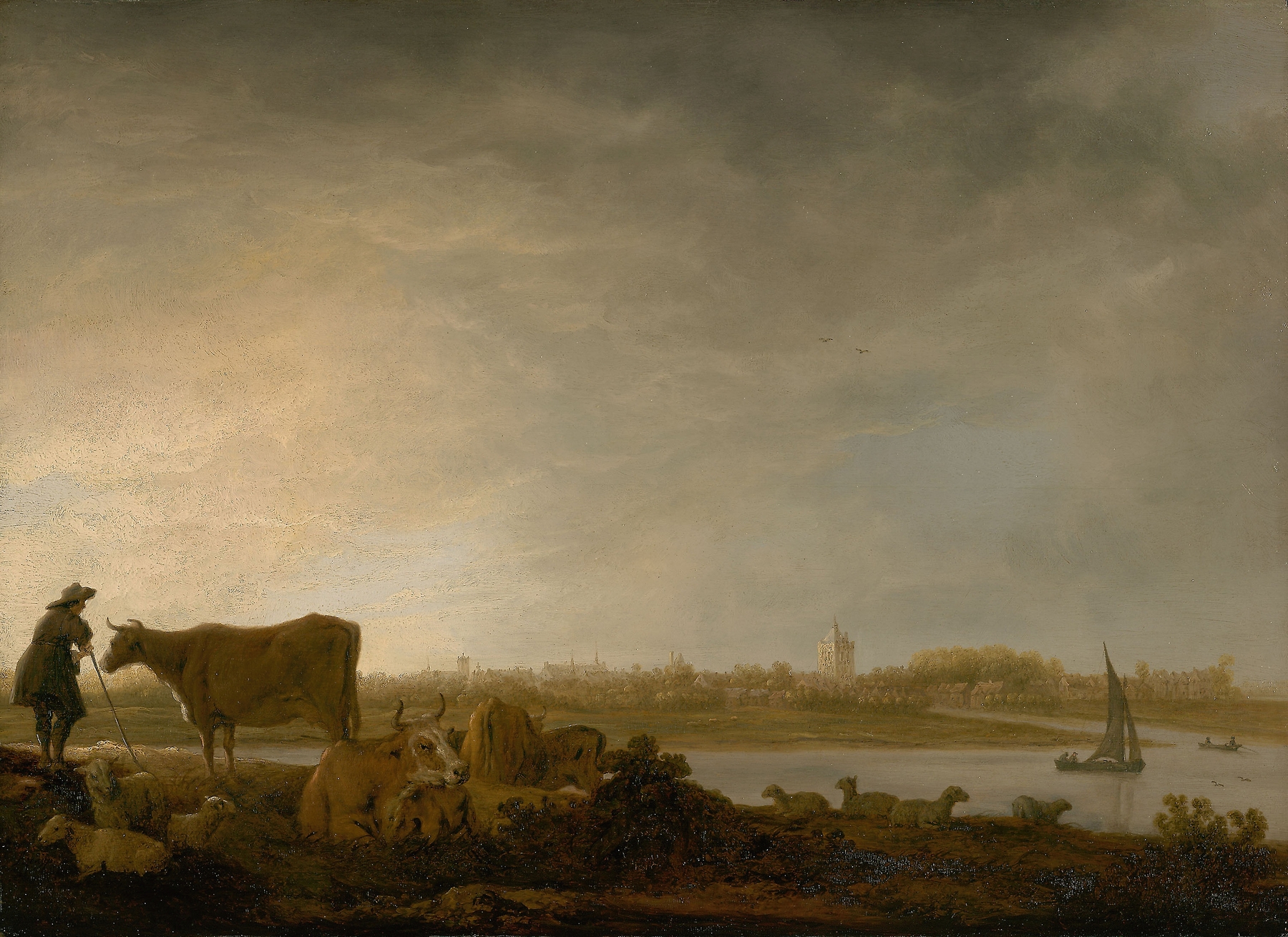
Is this a mirror — or a memory? Aelbert Cuyp’s depiction invites the viewer into the fluid interplay of water and light, transporting us to a moment suspended in time. Look to the center of the canvas, where boats glide effortlessly across the Maas, their sails billowing gently in the breeze. The soft hues of dawn, with delicate oranges and pale blues, envelop the scene, casting a golden glow on the rippling water.
Notice how the reflections dance and shimmer, blurring the lines between the vessels and the liquid surface, creating an ethereal quality that speaks to nature's ephemeral beauty. In this tranquil setting, the contrast between the bustling activity on the water and the serene stillness of the surrounding landscape tells a deeper story. The boats, laden with commerce, symbolize the vibrancy and movement of life, while the calmness of the water below hints at the underlying peace found in fleeting moments. The distant horizon beckons, suggesting a journey both literal and metaphorical, where every ripple carries memories yet to be formed.
Created in the early 1650s, this painting emerged during a time of flourishing trade and artistic exploration in the Netherlands. Cuyp, working primarily in Dordrecht, was significantly influenced by the natural light of the region and the maritime culture surrounding him. This piece stands as a testament to his ability to capture the essence of the moment, reflecting both the vitality of contemporary life and the serene beauty of the world around him.