Single Haystack in a Flat Marsh — History & Analysis
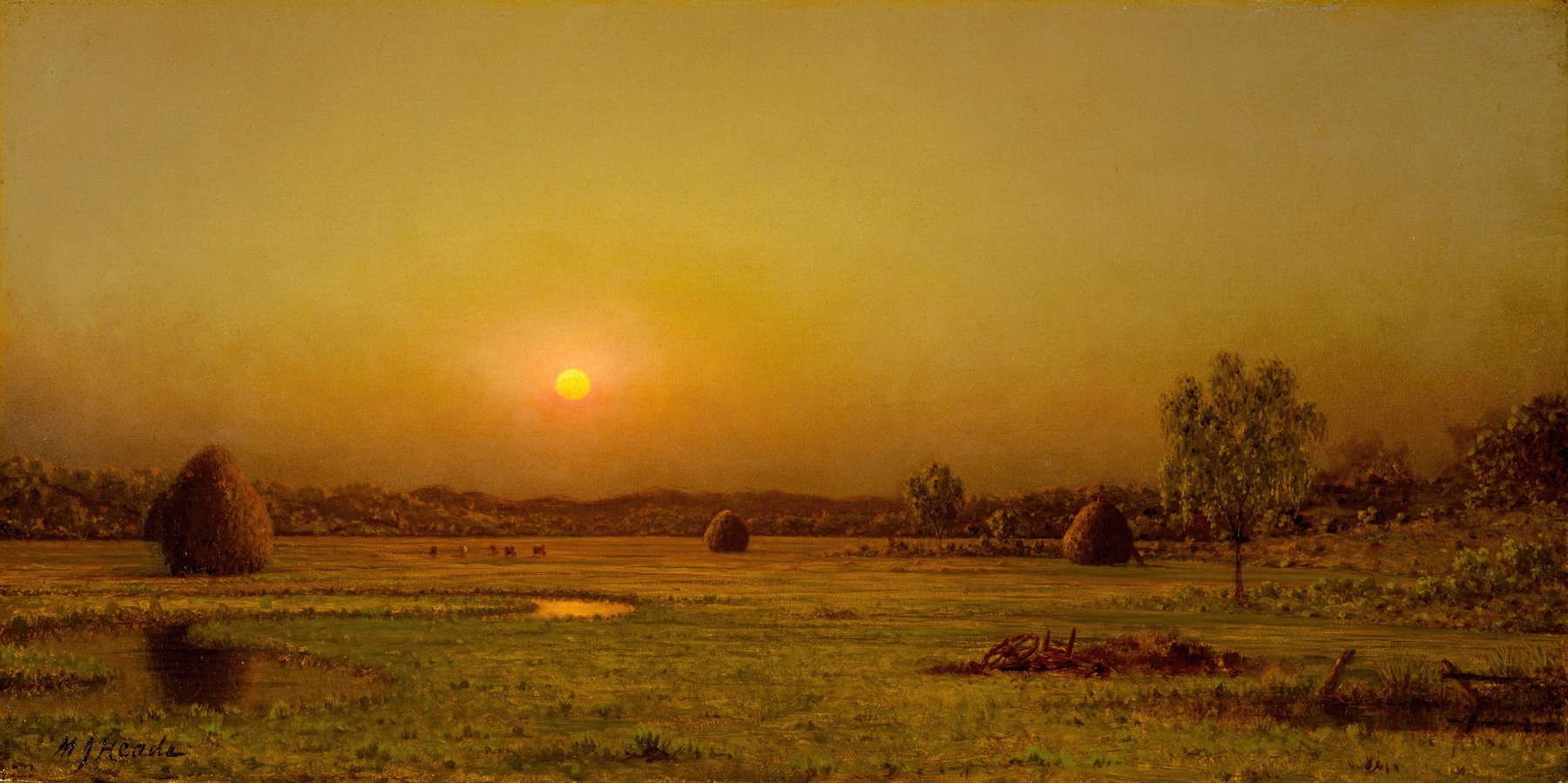
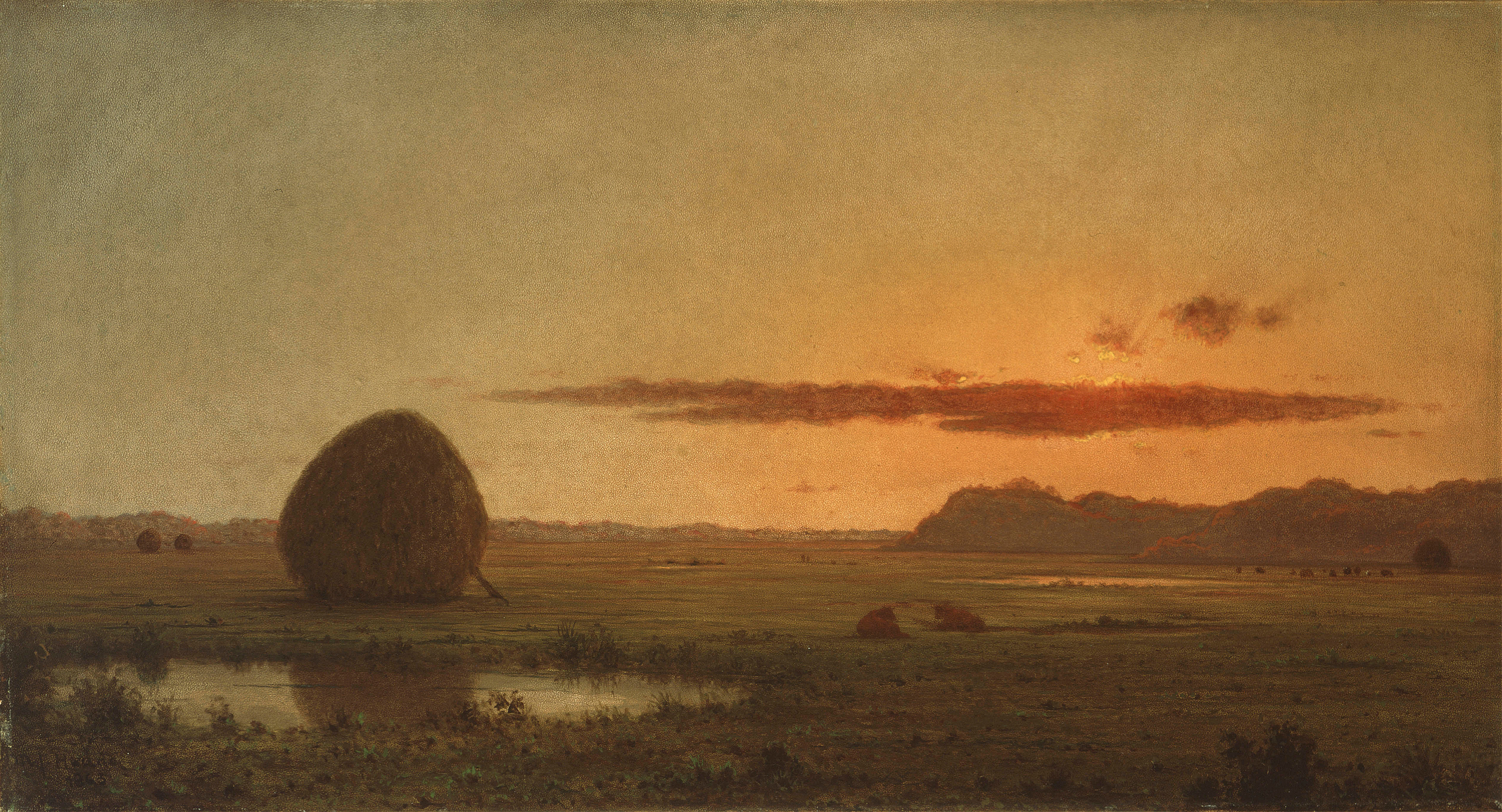
Did the painter know this moment would outlive them? In Single Haystack in a Flat Marsh, the lush palette speaks of both the fleeting nature of time and the enduring presence of beauty. Look to the horizon, where soft hues of amber and gold blend seamlessly into the deep blues of twilight. The solitary haystack, a humble mound, stands firm against the vastness of the marshland. Notice how the artist meticulously captures the interplay of light and shadow, revealing the subtle contours of the hay and the shimmering water below.
It’s a masterclass in atmospheric perspective, drawing the eye toward the infinite expanse while grounding it in the tangible. The painting exudes a tranquil solitude, inviting contemplation. The warmth of the haystack contrasts with the coolness of the surrounding water, suggesting a dialogue between stability and transience. There’s a tension in the stillness—a reminder of the vulnerability inherent in nature, where even the most steadfast elements can be swept away by the relentless passage of time.
Martin Johnson Heade painted this work in 1860 during a period marked by artistic exploration and innovation. At that time, he was immersed in the traditions of American landscape painting, seeking to capture the unique beauty of New England’s coastal marshes. The world was witnessing shifts in societal values and artistic expression, as realism began to challenge the romanticism of earlier years. In this moment, Heade not only reflected his environment but also laid a foundation for future generations of artists.