Sleeping Cupid — History & Analysis
What secret hides in the quiet of the canvas? The gentle repose of a cherubic figure invites us to explore the depths of peace and ecstasy intertwined. Look to the left at the figure of Cupid, swathed in delicate folds of fabric, his cheeks a soft blush that speaks of innocence and vulnerability. Notice how the light cascades over his form, highlighting the contours of his sleeping figure while casting subtle shadows that hint at a world of dreams just behind the surface.
The warm palette of reds and yellows envelops him, creating an intimate atmosphere that draws the viewer closer, as if we are intruding upon a sacred moment of stillness. Within this tranquil snapshot lies an array of contrasts—the juxtaposition of the divine and the earthly, the playful and the serene. The languid pose suggests both a sense of blissful escape and the weight of slumber, evoking a tension that speaks to the duality of love and desire. Each detail, from the delicate positioning of his fingers to the faint smile gracing his lips, invites contemplation about the hidden depths of passion and the fleeting nature of bliss.
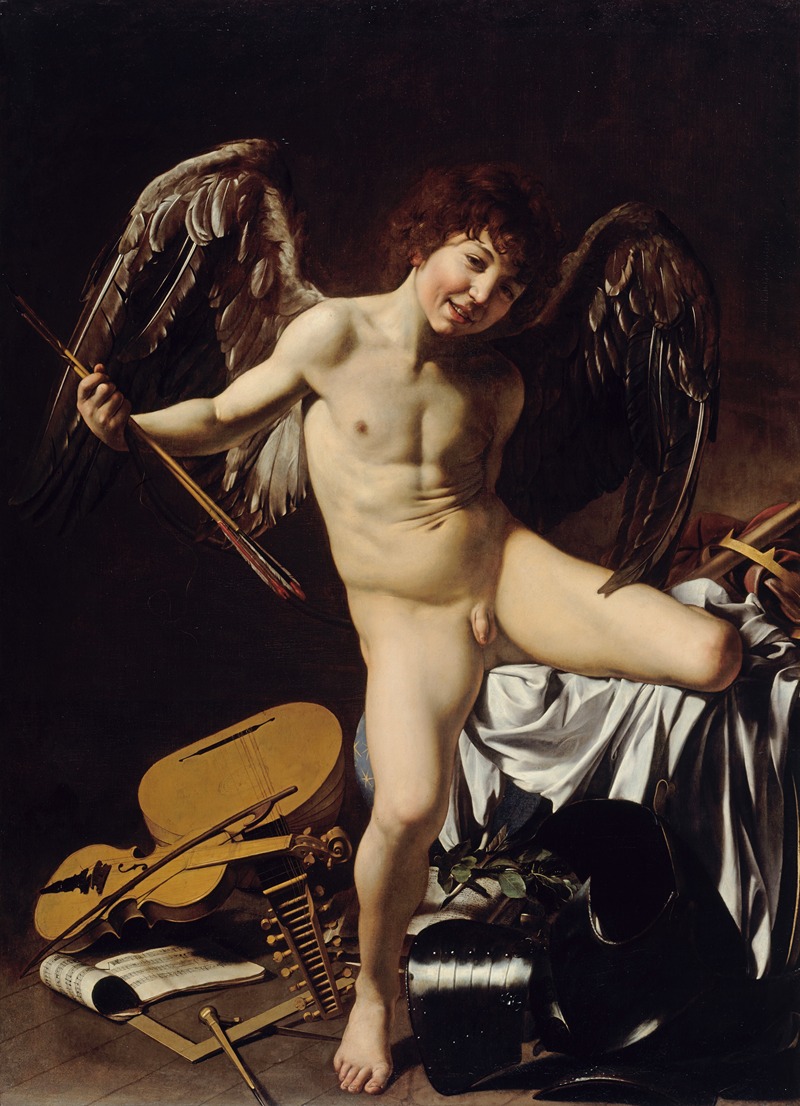
In 1600, while residing in Rome, the artist crafted Sleeping Cupid during a period marked by both personal turmoil and artistic innovation. Caravaggio was at the height of his career, celebrated for his dramatic use of light and shadow, yet his life was increasingly tumultuous. This work, shifting from religious themes to classical subjects, reflects a moment of introspective creativity, as he navigated the complexities of fame and the ever-shifting tides of the art world.