Soldaat voorovergebogen staand voor een boom — History & Analysis
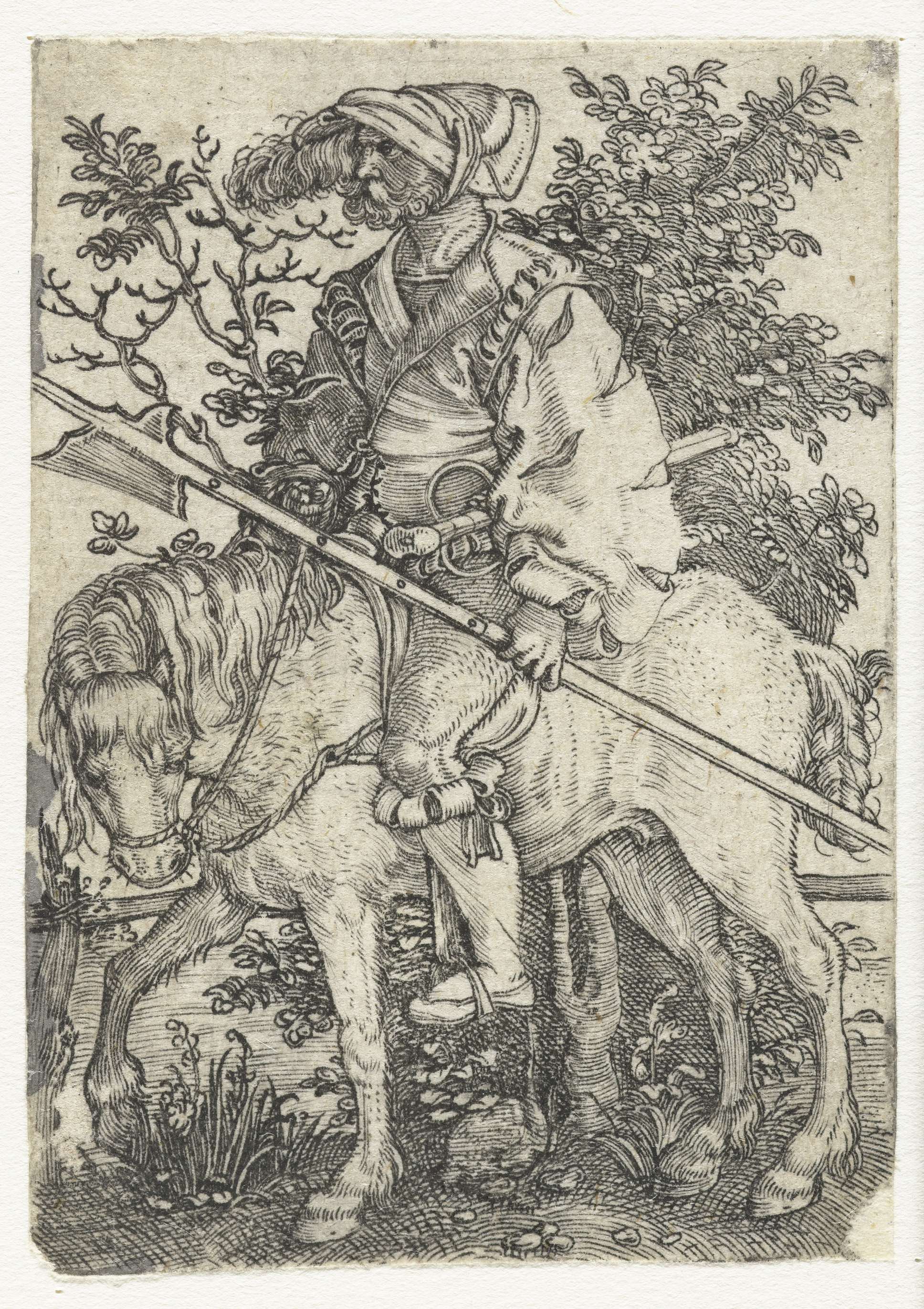
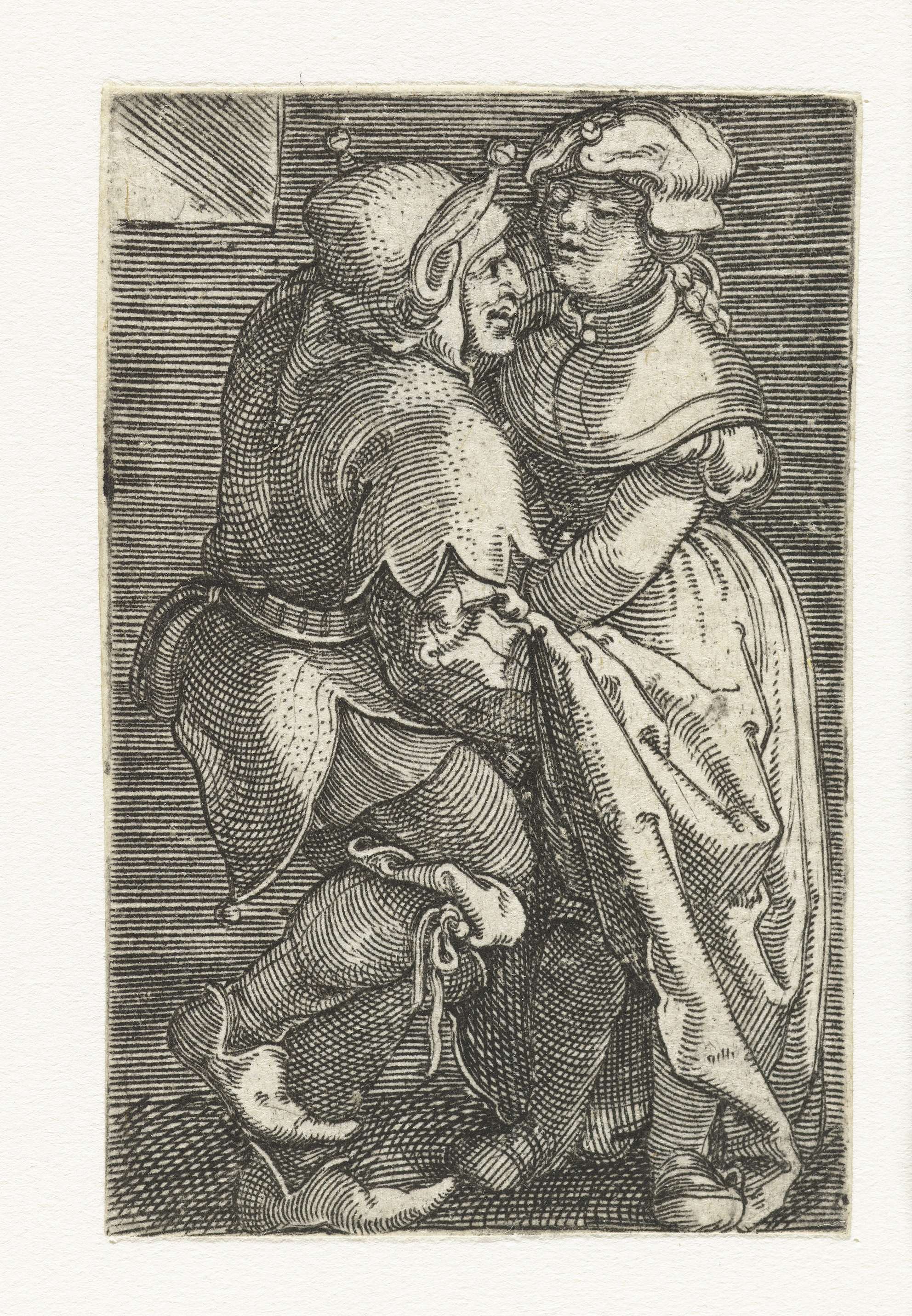
Could a single brushstroke hold eternity? In Barthel Beham's Soldaat voorovergebogen staand voor een boom, the answer lies in the weight of melancholy that blankets the canvas, whispering stories of solitude and reflection. Look closely at the soldier, his figure slightly bent forward, both physically and emotionally tethered to the ancient tree behind him. Notice how the muted earth tones envelop him, creating a tranquil yet somber harmony.
The soft play of light dappling through the foliage casts a delicate shadow on his face, accentuating the furrow in his brow and the tension in his posture, suggesting an unspoken burden. This is not merely a soldier; he is a vessel of contemplation, caught in a moment of introspection that is both palpable and haunting. The sturdy tree serves as more than a backdrop; it symbolizes endurance against the passage of time, a stark contrast to the soldier’s transient life. The juxtaposition of his vulnerability against the tree's steadfastness evokes a poignant dialogue about the human experience—our fleeting moments of existential reflection against the backdrop of nature's permanence.
The artist's meticulous attention to detail highlights the weight of history and the inevitability of human sorrow, as if the soldier carries not only his own thoughts but the collective ache of those who have come before him. Created in 1520, during a time of social upheaval and the early stirrings of the Reformation, Beham's work reflects the complexities of an evolving world. As a member of the Northern Renaissance, he sought to capture the essence of human emotion, blending realism with introspection. At this point in his life, Beham was navigating the challenging landscape of artistic expression, establishing himself within a dichotomy of tradition and innovation while confronting themes that would echo through the ages.