Sombere Marine — History & Analysis
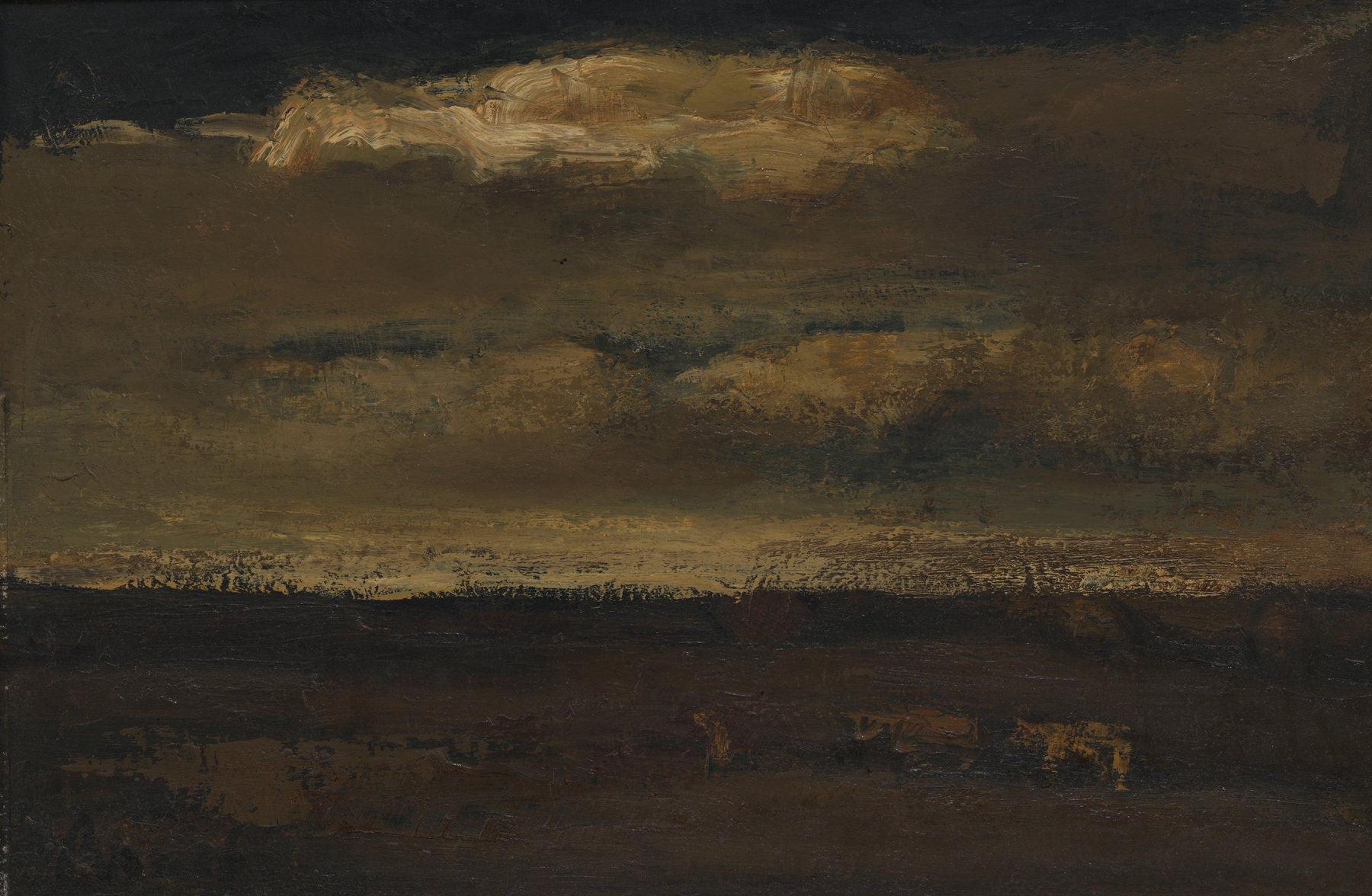
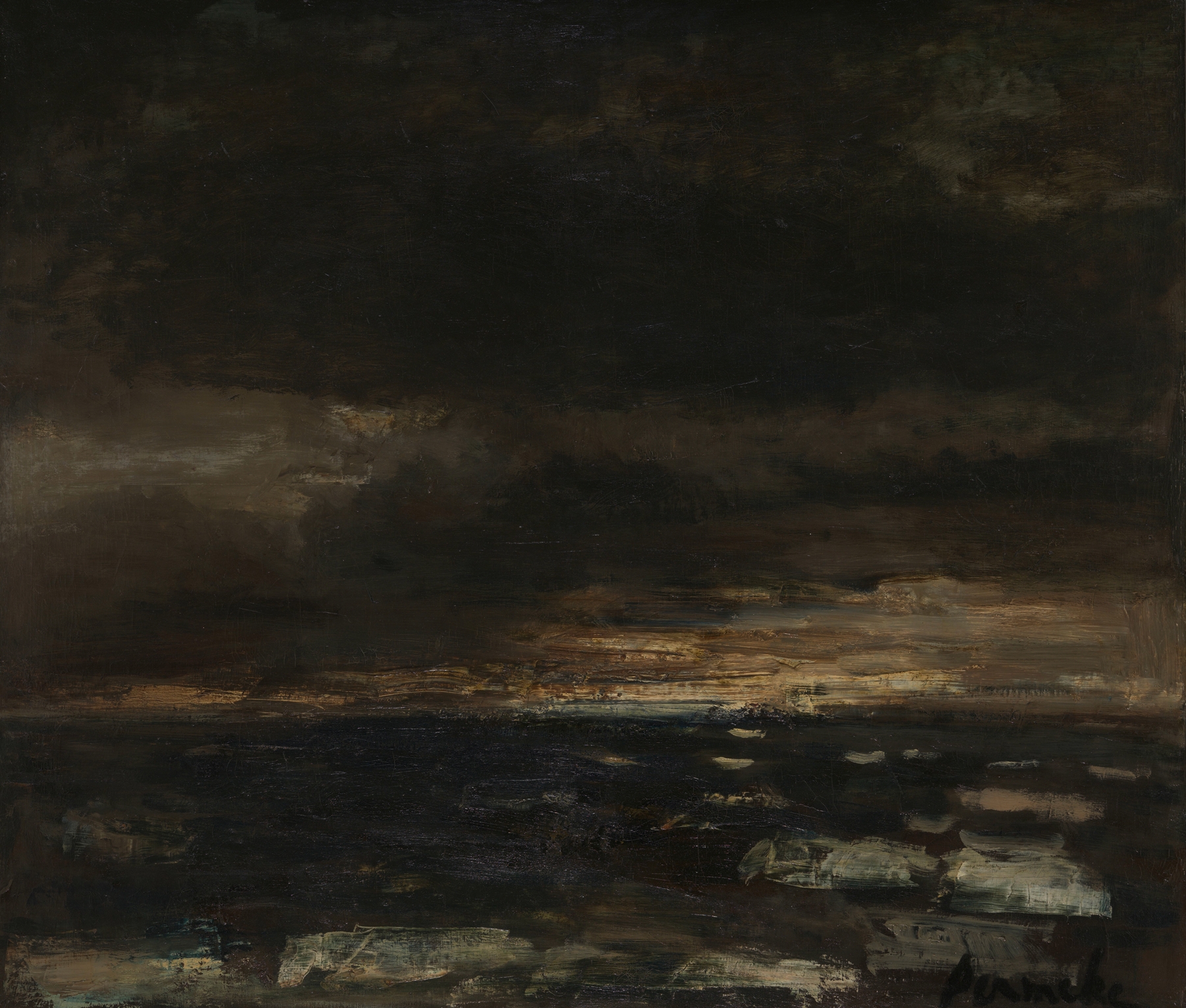
Could beauty survive in a century of chaos? In Constant Permeke's Sombere Marine, a world of solitude unfolds, capturing the essence of loneliness in its most poignant form. Look to the center of the canvas, where the turbulent sea meets a brooding sky, each brushstroke echoing the rawness of the elements. The deep blues and grays dominate, creating a somber atmosphere that wraps around the viewer like a thick fog. The composition is stark yet inviting, drawing the eye into the heart of the painting, where waves crash rhythmically against an indistinct shore.
Notice how the light, muted and diffused, barely penetrates the scene, casting shadows that dance with the contours of the turbulent waters. As you explore further, consider the emotional contrasts presented in the work. The ferocity of the sea speaks to an inner turmoil, a reflection of human experience amidst the chaos of the early 20th century. Small details, such as the distant figures barely silhouetted against the horizon, evoke a sense of isolation, suggesting that even in the presence of nature’s grandeur, one can feel profoundly alone.
This juxtaposition of beauty and loneliness invites contemplation on the fragility of existence itself. In 1924, while creating Sombere Marine, Permeke was grappling with the complexities of post-war Europe, which was still reeling from the devastation of World War I. A pioneering figure in Belgian expressionism, he sought to convey deep emotional truths through his art. During this period, he was exploring themes of humanity’s connection to nature, and the painting stands as a testament to his profound engagement with the world around him.