Sommerlandschaft — History & Analysis
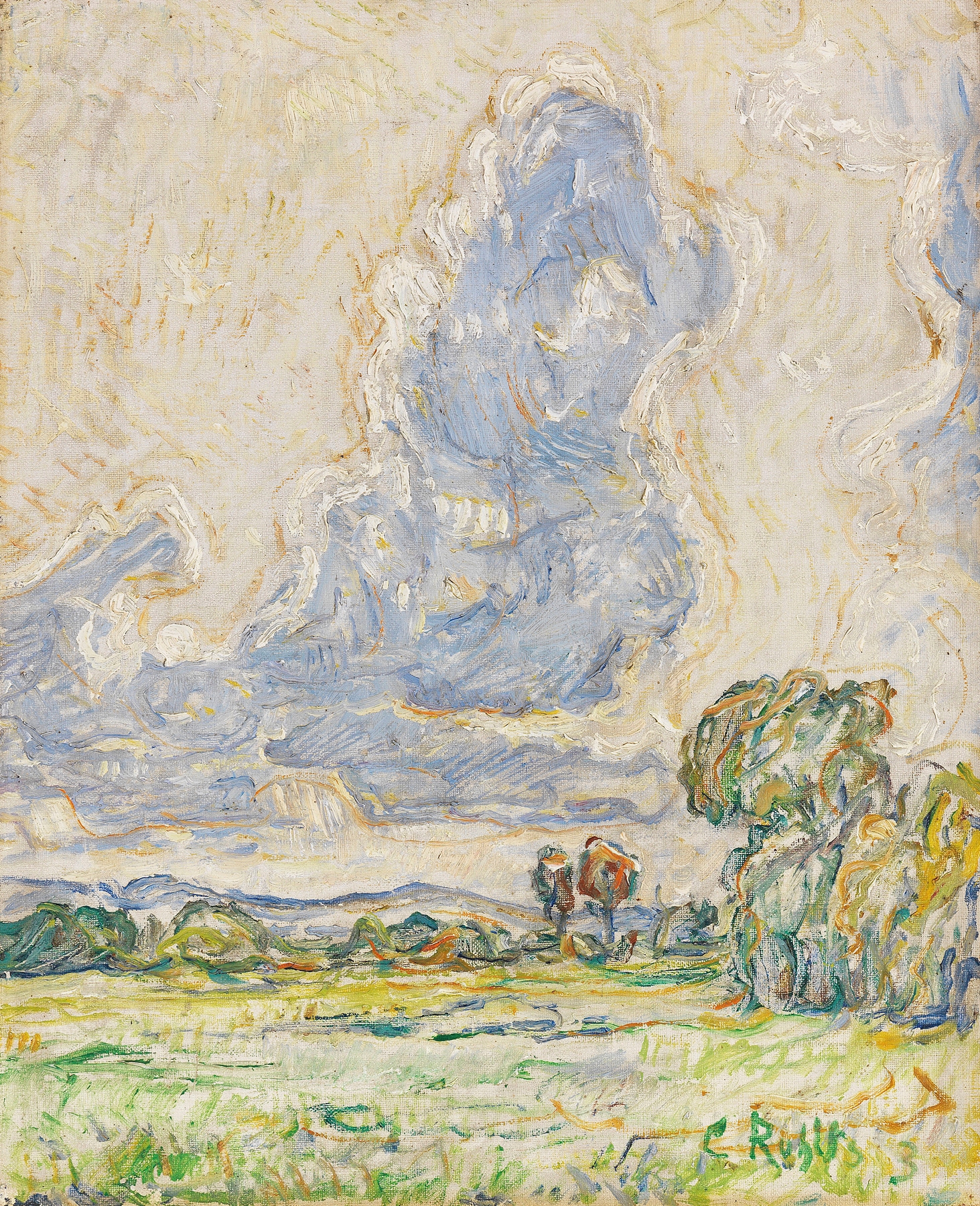
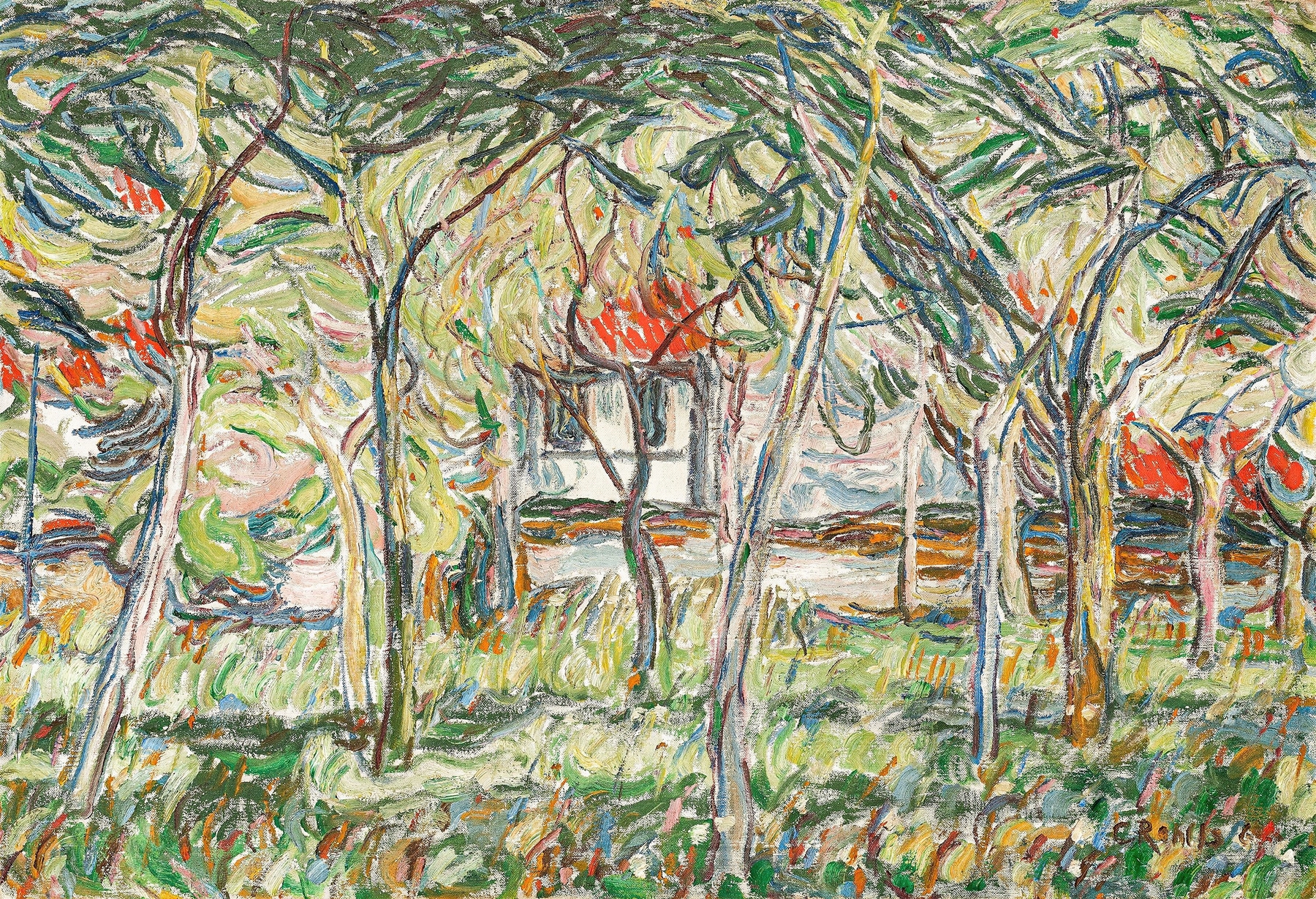
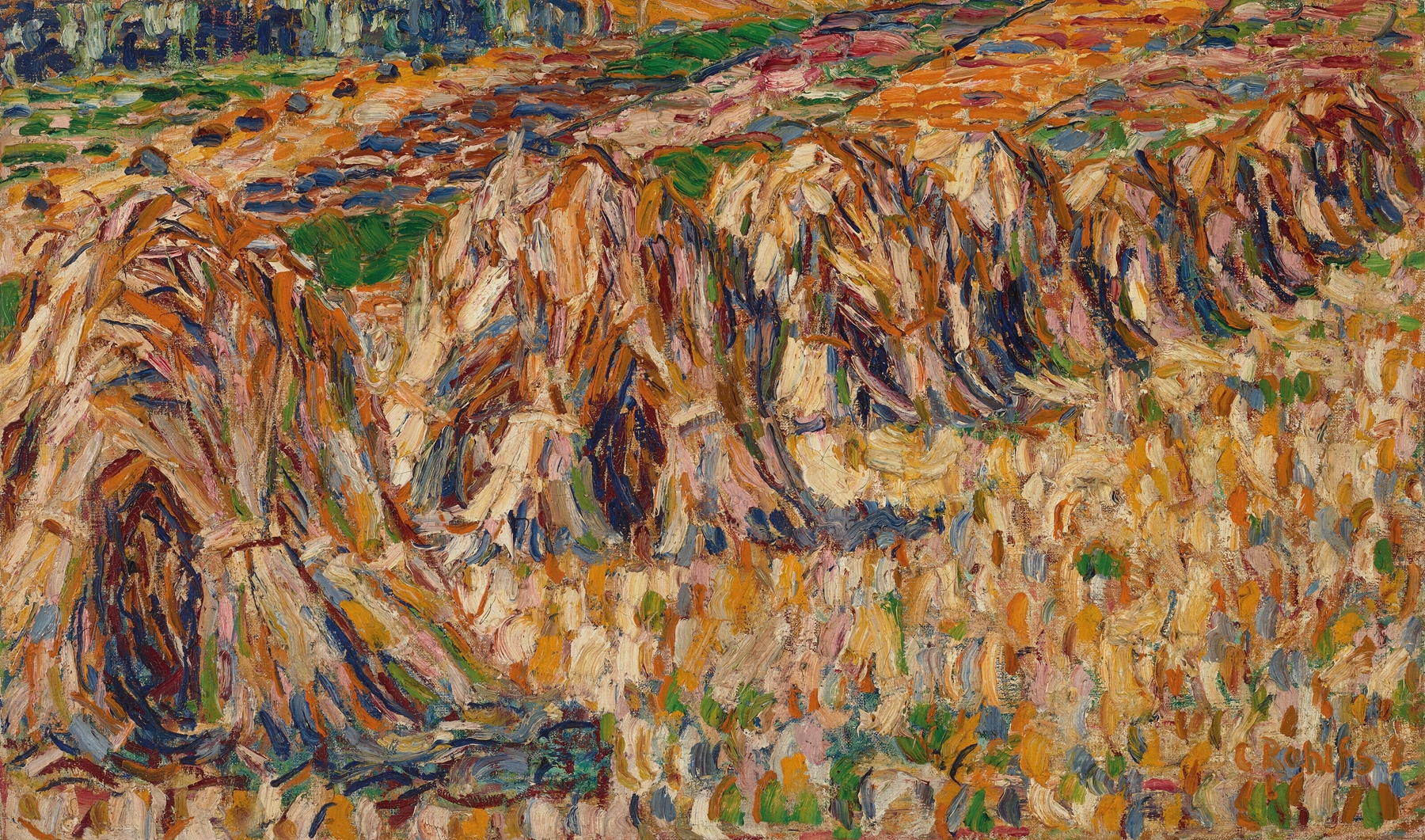
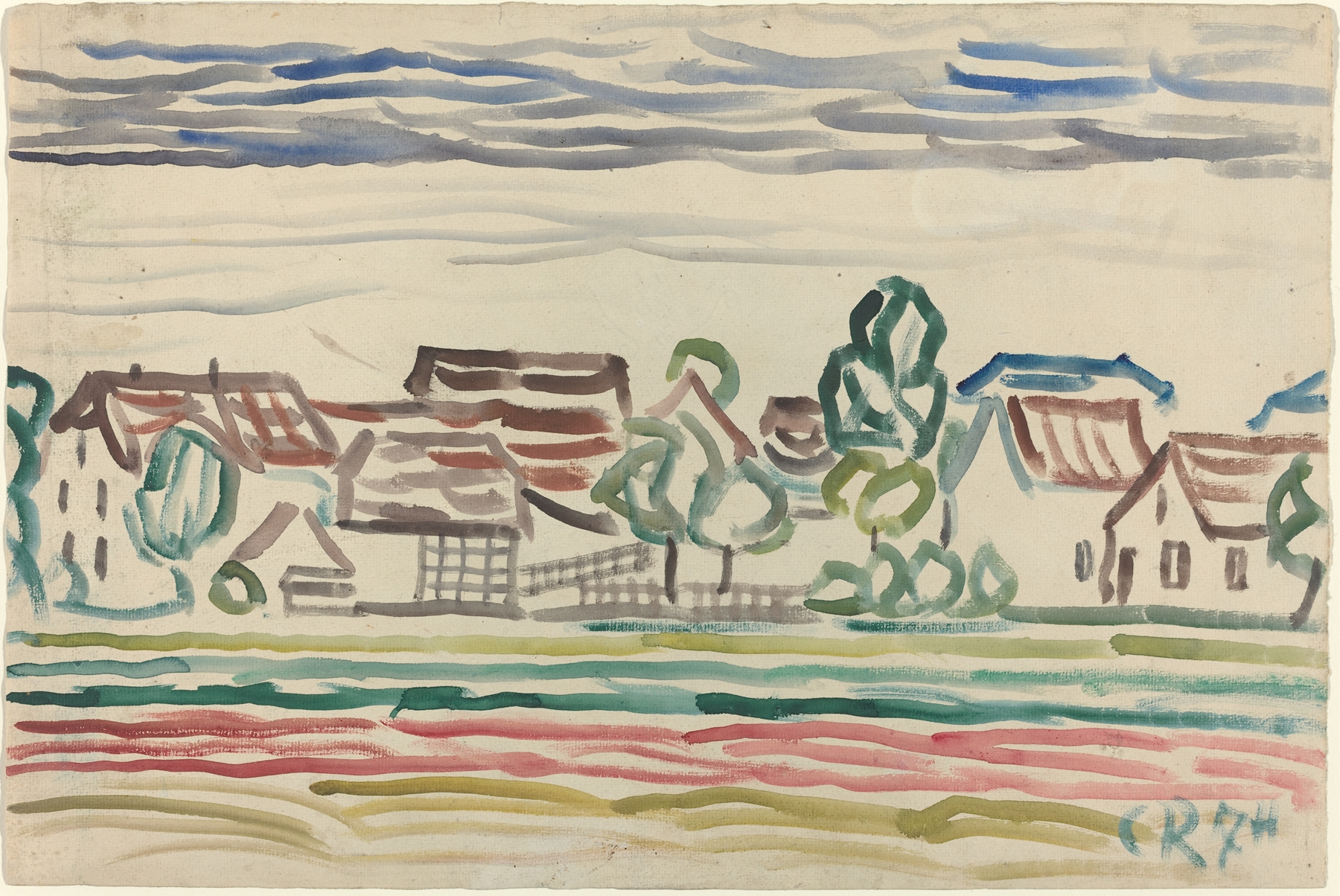
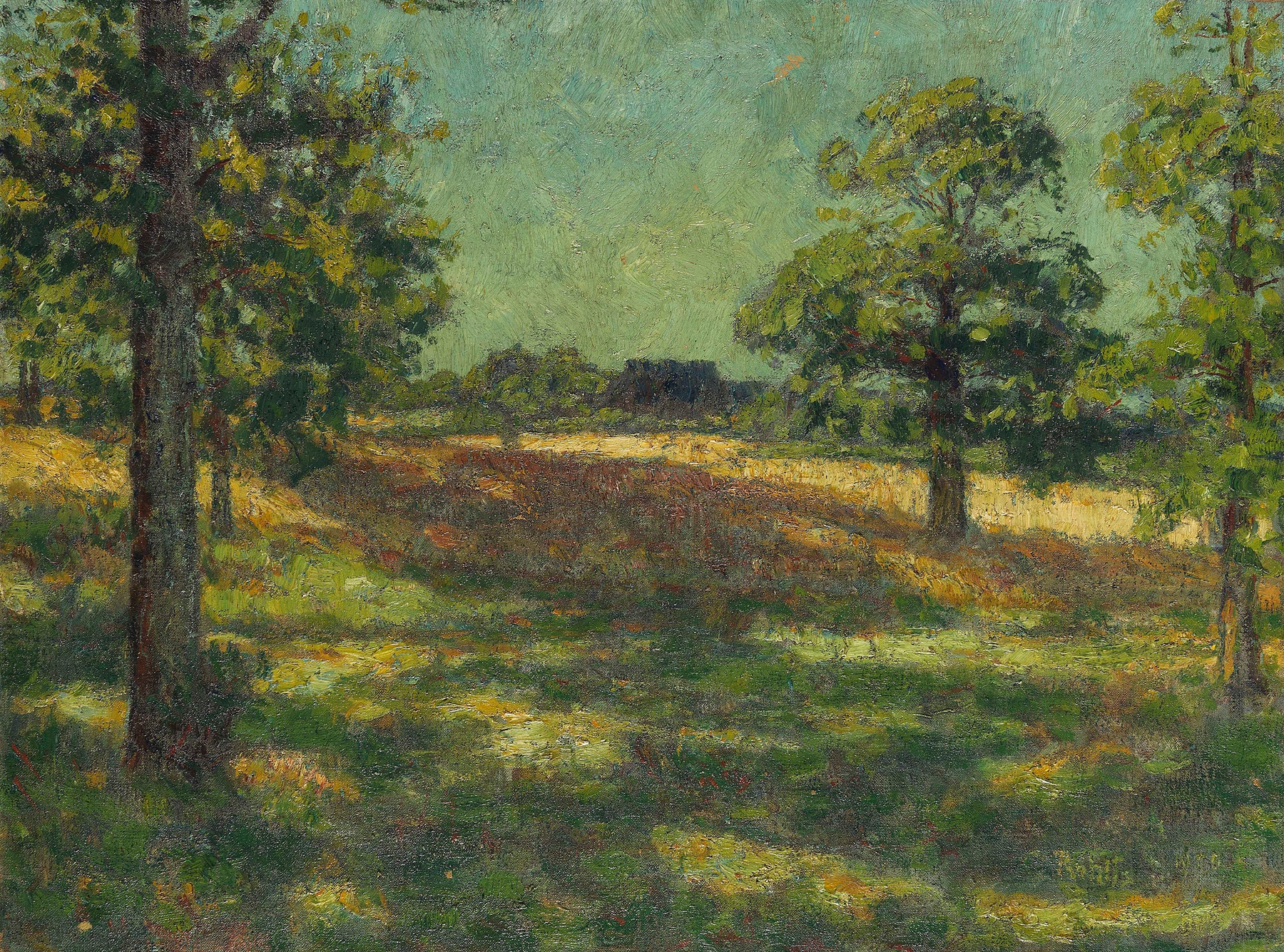
Can paint confess what words never could? In Sommerlandschaft, Christian Rohlfs unveils a world vibrant yet cloaked in an unsettling undercurrent of fear and uncertainty. Look to the foreground, where bold strokes of green and yellow vibrate with life in the fields. The brushwork dances, conveying the energy of summer, as sunlight bathes the landscape in an almost overwhelming brightness. Yet, as your gaze drifts upward, a shift occurs; the sky, rendered in swirling tones of blue and gray, hints at an imminent storm.
This stark contrast between the lively earth and the tumultuous heavens creates a tension that lingers and invites reflection. Within this seemingly idyllic landscape lies the psychological complexity of human emotion. The vivid colors may evoke joy, yet they are juxtaposed with darker shades that whisper of unease. The horizon, where the sky meets the ground, feels oppressive, as if the weight of the atmosphere is pressing down, mirroring the hidden fears of the viewer.
Rohlfs captures a moment that straddles the line between celebration and dread, revealing the dualities inherent in nature and life itself. In 1899, while living in Germany, Rohlfs was immersed in a movement that sought to express personal emotion and subjective experience. This was a time of artistic experimentation, where painters began to explore the boundaries of color and form, and Rohlfs, influenced by both Impressionism and Symbolism, sought to convey not just the beauty of nature but the complexities of the human psyche. Sommerlandschaft stands as a testament to this evolving dialogue in art, where every brushstroke carries the weight of unspoken fears.