Straße im Tiergarten (Bellevuestraße), Berlin — History & Analysis
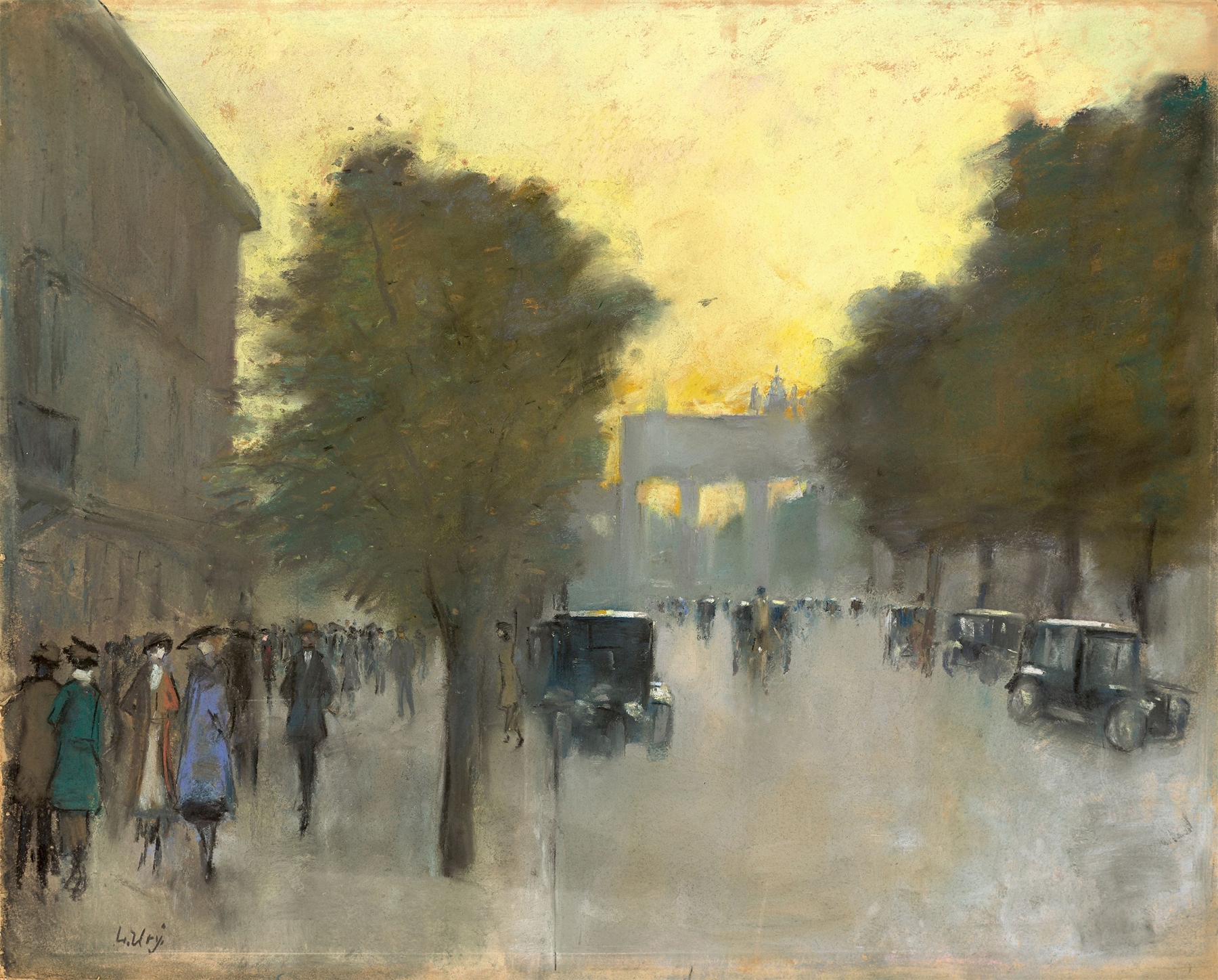
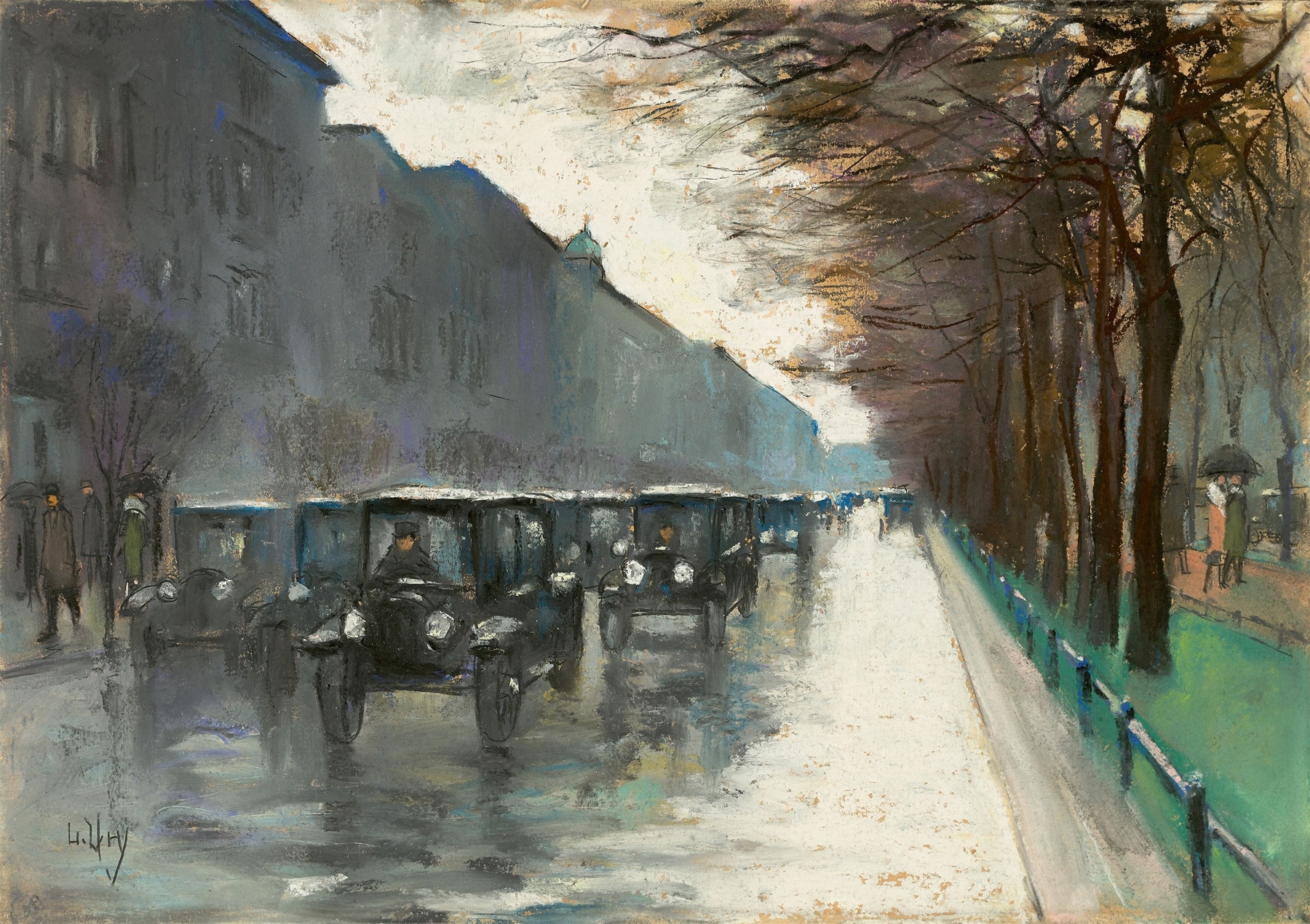
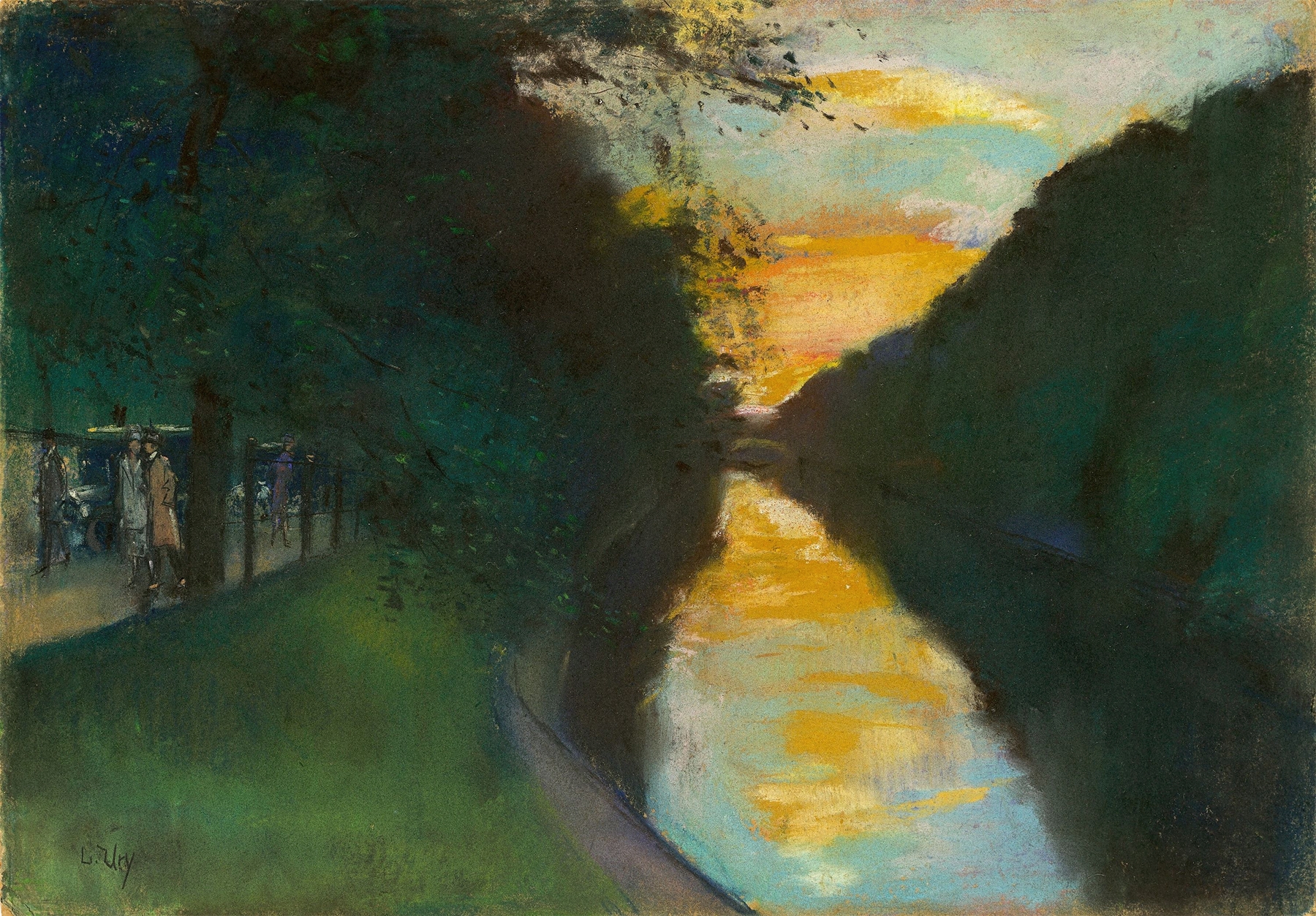
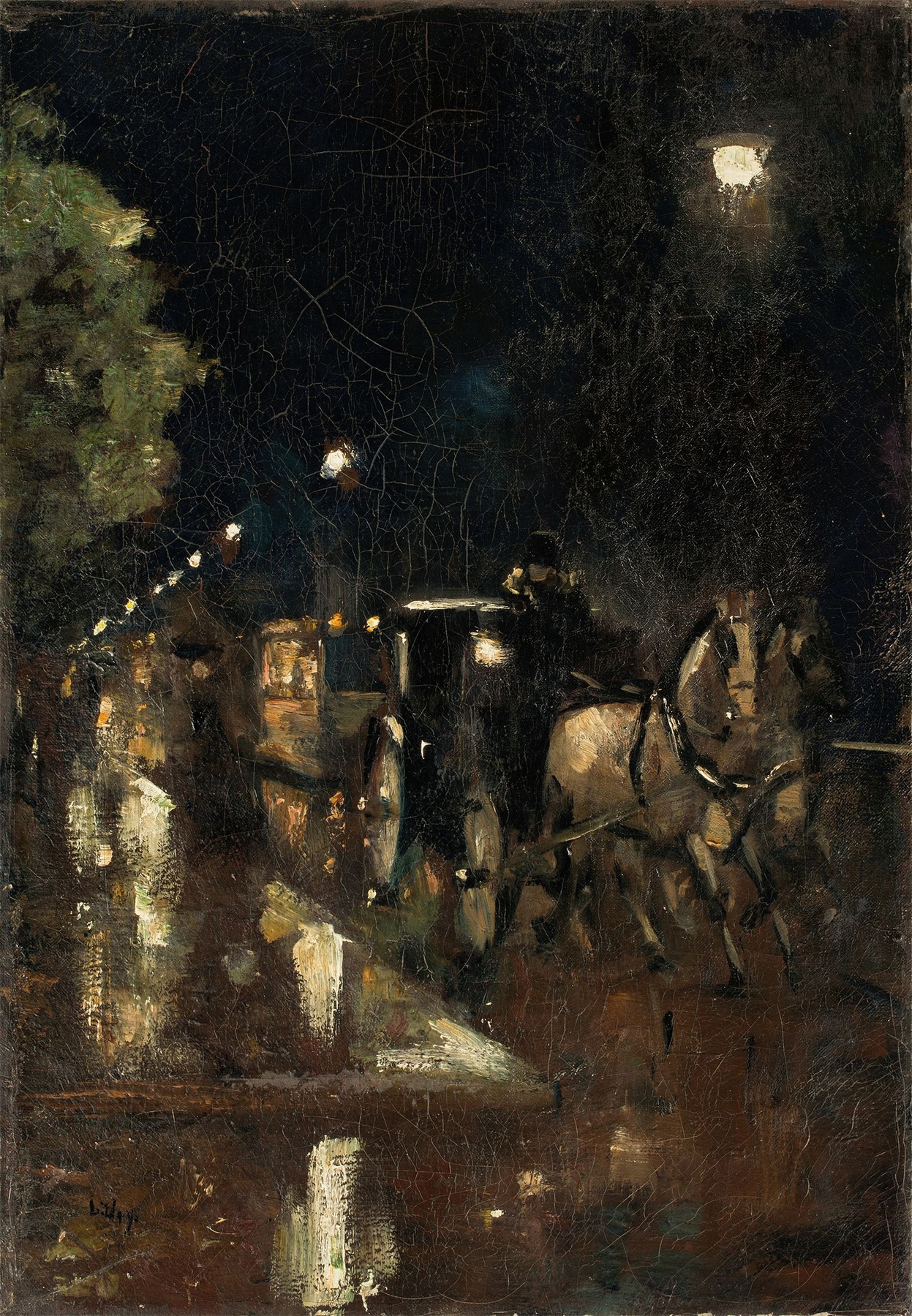
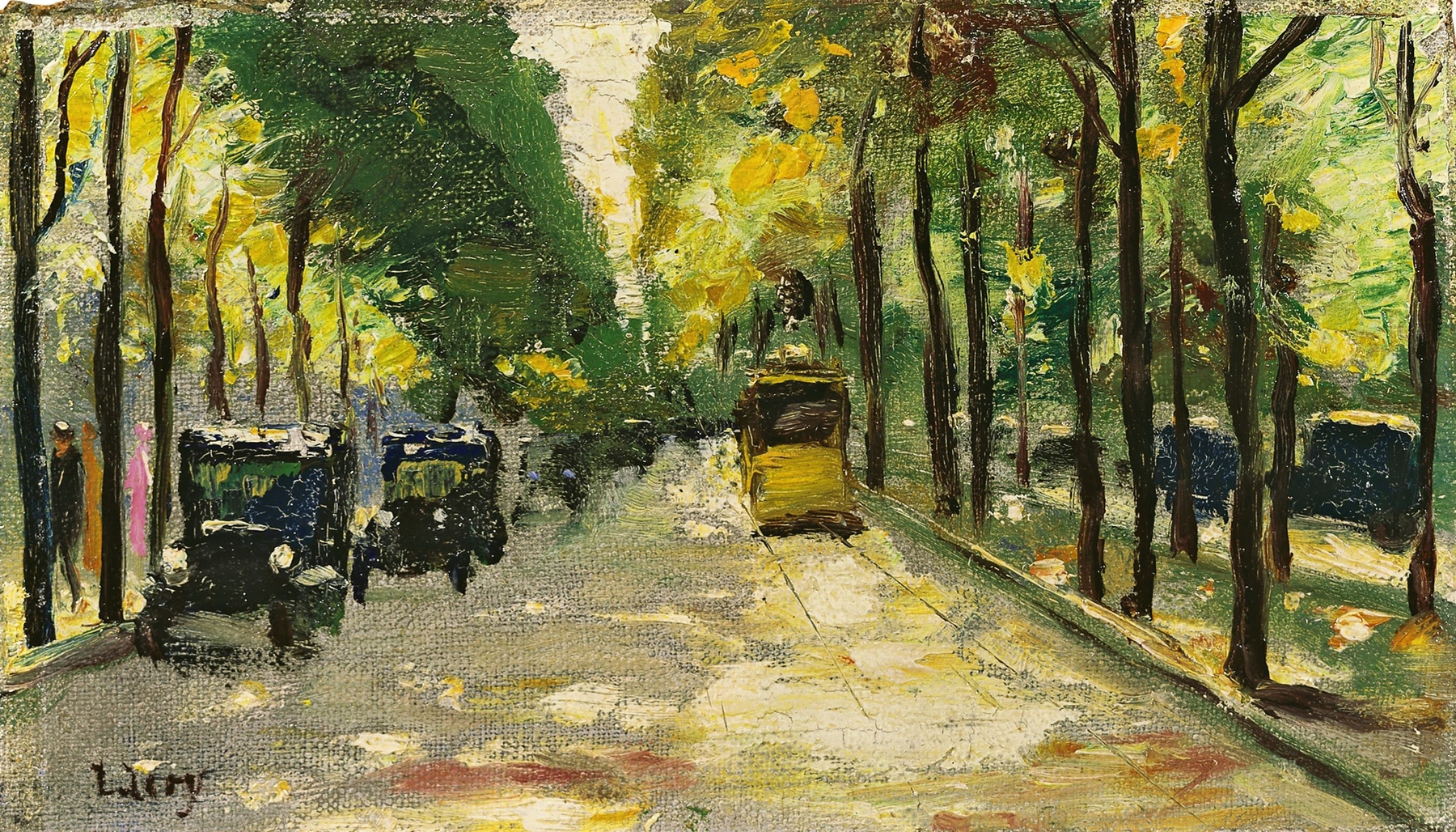
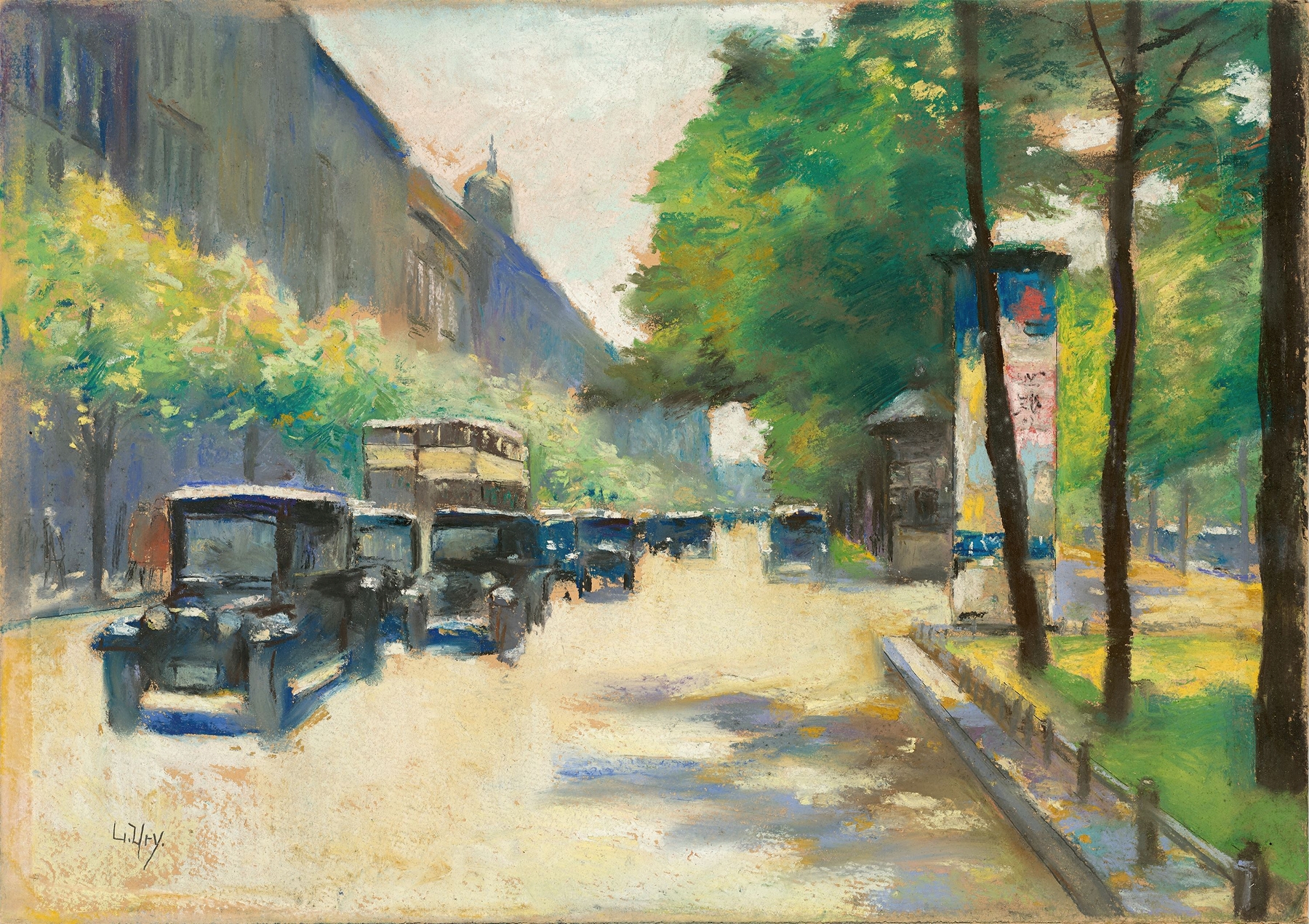
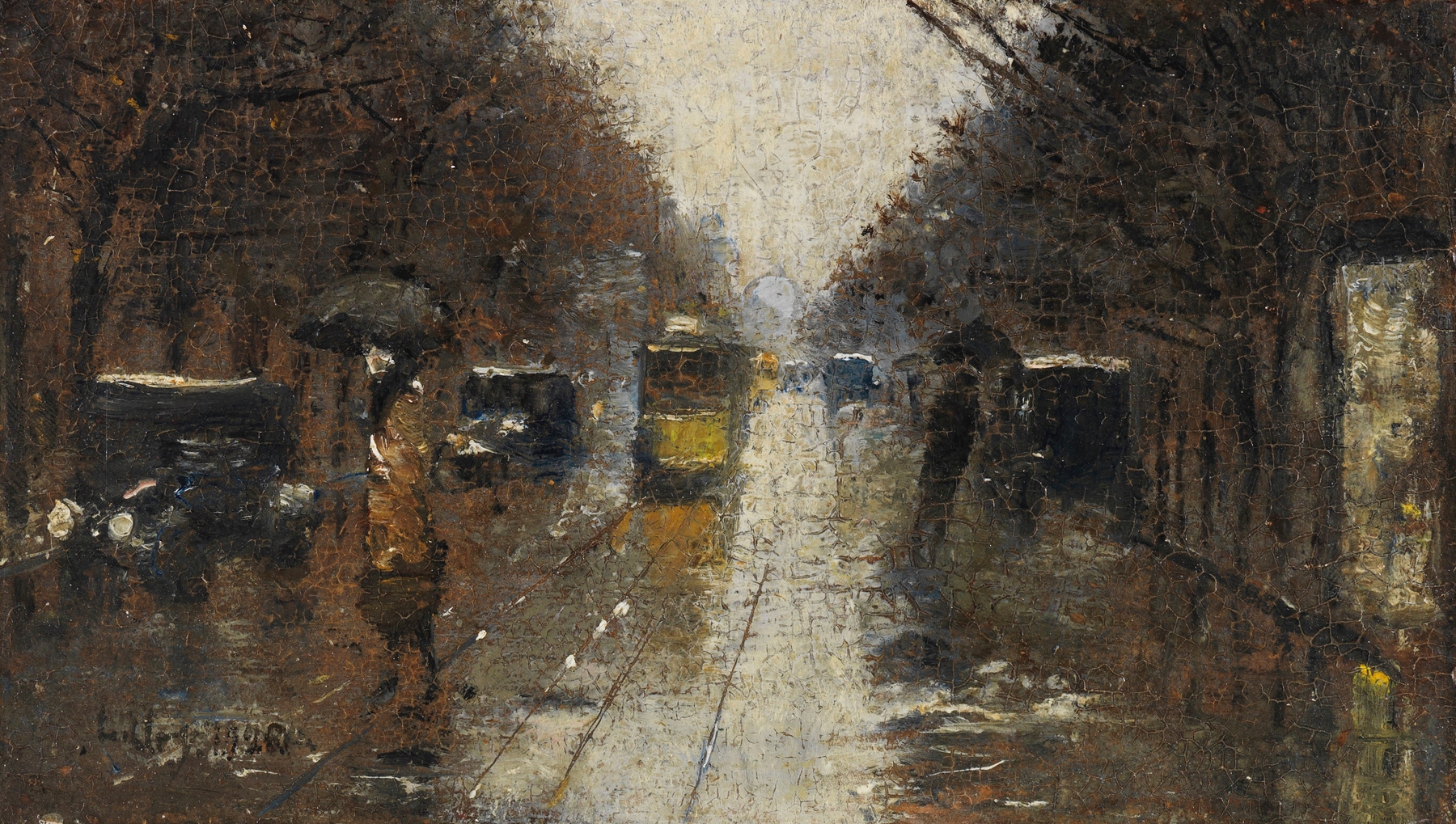
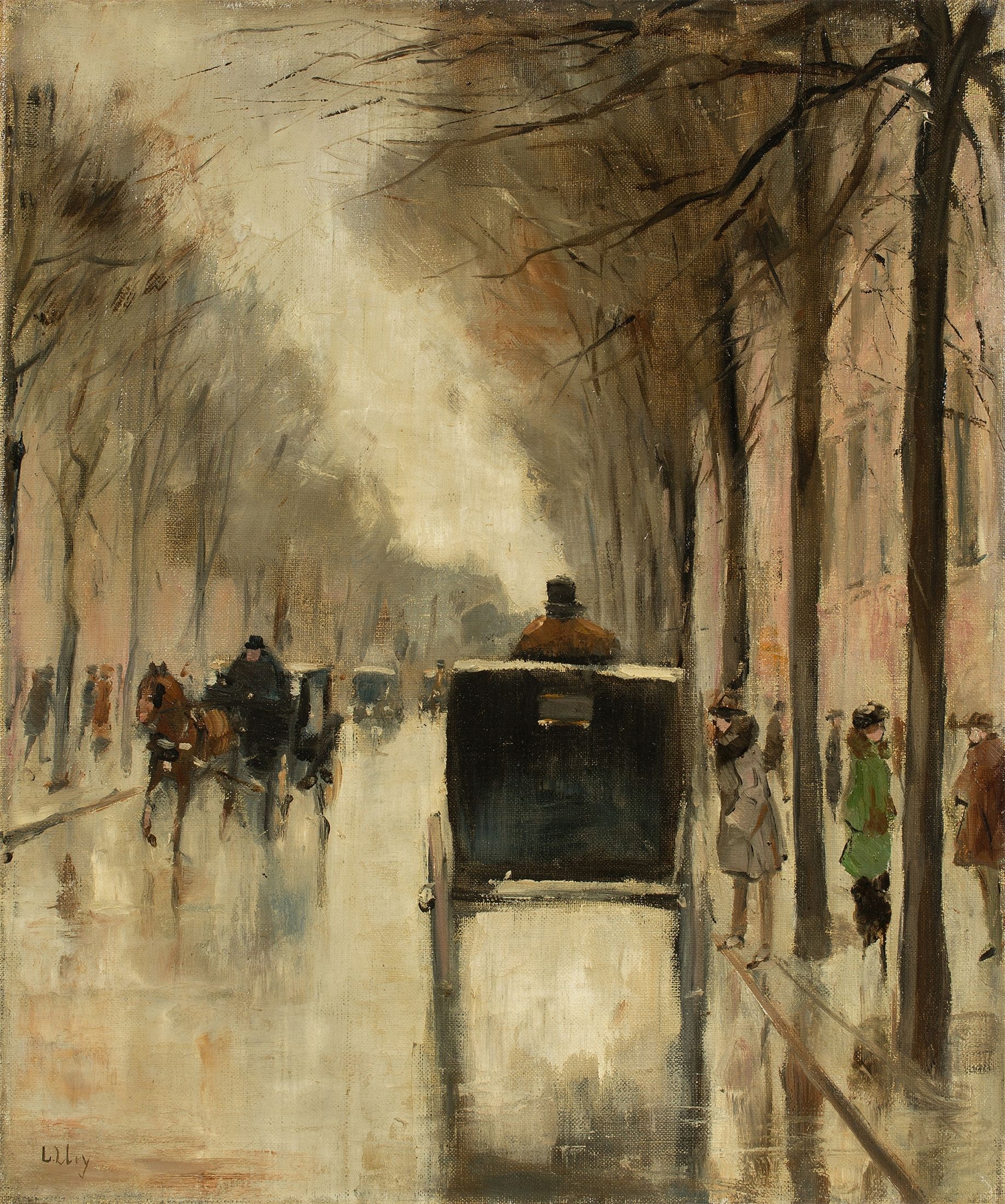
“Every brushstroke is a heartbeat remembered.” In a world marked by revolution and change, how do we capture the pulse of a city? Look to the left of the canvas, where the silhouettes of trees rise like sentinels against a muted sky, their branches draped in the soft embrace of twilight. The pathway, painted with delicate strokes, leads the viewer into an inviting depth, suggesting both movement and stillness. The blend of browns and greens creates a harmonic yet somber palette, reflecting the emotions of a city transitioning through time.
Notice how the light filters through the foliage, casting dappled shadows that play on the cobblestones, evoking a sense of nostalgia and contemplation. Delve deeper into the composition, and you’ll discover the tension between the vibrancy of nature and the solitude of the urban scene. The absence of figures invites the viewer to ponder who might walk this path—are they escaping the tumult outside, or are they drawn into it? Each brushstroke carries weight, as if recalling the stories of those who once traversed this bustling street, now silent in the twilight.
The juxtaposition of the lush greenery against the stark urban environment suggests a longing for tranquility amidst chaos, a yearning for connection in a changing world. Lesser Ury created Straße im Tiergarten (Bellevuestraße) during a period when Berlin was grappling with modernity and its consequences. Active in the late 19th and early 20th centuries, Ury was deeply influenced by the Impressionist movement while also documenting the transformative essence of his city. At this time, Berlin was evolving rapidly, caught between historical legacies and the winds of change, reflected poignantly in his work.