Sunset Across the Hudson Valley, Winter — History & Analysis
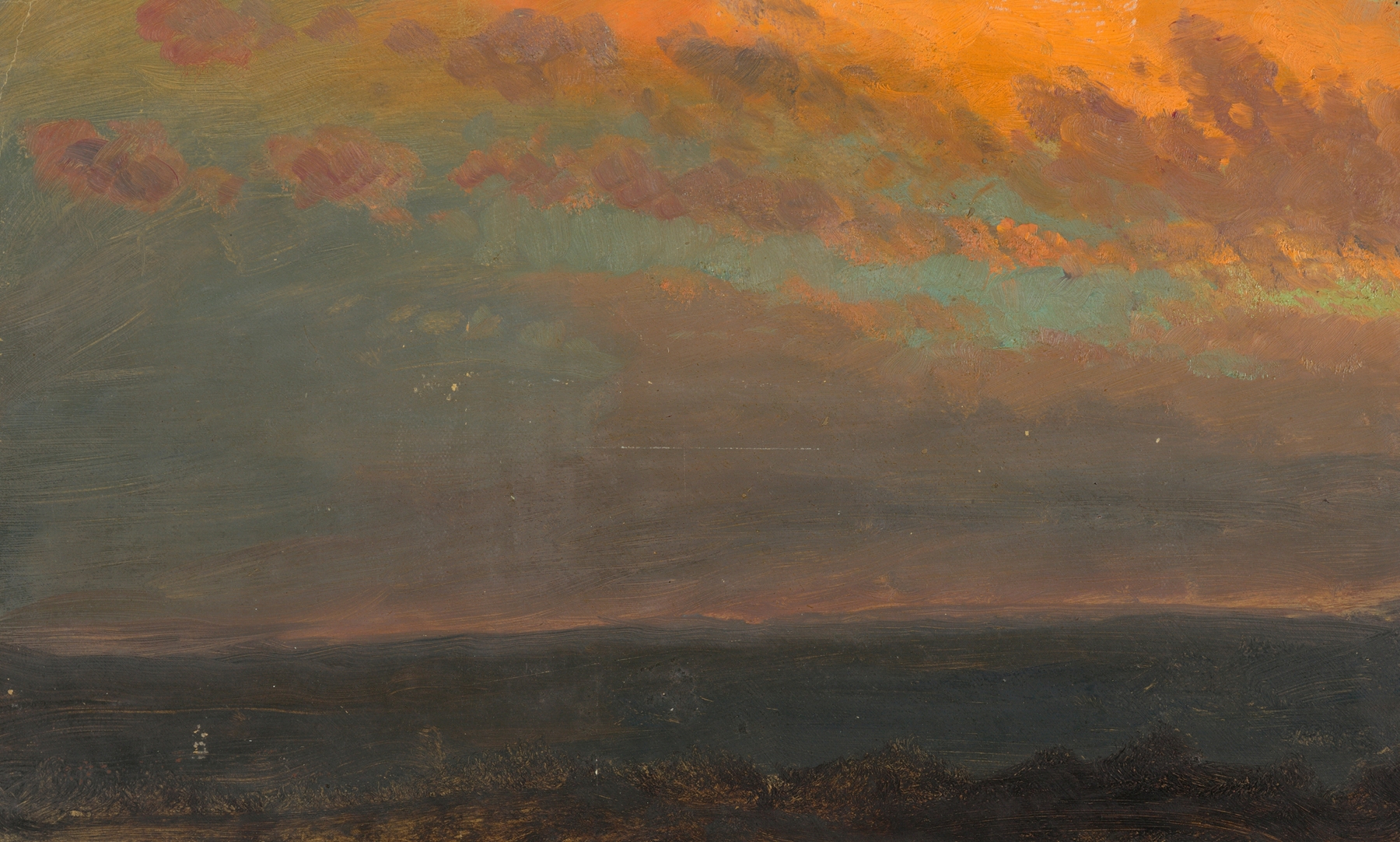
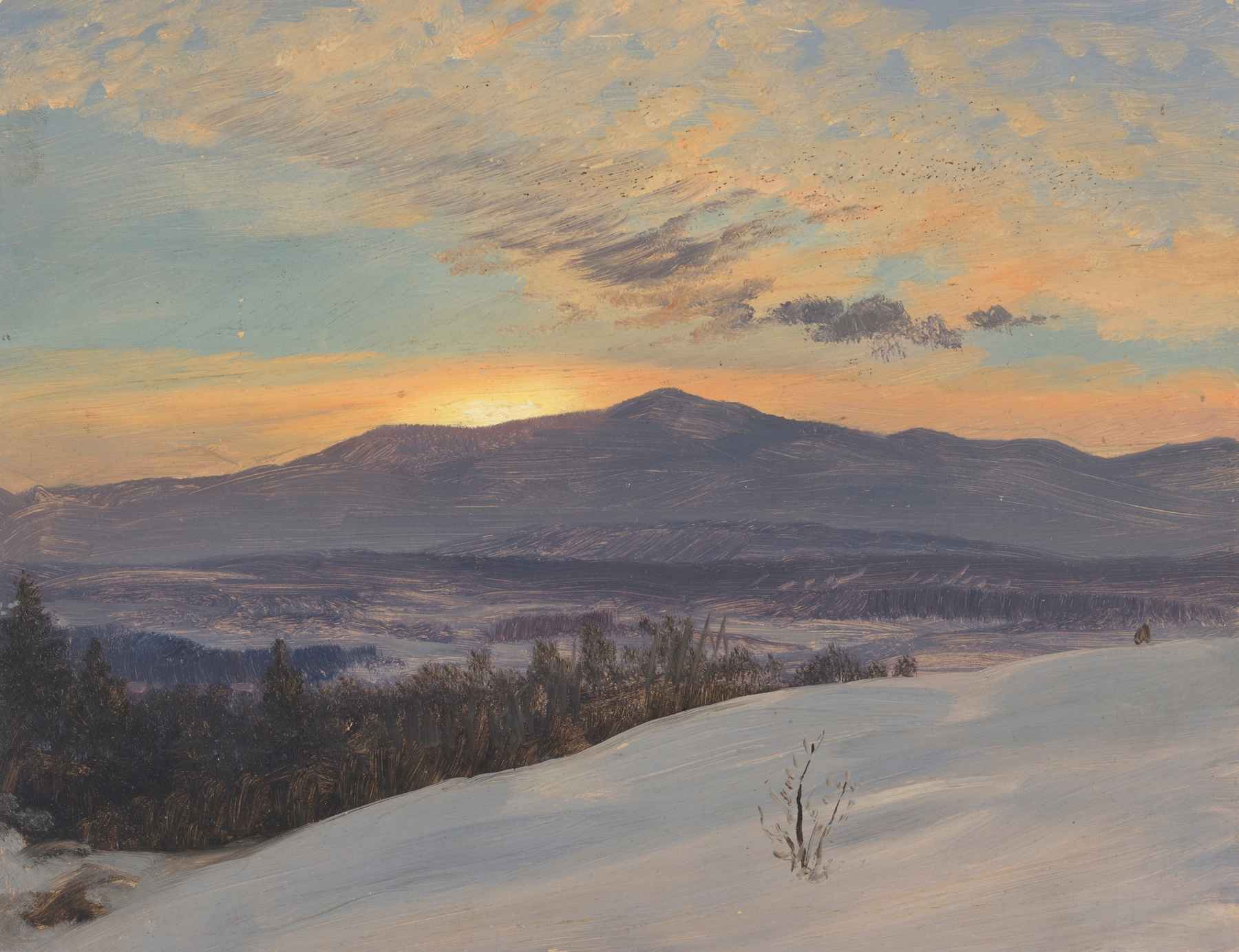
“To paint is to remember what time wants us to forget.” In Sunset Across the Hudson Valley, Winter, a profound sense of yearning permeates the canvas, inviting viewers to explore the delicate interplay between time and memory. Look to the horizon, where the sun dips beneath a blanket of vibrant oranges, purples, and deep blues, casting a soft glow over the snow-blanketed landscape. The sweeping valley unfolds into the distance, framed by frosted trees that arch gracefully towards the fading light. Notice how the cold winter air seems to shimmer with warmth against the rich colors, creating a juxtaposition that stirs the heart.
The artist's masterful brushwork evokes both the beauty of the moment and the fleeting nature of daylight. Beneath the tranquil surface, layers of emotional tension simmer. The winter scene reflects a longing for warmth, both physical and emotional, while the setting sun symbolizes the passage of time, prompting reflections on loss and nostalgia. The hardness of the icy terrain contrasts with the tender hues of twilight, hinting at the bittersweet nature of remembering cherished moments.
Each element, from the solitary tree to the distant mountains, adds complexity to the scene, engaging viewers in a dialogue about the beauty and fragility of existence. Frederic Edwin Church painted this work during the late 1870s, a period marked by a heightened interest in the sublime and the natural world within the Hudson River School. At this time, Church was deeply engaged with themes of landscape and atmospheric effects, reflecting not only his personal experiences but also the growing American identity. The world around him was rapidly changing, yet this painting captures a timeless tranquility, reflecting both his artistic vision and the broader cultural context of the era.