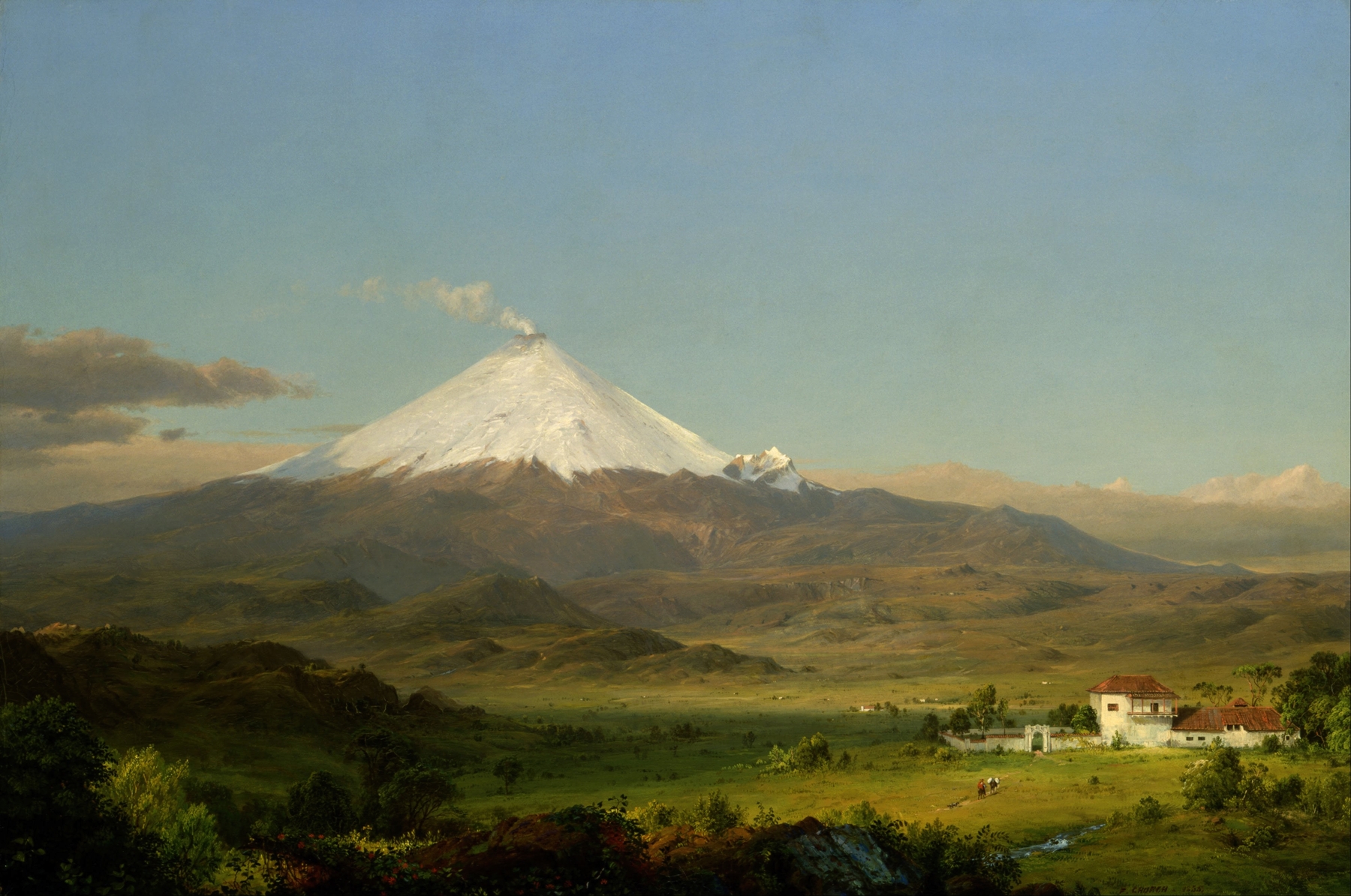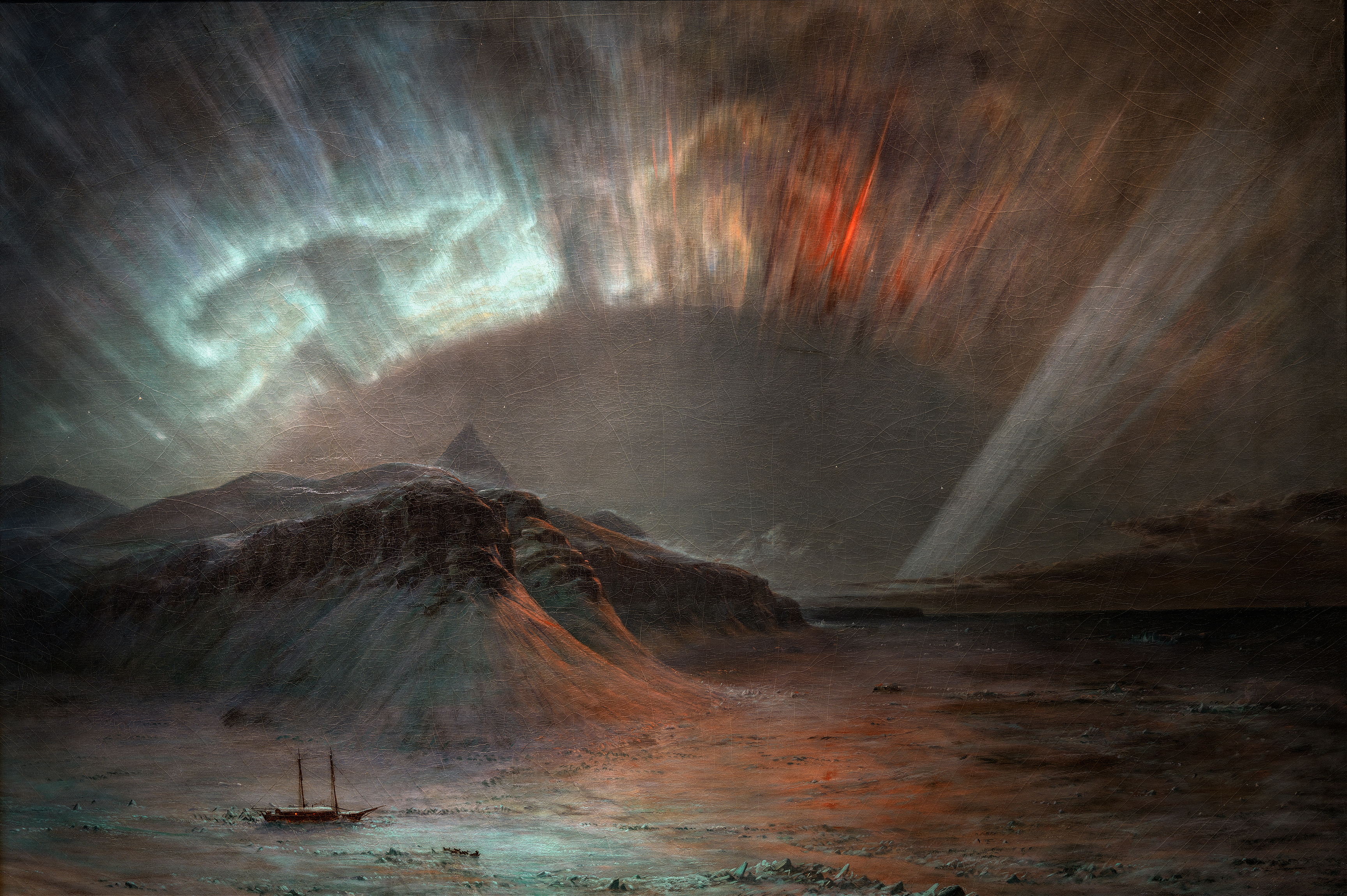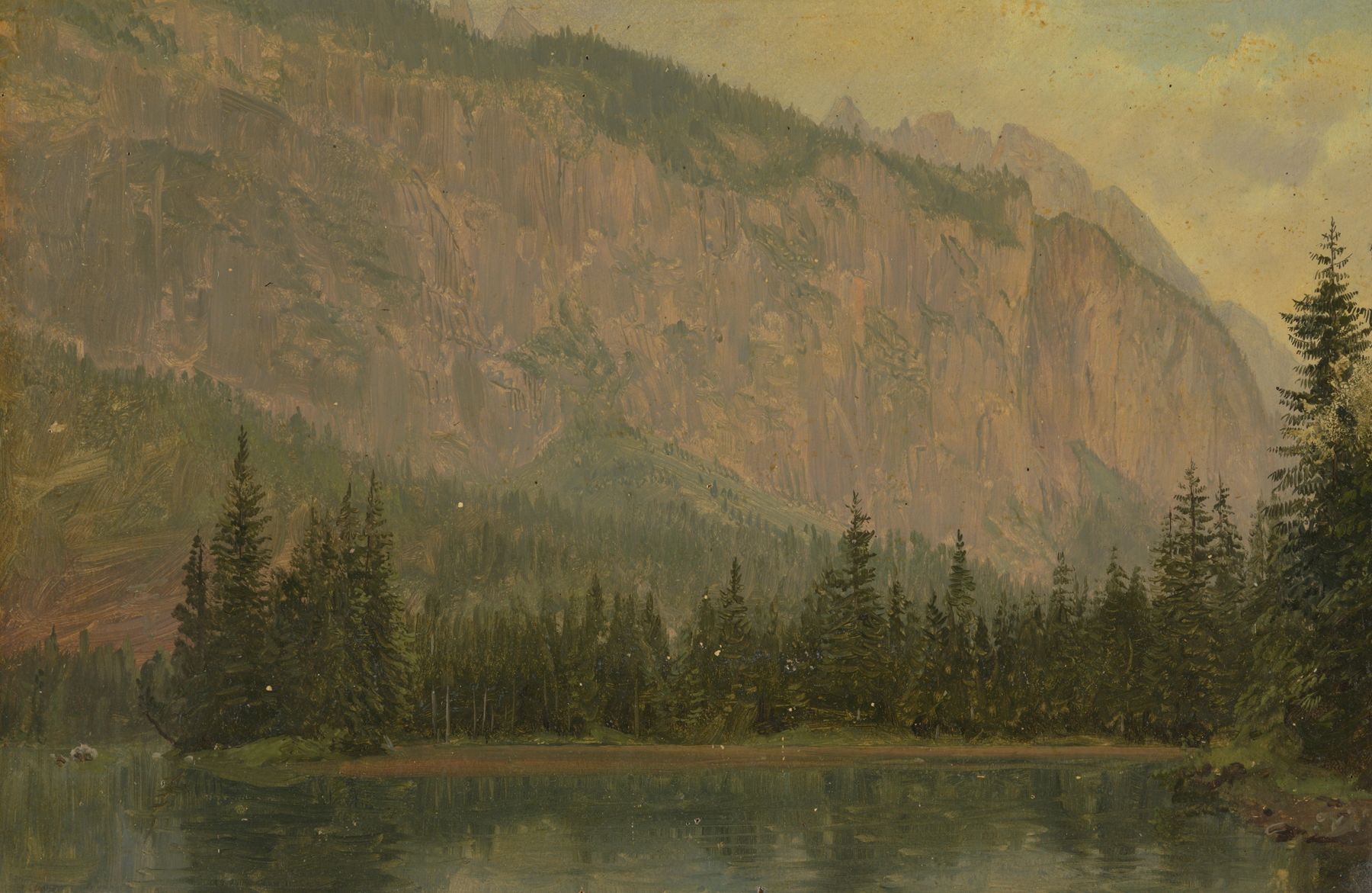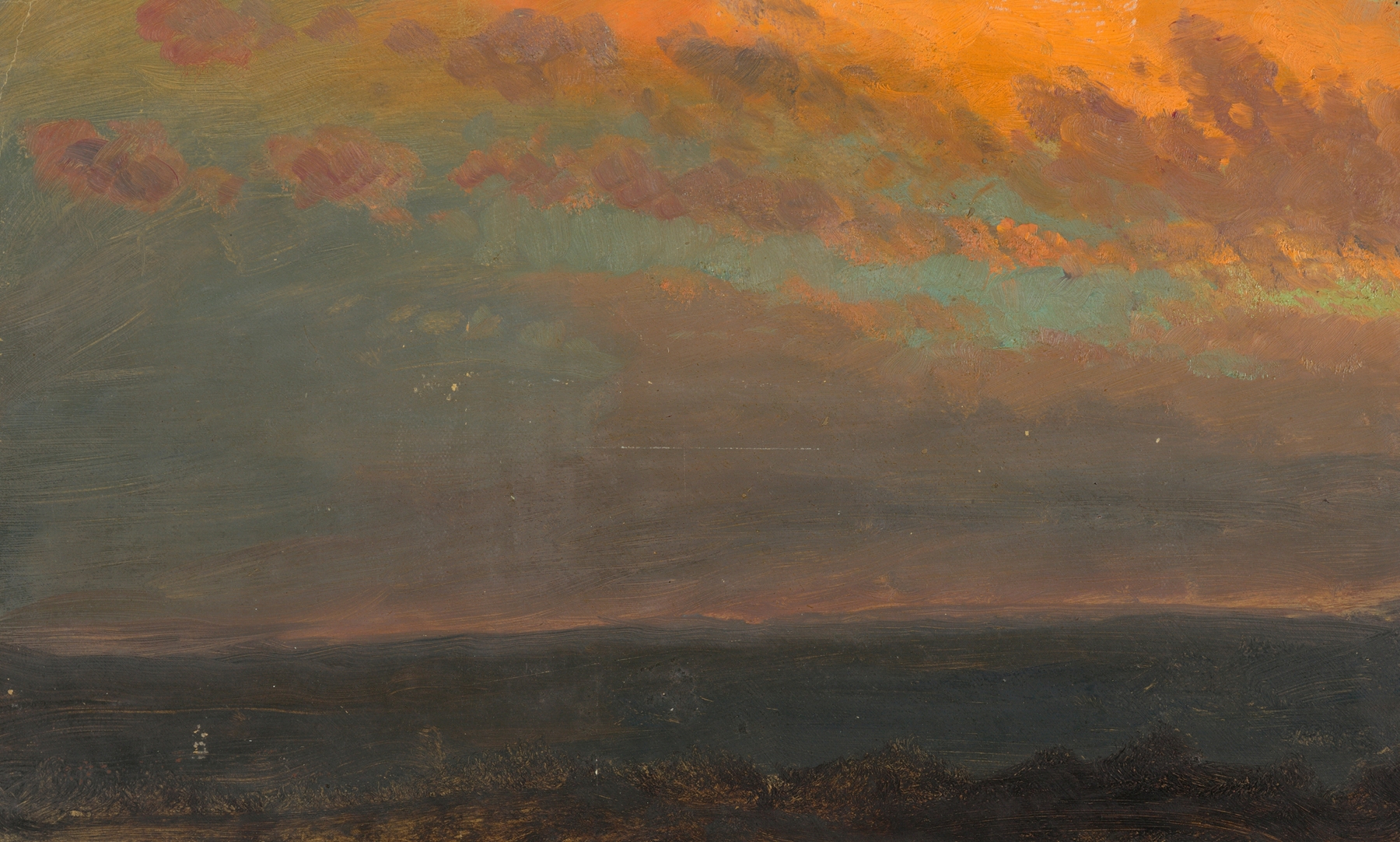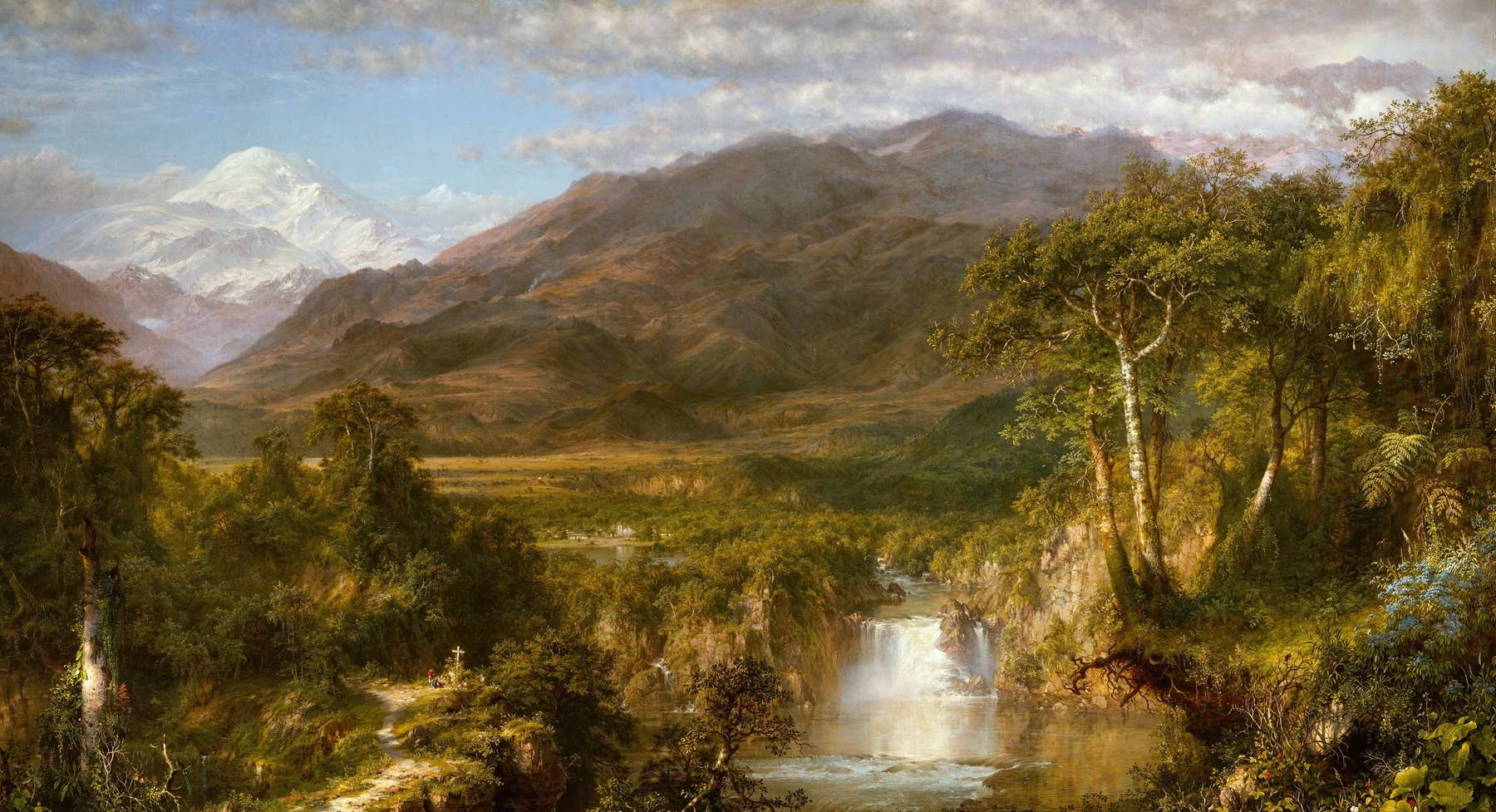
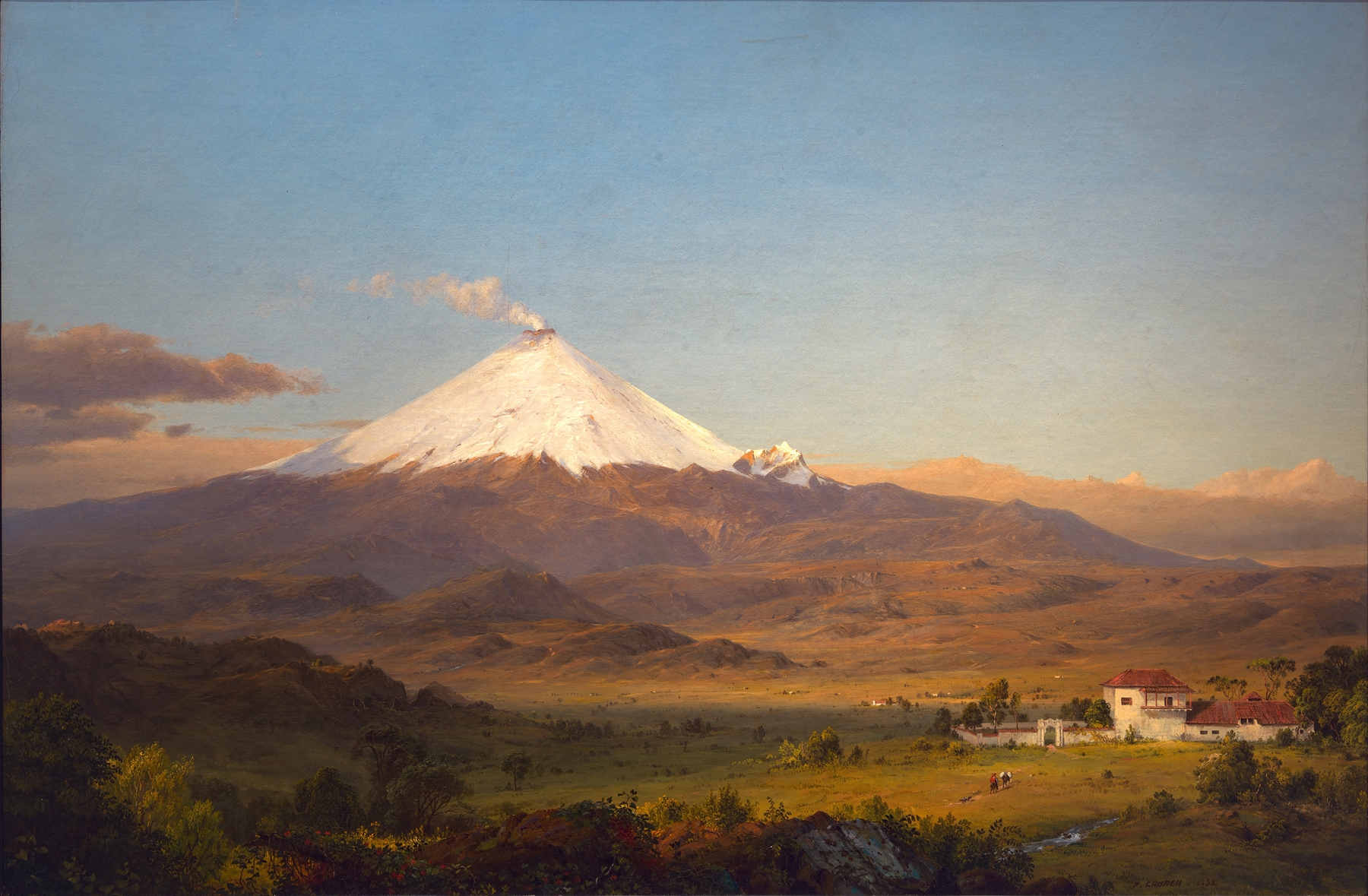
Did the painter know this moment would outlive them? In the stillness of the fading day, a profound emptiness stretches across the canvas, inviting contemplation and solitude amidst nature's breathtaking spectacle. Look to the left where the sun descends, casting a warm, golden hue that spills across the tranquil waters of the Hudson River. Notice how the vibrant oranges and deep purples blend seamlessly, igniting the sky in a dramatic display of color. The meticulous brushwork captures the fleeting light, emphasizing the tranquil surface of the water where reflections mingle with the dusky horizon. This interplay of light and shadow conveys not just beauty but an underlying melancholy that evokes the passage of time. The painting embodies contrasts: the serenity of the landscape against the inevitable onset of night. The looming mountains in the background stand silent, witnesses to the transient glory of day, while the distant trees seem to fade into the shadows, suggesting themes of loss and longing. This emptiness resonates with the viewer, prompting an introspection about the fleeting nature of existence and the moments that shape our lives. In 1870, when this work emerged, Frederic Edwin Church was at the forefront of the Hudson River School, a movement that aimed to capture the American landscape’s sublime beauty. During this period, the artist was increasingly drawn to themes of nature that echoed humanity's deeper feelings. Church was also grappling with profound personal loss, which may have infused his landscapes with a sense of yearning, allowing viewers to connect with his artistic vision on a profound level.