Tannen — History & Analysis
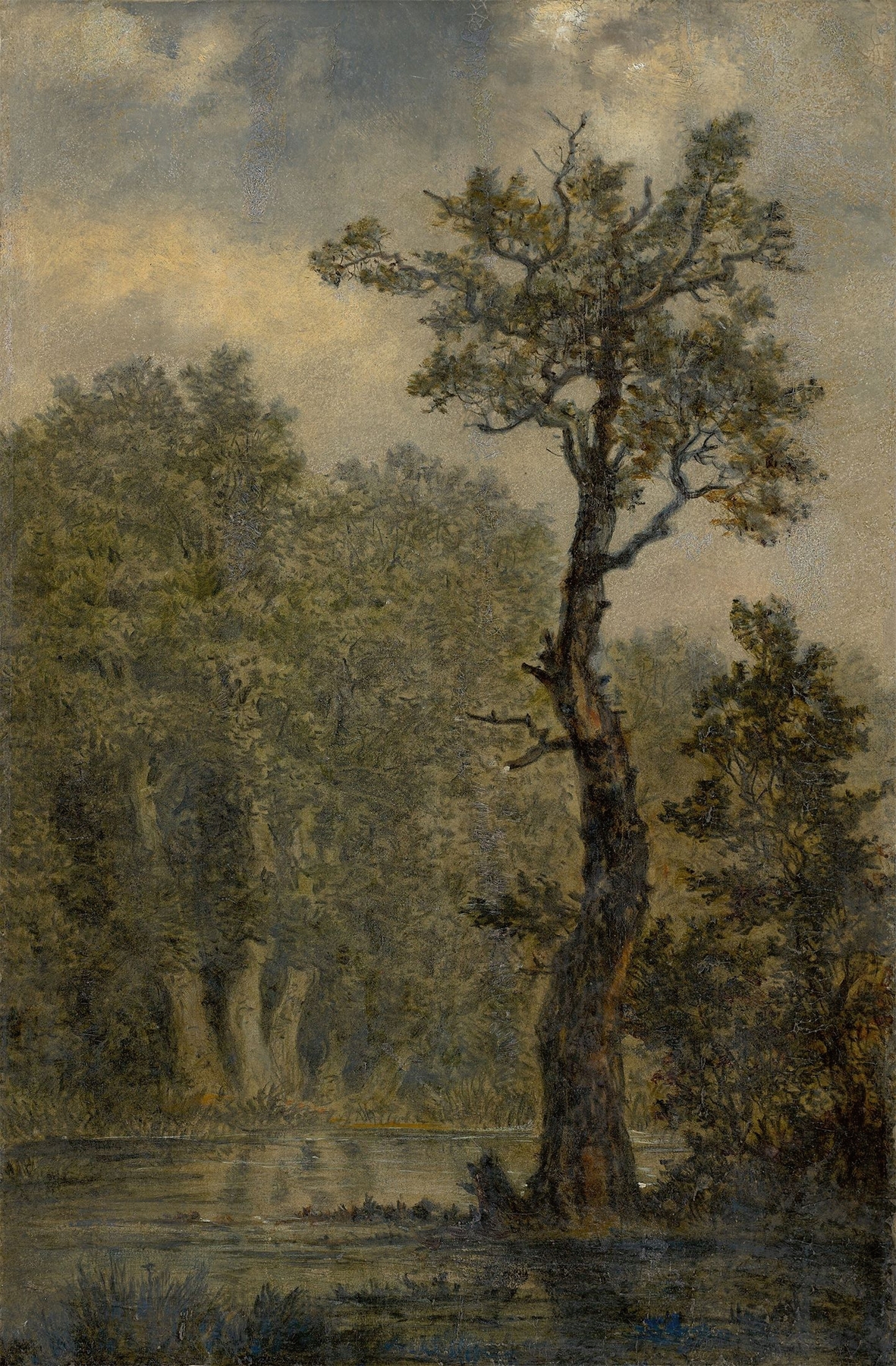
Can beauty exist without sorrow? A silent yearning whispers through the branches of Tannen, evoking a profound desire intertwined with nature's serenity. Focus on the lush greens that envelop the canvas, guiding your gaze towards the intricately painted pines that stand tall and proud. Notice how the light dances through the needles, casting gentle shadows that reveal the texture of each bough.
The cool blues and soft browns create a harmonious balance, drawing you into the tranquil yet contemplative atmosphere of the forest. Every brushstroke seems deliberate, inviting you to experience the quiet majesty of this woodland scene. As you delve deeper, observe how the vibrant foliage contrasts with the muted tones of the underbrush, symbolizing the tension between life and decay. The dense trees stand as guardians of hidden emotions, hinting at the stories of desire and longing that lie beneath their surface.
Each element, from the soft play of light to the delicate interplay of colors, conveys an undercurrent of introspection, suggesting that beauty is often laced with longing and melancholy. In 1840, while residing in Dresden, the artist created this work during a period marked by his exploration of Romanticism and nature. This was a time when Carl Gustav Carus sought to express the spiritual connection between man and the natural world, reflecting the shifting dynamics of art influenced by philosophical ideologies. Within this context, Tannen emerges as a testament to his desire to encapsulate both the beauty of nature and the deeper emotional experiences it evokes.