Gotische Kirche über Baumwipfeln bei Mondenschein — History & Analysis
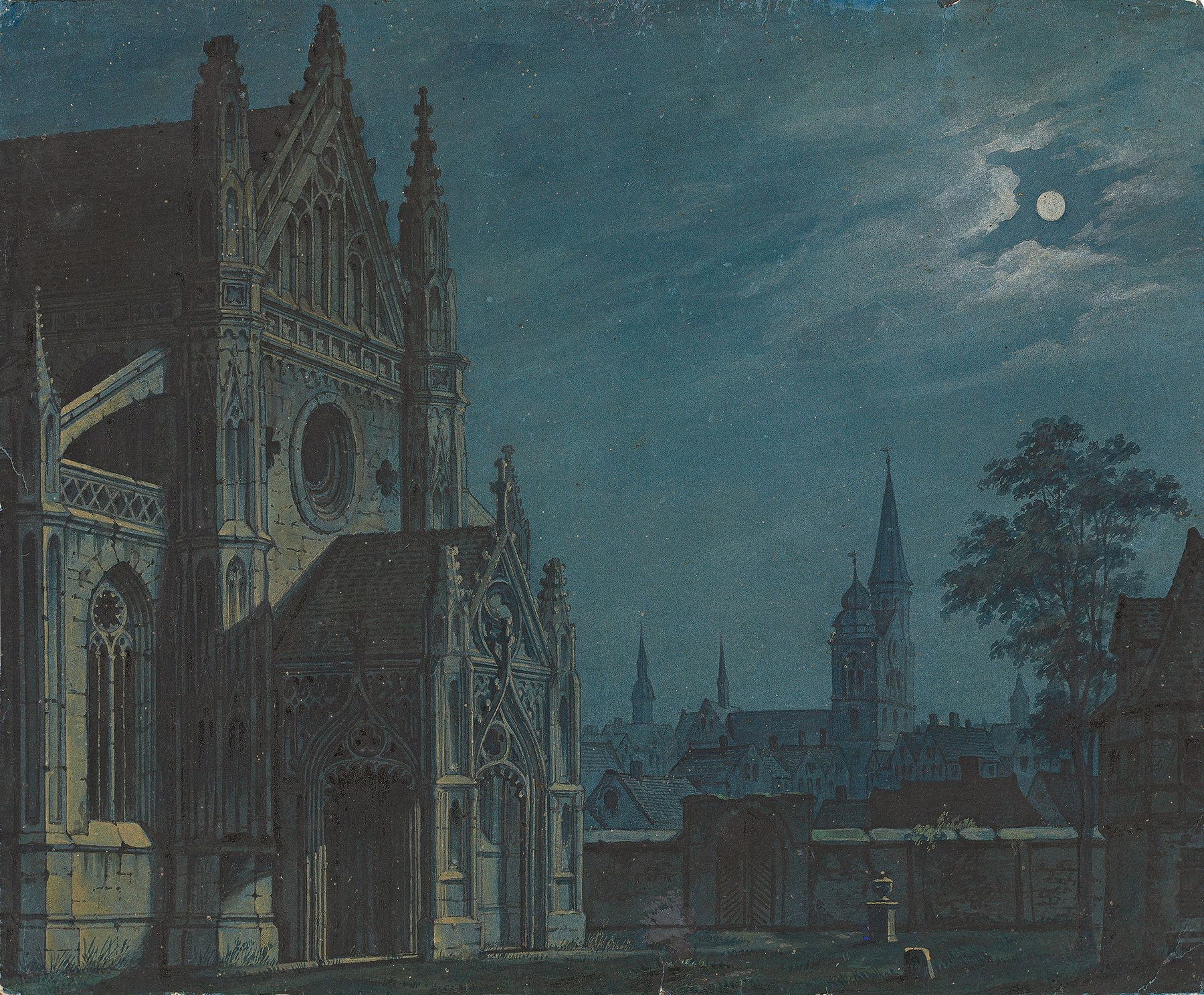
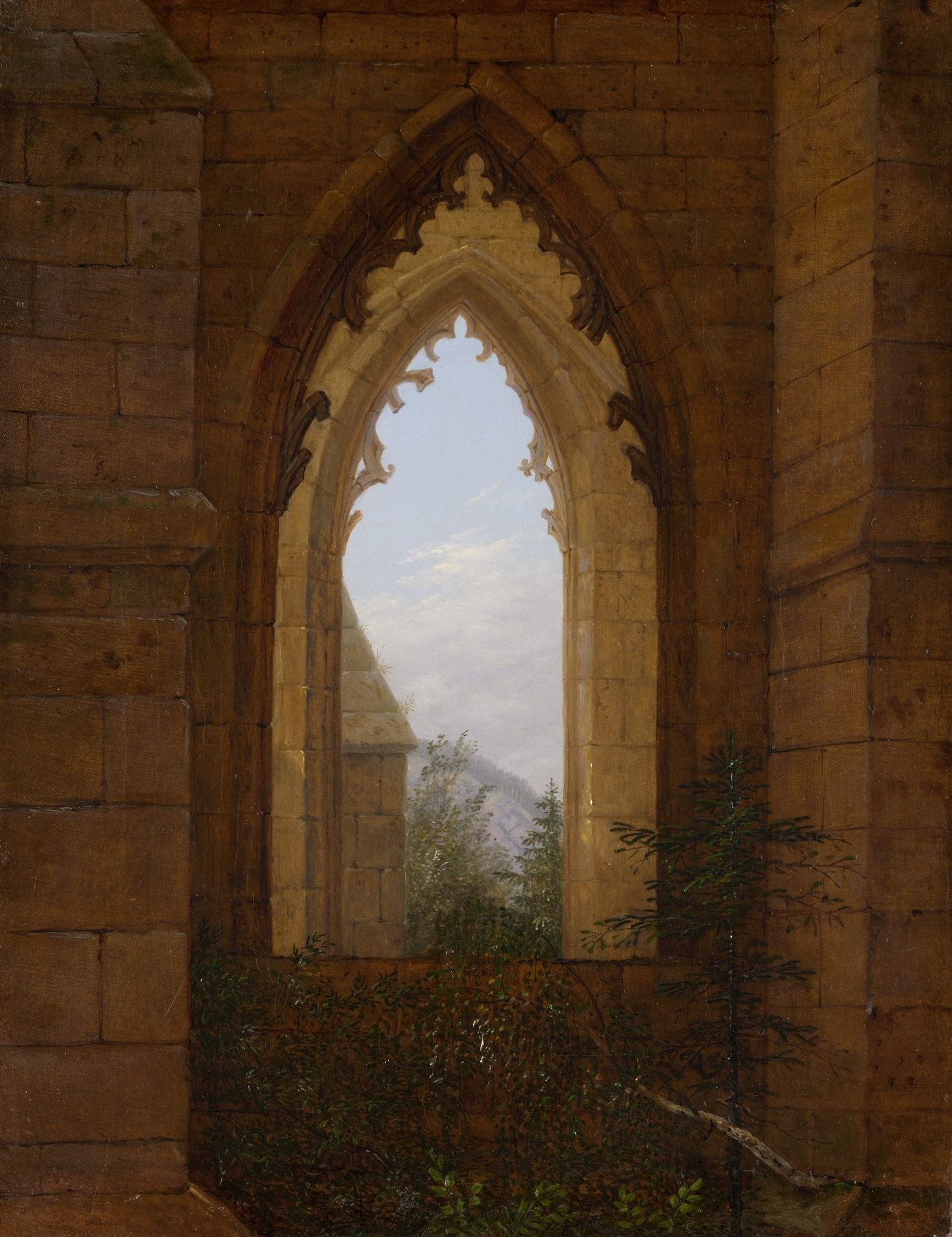
What secret hides in the quiet of the canvas? Under the soft embrace of moonlight, a serene church rises above the treetops, inviting contemplation of the divine that resides within and beyond. Look to the center of the composition, where the gothic spires reach skyward, silhouetted against the luminous night. Notice how the moonlight dances upon the church’s intricate details, illuminating its stone façade and casting delicate shadows on the foliage below.
The gentle gradient of blues and grays envelops the scene, evoking a sense of tranquility while highlighting the sharp architectural lines that contrast with the organic forms of surrounding trees. Yet, beneath this serene surface lies an interplay of opposites: the divine versus the earthly, the stillness of the night versus the whispers of nature. Observe the small, almost ghostly figures at the base of the church, as if they are drawn to its ethereal beauty, suggesting a yearning for connection with something greater. The juxtaposition of the robust church against the fragile trees speaks to the human desire for permanence in a transitory world.
In 1840, the artist was immersed in a Romantic movement that sought solace in nature and nostalgia for the sacred. Creating Gotische Kirche über Baumwipfeln bei Mondenschein during a time of personal reflection, Carus was influenced by his deep appreciation of landscape and spiritual themes. Positioned in Dresden, he sought to encapsulate the divine essence found in the natural world, embodying a moment where architecture and nature harmoniously coexist.