The Bathing Hour, Chester, Nova Scotia — History & Analysis
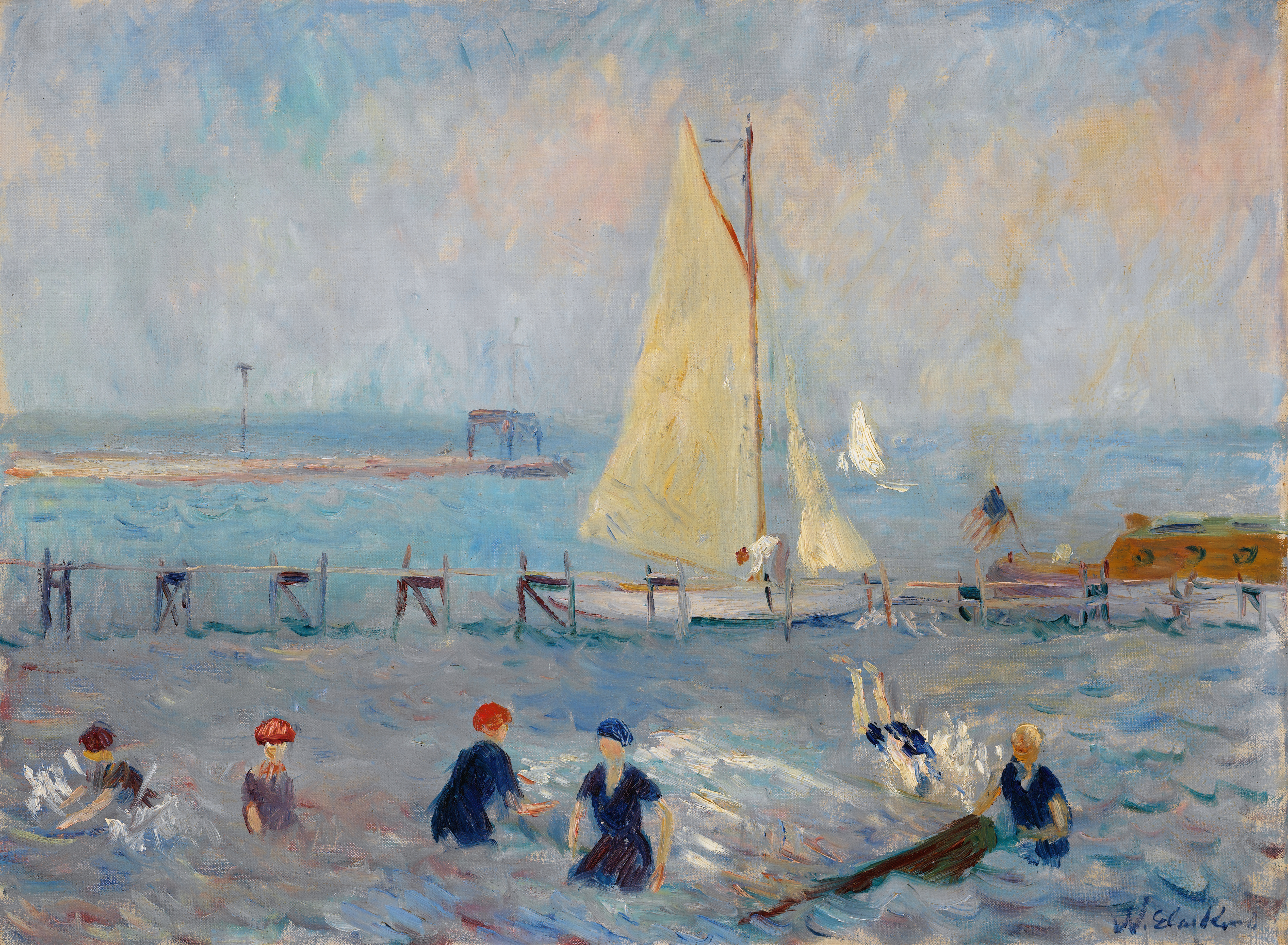
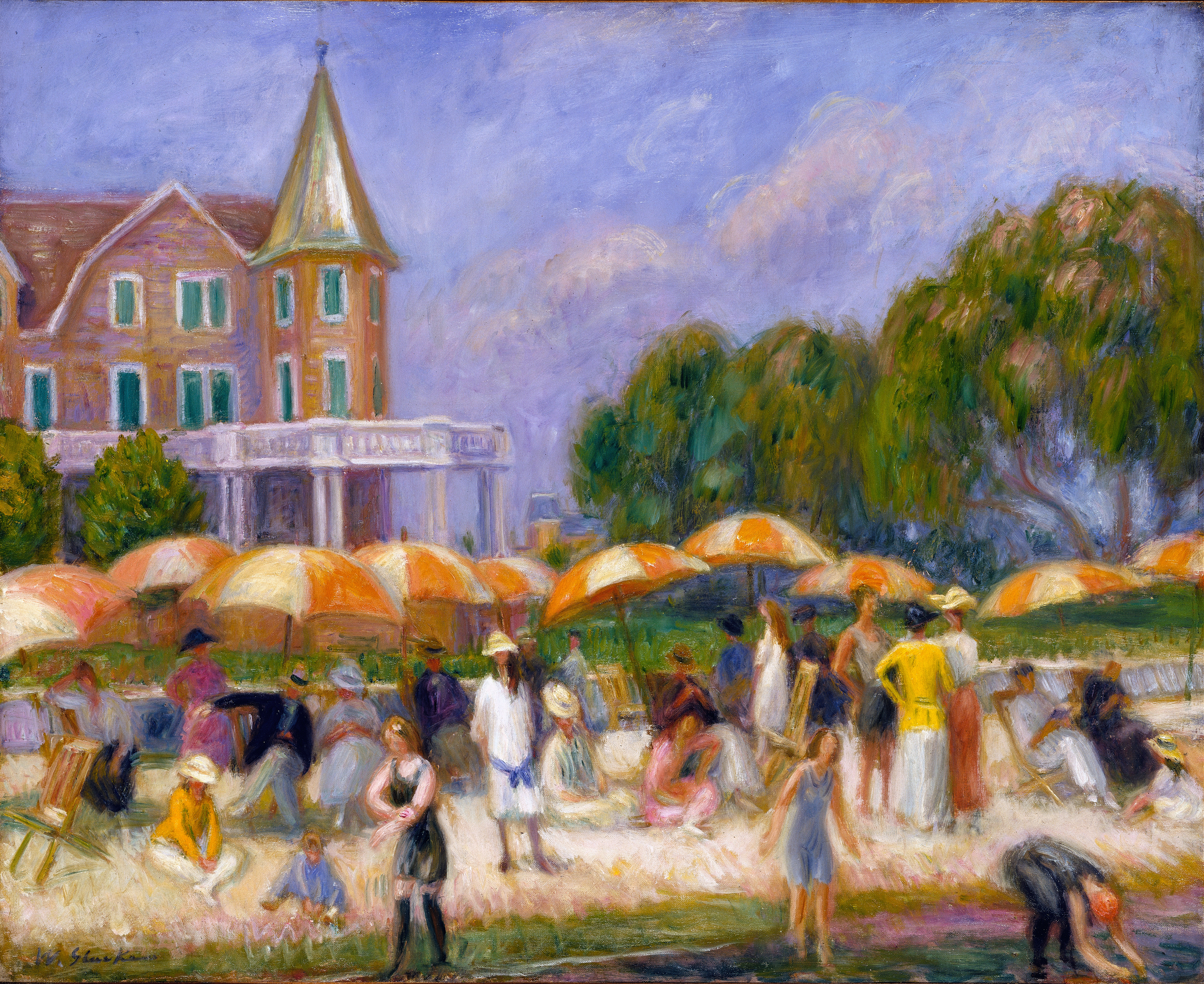
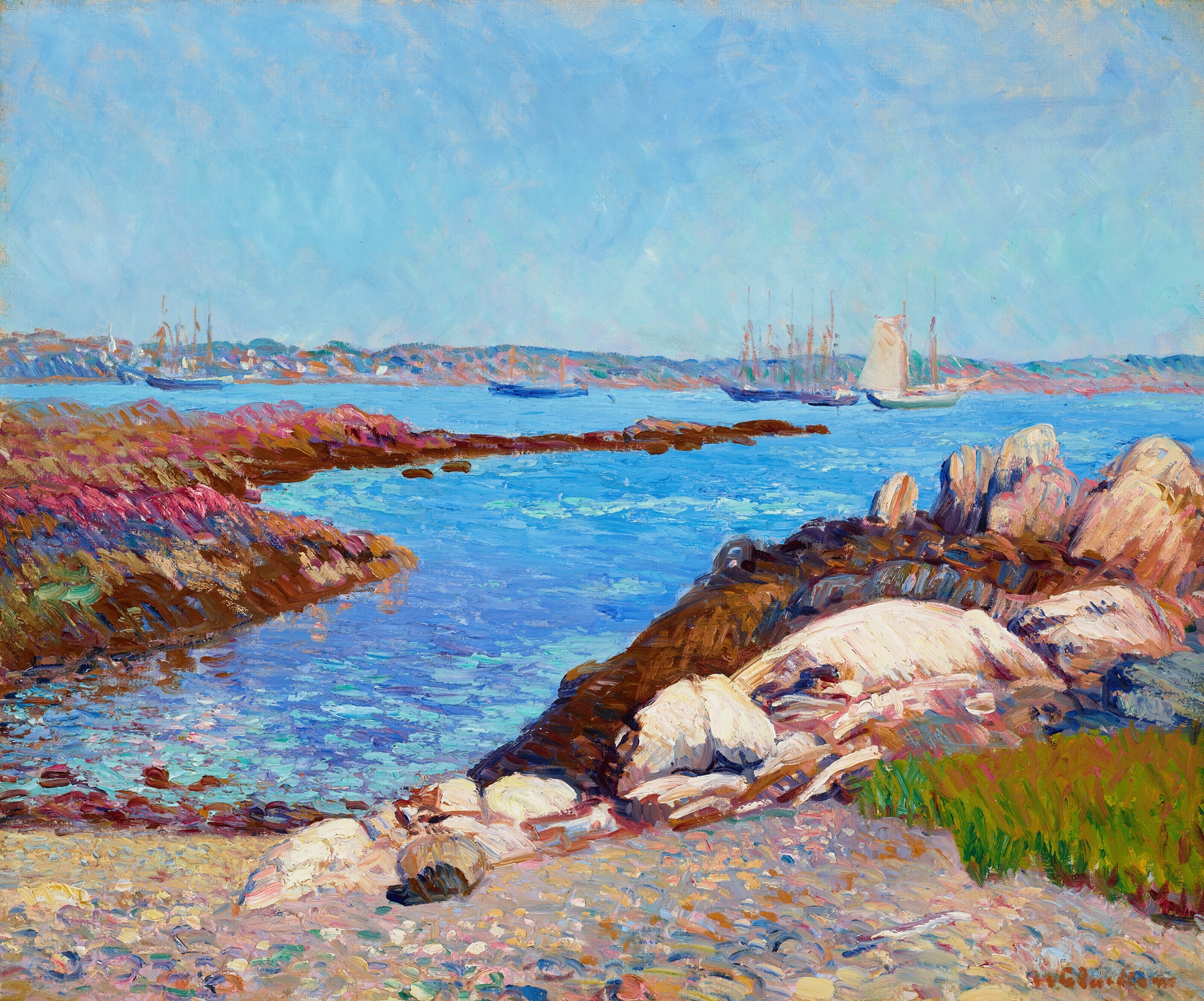
What secret hides in the quiet of the canvas? Memories linger like the gentle waves lapping against the shore, evoking a tender nostalgia that transcends time. Look to the left at the sun-drenched figures gathered on the sandy beach, their bodies an array of warm hues — soft ochres and muted pinks blend seamlessly with the golden light. Notice how the artist employs loose brushstrokes, creating a sense of movement that breathes life into this seemingly serene moment.
The contrasting cool blues of the water invite your gaze further into the horizon, where the sky meets the sea, suggesting an endless freedom that is both exhilarating and ephemeral. Within this idyllic scene lies an emotional tension between joy and reflection. The playful interactions of the bathers reveal a sense of community and shared experience, yet the solitary figure sitting apart stirs a longing for connection. The vibrant colors and lively composition capture the exuberance of summer, yet the hidden traces of solitude hint at deeper stories — whispers of laughter intertwined with the melancholic passage of time.
In 1910, Glackens painted this piece in Chester, Nova Scotia, during a period of burgeoning American Impressionism. His work during this time reflected a shift in focus from more formal artistic traditions to capturing everyday life and moments of leisure. Glackens was influenced by his contemporaries, striving to blend the vibrancy of modern life with the intimacy of memory, celebrating the beauty found in simplicity.