The Bay of New York and Governors Island Taken from Brooklyn Heights — History & Analysis
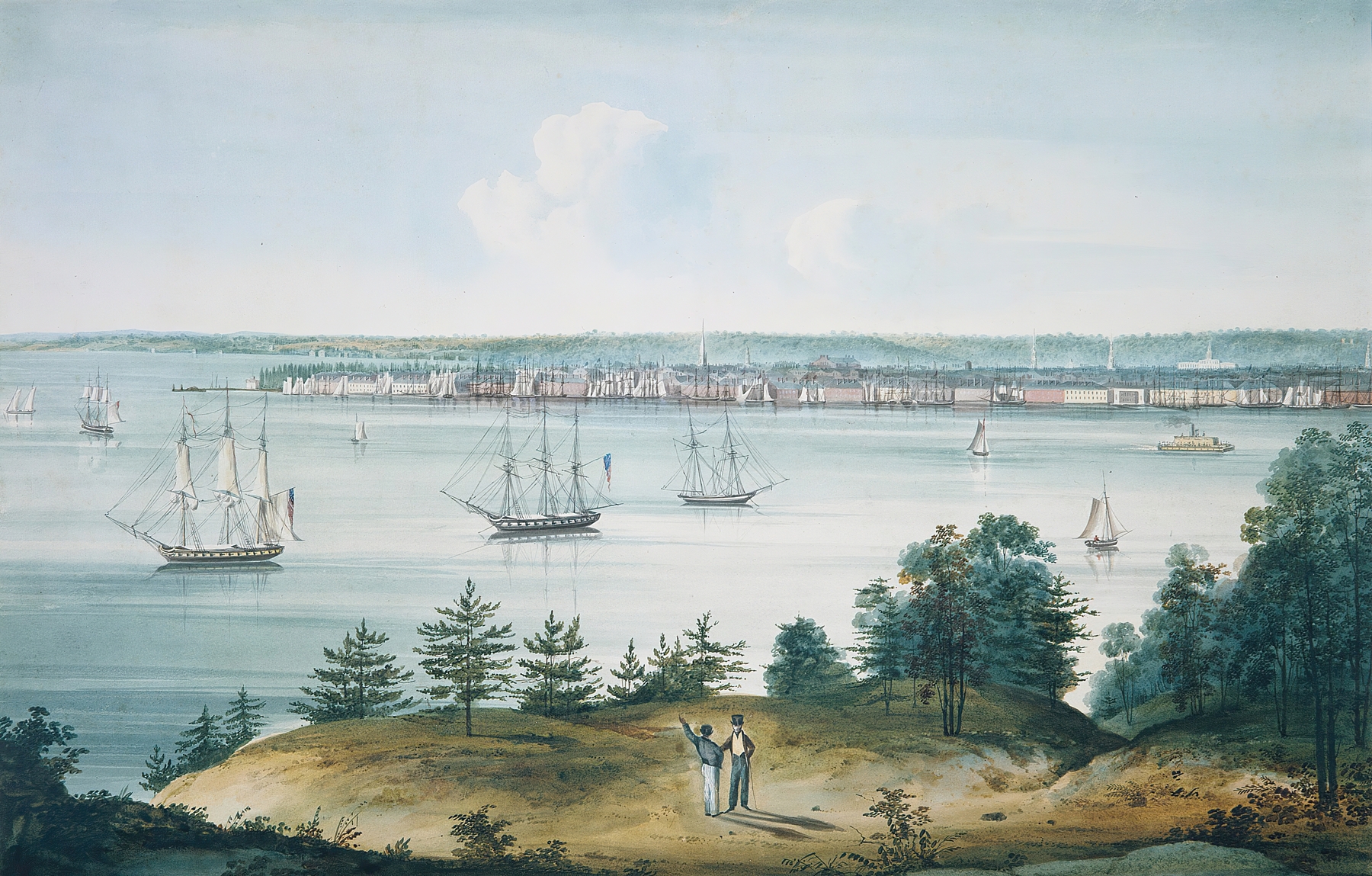
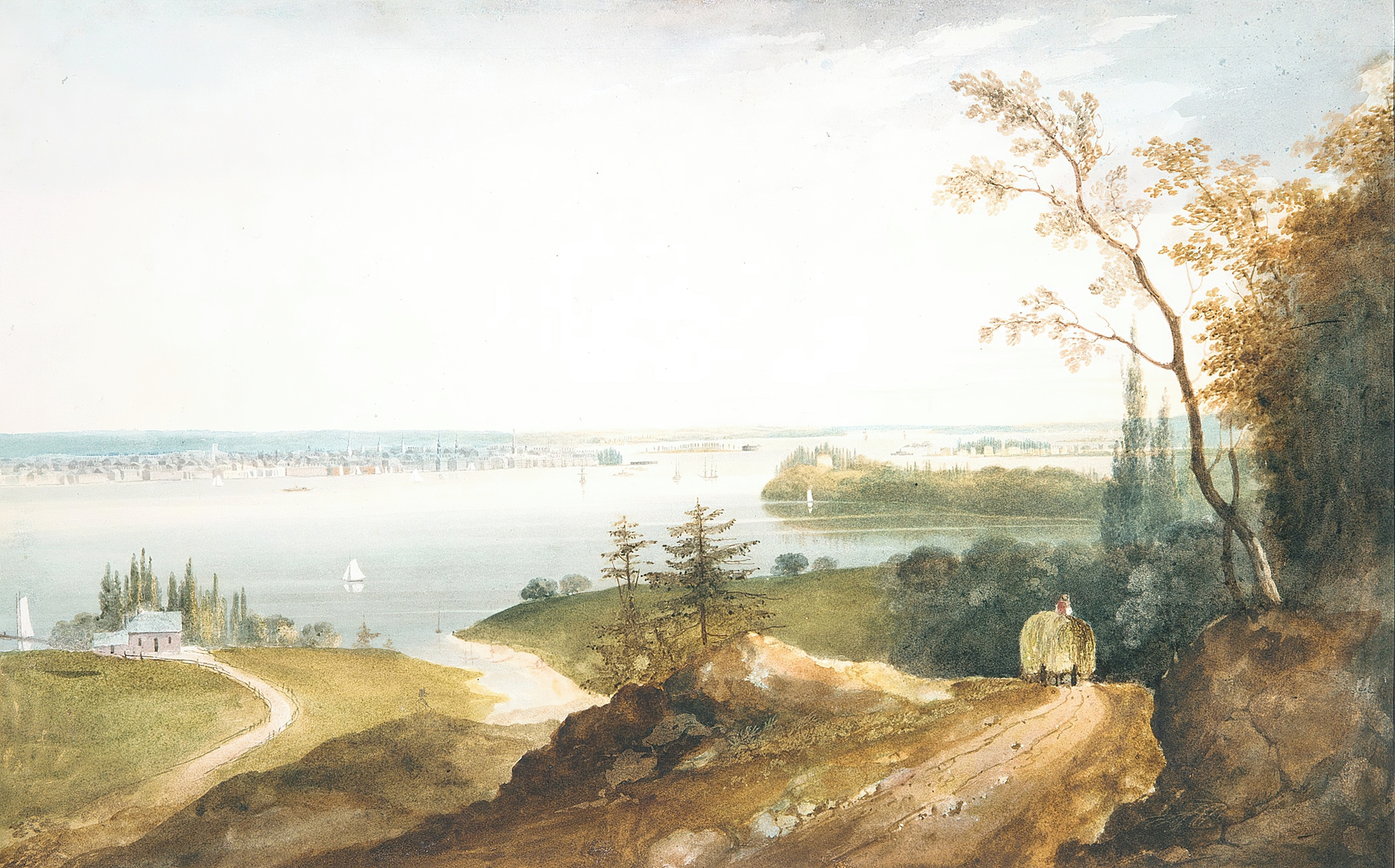
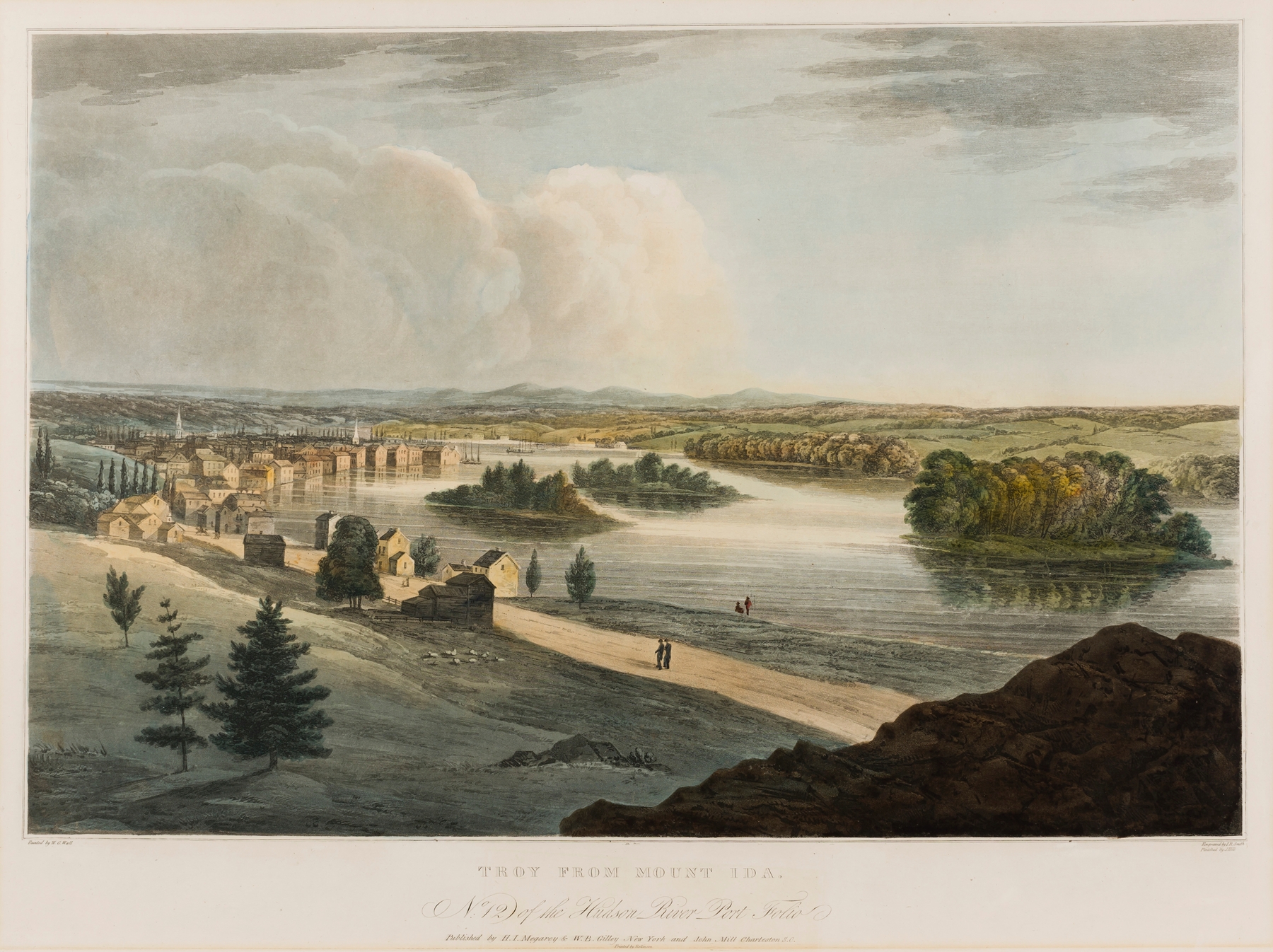
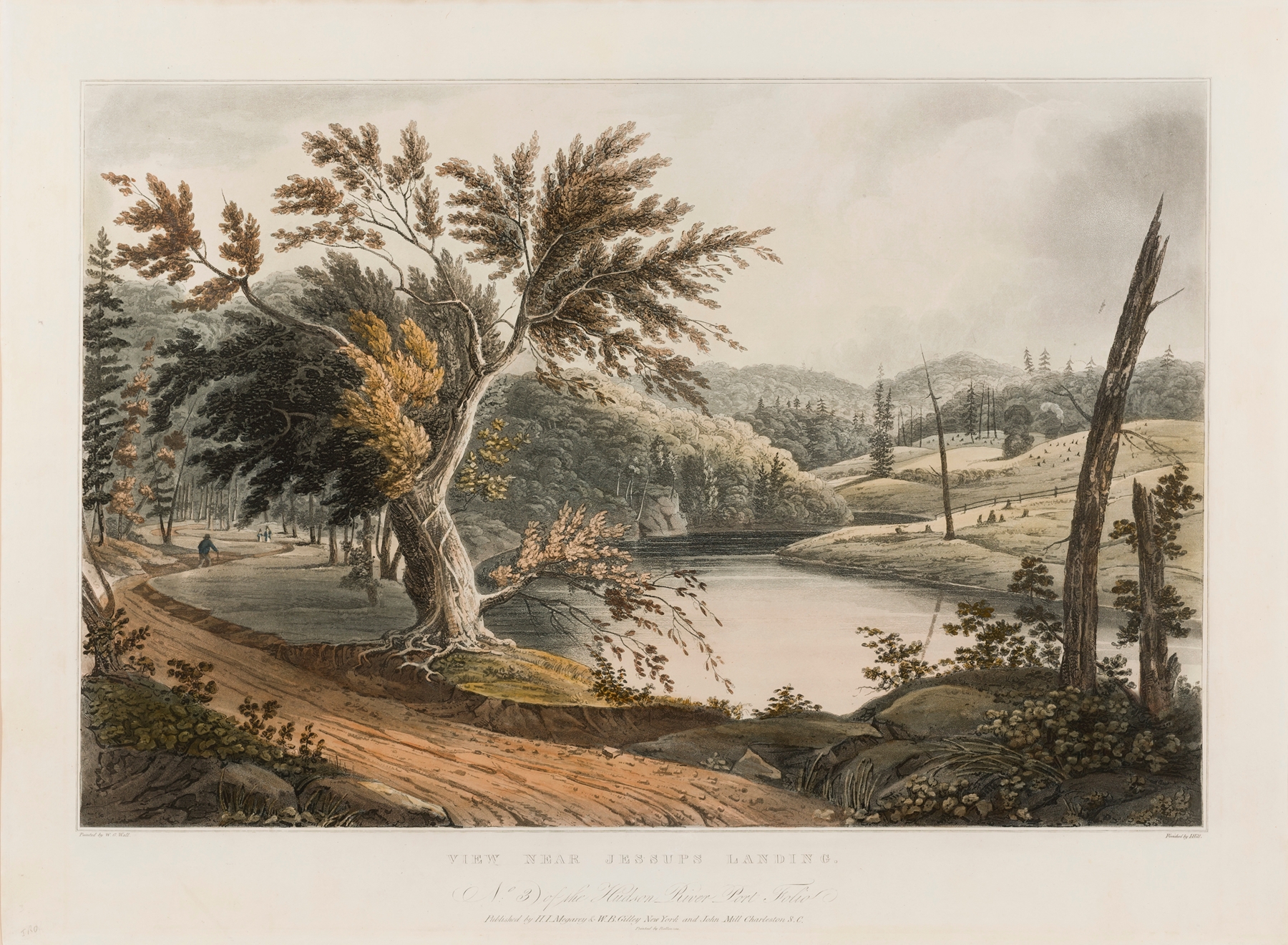
Did the painter know this moment would outlive them? The vivid hues of sky and water, woven together in a delicate dance, evoke a fleeting sense of eternity, urging us to pause and reflect. Look to the left at the vibrant blues stretching across the canvas, with the gentle ripples of the bay catching the light. Notice how the artist captures the warmth of the sun, casting a golden glow over the buildings dotting the shoreline.
The careful juxtaposition of soft pastel colors against the sharp outlines of the architecture accentuates the tranquility of the scene, inviting viewers to explore each detail, from the bustling boats to the distant skyline. The contrast between nature and urban development reveals a deeper narrative; the landscape is both idyllic and infused with the pulse of a growing city. Subtle hints of impending change lie in the distance, where the rippling water meets the man-made structures, suggesting a future where industry might overshadow the serene beauty of the bay. Each brushstroke carries the weight of history, capturing a fleeting moment before the world transformed irrevocably.
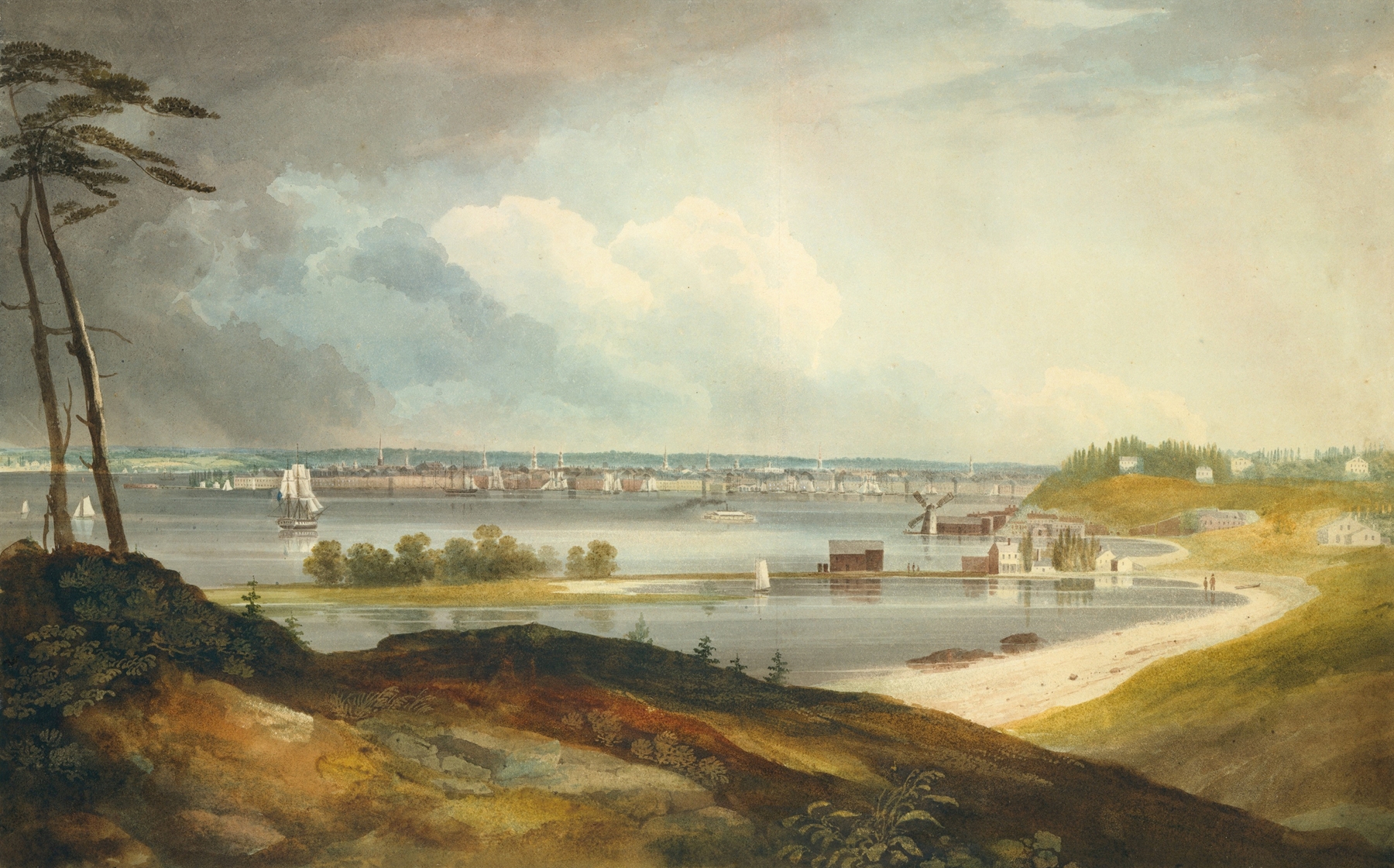
William Guy Wall painted this scene between 1820 and 1825, during a period of burgeoning growth in New York City. As the artist settled in America from England, he became captivated by the country’s landscapes, which were rapidly evolving in the wake of industrialization. This piece reflects not only his artistic vision but also the early 19th-century American spirit filled with optimism and change, emblematic of a nation on the verge of modernity.