The Bay of New York Taken from Brooklyn Heights — History & Analysis
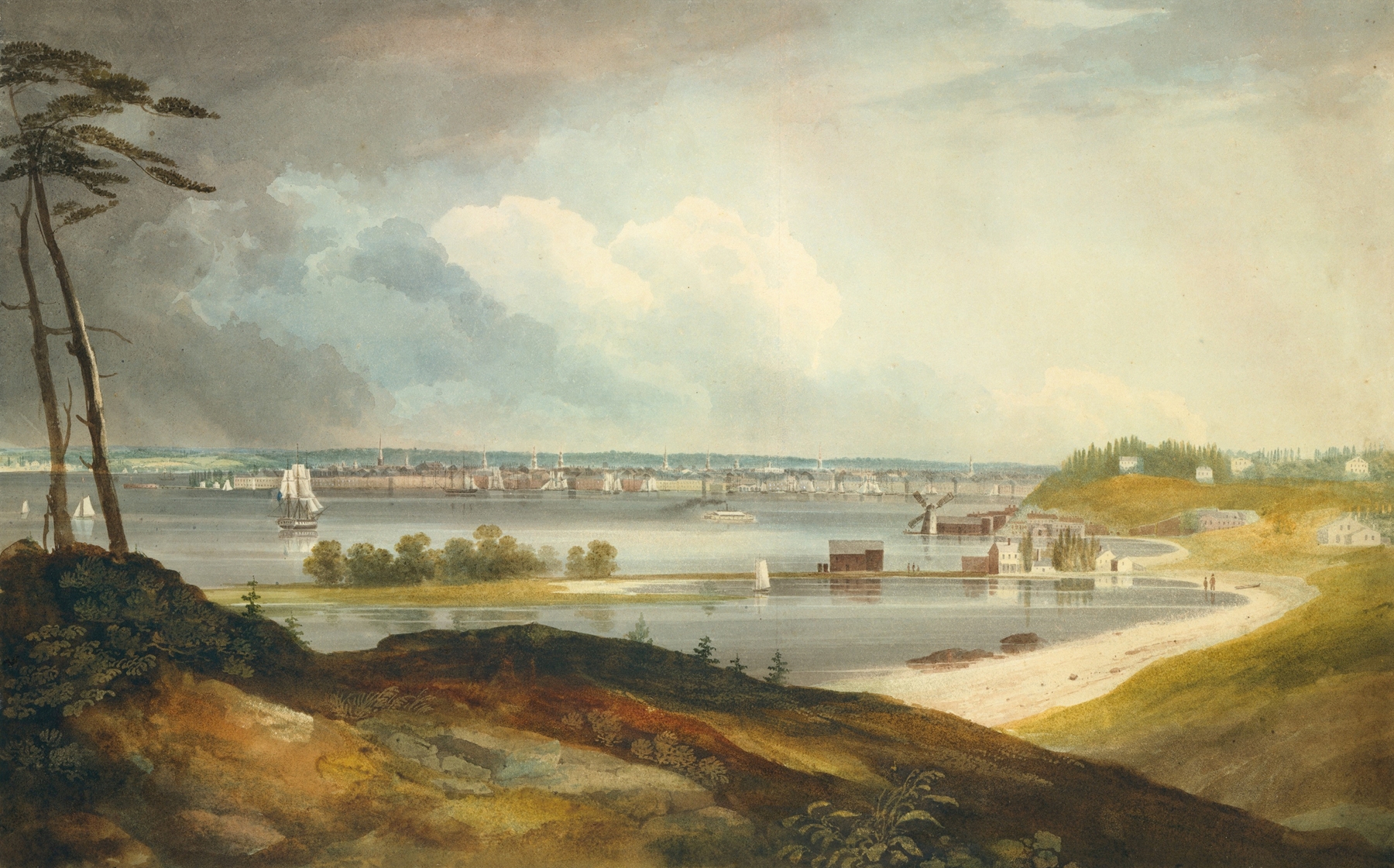
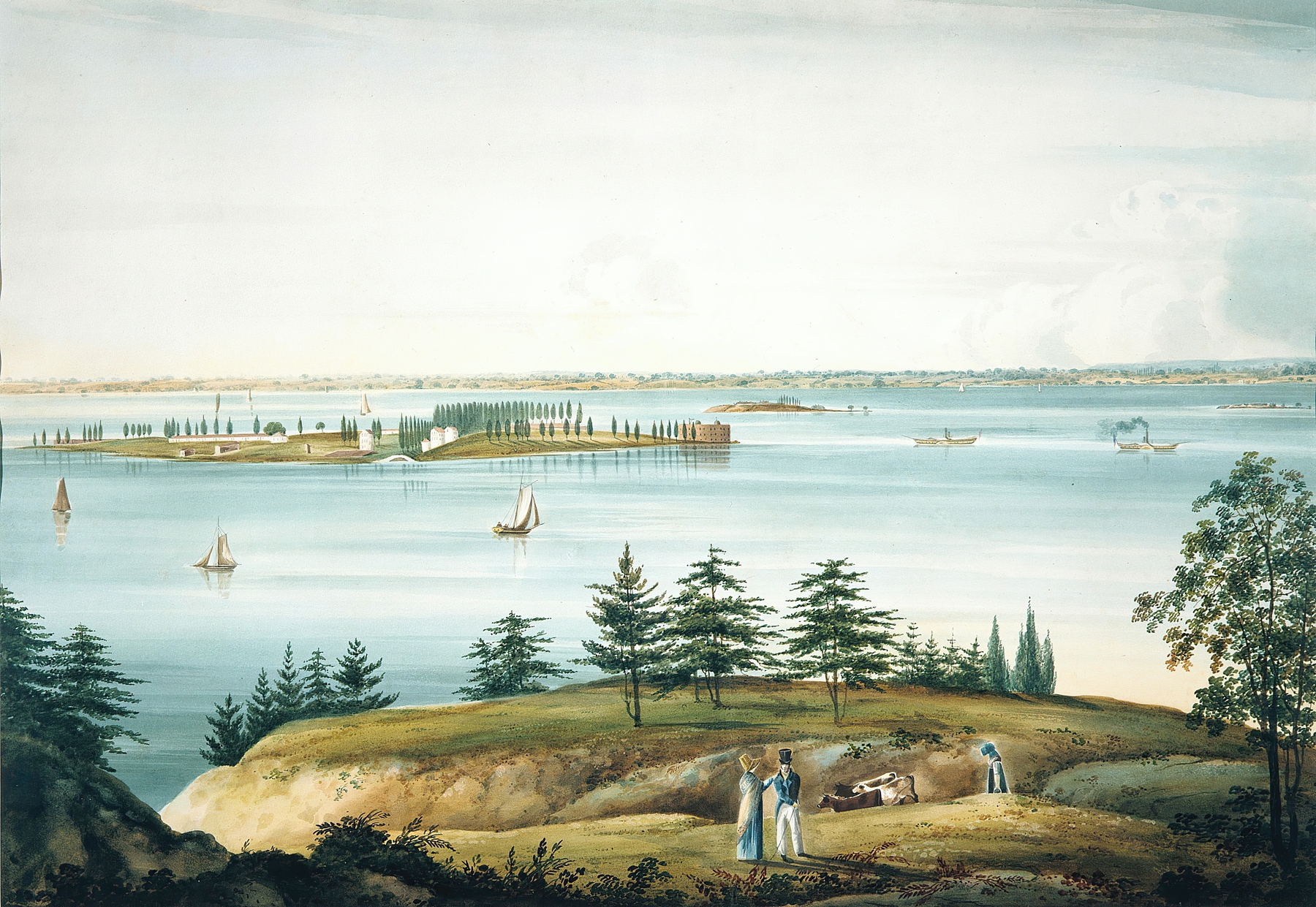
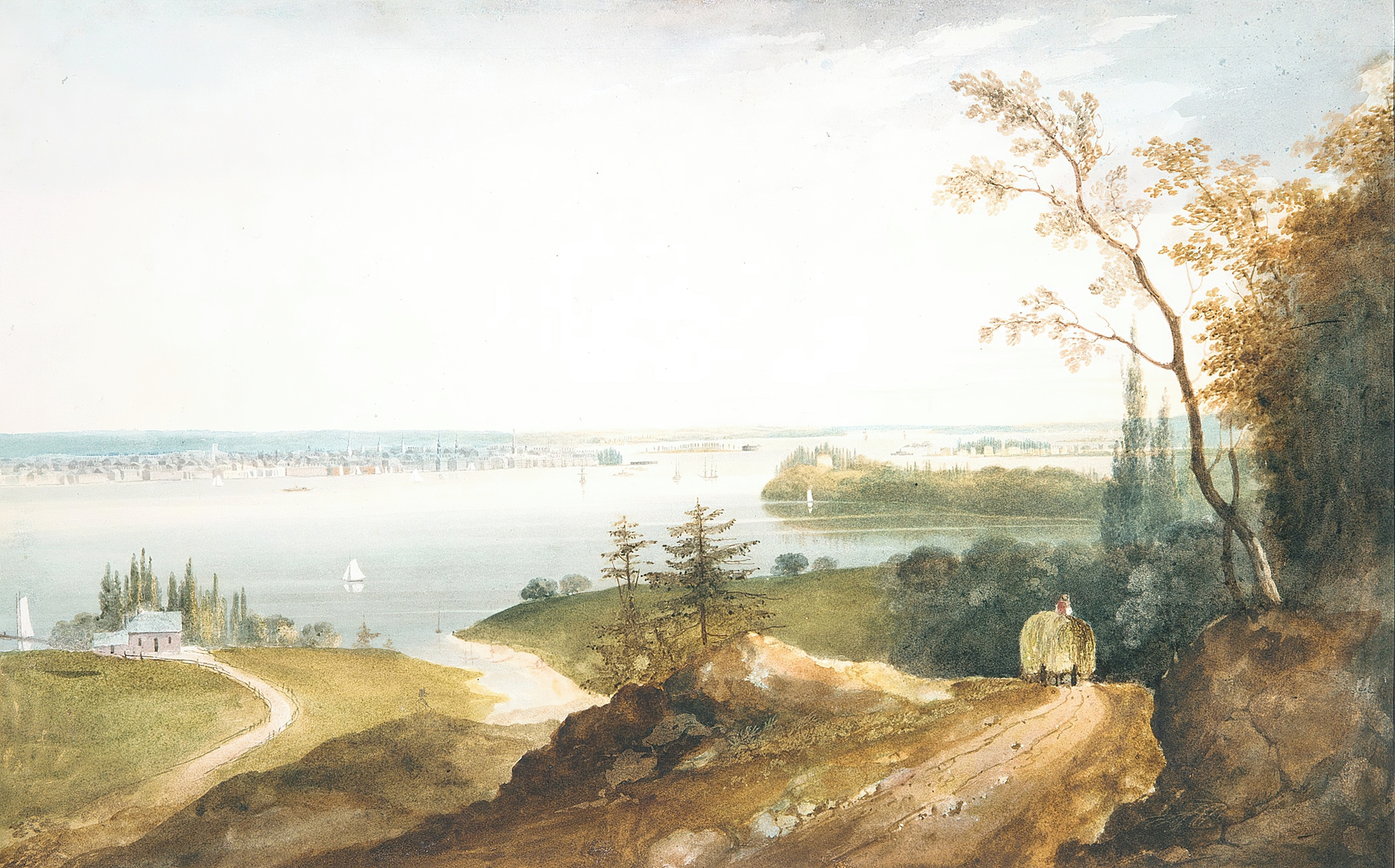
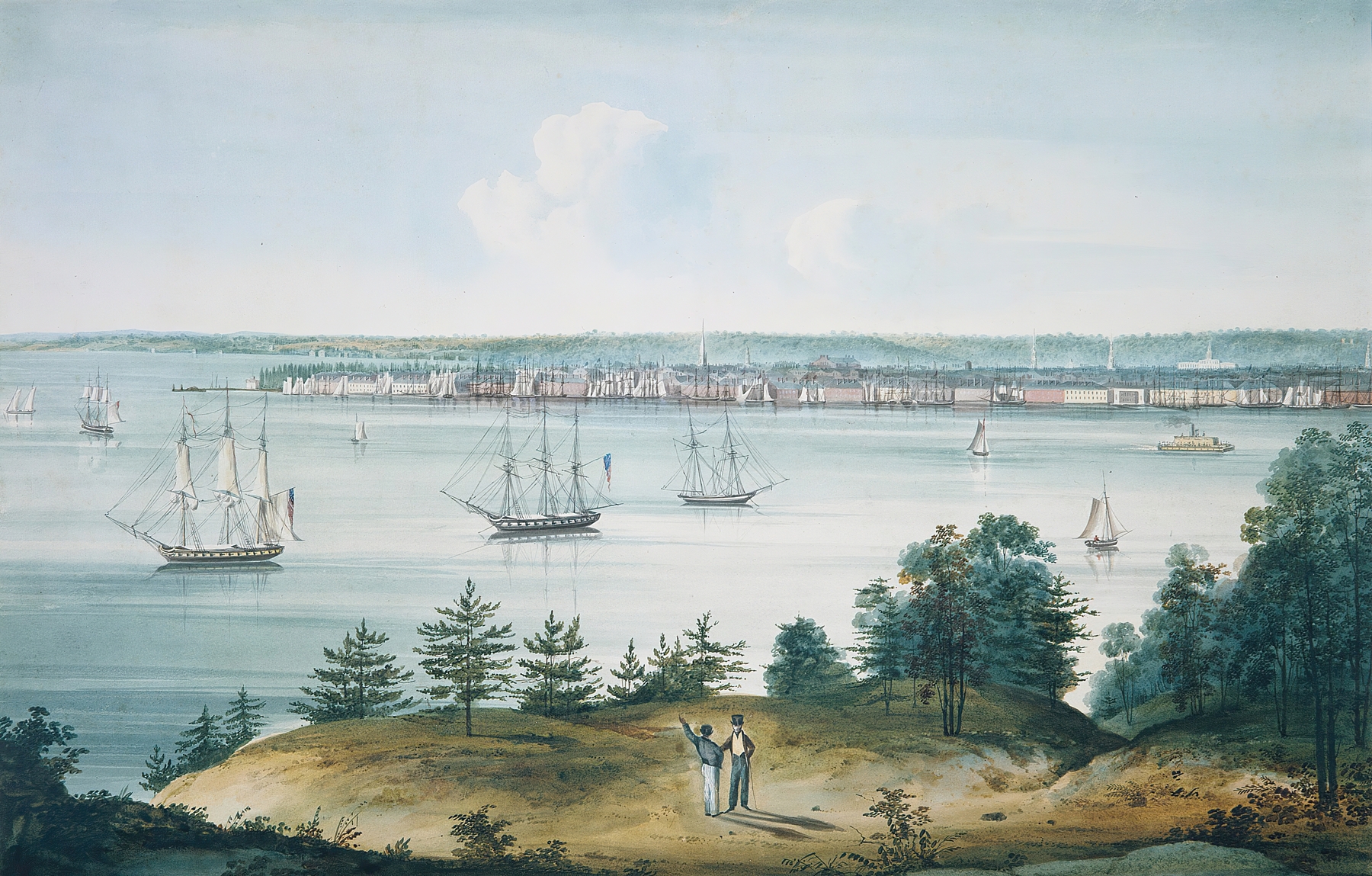
Who listens when art speaks of silence? In William Guy Wall's The Bay of New York Taken from Brooklyn Heights, silence resonates through the vastness of the landscape, urging us to find balance between the bustling life of the city and the stillness of nature. Look to the foreground, where the gentle curve of the shoreline draws your eye into the serene water. The soft blues and greens blend harmoniously, reflecting the sky’s tranquility while the boats at rest contrast with the looming city.
Notice how the delicate brushwork captures the shimmering surface of the bay, inviting you to explore beyond the visible horizon, where the rising skyline hints at the promise of human ambition nestled within the natural world. Hidden within this idyllic scene lies a tension between progress and preservation. The towering buildings of New York stand like sentinels of the future, yet their reflection in the calm water reminds us of their fragility. On the horizon, the distant city pulses with energy, while the foreground offers a retreat into nature’s embrace, urging viewers to reflect on their connection to both realms.
The balance of light and shadow enhances this dialogue, inviting contemplation of the delicate relationship between urban development and natural beauty. William Guy Wall painted this work between 1820 and 1825 during a period of significant change in New York City as it began its transformation into a burgeoning metropolis. The artist, who was originally from Ireland, found inspiration in the evolving landscape and the interplay of nature and civilization. At this time, artists were increasingly drawn to capturing the American experience, reflecting both the optimism and complexities of this new urban identity.