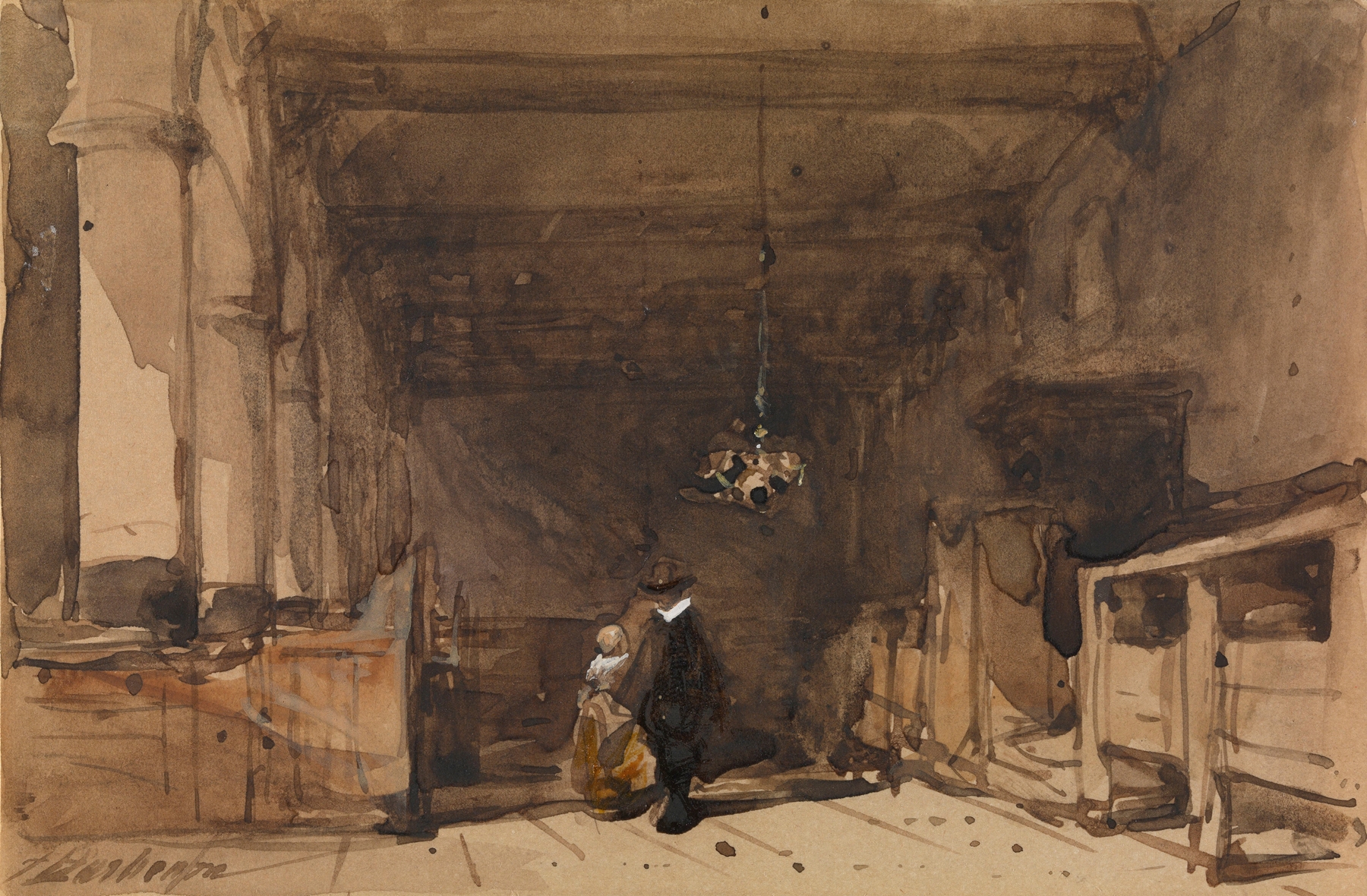
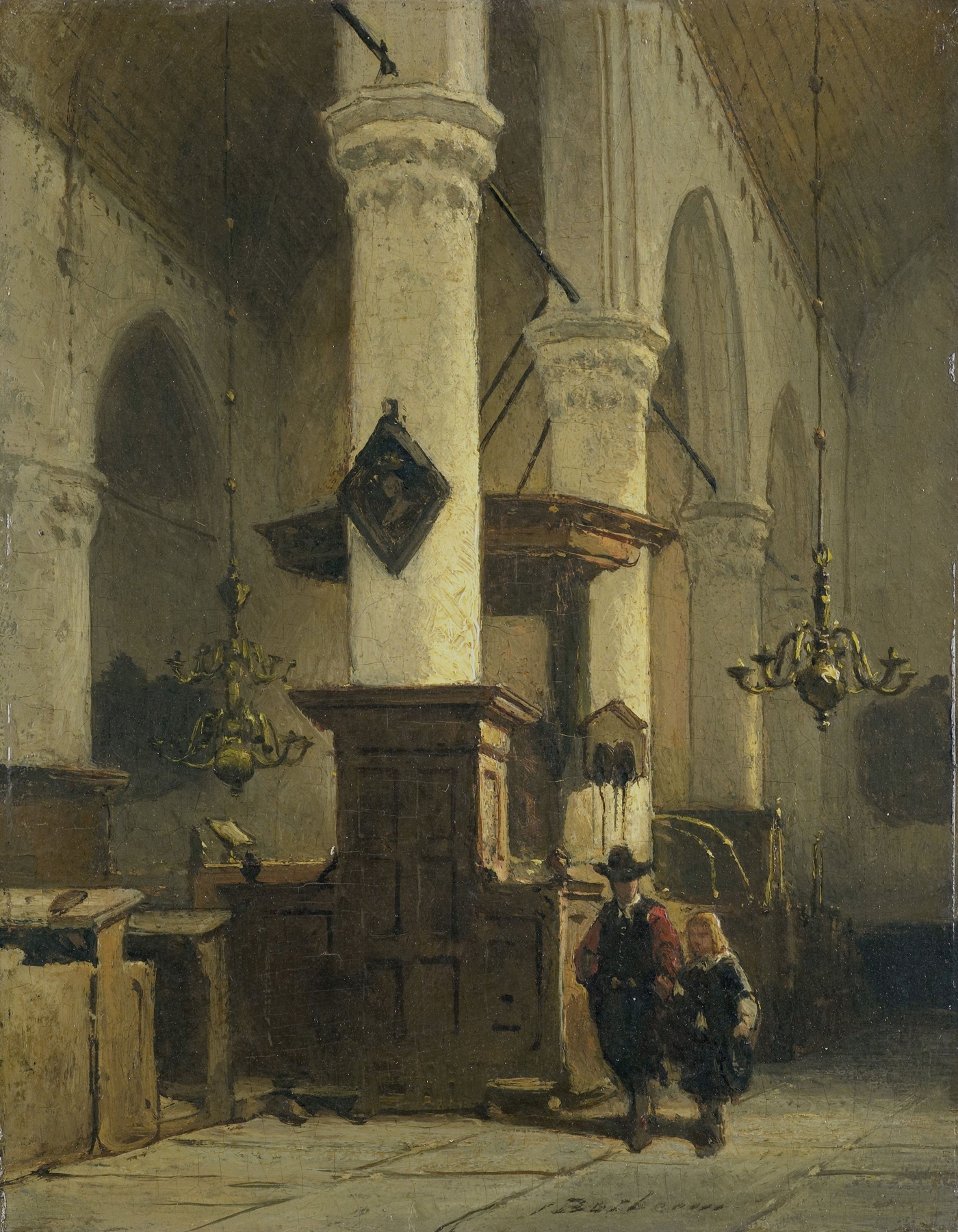
The Beach at Scheveningen — History & Analysis
“Art reveals the soul when the world turns away.” In The Beach at Scheveningen, desire flows freely amid the sunlit sands, capturing a fleeting moment where longing and serenity intertwine. The painting invites viewers to reflect on their own yearnings, beckoning them into a realm where the vibrancy of life and the delicate nuances of emotion coexist. Look to the left at the group of figures, their sun-kissed forms punctuated by the gentle hues of azure and beige. Notice how the sunlight dances upon the water’s surface, creating a shimmering pathway that leads the eye toward the horizon.
The careful brushstrokes evoke warmth and an inviting atmosphere, while the composition balances the playful energy of beachgoers with the quiet grandeur of nature, reminding one of the timeless allure of summer days. Delve deeper into the juxtaposition of movement and stillness. The couples walking hand in hand convey a sense of intimacy and desire, while the distant boat on the horizon suggests aspirations beyond the immediate. The contrast between the lively foreground and the tranquil sea hints at the complexity of human emotions—how joy can often mingle with yearning for something just out of reach.
In 1873, Johannes Bosboom created this piece while experiencing a burgeoning interest in capturing landscapes and everyday life. Working in the Netherlands, he was influenced by the growing demand for scenes that reflected modern leisure. This artwork not only speaks to personal desires but also embodies the changing tides of artistic expression during a time of increasing connectivity to the natural world.