The Evening Sea, Brigantine, Shoals — History & Analysis
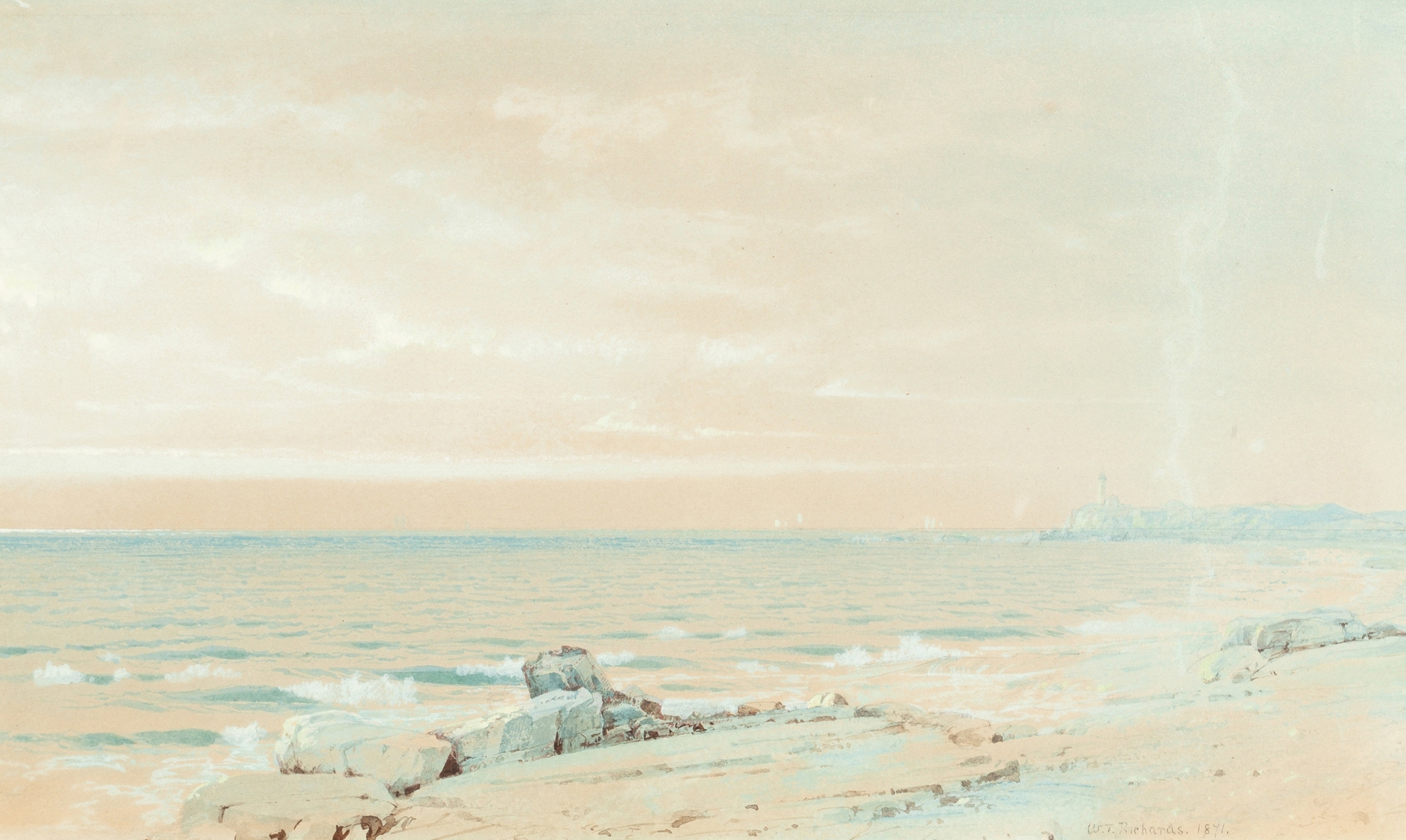
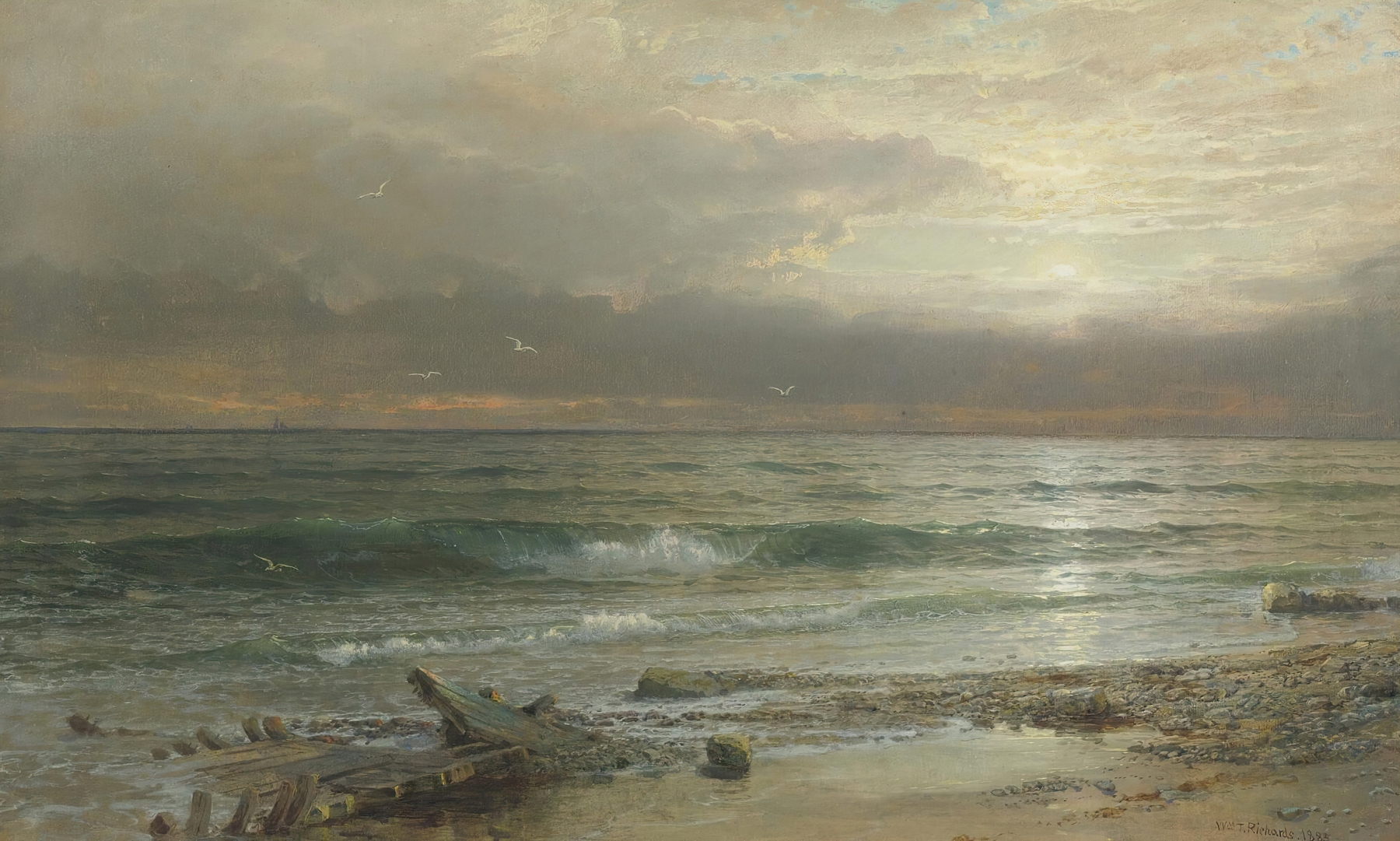
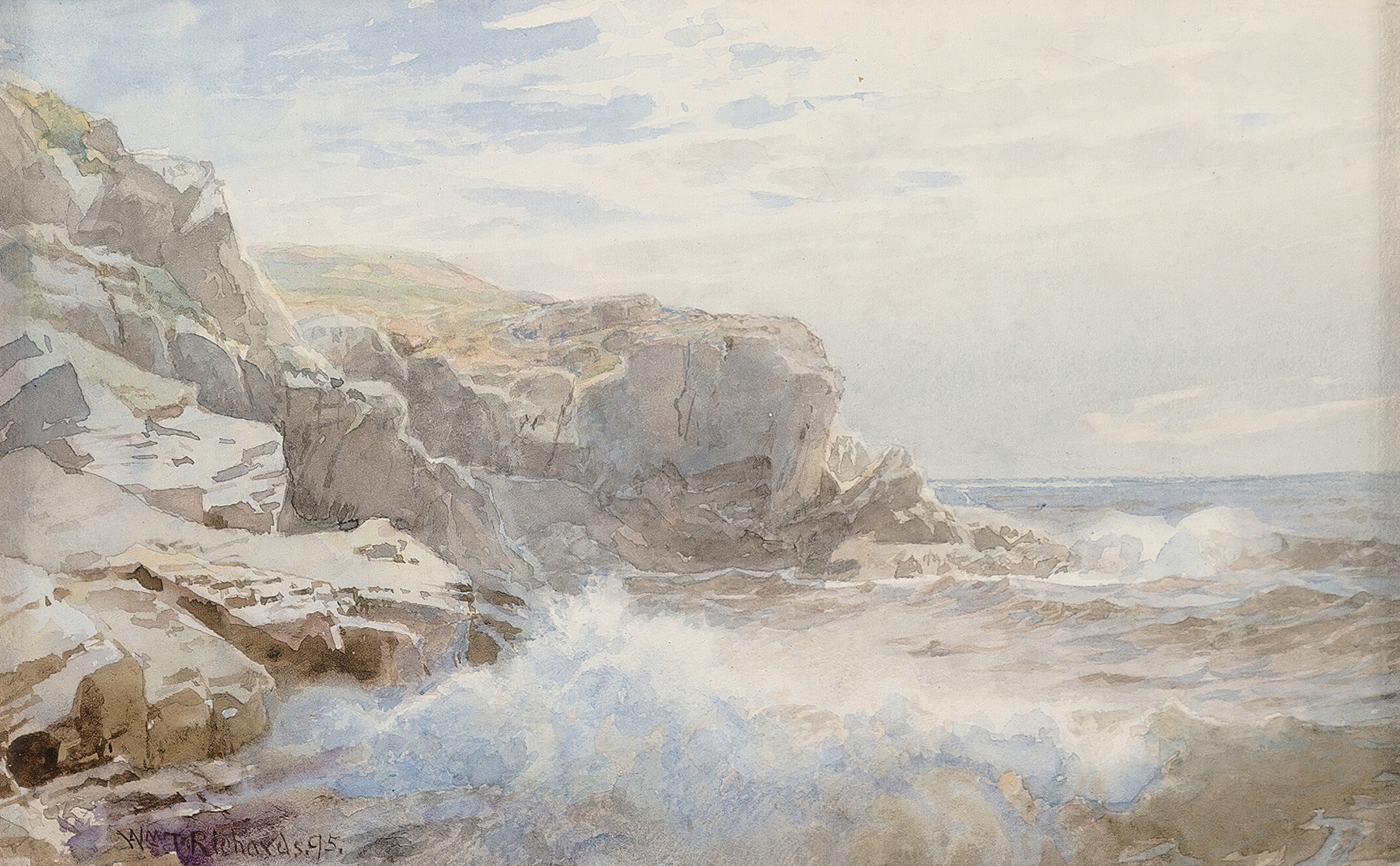
Could beauty survive in a century of chaos? William Trost Richards invites us to linger at the edge of the world, where the sea murmurs secrets of loss and longing, captured in the gentle swell of his brushwork. Look to the left at the rolling waves, each stroke of white foam contrasting against the deep blues and greens that dominate the canvas. The brigantine, a proud vessel on the horizon, beckons with a promise of adventure and escape, while the shore is painted with soft, sandy hues that ground the scene.
Notice how the light dances on the water’s surface, creating a shimmering pathway that draws the eye toward the infinite expanse, a metaphor for hope even amidst the solitude of the coast. Beneath its serene surface lies a profound tension — the ship, a symbol of transition, seems both a beacon of opportunity and a harbinger of inevitable departure. The vastness of the sea symbolizes not just adventure but also the deep, quiet sorrow of what is left behind. The interplay between the expansive sky and the confined shore reflects the duality of freedom and entrapment, capturing the essence of human experience amid the tides of life.
Richards created this evocative piece during the late 19th century, a time when American art was shifting toward naturalism. Living in Pennsylvania, he was influenced by the burgeoning landscape painting movement, and he sought to convey both the beauty and the tumult of nature. His works often reflect the themes of transience and permanence, a tension deeply felt during an era marked by rapid industrialization and change.