The Fishermen’S Return — History & Analysis
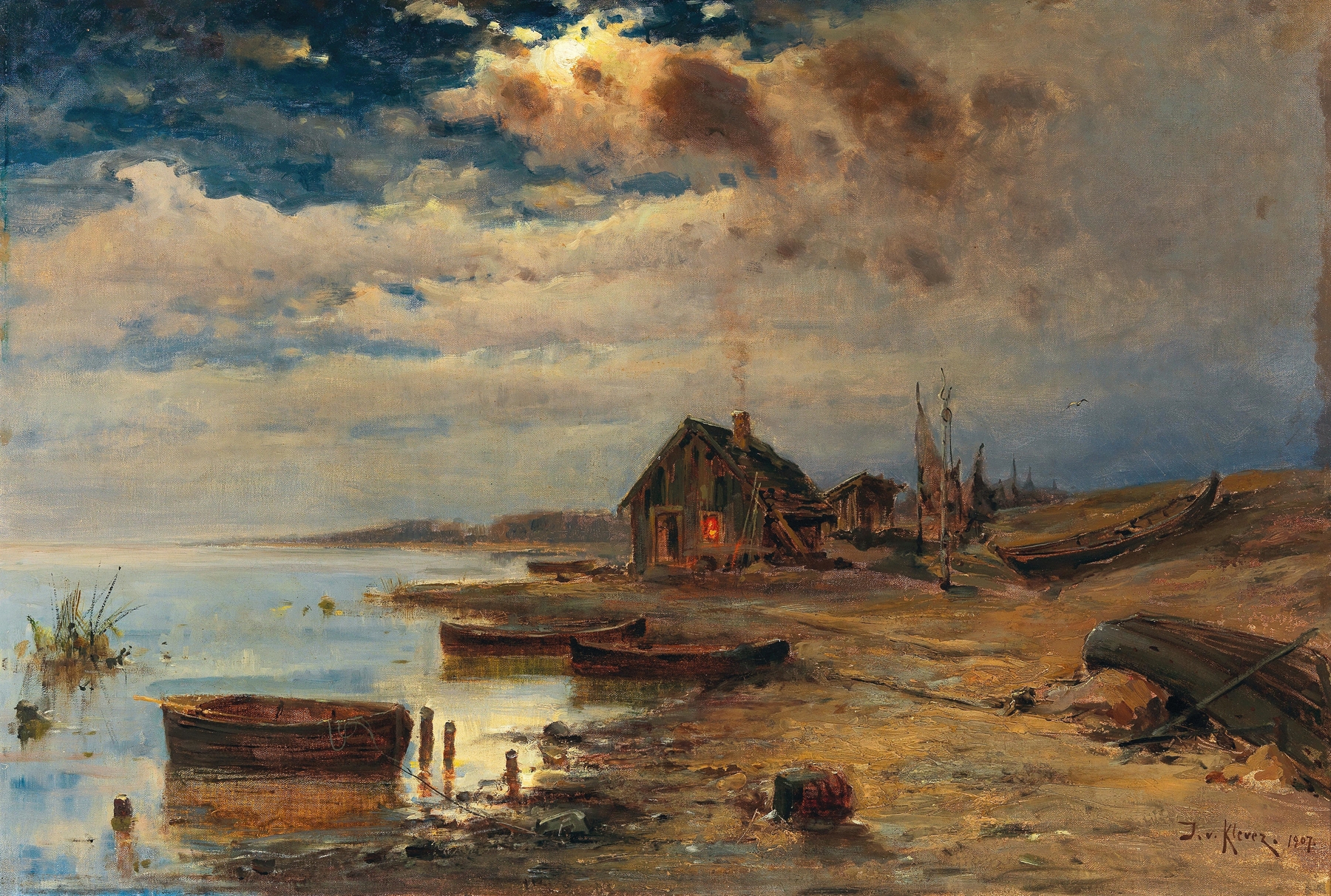
“The canvas doesn’t lie — it simply waits.” In the stillness of The Fishermen's Return, one senses the weight of both nature and humanity, poised at the threshold of transcendence. The moment captured holds an unspoken promise, inviting reflection on the act of returning and the inevitability of change. First, guide your gaze to the boat, anchored in the foreground, where the fishermen stand, their figures rendered with meticulous detail. The warm, earthy hues of their clothing contrast beautifully with the cool blues of the water and sky, creating a harmonious balance.
Notice how the light falls upon the fishermen's weathered faces, illuminating their expressions of exhaustion and relief. This interplay of light and shadow enhances the emotional depth of the scene, drawing you into their world. As you delve deeper, observe the ripples in the water, mirroring the fishermen's journey and the cyclical nature of life. The horizon, painted with the soft glow of twilight, symbolizes hope and the promise of new beginnings.
The delicate brushwork suggests not just a return from the sea but a confrontation with the weight of existence itself, evoking themes of resilience and connection with nature. In 1890, Klever painted this work while living in Russia, a time characterized by a growing interest in realism and the Romantic spirit. The artist was deeply inspired by the landscape and the lives of those who worked within it, reflecting broader social themes present in the art world. His attention to detail and emotional resonance in The Fishermen's Return captures not only a moment in time but also a profound understanding of the human condition.