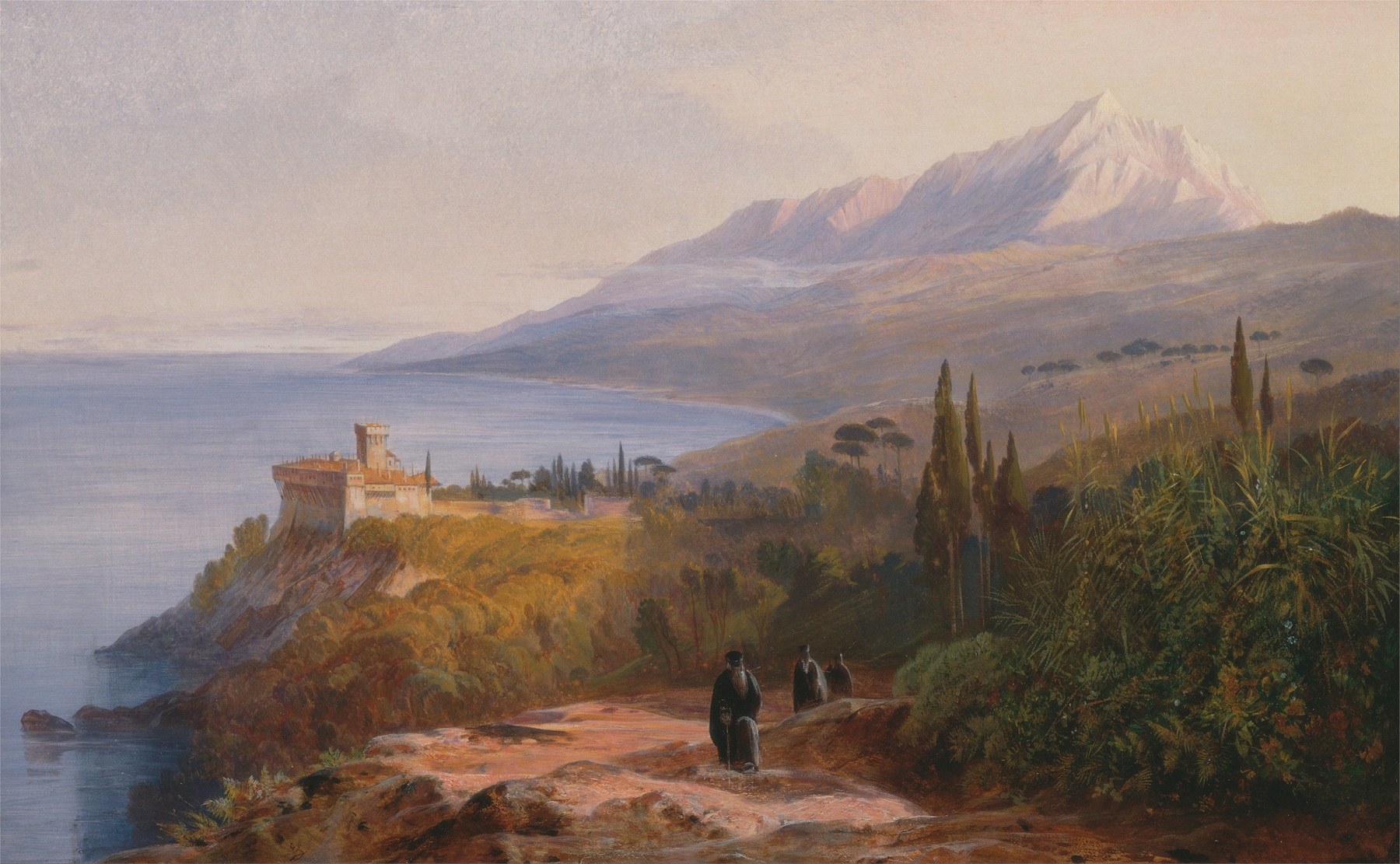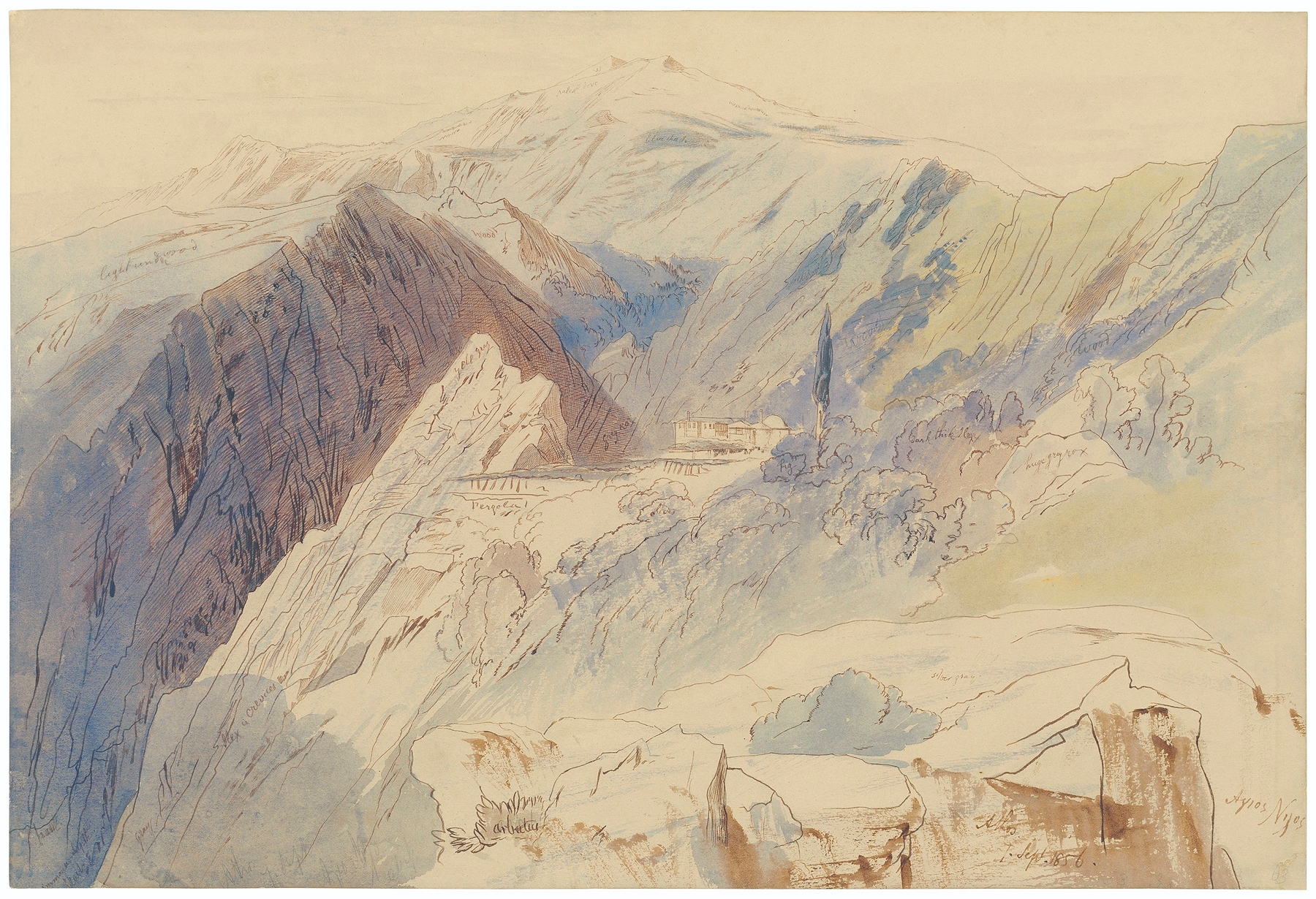
What if beauty was never meant to be finished? In Edward Lear's *The Monastery of St Nilus, Mount Athos*, the shadows speak of eternity, echoing a tranquility that seems to pause time within the frame. Look to the left at the imposing silhouette of the monastery, its ancient stones catching the soft, golden light of a fading day. The delicate interplay of light and dark creates a sense of depth that draws the eye inward, while the subtle hues of lavender and blue in the sky suggest the onset of twilight. Notice how Lear masterfully balances the structure and the surrounding landscape, inviting us to contemplate the stillness of the moment, punctuated only by the whisper of wind and the rustle of trees. Hidden beneath the surface lies a tension between the sacred and the ephemeral. The monastery, steadfast and silent, stands in stark contrast to the fleeting beauty of the sky, emphasizing the fragility of existence. Details like the wispy clouds hint at a transient world, while the monumentality of the architecture serves as a reminder of humanity's quest for permanence. Each shadow cast by the building conveys a depth of emotion—a longing for connection amidst the solitude of nature. In 1856, Lear was deeply immersed in his travels through Greece and the Mediterranean, seeking inspiration from the landscapes that shaped his artistic vision. This period was marked by a growing interest in Romanticism and the exploration of the sublime, as Lear sought to capture the essence of places that felt timeless. The creation of this work reflected not only his personal journey but also the broader artistic movement of the time, where nature and architecture merged to evoke profound emotional experiences.