The Monument from Fish Street Hill — History & Analysis
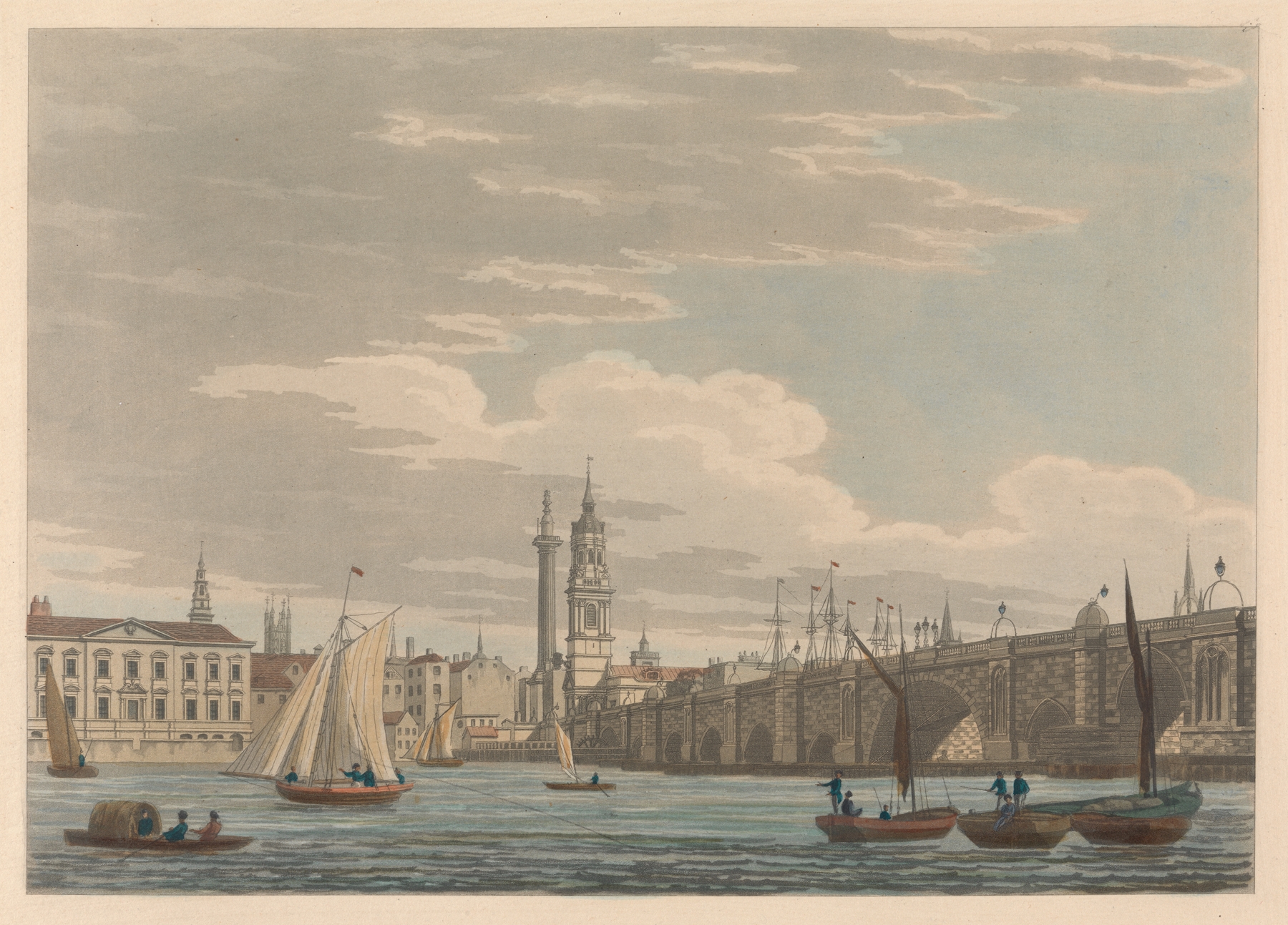
What if beauty was never meant to be finished? In the quiet allure of The Monument from Fish Street Hill, one feels the whisper of nostalgia, a fleeting moment of innocence captured in time. Look to the left at the grand column rising majestically against the sky, its intricate details meticulously rendered by Malton's precise hand. The interplay of light and shadow creates a sense of depth, inviting the viewer’s gaze upwards, while the bustling streets below, filled with figures, reveal the vibrant life of the city.
Notice how the soft hues of the buildings contrast with the stark white of the monument, symbolizing both permanence and the transitory nature of life. Delve deeper into the scene, and you will uncover the emotional tension between the monumental and the ordinary. The figures, seemingly lost in their daily routines, embody a certain innocence, unaware of the history intertwined with the stone they pass by. The monument, standing tall and proud, serves as a silent witness to their lives, evoking thoughts of legacy and the passage of time, reminding us that beauty often lies in what is fleeting.
Thomas Malton painted this work during a period when London was undergoing significant architectural transformation, likely in the late 18th century. As an artist known for his topographical views, he sought to capture the essence of his city, drawing inspiration from the neoclassical movements that celebrated both grandeur and simplicity. This piece reflects his dedication to documenting the evolving urban landscape, merging art with history in a timeless dialogue.