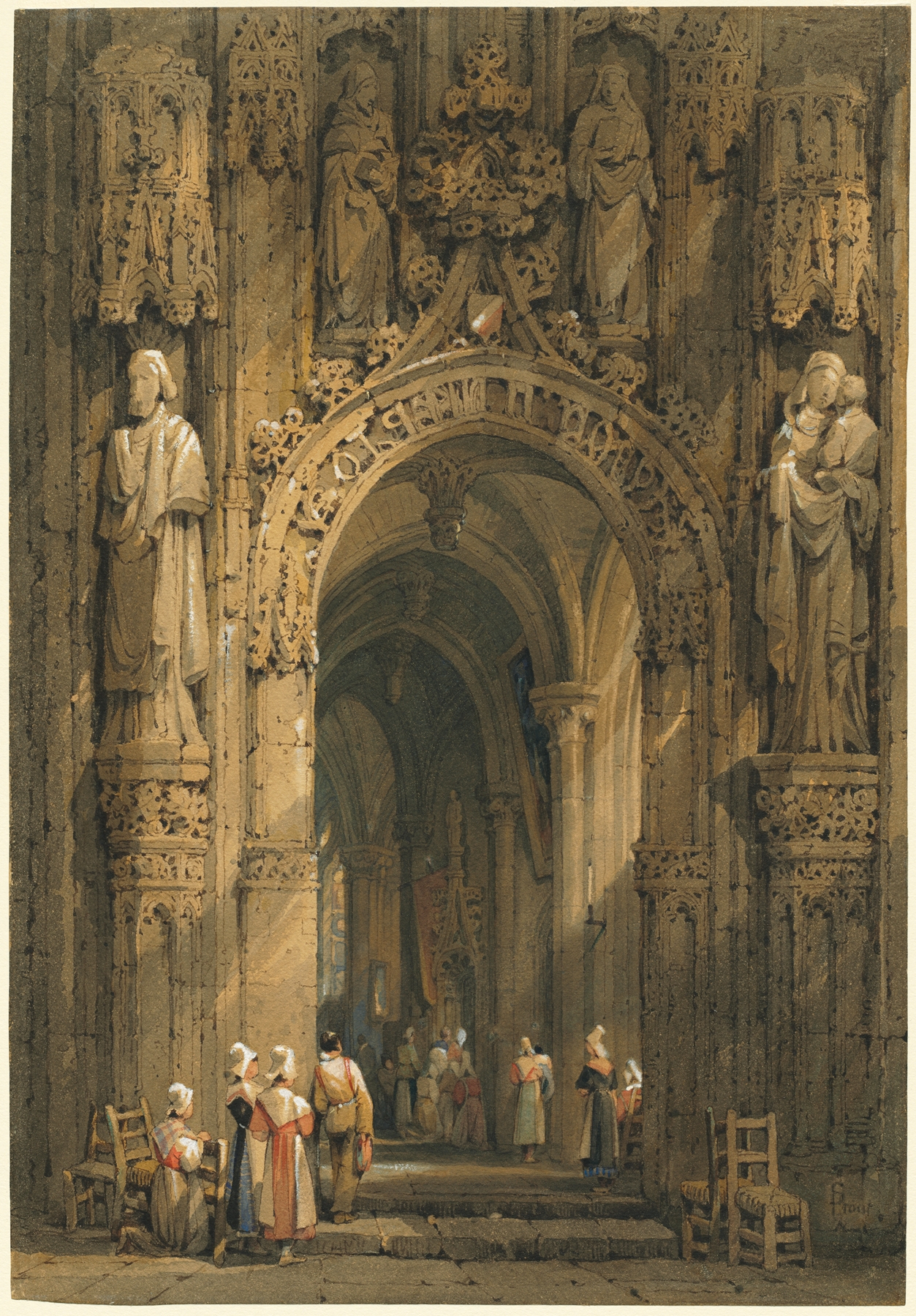
The Porch at Ratisbon Cathedral, Bavaria — History & Analysis
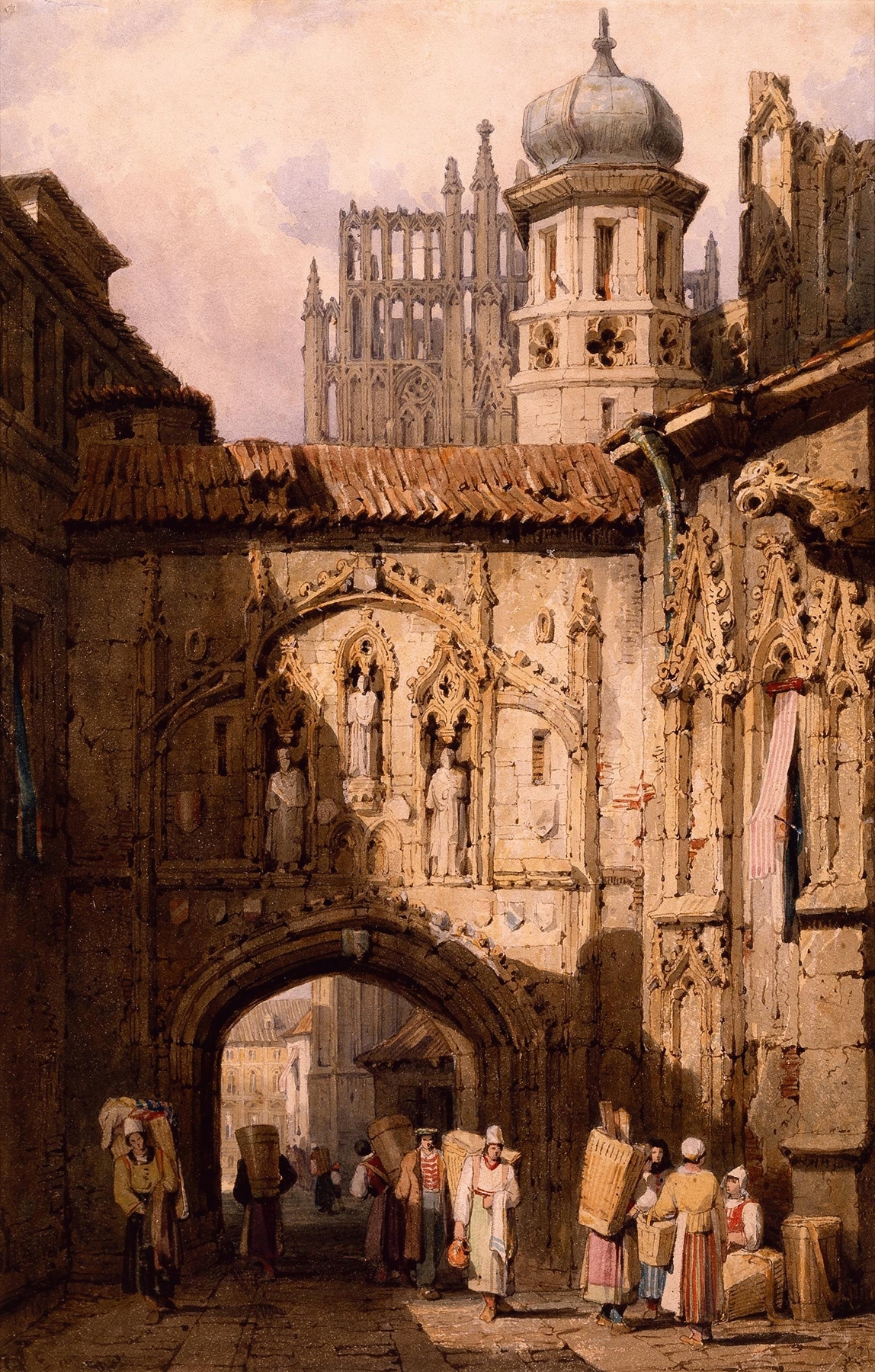
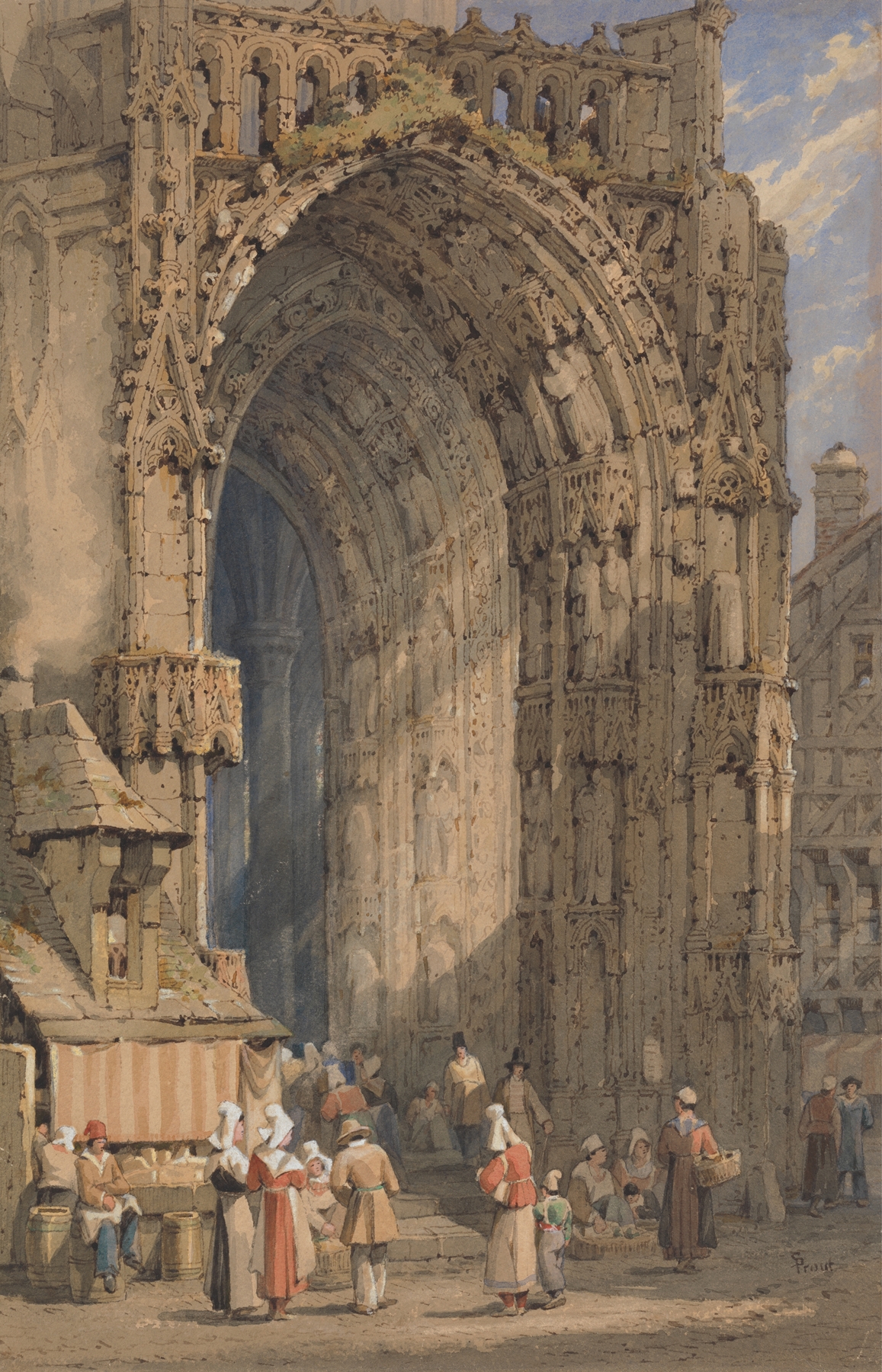
Can beauty exist without sorrow? This poignant question lingers in the air as one gazes upon the intricate details of a serene yet somber landscape captured on canvas. Look to the left, where light cascades from the glowing horizon, illuminating the weathered stones of the cathedral’s porch. The artist’s deft brushwork brings life to the gothic architecture, each craggy detail enhancing the structure's majesty while whispering of time's passage.
The subtle hues of ochre and grey evoke a sense of nostalgia, inviting the viewer to step into a moment suspended between reverence and the inevitability of decay. Yet, it is in the shadows cast by the arches where deeper tensions reside. The interplay of light and dark hints at a world filled with unspoken stories, where whispers of devotion are mingled with the weight of history. Each shadow represents not just absence but the weight of memories; the cathedral stands as a witness to countless lives and losses, imbuing the serene beauty with a profound sense of melancholy.
In 1832, Samuel Prout was deeply immersed in the landscape tradition of his time, painting in the picturesque style. Living in England when he created this work, he was heavily influenced by the Romantic movement, which emphasized emotional depth and a connection to nature. This painting reflects the era's fascination with blending architectural grandeur with the surrounding landscape, capturing both the aesthetic and the spiritual significance of places like Ratisbon Cathedral during a period of social and artistic transformation.