The Seine with Clothing on the Bank (Study for Bathers at Asnières ) — History & Analysis
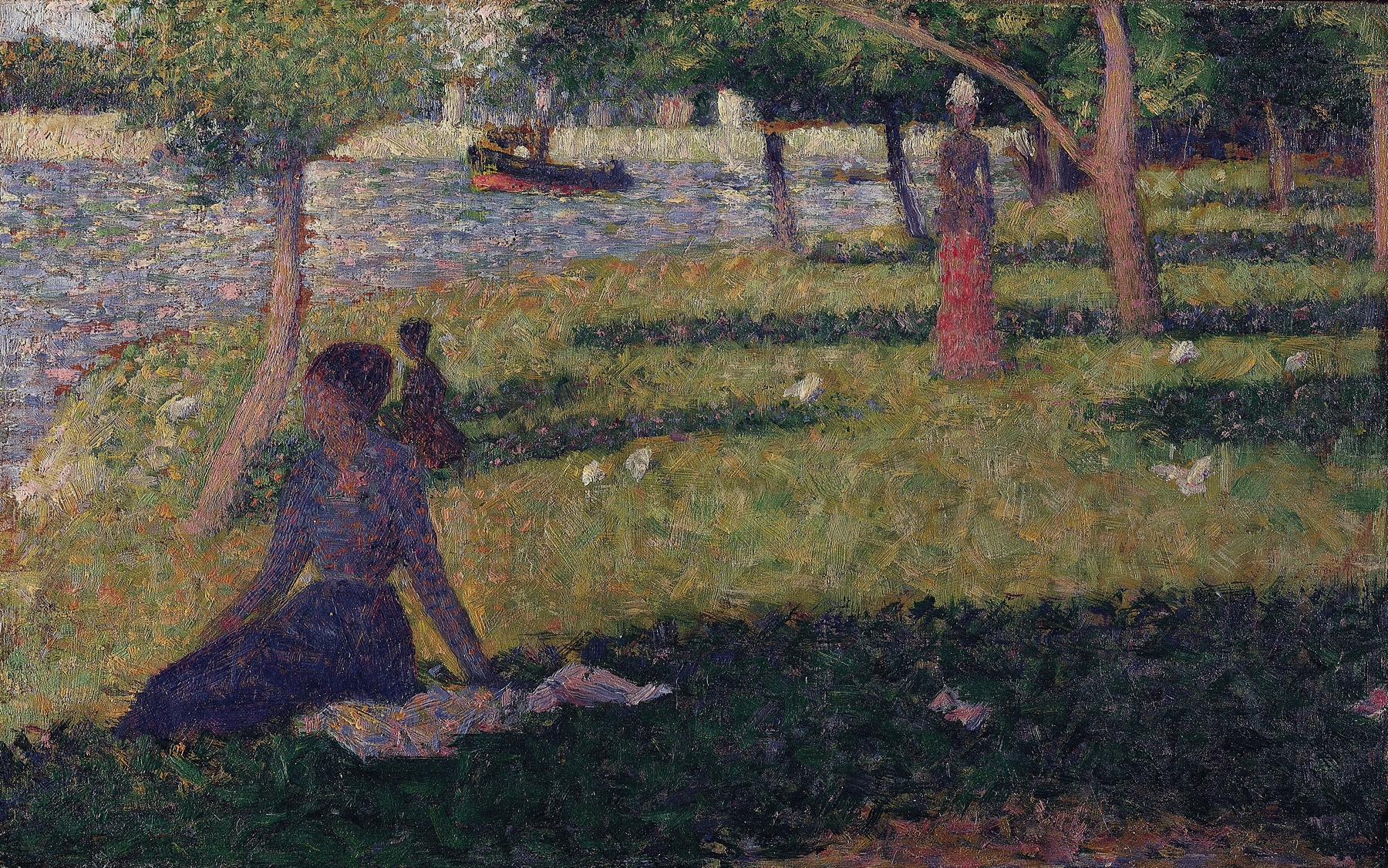
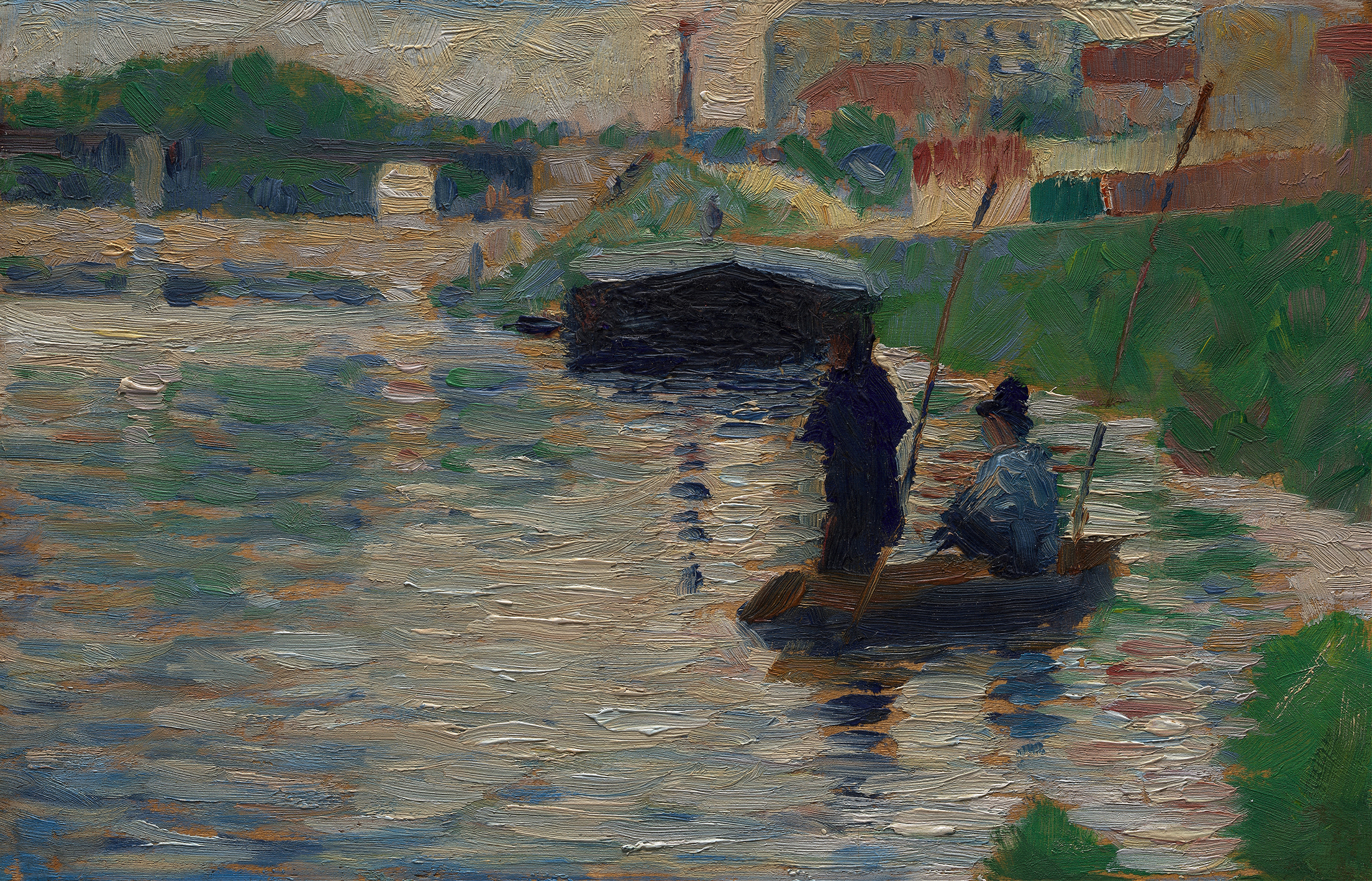
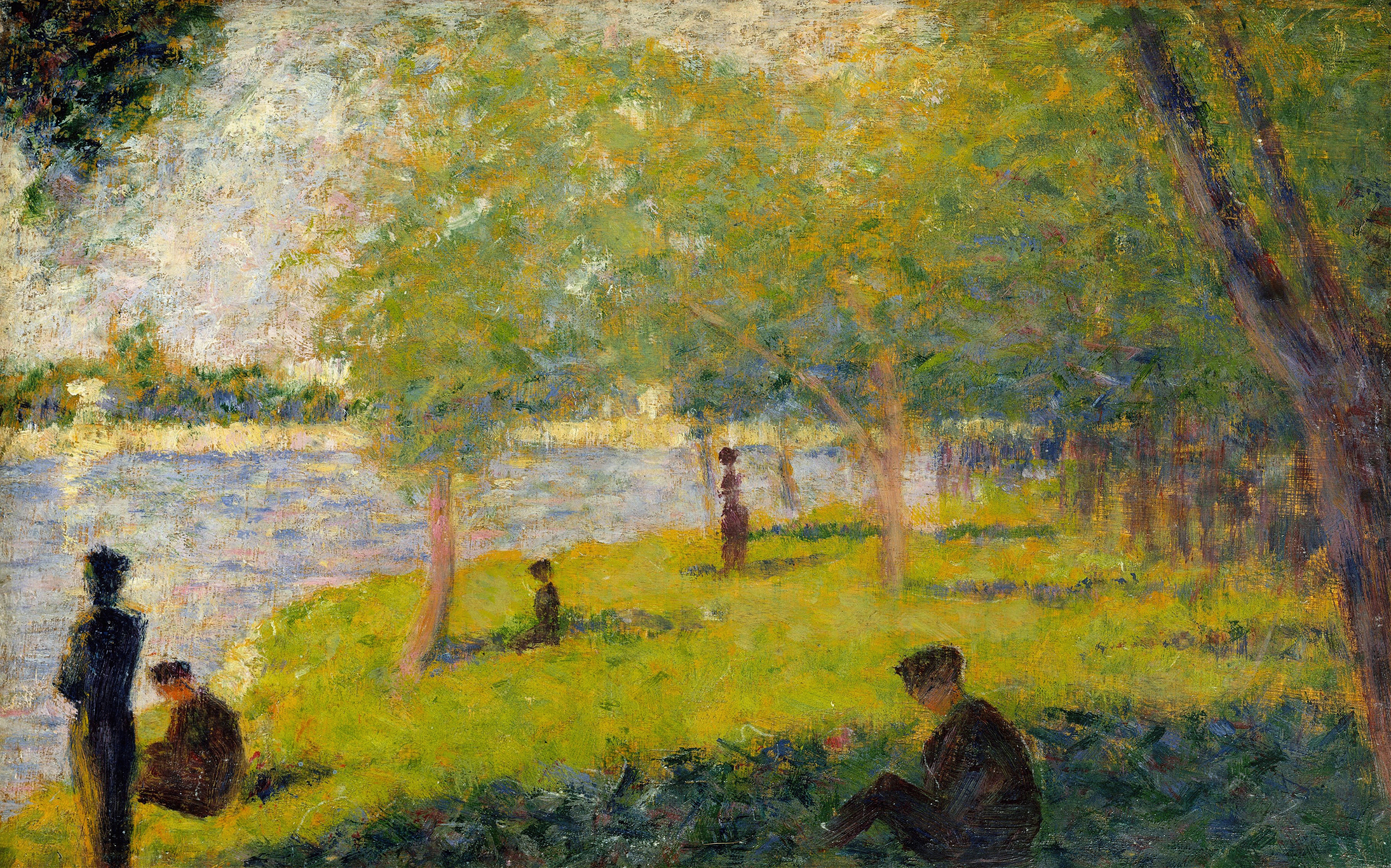
Could a single brushstroke hold eternity? In the gentle embrace of color and form, The Seine with Clothing on the Bank captures a moment steeped in serenity, blending the ordinary with the profound. Look to the left where the river slices through the canvas, inviting your gaze to dance upon its shimmering surface. The soft greens and blues that dominate the scene evoke tranquility, while the small figures lounging on the bank bring life and movement to the composition.
Notice how Seurat's distinctive pointillism creates an almost tactile rhythm; each dot of paint contributes to an intricate tapestry, harmonizing the elements in a delicate balance of light and shade. Beneath the surface, a quiet tension unfolds. The discarded clothing sprawled on the banks hints at a fleeting intimacy, suggesting a leisure that contrasts with the underlying currents of societal constraints. The composition brings together disparate worlds—nature and humanity, relaxation and expectation—echoing a longing for freedom amidst the constraints of modern life.
Each figure, while serene, embodies a subtle narrative, inviting reflection on the complexities of existence. During the years 1883-1884, Seurat was navigating the early stages of his artistic evolution in Paris, amid the burgeoning Impressionist movement. This period marked his exploration of color theory and composition, laying the groundwork for his later masterpieces. The world around him was in the midst of industrialization, yet his vision captured a stillness that offered an escape from the frenetic pace of life, creating a dialogue between the individual and the environment.