Travellers Crossing a Bridge over an Alpine Gorge — History & Analysis
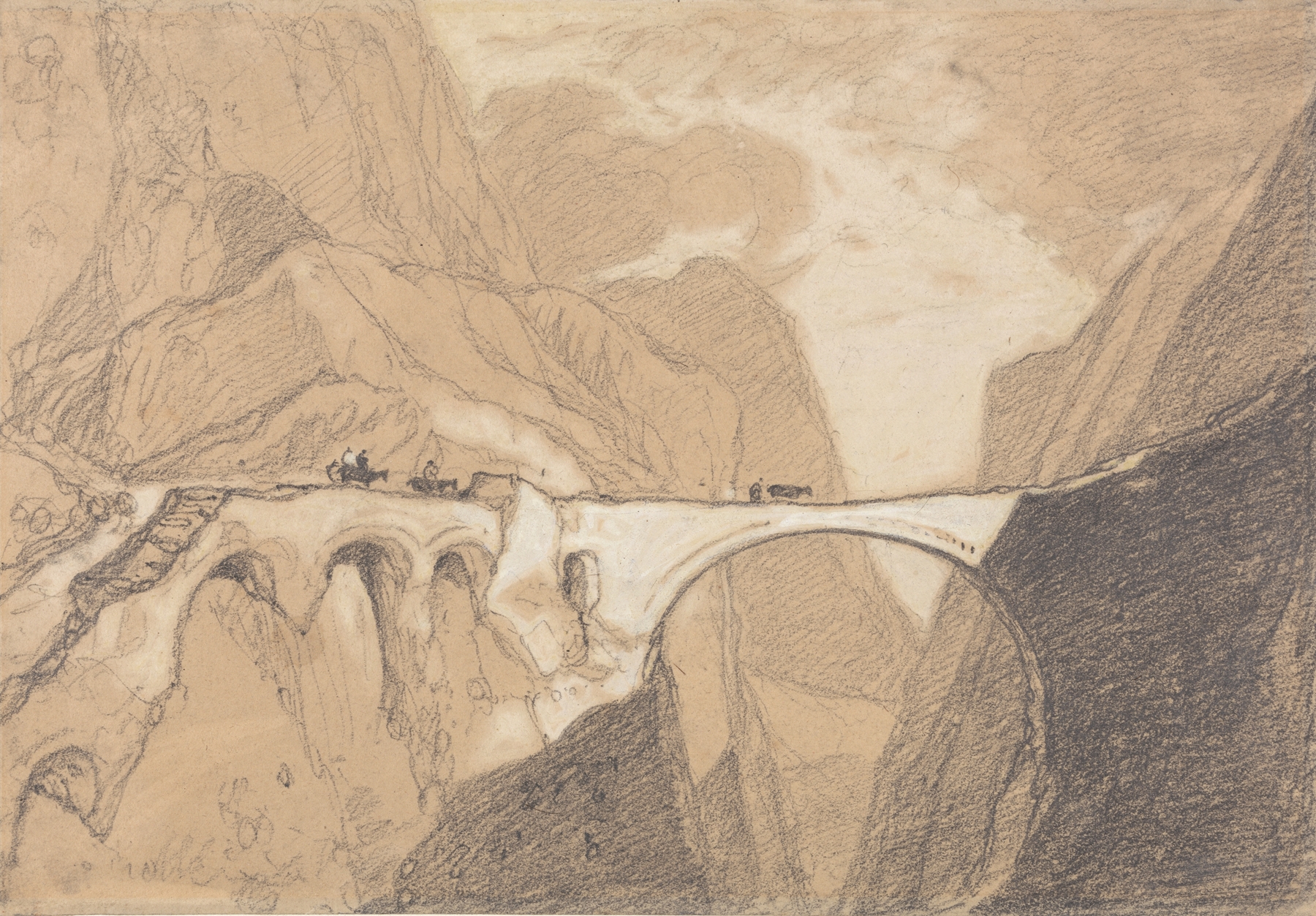
Did the painter know this moment would outlive them? As travelers navigate the precarious bridge, fear intertwines with awe, echoing the uncertainties of life’s many crossings. Focus on the bridge itself, an intricate network of wooden beams snaking across the chasm. The viewer's eye is naturally drawn to the figures, cloaked in shadow, poised uncertainly at the edge.
Notice how the light plays among the jagged cliffs, illuminating both the gorge's depths and the travelers' hesitant expressions, encapsulating a delicate balance between vulnerability and the beauty of their surroundings. This artwork speaks to the tension between adventure and trepidation. Each traveler encapsulates a story untold; their postures suggest a mix of bravery and latent fear, underscoring the human condition when faced with the unknown. The lush greenery of the mountains juxtaposed against the stark stones of the gorge reflects nature's duality—inviting yet intimidating, serene yet perilous.
In 1828, John Sell Cotman was deeply engaged in the emerging Romantic movement, reflecting the tensions of a rapidly changing world. He painted this piece while living in England, a time marked by a growing fascination with nature and the sublime. The interplay of light and shadow in Travellers Crossing a Bridge over an Alpine Gorge reveals his mastery of watercolors and communicates a profound dialogue on the human experience amid nature's vastness.